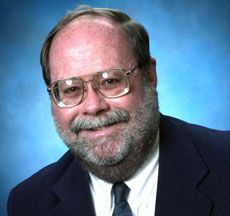
Joseph Tainter
American anthropologist and historianWikipedia
13
MENTIONS
9
EPISODES
9
PODCASTS
Search complete. 13 mentions across 9 episodes found for "Joseph Tainter".
Oct 21, 2026

Greg McKeownGUEST
And that's true of a small business, large business, or an entire society.
Greg McKeownGUEST
The great book by Joseph Tainter, the American historian, called The Collapse of Complex Societies.
Greg McKeownGUEST
Complexity grows until what happens is that all of your resources are being utilized just managing the complexity.
Greg McKeownGUEST
And then you become fragile as an institution because you can't deal with whatever the next disruption is.

William ReesGUEST
Every single major society has gone through a similar developmental process of starting simple, of becoming more and more complex.
William ReesGUEST
You know, Joseph Tainter has a whole book called The Collapse of Complex Societies, based on the notion that human beings are problem-solving entities, but with each problem solved, the society becomes more complex.
William ReesGUEST
So you run out of food because you're hunting and gathering skills and tools have become so competent.
William ReesGUEST
Well, we invent agriculture.
William ReesGUEST
And so in the United States, it's obvious with the emergence of the proletariat underground, the people have been ignored by the enormous acquisition of wealth.
William ReesGUEST
40% of the U.S. people haven't experienced any income growth, significant income growth in the last several decades.
William ReesGUEST
So all the manifestations and symptoms that Joseph Tainter describes for the complex of previous cultures is now occurring on a global scale in our culture.
William ReesGUEST
And the point will be reached where it begins to slide.

Alie WardHOST
But actually since Jeff's first two episodes aired, we have made a revolutions episode, literally the field is called revolutionology, with world expert historian Dr. Jack Goldstone.
Alie WardHOST
Uh, we've also made an episode on the collapse of societies with author and scholar Dr. Joseph Tainter.
Alie WardHOST
But anyway, after the Russian Revolution-
Jeff HoldemanSOUNDBITE_SPEAKER
We have these East Europeans that are both working, you know, in factories and building skyscrapers and things like that, but also these educated people, wealthy people who are from the Dark East, and they're still scary, and they still practice religions that, that we don't know, and we, we put a lot of our fears into these, you know, possibly powerful people who are wealthy and educated and come from this area of the world and practice those, those religions.

Sarah WilsonGUEST
So there's this kind of complexity that happens, and eventually they reach this threshold where all the fat of the society goes into keeping the complexity going.
Sarah WilsonGUEST
Then what happens is that there's generally a trigger, and this is actually the work of, um, Joseph Tainter, who's on the cover of the book.
Sarah WilsonGUEST
He's sort of the OG voice in this area.
Sarah WilsonGUEST
Uh, I think he's in his sort of 80s now.

Alex LeffNARRATOR
So if we're facing a contraction towards smaller, more localized and communal societies, how do we preserve those gains without preserving the system that produced them? Is it possible to have contraction without a complete breakdown of society? Are there any examples in history of a society contracting without total disorder?
speaker_1HOST
I found a paper by Joseph Tainter, this historian.
speaker_1HOST
Uh, it was written in 2000.
speaker_1HOST
This is prior to the transition town movement and local, all this localization stuff that's gone on.

Ashley ColbyGUEST
And people just can't remember as well when it's, everything is do- being done on a screen.
Shane SimonsenHOST
Do you watch all of this unfolding and think this is like Joseph Tainter's, uh, diminishing returns of complexity? Like, we're living through it.
Shane SimonsenHOST
Ev- everything's-
Ashley ColbyGUEST
Yeah

speaker_2SOUNDBITE_SPEAKER
For that, you need an anthropologist who spent the 1980s digging through the wreckage of dead societies, looking for the one thing they had in common.
speaker_2SOUNDBITE_SPEAKER
Joseph Tainter published The Collapse of Complex Societies in 1988, and his answer was so cold it barely sounds like history.
speaker_2SOUNDBITE_SPEAKER
Civilizations don't die from decadence, he argued.
speaker_2SOUNDBITE_SPEAKER
They don't die from barbarians.