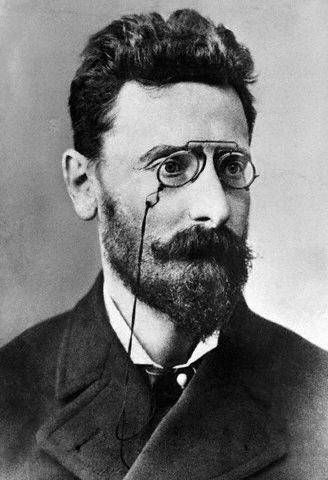
Joseph Pulitzer
Publisher and former United States RepresentativeWikipedia
143
MENTIONS
21
EPISODES
21
PODCASTS
Search complete. 143 mentions across 21 episodes found for "Joseph Pulitzer".
Nov 21, 2026

Steven GoldmanHOST
The more you read and the more you study, the more you feel like Kipling's young elephant that remarked when the alligator seized him by the tip of the trunk, it is too much for me.
Steven GoldmanHOST
Brisbane was a key man for both Joseph Pulitzer and William Randolph Hearst during the cutthroat newspaper wars of the 1880s.
Steven GoldmanHOST
He was a Hall of Fame journalist and editor and newspaper man, but I don't know if he was necessarily a great writer.
Steven GoldmanHOST
Still, I find his columns entertaining, and they do a lot of moralizing in the area of self-improvement that mirrors the kinds of things that I like to say quite often.

Britta BarosHOST
So it's like, what do we do from here?
David RyfeGUEST
I think, again, it's going to be the analogy I use to Joseph Pulitzer.
David RyfeGUEST
I don't know if you know who Joseph Pulitzer was.
David RyfeGUEST
Joseph Pulitzer was a German immigrant who moved to St. Louis in the 1880s, I believe.
David RyfeGUEST
He did not speak English, and he bought a German language newspaper.
David RyfeGUEST
And journalism looked a lot different in those days.

JustinHOST
if i weren't enough of a dork now everybody knows uh
ShelbyGUEST
it's now and now we know you've you've let it out of the bag I've talked about, I have this Joseph Pulitzer, which is a leaf product that leaf executive.
ShelbyGUEST
And basically what it was is all of these are one of one autographs that came out of that.
ShelbyGUEST
So I bought that just super excited to see something that was like an autograph that you never really run into.

Mackenzie HornerHOST
That's right.
Mackenzie HornerHOST
We're going to go take on that nasty Mr. Pulitzer there.
Mackenzie HornerHOST
You know.
Mackenzie HornerHOST
They're all nasty.
19 MINS LATER
Scott HurstHOST
you sort of go but if it's that good a life then why are we telling this story
Mackenzie HornerHOST
Well, I think once again, I think once again, the Newsies have built a life.
Mackenzie HornerHOST
It's not till the, you know, crony capitalist there, Mr. Pulitzer, messes with it and goes, guess what? I'm going to screw with your life as you know it.
Mackenzie HornerHOST
That they go, wait, now my life isn't fine.

Ben BowlinHOST
The publisher was not going to – compensate you in any way.
Ben BowlinHOST
And so as our research associate Ames points out, for the purposes of the newsy strike here, we're going to focus on two big baddies, Joseph Pulitzer, publisher of New York Evening World, and William Randolph Hearst, boo, publisher of the New York Evening Journal.
Noel BrownHOST
Was Pulitzer a baddie? He's
speaker_6SOUNDBITE_SPEAKER
got the prize.
Ben BowlinHOST
Hearst
Ben BowlinHOST
And when the Spanish War begins, the publishers that we mentioned earlier raise the daily price of newspaper bundles from 50 cents to 60 cents.
Ben BowlinHOST
This is a huge blow to the newsies.
Noel BrownHOST
American Heritage writes that the publishers, especially Hearst and Pulitzer, had been spending way more money And they had competing with one another, putting out extra additions, splashier front pages, going for more hard hitting journalism, which required paying more hard hitting journalists, eyewitness accounts, things like that, so that they could recoup on advertising and sales of their papers.

Robo KrepsHOST
You have to think about it.
Robo KrepsHOST
Number three, Joseph Pulitzer, mind you, is an immigrant, doesn't speak really good English, is coming to America and he changes journalism.
Robo KrepsHOST
how how here's how reading read a ton so much so he's waiting on the steps of the st louis library for the person to open it he's like waiting until he can get into the library to read he didn't have much money he signed up for this some subscription where it's like two dollars a week or whatever it was so he could have access to all these books because he knew he could make it through reading but he had to immerse himself in it so much so that he not only is waiting on the steps but then during the day and when he's in between jobs He's taking two apples with him because that's all he's going to eat because he's like, I can't leave the library once it opens.
Robo KrepsHOST
So I'm going to be there at the open throughout the entire day.

Dan SnowNARRATOR
newspaper has redefined the way America tells its stories.
Dan SnowNARRATOR
But its rise to prominence was fueled by a bitter rivalry between Joseph Pulitzer.
Joseph PulitzerVOICE_ACTOR
We'll dedicate ourselves to the cause of the people.
Dan SnowNARRATOR
A man who built himself up from nothing.
speaker_8VOICE_ACTOR
Mr. Augustine! Mr.
speaker_8VOICE_ACTOR
Augustine!
Dan SnowNARRATOR
From his earliest days as a reporter, Joseph Pulitzer has aspired to be the voice of the people.
Dan SnowNARRATOR
It's a dream born of his humble beginnings as a young immigrant from Hungary.

Sally JenkinsSOUNDBITE_SPEAKER
Well, Carlisle almost beats Princeton and then comes and plays Yale at the Polar Grounds in 1896 and scores a touchdown that would have won the game against Yale, only it's called back by an official who happened to have gone to Yale.
Sally JenkinsSOUNDBITE_SPEAKER
And the next day, the New York World, which was Joseph Pulitzer's newspaper, which had a really great sports section that I spent a lot of time reading, they wrote that Carlisle could beat 11 Yale men, but they couldn't beat 11 Yale men and a Yale referee.
Sally JenkinsSOUNDBITE_SPEAKER
Well, at that game, The audience becomes really so enchanted by the Carlisle team and what a great, courageous game they play that they are incensed when this touchdown is called back and they boo for several minutes.
Sally JenkinsSOUNDBITE_SPEAKER
It incensed the crowd.

Carl RaymondHOST
Now...
Carl RaymondHOST
Pulitzer's Mansion is entirely different from what we've been talking about so far.
Carl RaymondHOST
This is not Beaux-Arts.
Carl RaymondHOST
So what do we see when we see Pulitzer's Mansion?
Emma Guest-ConsalesGUEST
Yeah, well, it's not Beaux-Arts in the sense it's not French-inspired.
Emma Guest-ConsalesGUEST
So it's not French-inspired specifically.
Emma Guest-ConsalesGUEST
You're right.
Emma Guest-ConsalesGUEST
It's much more austere, almost refined on the exterior.

Will TannerHOST
These he marshaled in a desperate attempt to try and prevent an outbreak of war.
Will TannerHOST
While the yellow press in New York, led by William Randolph Hearst and Joseph Pulitzer, screamed for instant war and accused the Spanish of treachery, Fitzhugh Lee kept his head.
Will TannerHOST
He worked through the night, supervised rescue operations, established emergency hospitals for the burned sailors, visited the dying men in their beds.
Will TannerHOST
He immediately drafted a historic telegram to the Department of State in Washington, calmly explaining, Maine blown up and destroyed tonight at 9.40 p.m. many killed and wounded.
11 more episodes mention Joseph Pulitzer.
Create an account to see the whole feed, search across every transcript, and follow the entities you care about.