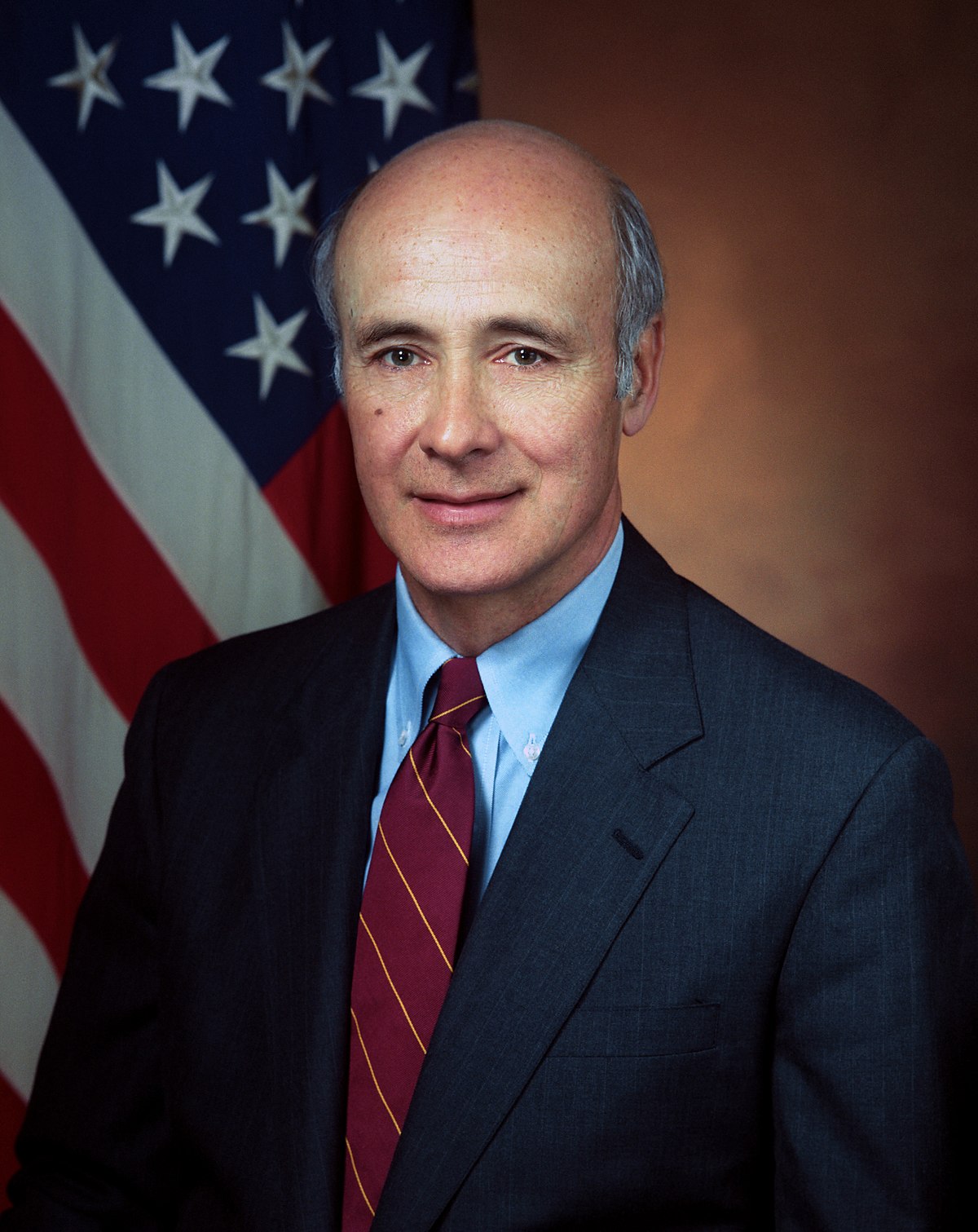
Joseph Nye

Joseph Nye

Political scientist and former Assistant Secretary of Defense for International Security Affairs of the United StatesWikipedia

Search complete. 20 mentions across 17 episodes found for "Joseph Nye".

Sep 11, 2026

Roland KeltsGUEST
12:36
My name is Roland Nozuma Kelts.
Roland KeltsGUEST
12:38
I'm a Japanese American author and editor and scholar, a professor at Waseda University, and I'm producing a film right now.
PJ VogtHOST
12:48
What's the film?
Roland KeltsGUEST
12:49
[laughs] It's a documentary about Osamu Tezuka, the god of manga and the father of anime.

6 MINS LATER

PJ VogtHOST
19:03
... our dreams show up in another place, and then people become enamored with those dreams, and they become curious about the people who have them.
Roland KeltsGUEST
19:09
No, absolutely.
Roland KeltsGUEST
19:10
Uh, the phrase soft power was coined by an American professor, Joseph Nye from Harvard.
Roland KeltsGUEST
19:16
He published an essay examining how the US was winning the Cold War with the Soviet Union, partly because the US had this great soft power, and what he meant by soft power was Hollywood movies, Levi's jeans, Marilyn Monroe, James Dean, rock and roll, Elvis Presley, that made America look much more attractive than the Soviet Union.
Michael GreenGUEST
12:16
And so you have leaders who have plans, and they go right Into a wall.
Michael GreenGUEST
12:20
And so great leaders, Joe Nye, the late Harvard professor, used the word cognitive intelligence in his book on leadership.
Ashton JonesHOST
12:25
Yeah.
Michael GreenGUEST
12:25
Really great world leaders-
Robert HardmanGUEST
7:32
But, I mean, all these things link back, have a royal connection.
Robert HardmanGUEST
7:35
And I interviewed him for a previous book, actually, Professor Joe Nye of Harvard University.
Robert HardmanGUEST
7:40
And Joe Nye...
Robert HardmanGUEST
7:42
He invented the concept of soft power.
Robert HardmanGUEST
7:45
He kind of codified it.
Aaron MacLeanHOST
4:46
You talk about Mackinder.
Aaron MacLeanHOST
4:48
Which of these? And then there are more and more contemporary ones like Joseph Nye's conception of soft power, Paul Kennedy's focus on economics.
Aaron MacLeanHOST
4:54
Maybe walk us through a few of these that you found most valuable to yourself in thinking all this through.
Brendan SimmsGUEST
5:00
Well, I think all of these approaches have something to be said for them.
Jessica SternGUEST
4:05
But soon after that, uh, I-- It was a very small group of us who worked on terrorism, so I was getting so many calls from media, small group by the way all around the world there just weren’t...It just wasn't a popular topic and, uh, I c-I couldn't answer all the calls that were coming in and so the dean's office took over my phone and, uh, I remember just being so exhausted even though I, I realize in retrospect that I was quite dissociated that day as I think many people were and indeed those weeks I remember just lying on the floor i wou-in th-in the middle of the day.
Jessica SternGUEST
4:52
I was so exhausted from I guess well all the queries but also the, the trauma that I wasn't really feeling and my Dean at the time Joe Nye, uh, the late Joe Nye actually asked me to cancel my classes and go to New York and go on TV he thought it was a public service and he sent one of our PR peop-...
Jessica SternGUEST
5:20
One of our publicist at Kennedy school with me and she still is traumatized by that experience because we flew to New York There was almost no one on the plane and New York there was almost no one on the street Uh We--it, it was a couple days before planes were flying but it was a surreal experience and Well That's what I remember Not to get into the Policy responses or any of that Do you remember when it was clear that it was In fact A terrorist attack do you remember kind of Your Top Line Thought About
Paul MassariHOST
6:05
AboutWhat you thought the future might hold.
Eric OlanderHOST
37:30
I was in Austria just a couple of weeks ago, and we were talking about soft power, and they immediately said, well, you know, we're not going to start looking at Chinese movies.
Eric OlanderHOST
37:40
And they looked at it in this very... kind of arrogant traditional way of the Joseph Nye version of soft power, which is obviously is just, you know, cultural content and things like that.
Eric OlanderHOST
37:52
And they were so dismissive.
Eric OlanderHOST
37:53
And I think this is an older generation too, because there's a big generational difference here.
Yuri PinesGUEST
23:29
In the 11th century, they erupted, they conquered the Shang, they established their dominance over the entire northern part of what is today China, most of the Yellow River Basin.
Yuri PinesGUEST
23:39
And then gradually they started losing their real military power, but they maintained their rule still big before the springs and autumns for three centuries because they had what Joseph Nye, the late United States political scientist, termed very nicely the soft power.
Yuri PinesGUEST
23:58
You know, Nye spoke about soft power, which comprises institutional, ideological, and cultural power, and the Zhou were ideological.
Yuri PinesGUEST
24:09
They claimed that they have the mandate of heaven.
Yuri PinesGUEST
23:44
In the 11th century, they erupted, they conquered the Shang, they established their dominance over the entire northern part of what is today China, most of the Yellow River Basin.
Yuri PinesGUEST
23:54
Then, gradually, they started losing their real military power, but they maintained their rule still big before the springs and autumns for three centuries because they had what Joseph Nye, the late United States political scientist, termed very nicely the soft power.
Yuri PinesGUEST
24:14
You know, Nye spoke about soft power, which comprises institutional, ideological, and cultural power, and the Zhou were ideological.
Yuri PinesGUEST
24:24
They claimed that they have the mandate of heaven, the kings of Zhou bore the honorific title sons of heaven, and nobody dared to proclaim himself son of heaven, not a single political leader.
Yuri PinesGUEST
23:29
In the 11th century, they erupted, they conquered the Shang, they established their dominance over the entire northern part of what is today China, most of the Yellow River Basin.
Yuri PinesGUEST
23:39
And then gradually they started losing their real military power, but they maintained their rule still big before the springs and autumns for three centuries because they had what Joseph Nye, the late United States political scientist, termed very nicely the soft power.
Yuri PinesGUEST
23:58
You know, Nye spoke about soft power, which comprises institutional, ideological, and cultural power.
Yuri PinesGUEST
24:06
And the Zhou were ideological.
Yuri PinesGUEST
20:13
In the 11th century, they erupted, they conquered the Shang, they established their dominance over the entire northern part of what is today China, most of the Yellow River Basin.
Yuri PinesGUEST
20:24
Gradually, they started losing their real military power, but they maintained their rule still before the spring and the autumn for three centuries because they had what Joseph Nye, the late United States political scientist, termed very nicely the soft power.
Yuri PinesGUEST
20:43
You know, Nye spoke about soft power, which comprises institutional, ideological, and cultural power, and the Zhou were ideological.
Yuri PinesGUEST
20:53
They claimed that they have the mandate of heaven.

7 more episodes mention Joseph Nye.

Create an account to see the whole feed, search across every transcript, and follow the entities you care about.

We value your privacy

We use cookies to understand how you use our platform and to improve your experience. Click “Accept All” to consent, or “Decline non-essential” to opt out of non-essential cookies. Read our Privacy Policy.