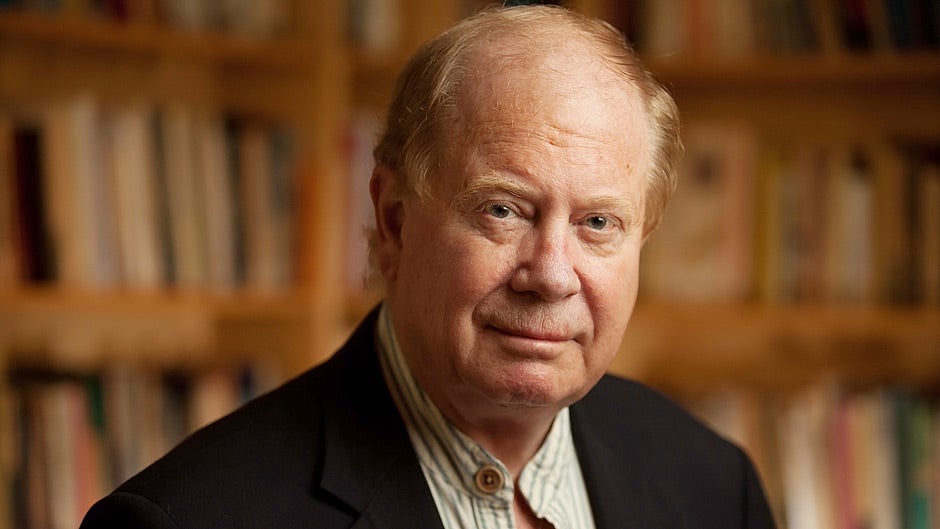
Joseph J. Ellis
American historian
27
APPEARANCES
9
PODCASTS
Aug 30, 2026


Joseph EllisGUEST
He's an immigrant and comes to America as a young boy and at a very early age, involved in a mercantile house in Philadelphia and establishes a company, which is the major trading company in Japan and in the Caribbean, as well as North America and the Mediterranean region.
Joseph EllisGUEST
And during the war, he uses his credit to promote trade with France that's illegal trade.
Joseph EllisGUEST
I mean, and if Morris promised you that he was going to pay you back, you knew that you would get it.
11 MINS LATER
Joseph EllisGUEST
It meant that he had 800,000 pounds, I believe it is, to spend based on the royal treasury to essentially And so while George III, in moving towards a policy of war with America, claimed that he was doing it to defend Parliament's authority.
Joseph EllisGUEST
In the Goyas Revolution, the English government became what they said, king in Parliament.
6 MINS LATER

Joseph EllisGUEST
One of the things I wanna let your viewers hear is that the United States faced a unique dilemma in 1776.
Joseph EllisGUEST
Not, not only in went into war against Great Britain, but also that if you owned slaves in Brit- in anywhere in England, in Great Britain, in France, and you were forced to free them, where were they? They were an ocean away in the Caribbean and Latin America.
Joseph EllisGUEST
If you free them here, they're your neighbors, and they're 20% of the total population.
Joseph EllisGUEST
And so the issue at stake isn't just, should we end slavery? The issue is, should we become a biracial society? And the answer to that in both Northern and Southern states, and we'll talk about that, is no.
26 MINS LATER

Martin DeCaroHOST
You know, uh, in all these episodes I've done, Joseph, about the Semi-Quincentennial, I tend to take a positive historical view of the American Revolution, but I don't think any Native American tribe could see that as a positive development in history.

Lewis LaphamSOUNDBITE_SPEAKER
So the British Navy under Admiral Richard Howe and the British Army under his brother Howe William, I think, is in Brooklyn, right? I mean, and at the same time that the declaration is being written in Philadelphia.
Joseph J. EllisGUEST
George Washington brings the Continental Army, it's only about 10,000 troops, down from Boston to New York to defend New York because they know that's where the British are going to invade.
Joseph J. EllisGUEST
and presumably then move up to Hudson and sever New England off from the rest of the colonies.
Joseph J. EllisGUEST
In retrospect, which means hindsight wisdom of the historian, it was a huge mistake to try to defend New York because it's an archipelago surrounded by water and whoever controls the sea controls the battle.
Joseph J. EllisGUEST
But Washington believed he had no choice but to do so because he was ordered by the Continental Congress to do so.
Joseph J. EllisGUEST
And also it catches a shred of his personality here that Washington began the war believing that battle was like a challenge to duel.
5 MINS LATER
Lewis LaphamSOUNDBITE_SPEAKER
Right.


Joseph EllisGUEST
You're raising a very important point, and it needs to note of it, throughout the American Revolution, the war, the Continental Army was kept on life support.
Joseph EllisGUEST
People were willing to give money or to volunteer for militia for local war, but not to the Continental Army.
Joseph EllisGUEST
Washington said, "If you give me what we could get out of this population, we could have an army of 60 to 80,000." He never had an army more than 12,000, or 12 to 15,000.
Joseph EllisGUEST
He said he could have won the war, and Hamilton agreed with him, in two years if the, if the population had supported the Continental Army.


Kelley BrownHOST
and that the band already too weak which holds us together will soon be broken it just really struck me that that thinking that he was going through and i and i'm wondering just why you think he was willing to come back i know he didn't want to at first
Joseph EllisGUEST
Throughout the American Revolution, the war, the Continental Army was kept on life support.
Joseph EllisGUEST
People were willing to give money or to volunteer for militia for local war, but not to the Continental Army.
Joseph EllisGUEST
So throughout the war, Washington is aware of the fact, Washington said, if you give me what we could get out of this population, we could have an army of 60 to 80,000.


Joseph EllisGUEST
Um, Adams was the guy who'd led the way in the Congress on the debate towards independence.
Joseph EllisGUEST
He had embraced that position, and he said all those who were waiting, uh, were waiting for a Messiah that would never come.
Joseph EllisGUEST
And i- in the play, 1776, they do a good job with this, showing him, um, that, uh, Jefferson was pretty close in terms of coming along on the, uh, question of independence.
Joseph EllisGUEST
And, um, and when the committee was created to draft a do- And there's a, there's a, a portrait.
12 MINS LATER


Joseph EllisGUEST
The American people actually deserved it because he, Adams, in May, required the Congress to send every state an order to redo their constitutions, which they did, and to answer the question, "Do you or do you not commit to American independence?" They all said yes.
Joseph EllisGUEST
And Adams said that was where the lightning struck, and Jefferson's declaration was just a thunderous aftermath.
Joseph EllisGUEST
And, um, so it gets complicated, but it's fun to keep trying to understand these people.
17 MINS LATER
Joseph EllisGUEST
After the declaration was published, and it was, the date is July 4th, was written atop it, the Congress decided to send it to Washington, who had an army of about 25,000 in New York, who were waiting.

John BatchelorHOST
So what is the opinion of the Confederation Congress, 'eighty-three to 'eighty-five, towards the Native Americans, professor?
Joseph EllisGUEST
The, the official position of the Congress, and later on Washington will say he doesn't agree with all this, but that at that time, that the Native Americans w-- are a conquered people, that they, the Iroquois sided with the British.
Joseph EllisGUEST
Of course, many other tribes didn't, but that they, they had no rights whatso- at all.
Joseph EllisGUEST
And so that, uh, you can begin to see Indian removal taking hold, even though officially it doesn't happen until eighteen thirty under Jackson.
Joseph EllisGUEST
The origins and the, the rationale for it is present right at the end of the war.
Joseph EllisGUEST
He's probably the wealthiest man in Philadelphia, and maybe the wealthiest man in, uh, America.
Joseph EllisGUEST
Uh, he, he's an immigrant, uh, and, uh, comes to America as a young boy, and at a very early age, involved in a mercantile house in Philadelphia and establishes a company which is the major trading company in Japan-- in, uh, in, in the Caribbean as well as North America and the Mediterranean.
Joseph EllisGUEST
And during the war, he uses his, his credit to promote, uh, trade with Europe, with France, that's illegal trade.
Joseph EllisGUEST
Uh, I mean, and if Morris promised you that he was gonna pay you back, you knew that you would get it.
John BatchelorHOST
Professor, was that an order to f- York-- uh, to, uh, Cornwallis? Uh, was that his thinking that the fleet will arrive and rescue me? Why did he put himself in that trap?
Joseph EllisGUEST
He was ordered to by General Clinton, his superior, back in New York, uh, uh, because Clinton believed that the French and American army was gonna attack New York, where he was, and he was gonna need Cor- a portion of Cornwallis' troops.
Joseph EllisGUEST
He doesn't realize, does Clinton, until it's too late, that the Continental Army is going around New York and going all the way down to Yorktown.
Joseph EllisGUEST
He didn't like to fight in the defensive, and he really didn't get along with Clinton at all and had disobeyed his orders on many occasions.
John BatchelorHOST
Was there any thought now that it's time to get out, or were they too bloody-minded already?
Joseph EllisGUEST
There were thoughts in certain members of the House of Commons and a few in the House of Lords, but at the very top, the two people that remained committed to, uh, try to win the, the war against the Americans are George III and George Germain.
Joseph EllisGUEST
Everybody else is willing to cut its losses here, because as you have indicated, the entry of the French provide them with a... present them with a real dilemma.
Joseph EllisGUEST
How can we defend the rest of the empire? It's like the dominoes are fall-falling the other way here.
Joseph EllisGUEST
Um, if we try to win the war against the Americans, we lose the other parts of our empire.
Joseph EllisGUEST
So, uh, after that, it's difficult in retrospect to believe and to, um, to rationalize why they continued the war.
Joseph EllisGUEST
Um, but they do, um, and, uh, and it, and it, a-and in both place-- Well, in, in, in the United States, or what comes to be the United States, everybody thinks the war is essentially over, um, or it's ending, and you lose a le-- the level of commitment to the cause, um, especially at the local level now.
6 MINS LATER
John BatchelorHOST
What did the British promise the Iroquois Nation? What was the negotiation that they would come in on the British side?
Joseph EllisGUEST
He does it, and, uh, he, he manages to send foraging patrols out further eventually to provide enough, uh, food.
Joseph EllisGUEST
About twelve hundred American soldiers die of malnutrition or exposure during the winter of, uh, Valley Forge.
Joseph EllisGUEST
Um, so it really is the kind of, uh, you know, it's, it, it's, it's the time for the-- what I call the few.
6 MINS LATER
John BatchelorHOST
Before the Howes arrive back with a fleet to dominate the story, why does George Washington believe New York is important? Why does he move his forces from Boston, where they're quite secure, to Long Island?
Joseph EllisGUEST
He moves it because he knows, and the American Congress knows, that that's the place the British are going to focus on and attack.
Joseph EllisGUEST
They know there's a British strategy to take New York, whose harbor is invaluable for the British Navy, but it will be the headquarters.
Joseph EllisGUEST
And, and then a British army coming down from Quebec will meet a British army coming up from New York in the Mohawk Valley and seal off New England.
Joseph EllisGUEST
And then the two armies together will march across New England, devastate everything.
Joseph EllisGUEST
So Washington takes his ten thousand troops, which are then supplemented by another twenty thousand militia from Pennsylvania, Mary-- uh, New York, uh, Connecticut to defend this archipelago.
John BatchelorHOST
Nathanael Greene and Israel Putnam, what do we need to know about them, Professor?
John BatchelorHOST
Professor, what was John Dickinson in seventy-four, seventy-five to the cause?
Joseph EllisGUEST
He was educated at King's College at now Columbia in New York and, and spent some time in the Middle Temple in London.
Joseph EllisGUEST
Very well-educated young man, but he's the kind of creature who would have simply never appeared in history if it weren't for this crisis.
Joseph EllisGUEST
And he's called-- He had a series of essays, uh, under the title The Farmer, uh, Letters from the Farmer, which lie-- which frame out the American constitutional position.
John BatchelorHOST
And now Tom Paine, thirty-seven years old, what is his position toward the cause? How was he regarded?
John BatchelorHOST
Who called what we now see the revolution the Cause, and why did they call it the Cause? Good evening to you.
Joseph EllisGUEST
Um, the Cause is what the American colonists began to use as a term to describe their opposition to British policy, um, in the late-- the mid seventeen seventies.
Joseph EllisGUEST
And, um, nobody called it the American Revolution at that time or even until at the end of the war.
Joseph EllisGUEST
It was a term that the twelve other colonies used to describe their willingness to support Massachusetts when Massachusetts was occupied by the British Army in the wake of the Tea Party and what's called the Coercive Acts as a way of punishing that particular colony.


Judy WoodruffCORRESPONDENT
Ellis contends a second major failure was the exclusion of Native Americans, who were not citizens, had no vote, and were not considered in the treaty that formally declared the United States a nation at the end of the Revolutionary War.
Joseph EllisGUEST
They basically c- confiscated all their property, claiming that they lost the war or something.
Joseph EllisGUEST
One of the things that propels me towards a more positive view of Washington is that Washington is president, and he's very busy, and, uh, his, uh, Secretary of War comes to him and says, "Unless we do something, we're on a path that the only Native Americans east of the Mississippi will be in history books.
Joseph EllisGUEST
Your f- whole future as a distinguished American president will depend upon you getting this right."
Judy WoodruffCORRESPONDENT
Ellis said George Washington, in particular, was aware the failures in the founding documents would haunt him.
Joseph EllisGUEST
If you wanna understand this chapter in American history, the greatest generation of political leaders in American history did unbelievably large things that we're celebrating right now, and they failed.
John BatchelorHOST
So what is the opinion of the Confederation Congress, eighty-three to eighty-five, towards the Native Americans, Professor?
Joseph EllisGUEST
The, the official position of the, of Congress, and later on, Washington will say he doesn't agree with all this, but the... at that time, that the Native Americans w- are a conquered people, that they, the Iroquois, sided with the British.
Joseph EllisGUEST
Of course, many other tribes didn't, but they, they, they have no rights whatso- at all.
Joseph EllisGUEST
So, uh, you can begin to see Indian removal taking hold, even though officially it doesn't happen until eighteen thirty under Jackson.
Joseph EllisGUEST
The origins and the, the rationale for it is present right at the end of the war.
Joseph EllisGUEST
It's quite clear, um, that, um, the... and the, the way it's gonna play is that instead of going to war with them, we're going to simply allow the demographic wave of settlers coming, pursuing their happiness across the Alleghenies, all carrying diseases which the Native Americans have no immunity to.
Joseph EllisGUEST
He's the probably the wealthiest man in Philadelphia, and maybe the wealthiest man in, uh, America.
Joseph EllisGUEST
Uh, he, he's an immigrant, uh, and, uh, comes to America as a young boy and at a very early age, involved in a mercantile house in Philadelphia and establishes a company which is the major trading company in Japan...
Joseph EllisGUEST
And during the war, he, uh, uses his, his credit to promote, uh, trade with Europe, with France.
John BatchelorHOST
Professor, was that an order to f- Yor- uh, to, uh, Cornwallis? Uh, was that his thinking, that the fleet will arrive and rescue me? Why did he put himself in that trap?
Joseph EllisGUEST
He was ordered to by General Clinton, his superior, back in New York, uh, uh, because Clinton believed that the French and American army was gonna attack New York, where he was, and he was gonna need Cor- a portion of Cornwallis's troops.
Joseph EllisGUEST
He doesn't realize, does Clinton, until it's too late, that the Continental Army is going around New York and going all the way down to Yorktown.
Joseph EllisGUEST
He didn't like to fight on the defensive, and he really didn't get along with Clinton at all and had disobeyed his orders on many occasions.
John BatchelorHOST
Was there any thought now that it's time to get out, or were they too bloody-minded already?
Joseph EllisGUEST
There were thoughts in certain members of the House of Commons and a few in the House of Lords, but at the very top, the two people that remained committed to, uh, trying to win the, the war against the Americans are George III and George Germain.
Joseph EllisGUEST
Everybody else is willing to cut its losses here, 'cause as you have indicated, the entry of the French provide them with a... present them with a real dilemma: "How can we defend the rest of the empire?" It's like the dominoes are fall- falling the other way here.
Joseph EllisGUEST
Um, if we try to win the war against the Americans, we lose the other parts of our empire.
Joseph EllisGUEST
So, uh, after that, it's difficult in retrospect to believe and to, um, to rationalize why they continued the war.
Joseph EllisGUEST
Um, but they do, um, and, uh, and it, and it, a- and in both place-- well, in, in, in the United States, well, when it comes to the United States, everybody thinks the war is essentially over, um, or it's ending, and you lose a le- the level of commitment to the cause, um, especially at the local level now.
6 MINS LATER
John BatchelorHOST
What did the British promise the Iroquois Nation? What was the negotiation that they would come in on the British side?
John BatchelorHOST
Before the Howes arrive back with a fleet to dominate the story, why does George Washington believe New York is important? Why does he move his forces from Boston, where they're quite secure, to Long Island?
Joseph EllisGUEST
He moves it because he knows, and the American Congress knows, that that's the place the British are going to focus on and attack.
Joseph EllisGUEST
They know there's a British strategy to take New York, whose harbor is invaluable for the British Navy, but it will be the headquarters.
Joseph EllisGUEST
And, and then a British army coming down from Quebec will meet a British army coming up from New York in the Mohawk Valley and seal off New England.
Joseph EllisGUEST
And then the two armies together will march across New England, devastate everything, the navy will blow up the cities, and that's their strategy for victory.
Joseph EllisGUEST
So Washington takes his ten thousand troops, which are then supplemented by another twenty thousand militia from Pennsylvania, Maryl- uh, uh, New York, uh, Connecticut, to defend this archipelago.
Joseph EllisGUEST
Notice, New York is a set of islands, and, um, any military assessment of the terrain should have informed Washington that this was an indefensible position.
John BatchelorHOST
Nathanael Greene and Israel Putnam, what do we need to know about them, Professor?
Joseph EllisGUEST
He does it, and, uh, he, he manages to send foraging patrols out further, eventually, to provide enough, uh, food.
Joseph EllisGUEST
About twelve hundred, uh, American soldiers die of n- malnutrition or exposure during the winter of, uh, Valley Forge.
Joseph EllisGUEST
Um, so it really is a kind of, uh, you know, it's, it, it's, it's a time for the, what I call the few.
6 MINS LATER
John BatchelorHOST
Professor, what was John Dickinson in seventy-four, seventy-five to the cause?
Joseph EllisGUEST
He was educated at King's College, uh, now Columbia in New York, and, and spent some time in the Middle Temple in London.
Joseph EllisGUEST
Very well-educated young man, but he's the kind of creature who would've simply never appeared in history if it weren't for this crisis.
5 MINS LATER
John BatchelorHOST
And now Tom Paine, thirty-seven years old, what is his position toward the cause? How is he regarded?
John BatchelorHOST
Who called what we now see the revolution the Cause, and why did they call it the Cause? Good evening to you.
Joseph EllisGUEST
It's, um, the Cause is what the American colonists began to use as a term to describe their opposition to British policy, um, in, uh, the late...
Joseph EllisGUEST
the mid-1770s, and, um, nobody called it the American Revolution at that time or even until at the end of the war.
Joseph EllisGUEST
Um, the British called it the American Rebellion, and originally, the phrase was the Common Cause.
Joseph EllisGUEST
It was a term that the twelve other colonies used to describe their willingness to support Massachusetts when Massachusetts was occupied by the British Army in the wake of the Tea Party and what's called the Coercive Acts, as a way of punishing that particular colony.
Joseph EllisGUEST
Um, once you get to this, the summer of 'seventy-six, the Common Cause becomes simply the Cause, and I see it as a kind of verna, um, a, a canopy, uh, uh, over... a verbal canopy over a variety of interest groups.
Scroll for more appearances