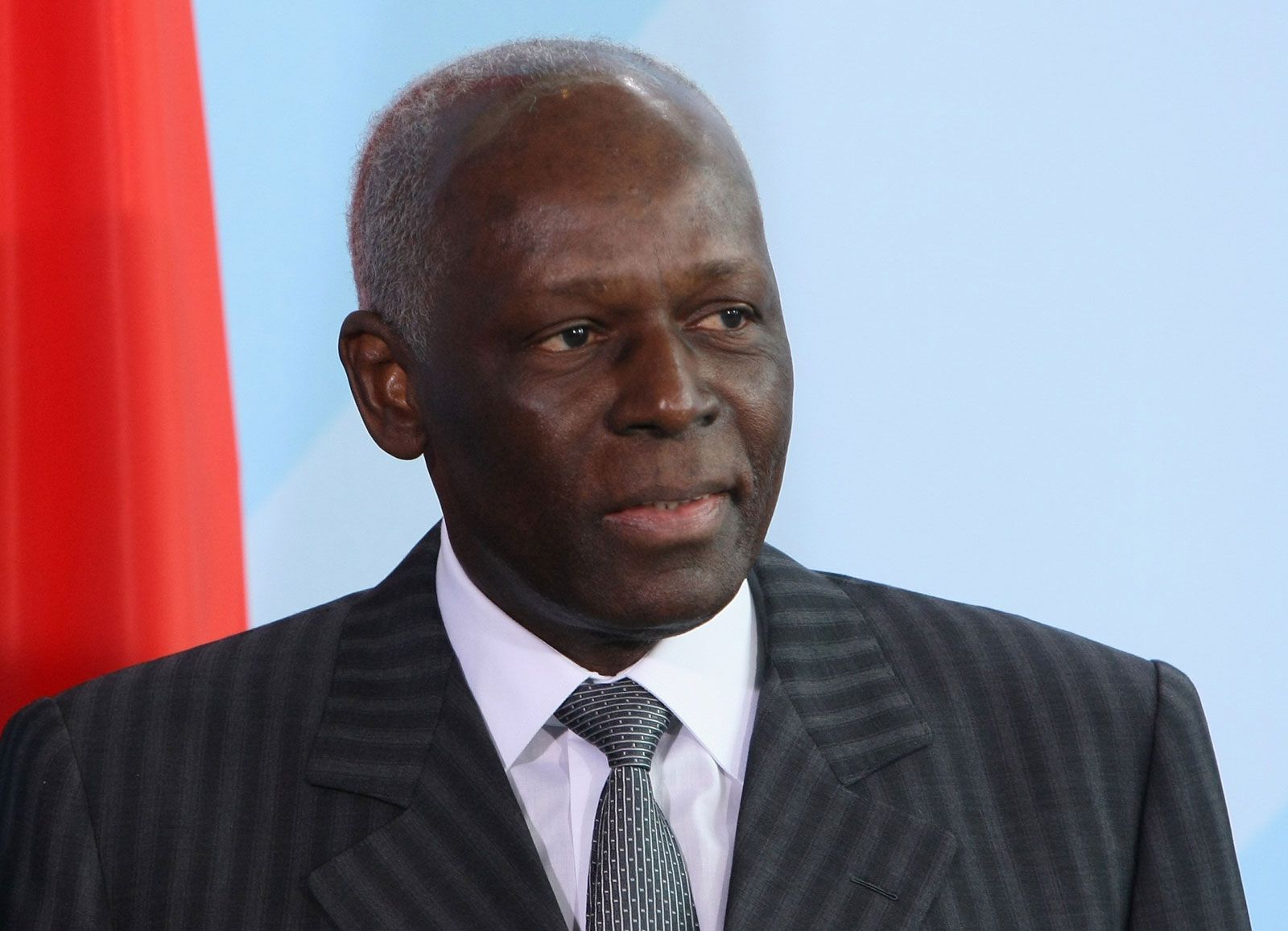
José Eduardo dos Santos
Former President of AngolaWikipedia
51
MENTIONS
6
EPISODES
5
PODCASTS
Search complete. 51 mentions across 6 episodes found for "José Eduardo dos Santos".
Oct 29, 2026

AndreHOST
In today's episode, we're looking at Angola, where we see a surge of interest from investors, especially when it comes to the oil and gas sector.
AndreHOST
Much of that interest stems from reforms introduced by President João Lourenço, who came to power in 2017 promising better governance and a break with the nearly 40-year rule of his predecessor José Eduardo dos Santos.
AndreHOST
That included reshaping the role of state oil company Sonangol and creating a new upstream regulator, ANPG, as part of a wider push to win over international investors.
AndreHOST
But how much has changed in practice? And with Lorenzo approaching the end of his second presidential term, what should investors be watching next? To explore those questions, our very own Ben Hubert, a senior associate and our lead Angola analyst, is in conversation with Hugh Charles, our director who leads our work in Africa.
6 MINS LATER
Huw CharlesGUEST
And so the impacts of that administration and the reforms it's had have been significant, but the durability is still something that remains to be seen.
Huw CharlesGUEST
Angola really does not have a clear precedent for a kind of transfer of power that doesn't bring with it major, major changes in policy.
Huw CharlesGUEST
Lorenzo, despite being Dos Santos' hand-picked successor, took a number of major steps to distance himself from Dos Santos' legacy, not least launching investigations into Dos Santos' children and some of his closest advisors.
Huw CharlesGUEST
And so I think we can't rule out a significant change, even if Lorenzo gets his way in terms of who is chosen by the MPLA as his successor.

Todd JohnsonHOST
With Governing in the Shadows, you argued that security has been the organizing logic of Angola in both peace and war.
Todd JohnsonHOST
For listeners who are coming to Angola new or who maybe know Angola from the Civil War era or the Dos Santos era, explain what you mean by a securitized state and tell us how you came to the subject in the first place, how you decided to go deep on this lovely but very, dare I say, mysterious or misunderstood country.
Paula Cristina RoqueGUEST
So like you said, you know, I've been following Angola indirectly and by default since I was a young child.
Paula Cristina RoqueGUEST
But since the end of the war, I came across a country that was highly militarized because of its brutal and protracted civil war.
7 MINS LATER
Paula Cristina RoqueGUEST
Of course, not all of them were registered to vote.
Paula Cristina RoqueGUEST
But the point is that the MPLA understood very clearly that in 2022, it had already understood before that their time was coming to an end sooner or later.
Paula Cristina RoqueGUEST
And that's why, you know, Juan Lorenzo, when he took over from dos Santos, bought himself some time by opening up with civil society, with the press.
Paula Cristina RoqueGUEST
You know, he had, he made some conciliatory moves that were, you know, we were all impressed by it.

speaker_2NARRATOR
Regardless, Angola's internal war is still unresolved.
speaker_2NARRATOR
In May 1991, President José Eduardo dos Santos and UNITA leader Jonas Savimbi signed the Business Accords in Portugal.
speaker_2NARRATOR
They agreed to end the fighting, create a unified national army and hold Angola's first multi-party elections.
speaker_2NARRATOR
For the first time in years, there seems to be a possible political route out of the conflict.

Sam DenbyNARRATOR
Francisco Sagasti will now lead the country, following a Congress-led ousting of one president and a five-day term-turned-resignation by the second.
Sam DenbyNARRATOR
Sagasti is seen as a consensus builder, so citizens are hopeful, but the tumultuous leadership changes over the past several years leave a lot of uncertainty and, frankly, apathy at this point.
Sam DenbyNARRATOR
If there's a baby boom this spring, a shortage of condom manufacturing in March may be the culprit.
Sam DenbyNARRATOR
A Malaysian company, Karex Bhd, makes one in every five condoms globally, and when the pandemic hit this year, facilities were forced to shut down, resulting in at least 100 million fewer condoms worldwide.
17 MINS LATER
Sam DenbyNARRATOR
11 months in Argentina sounds nice, but for Bolivian President Evo Morales, it was more of an exile.
Sam DenbyNARRATOR
He reentered Bolivia this November after a 2019 campaign for a fourth presidential term became marred by fraud allegations, leading him to flee the country.
Sam DenbyNARRATOR
A caretaker government has managed affairs since then, but when Morales' former economic minister recently assumed leadership, it paved the way for Morales to return, though it's unclear what role he'll play in the country's new reality.
Sam DenbyNARRATOR
If it all sounds turbulent, it is.
Sam DenbyNARRATOR
As the Cold War closed, Angola's civil war lost its ideological edge and international appeal.
Sam DenbyNARRATOR
Angola's president, Jose Eduardo dos Santos, who had led the MPLA government since Neto's death in 1979, liberalized much of the Angolan economy, while UNITA carried on without the money from the West, instead funding their war efforts through the diamond trade.
Sam DenbyNARRATOR
In 2002, with the assassination of its longtime leader, with increasingly tight sanctions on its diamond trade, and without a real cause to fight for, UNITA entered peace talks.
Sam DenbyNARRATOR
After nearly 30 years, the Angolan Civil War came sputtering to a close, accomplishing remarkably little.
Sam DenbyNARRATOR
Profiteers the world over jumped on the opportunity.
Sam DenbyNARRATOR
Sonangol and its international partners planned for new rigs and expanded operations, which came at the perfect time as the West, and especially America, looked to distance itself from Middle Eastern oil in the wake of 9/11.
Sam DenbyNARRATOR
President dos Santos was even invited by Bush to the Oval Office to discuss that very subject.
Sam DenbyNARRATOR
Meanwhile, on the other side of the world, China also identified the opportunity.

speaker_1NARRATOR
Peace plus sky-high oil prices in the 2000s equaled an absolute gusher of cash.
speaker_1NARRATOR
The MPLA government, led by a man named José Eduardo dos Santos, remember that name, launched a massive reconstruction program.
speaker_1NARRATOR
Roads, bridges, glittering towers in Luanda.
speaker_1NARRATOR
For a few golden years, Angola was posting some of the fastest GDP growth on the planet.
speaker_1NARRATOR
We do these forensic breakdowns of national economies every week, and it genuinely helps the channel reach more curious people like you.
speaker_1NARRATOR
Okay, back to the money trail.
speaker_1NARRATOR
To understand where Angola's wealth went, meet the Dos Santos family.
speaker_1NARRATOR
The patriarch, José Eduardo Dos Santos, ruled Angola for 38 consecutive years.