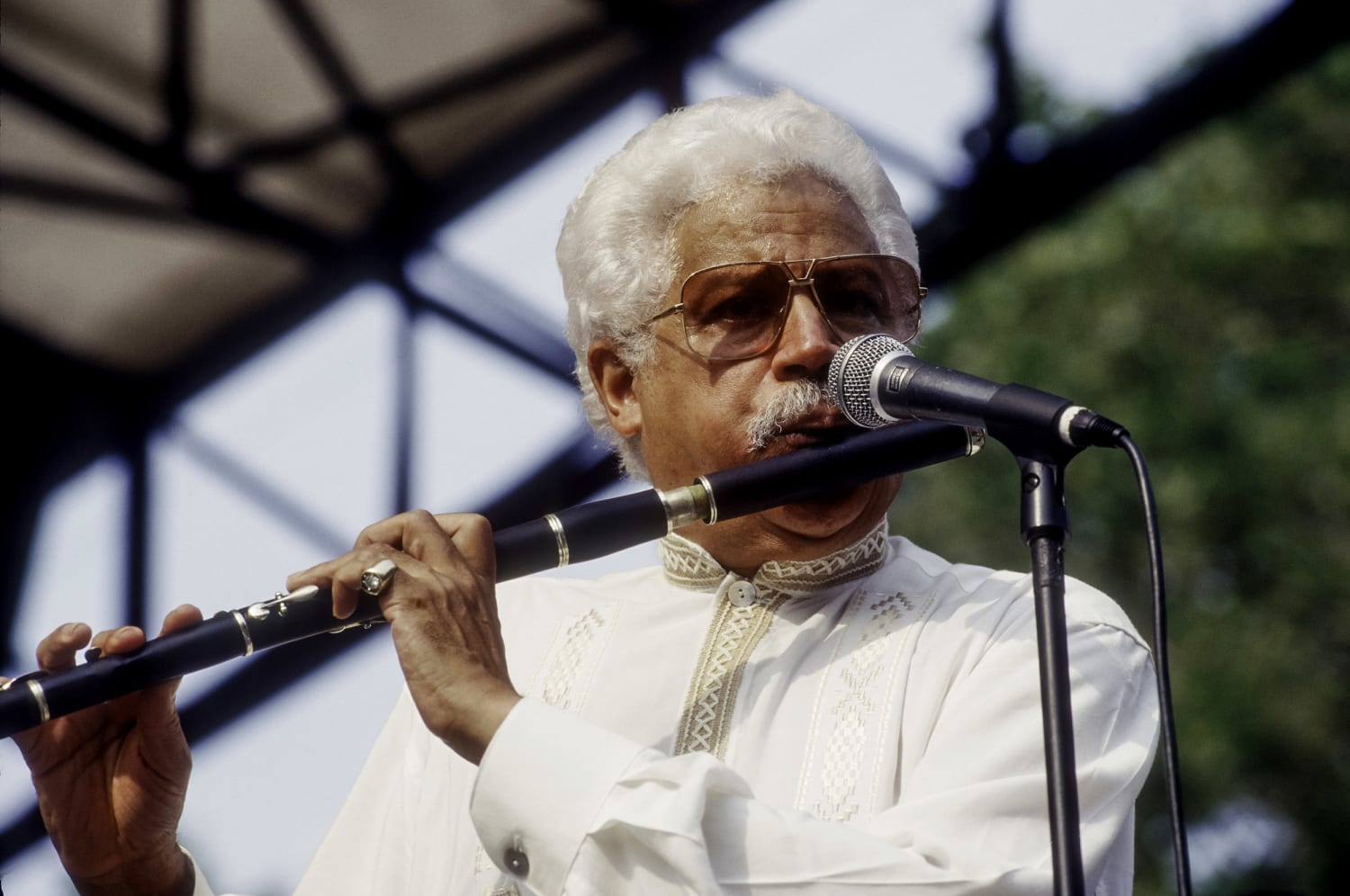
Johnny Pacheco
Dominican musicianWikipedia
10
MENTIONS
5
EPISODES
4
PODCASTS
Search complete. 10 mentions across 5 episodes found for "Johnny Pacheco".
Sep 22, 2026

Mangesh HattikudurHOST
And his name is Cheetah.
Mangesh HattikudurHOST
Along with his human sidekick, a musician named Noah Moranis, aka Good Boy Noah, he makes musical cooking videos.
Mangesh HattikudurHOST
Now, I found these videos a few years ago, and to be honest, I was so delighted by them.
Mangesh HattikudurHOST
And part of my excitement about this episode, in addition to talking about animals, which, you know, I obviously love, was being able to talk about these genius videos online.
12 MINS LATER
Mangesh HattikudurHOST
Yeah.
Mangesh HattikudurHOST
Cheetah was definitely a scene, but what set Cheetah apart from other nightclubs of the era was its impact on music, specifically New York salsa.
Mangesh HattikudurHOST
The connection to salsa actually came thanks to a New York record label called Fania, which was founded by the Juilliard-trained Dominican musician Johnny Pacheco.
Mangesh HattikudurHOST
People have referred to Fania as the Latin Motown, and that just kind of gives you a sense of the significance of it.

Joe BataanGUEST
We got into the studio.
Joe BataanGUEST
Johnny Pacheco was the music director.
Joe BataanGUEST
And he said, okay, you guys ready? I said, yeah.
Joe BataanGUEST
He said, okay, we'll do the piano and this first, and then we'll do this.

Joe KwaczalaHOST
Her collaborations are some of her best work, especially with Willie Colon.
Greg HellerGUEST
And Joe, I haven't listened to that episode yet, but if I understand this correctly, the way Fania did it is they just kind of kept pairing Celia with different producers, right? Like she gets Ray Barreto and Johnny Pacheco at one point.
Greg HellerGUEST
And then the Willie Colon records are the ones I think that really take off for her.
Greg HellerGUEST
And she's older at this point, right? Because she's been putting out records since the mid-60s, late
Joe KwaczalaHOST
With
Ana Cristina ReymundoGUEST
Johnny Pacheco.
Joe KwaczalaHOST
Yeah, the founder of Fania Records.
Joe KwaczalaHOST
He and Celia make an album called Celia y Johnny.
14 MINS LATER
Ana Cristina ReymundoGUEST
Salsa was a return and a discovery of the music of their grandparents.
Ana Cristina ReymundoGUEST
And they were returning to that.
Ana Cristina ReymundoGUEST
But why did it become salsa? It was never salsa until Johnny Pacheco called it that.
Ana Cristina ReymundoGUEST
And I'll tell you why.

Willie RodriguezGUEST
Me that pain on me.
Willie RodriguezGUEST
I feel bad at the fact that the legacy of Tito Puente, Celia Cruz, Hector Lavo, Willie Colón, may he rest in peace, Johnny Pacheco, all these amazing legends have dedicated their life to this genre.
Willie RodriguezGUEST
Not only the legends, but also the musicians and the booking agents and the managers.
Willie RodriguezGUEST
We've dedicated our life to this genre and there's no place to really like honor them in a grandiose way in New York City, out of all cities where Salsa was born here in New York.
10 MINS LATER
Led BlackHOST
You know what I mean? They kind of came of age, same place.
Led BlackHOST
And I think one of the things you've talked about, also the beginning of salsa, it was an amalgam of different Latinos.
Led BlackHOST
You have Puerto Ricans, you have Johnny Pacheco, who was the man.
Led BlackHOST
He was Dominican, you know what I mean? It was a pan-Latin kind of thing, you know what I mean? But talk about the similarities between salsa and hip-hop.