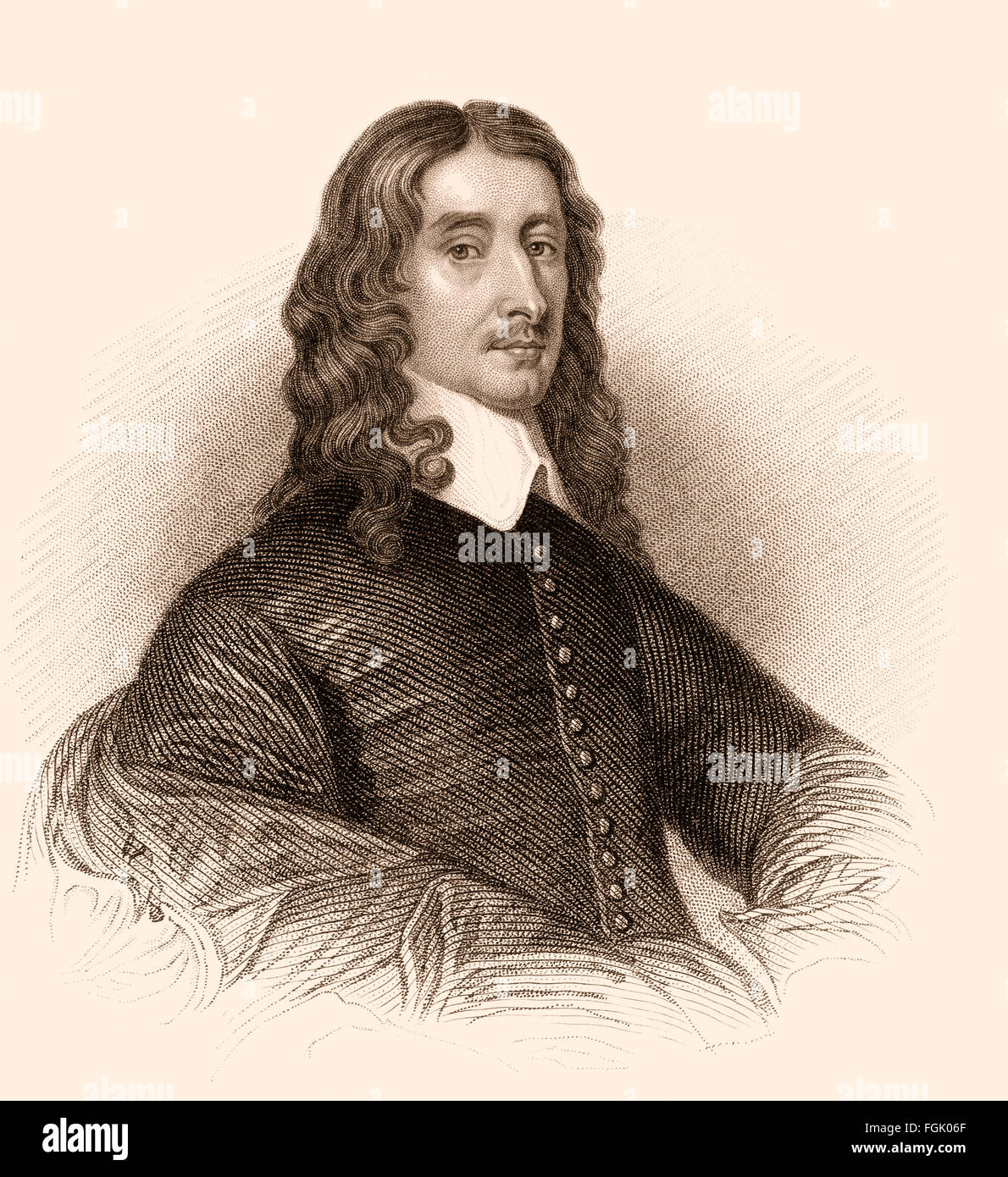
John Selden
English jurist and scholarWikipedia
31
MENTIONS
10
EPISODES
9
PODCASTS
Search complete. 31 mentions across 10 episodes found for "John Selden".
Sep 25, 2026

Pamela NagamiNARRATOR
This tour marks Hobbes' first recognition by philosophical contemporaries.
Pamela NagamiNARRATOR
He was at Florence in April 1636, anxious, as he says in a letter, to read Halen's History of the Sabbath and Selden's Mare Clausum.
Pamela NagamiNARRATOR
At this time, too, he saw Galileo, who had lately made his famous recantation and was living near Florence as a prisoner of the Inquisition.
Pamela NagamiNARRATOR
He was admitted to the friendship of the great man, whom he mentions in his books with profound respect.
1 HR LATER
Pamela NagamiNARRATOR
One was Harvey, 1578-1657, whose great discovery of the circulation of the blood had been first published in 1616, and of whom Hobbes always speaks with profound admiration.
Pamela NagamiNARRATOR
Harvey is said to have left him ten pounds in his will.
Pamela NagamiNARRATOR
The other was John Selden, 1584-1654.
Pamela NagamiNARRATOR
Their acquaintance began by Hobbes sending him a copy of the Leviathan, after which, says Aubrey, there was a strict friendship between them.

Pamela NagamiNARRATOR
This tour marks Hobbes's first recognition by philosophical contemporaries.
Pamela NagamiNARRATOR
He was at Florence in April 1636, anxious, as he says in a letter, to read Halen's History of the Sabbath and Selden's Mare Clausum.
Pamela NagamiNARRATOR
At this time too he saw Galileo, who had lately made his famous recantation and was living near Florence as a prisoner of the Inquisition.
Pamela NagamiNARRATOR
He was admitted to the friendship of the great man, whom he mentions in his books with profound respect.
1 HR 4 MINS LATER
Pamela NagamiNARRATOR
One was Harvey, 1578 to 1657, whose great discovery of the circulation of the blood had been first published in 1616, and of whom Hobbes always speaks with profound admiration.
Pamela NagamiNARRATOR
Harvey is said to have left him ten pounds in his will.
Pamela NagamiNARRATOR
The other was John Selden, 1584 to 1654.
Pamela NagamiNARRATOR
Their acquaintance began by Hobbes sending him a copy of the Leviathan, after which, says Aubrey, there was a strict friendship between them.

Brendan ScottGUEST
Uh, as I said, the fate of the rest of the originals, bar the one, uh, in, in, uh, Ossory, uh, are unknown.
Brendan ScottGUEST
They were all delivered to Lambeth Palace, uh, Library at some point, and later passed into the hands of John Selden, who was an antiquarian in mid-17th century England, and he retrieved them for safekeeping during the civil war, uh, in England.
Brendan ScottGUEST
And following Selden's death, it's likely that his executor, a guy called Matthew Hall, uh, took possession of them.
Brendan ScottGUEST
Uh, Selden's contemporary, the Irish antiquarian, uh, James Ware, uh, he was just beginning his own kind of career, uh, within Irish officialdom at the time of the 1622 commission.
Brendan ScottGUEST
They also held them for a time, but after that, what happened to them is, uh, unknown.
Brendan ScottGUEST
Now, barring some exceptions, uh, such as Alan Ford and John McCafferty, who just walked in to hear his name being mentioned there.

Brendan ScottGUEST
And they're copies of copies and they're epitomised to varying levels of detail.
Brendan ScottGUEST
But some of them are so full of abbreviations, those ones that are in Armagh, and epitomised sections of text, sometimes it's difficult to... determine what the import of the original text might have been in some cases as I said the fate of the rest of the originals bar the one in Ossory are unknown they were all delivered to Lambeth Palace Library at some point and later passed into the hands of John Selden who was an antiquarian in mid 17th century England and he retrieved them for safekeeping during the Civil War in England and following Seldon's death it's likely that his executor a guy called Matthew Hall took possession of them Seldon's contemporary the Irish antiquarian James Ware he was just beginning his own kind of career within Irish officialdom at the time of the 1622 commission they also held them for a time but after that what happened to them is unknown Now barring some exceptions such as Alan Ford and John McCaffrey who just walked in to hear his name being mentioned there.
Brendan ScottGUEST
Good timing there John.
Brendan ScottGUEST
Bar some exceptions as I say Alan and John the 1622 visitations have been relatively underutilised by historians but they are I think a really important indicator of the state of the Church of Ireland in the early 17th century.

Pamela NagamiNARRATOR
This tour marks Hobbes' first recognition by philosophical contemporaries.
Pamela NagamiNARRATOR
He was at Florence in April 1636, anxious, as he says in a letter, to read Halen's History of the Sabbath and Selden's Mare Clausum.
Pamela NagamiNARRATOR
At this time, too, he saw Galileo, who had lately made his famous recantation and was living near Florence as a prisoner of the Inquisition.
Pamela NagamiNARRATOR
He was admitted to the friendship of the great man, whom he mentions in his books with profound respect.
1 HR 6 MINS LATER
Pamela NagamiNARRATOR
One was Harvey, 1578-1657, whose great discovery of the circulation of the blood had been first published in 1616, and of whom Hobbes always speaks with profound admiration.
Pamela NagamiNARRATOR
Harvey is said to have left him ten pounds in his will.
Pamela NagamiNARRATOR
The other was John Selden, 1584-1654.
Pamela NagamiNARRATOR
Their acquaintance began by Hobbes sending him a copy of the Leviathan, after which, says Aubrey, there was a strict friendship between them.

Ramon EscamillaNARRATOR
Bastwick.
Ramon EscamillaNARRATOR
John Selden.
Ramon EscamillaNARRATOR
John Touchin.
Ramon EscamillaNARRATOR
Delaune.
25 MINS LATER
Ramon EscamillaNARRATOR
End of Chapter 6, Part 1 Recording by Ramon Escamilla Conway, Arkansas r-a-m-o-n-e-s-c-a-m-i-l-l-a dot wordpress dot com Chapter 6, Part 2 of Books Fatal to Their Authors This is a LibriVox recording.
Ramon EscamillaNARRATOR
All LibriVox recordings are in the public domain.
Ramon EscamillaNARRATOR
For more information, or to volunteer, please visit LibriVox.org. Recording by Ramon Escamilla Books Fatal to Their Authors by Peter H. Ditchfield Chapter 6, Part 2 During this period of severe literary criticism lived John Selden, an author of much industry and varied learning.
Ramon EscamillaNARRATOR
He was a just, upright, and fearless man, who spoke his mind, upheld what he deemed to be right in the conduct of either king or parliament, and was one of the best characters in that strange drama of the Great Rebellion.

Jim LongHOST
This shows you how people don't see Hashem's hand always on us all the time.
Jim LongHOST
John Selden, who impacted English common law, he wrote a book called Desenadrus.
Jim LongHOST
Desenadrus is the Latin word for Sanhedrin, and it's where we get the word Senate.
Jim LongHOST
And he and other thinkers of that time It's a big span of time.

Marianne SpiegelNARRATOR
And fifteen who were already in Sienti before leaving England, and which even the most censorious can hardly lay to the charge of the B.E.F., and of all that six thousand what percentage do you suppose has had to be sent back for what is euphemistically known i believe as getting into trouble since landing in france no percentage at all if i may express myself thus unmathematically but exactly five cases five out of six thousand compare that with the morality of any village in england or anywhere else in the world and then say if you dare to be so obviously dishonest that there is any reason why the women's army should be aspersed these statistics were given to me at the office of the area controller and later repeated at the women's army h q by the controller in chief but on that first sunny morning amongst the pines and pale golden sand dunes it was naturally the human and individual side rather than any of figures however startling that claimed the mind the most for one thing i had the actual organization and attributes of the women's army to learn i knew nothing the actual working knowledge apart from impressions and things learnt only by seeing them that i gathered during the days i spent at various wax centers is as follows the women's army differs from the fany and the v a d in being a paid instead of a volunteer body in being directly under the army not the red cross and in its members being ranked as privates but it also differs from the g s v a d though that too is paid and its members rank as privates the g s v a d is far more mixed its members are of all classes and educations and are drafted off for work accordingly but the bulk of the wax are working girls and do manual labor such as gardening cooking baking scrubbing etc though there are amongst them girls of a more specialized education who are signalers and clerks the officers of course are women of education who have undergone a stiff training and have been carefully selected for the post they fill for as will be seen nearly everything depends upon whack officers they have certainly a greater power for good or harm than the officers of the regular army and never were both the force and danger of personality more acutely illustrated than in the position of the whack leaders a unit administrator has to know individually every girl in her camp though there may be several hundreds she has to blend with her absolute authority a maternal interest and supervision while she has no power to say whom a girl shall or shall not walk out with yet she makes it her business to know what choice of men friends the girl makes and to influence as far as she can that choice towards discretion she must not nag but must inculcate by subtle methods a realization of what is due to the uniform a sense of the idea the symbol of it she does not actually say to a girl that she is not to walk arm in arm with a tommy or pin her collar with her paste brooch but she conveys to her that these things are not done in the best uniforms and the girl learns with incredible rapidity a thing is not done what a potency in those words in that attitude of mind it probably influenced the earliest savages in the manner of wearing their cowries After all, the whole idea of uniform, of distinguishing one cast from another by bits of different colored cloth, is based on the instinct for being superior.
Marianne SpiegelNARRATOR
Was it not John Selden who said something to the effect, that our rulers have always tried to make themselves as different from us as possible? Of course they have, and it is exactly the same thing which the wise Pope Gregory VII had in mind when he definitely crystallized the measures for celibacy of the priesthood, and it is exactly the same thing which puts the policeman into a dark blue uniform and a helmet before he can so much as stop a milk cart.
Marianne SpiegelNARRATOR
A policeman in plain clothes is a dethroned monarch.
Marianne SpiegelNARRATOR
nothing in the nature of controlling others was ever done without dressing up the marvel is that for so many centuries the principle should have been confined to the masculine sex when it had such an obvious appeal to the feminine This principle, when carried a step further, and applied to those controlled, by giving them the sensation of being different from the rest of the world, results in that spirit called esprit de corps, which is really the esprit de la uniforme.