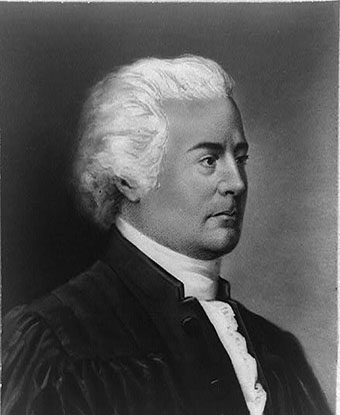
John Rutledge
Former Associate Justice of the Supreme Court of the United StatesWikipedia
13
MENTIONS
12
EPISODES
11
PODCASTS
Search complete. 13 mentions across 12 episodes found for "John Rutledge".
Oct 3, 2026

Laurie Ann WaldenNARRATOR
South Carolina.
Laurie Ann WaldenNARRATOR
John Rutledge.
Laurie Ann WaldenNARRATOR
Charles Coatsworth Pinckney.
Laurie Ann WaldenNARRATOR
Charles Pinckney.

Regina BlessHOST
one chief justice, and five associate justices.
Regina BlessHOST
President Washington nominated John Jay as the first chief justice, along with five associate justices, John Rutledge, William Cushing, John Blay, Robert Harrison, and James Wilson.
Regina BlessHOST
The U.S. Senate confirmed all six appointments on September 27, 1789.
Regina BlessHOST
The court held its first formal meeting on February 1, 1790, in New York City, which was then the nation's capital.

speaker_0HOST
and then allowed him an amiable and sweet temper and good and honorable principles.
speaker_0HOST
South Carolina sent four men of fortune, led by John Rutledge, the war governor who had held Charleston's government together through invasion, a man whose reputation in the first Congress gave him a distinguished rank among the American worthies.
speaker_0HOST
Too rapid a speaker for Major Pierce's taste, but undoubtedly a man of abilities.
speaker_0HOST
and General Charles Cotworth Pickney, who had soldiered through the war with high rank.

Ed HumpalNARRATOR
the intolerable acts rouse the spirit of the people from virginia in reply came the suggestion for a general congress to deliberate on those measures which the united interests of america may from time to time require at the call of massachusetts the first continental congress assembled at carpenter's hall philadelphia september fifth seventeen seventy four Fifty-five delegates from every colony, Georgia excepted, answered the summons.
Ed HumpalNARRATOR
Massachusetts sent John and Samuel Adams, Connecticut, her shoemaker statesman Roger Sherman, Pennsylvania, John Dickinson, New York, John Jay, South Carolina was represented by Christopher Gadsden and John Rutledge, while Virginia sent Richard Henry Lee, Patrick Henry, and the man who was a host and a congress in himself, the incomparable Washington.
Ed HumpalNARRATOR
The First Continental Congress exercised a powerful influence on the destinies of America.
Ed HumpalNARRATOR
Without it, the work of the Second Continental Congress would never have been accomplished.
speaker_0HOST
Robert Morris rose on Dr. Franklin's behalf and nominated George Washington.
speaker_0HOST
John Rutledge of South Carolina seconded, the ballots were cast, and the vote was unanimous.
speaker_0HOST
And Robert Morris and John Rutledge walked to Washington's seat with the Virginians and escorted him, one on each side, up to the president's chair on the low dais at the front of the room.
speaker_0HOST
James Madison recorded what happened when he got there.
speaker_0HOST
In a very emphatic manner he thanked the convention for the honour that had conferred him, reminded them of the novelty of the scene of business in which he was to act, lamented his want for better qualifications, and claimed the indulgence of the house toward the involuntary errors which his inexperience might occasion.

Mary ReichardHOST
That was so unappealing that one of Washington's first appointees declined the job.
Mary ReichardHOST
Another justice, John Rutledge, resigned after just two years.
Mark David HallGUEST
So many of the early Supreme Court justices only lasted a couple years.
Mary ReichardHOST
Eventually, Congress created separate appellate judgeships, which freed Supreme Court justices from most of their circuit writing.

Kristi NowakNARRATOR
They were not theorists, but practical men, rich in political experience and endowed with deep insight into the springs of human action.
Kristi NowakNARRATOR
Three of them had served in the Stamp Act Congress—Dickinson of Delaware, William Samuel Johnson of Connecticut, and John Rutledge of South Carolina.
Kristi NowakNARRATOR
Eight had been signers of the Declaration of Independence—Reed of Delaware, Sherman of Connecticut, Wythe of Virginia, Jerry of Massachusetts, Franklin, Robert Morris, George Clymer, and James Wilson of Pennsylvania— all but twelve had at some time served in the continental congress and eighteen were members of that body in the spring of seventeen eighty seven washington hamilton mifflin and charles pinckney had been officers in the revolutionary army seven of the delegates had gained political experience as governors of states the convention as a whole according to historian hildreth represented in a marked manner the talent intelligence and especially the conservative sentiment of the country
speaker_7NARRATOR
End of section 7a
2 more episodes mention John Rutledge.
Create an account to see the whole feed, search across every transcript, and follow the entities you care about.