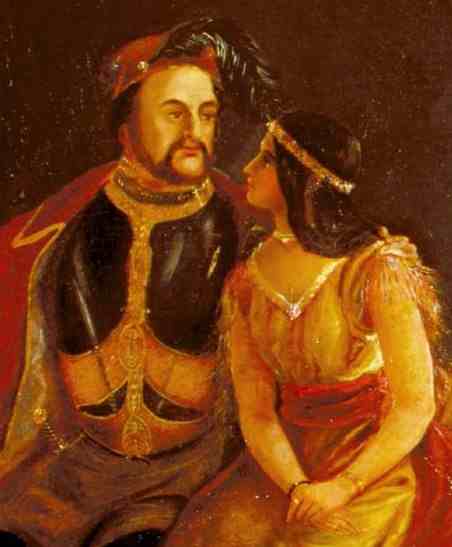
John Rolfe
English explorerWikipedia
167
MENTIONS
45
EPISODES
44
PODCASTS
Search complete. 167 mentions across 45 episodes found for "John Rolfe".
Sep 13, 2026

Mark SmithNARRATOR
Refuse pits were explored meticulously, since before the dawn of history man has left his story and the objects he discarded.
Mark SmithNARRATOR
When archaeology at Jamestown is mentioned, the question is often asked, why was it necessary to treat so famous a historic site as an archaeological problem at all? Isn't the story finished with the accounts of John Smith's adventures, the romance of John Rolfe and Pocahontas, the Starving Time, the India Massacre of 1622, Nathaniel Bacon's rebellion against Governor Berkeley, and the establishment of the first Legislative Assembly? The archaeologists answer is that the real drama of daily life of the settlers, the life they knew twenty-four hours a day, is locked in the unwritten history beneath humus and tangled vegetation of the island.
Mark SmithNARRATOR
Here a thimble from the ruins of a cottage still retains a pellet of paper to keep it on a tiny finger that wore it three hundred years ago.
Mark SmithNARRATOR
a bent halberd in an abandoned well a discarded sword and a piece of armour tell again the passing of terror of the unknown after the indians retreated for ever into the distant hills and forests rust-eaten axes wedges mattocks and saws recall the struggle to clear a wilderness The simple essentials of life in the first desperate years have largely vanished, with traces of the first fort and its framed buildings.
1 HR 40 MINS LATER
Mark SmithNARRATOR
The ones shown range in date from 1600 to 1700.
Mark SmithNARRATOR
During this one hundred year period, pipes developed from small bowls to fairly large ones.
Mark SmithNARRATOR
END OF CAPTION SMOKING the first colonists were quite familiar with the use of tobacco and it is believed that many of them smoked clay pipes evidently there was some demand for tobacco pipes by the early planters as one of the men robert cotton who reached jamestown in january sixteen o eight was a tobacco pipe maker in sixteen eleven to sixteen twelve john rolfe had experimented with tobacco plants in virginia he used virginia plants as well as varieties from the west indies and south america and was successful in developing a sweet-scented leaf It became popular overnight, and for many years was the staple crop of the infant colony.
Mark SmithNARRATOR
There was a prompt demand for the new leaf in England, and its introduction there was an important factor in popularizing the use of clay pipes.

Mark SmithNARRATOR
Refuse pits were explored meticulously, since before the dawn of history man has left his story and the objects he discarded.
Mark SmithNARRATOR
When archaeology at Jamestown is mentioned, the question is often asked, why was it necessary to treat so famous a historic site as an archaeological problem at all? Isn't the story finished with the accounts of John Smith's adventures, the romance of John Rolfe and Pocahontas, the Starving Time, the Indian Massacre of 1622, Nathaniel Bacon's rebellion against Governor Berkeley, and the establishment of the first Legislative Assembly? The archaeologists answer is that the real drama of daily life of the settlers, the life they knew twenty-four hours a day, is locked in the unwritten history beneath humus and tangled vegetation of the island.
Mark SmithNARRATOR
Here a thimble from the ruins of a cottage still retains a pellet of paper to keep it on a tiny finger that wore it three hundred years ago.
Mark SmithNARRATOR
a bent halberd in an abandoned well a discarded sword and a piece of armor tell again the passing of terror of the unknown after the indians retreated forever into the distant hills and forests rust-eaten axes wedges mattocks and saws recall the struggle to clear a wilderness the simple essentials of life in the first desperate years have largely vanished with traces of the first fort and its frame buildings but in later houses the evidence of venetian glass dutch and english delft ware pewter and silver eating utensils and other comforts and
1 HR 49 MINS LATER
Mark SmithNARRATOR
illustration caption a few of thousands of clay pipe fragments unearthed at jamestown the ones shown range in date from sixteen hundred to seventeen hundred during this one hundred year period pipes developed from small bowls to fairly large ones smoking The first colonists were quite familiar with the use of tobacco, and it is believed that many of them smoked clay pipes.
Mark SmithNARRATOR
Evidently there was some demand for tobacco pipes by the early planters, as one of the men, Robert Cotton, who reached Jamestown in January 1608, was a tobacco pipe-maker.
Mark SmithNARRATOR
in sixteen eleven to sixteen twelve john rolfe had experimented with tobacco plants in virginia he used virginia plants as well as varieties from the west indies and south america and was successful in developing a sweet-scented leaf it became popular overnight and for many years was the staple crop of the infant colony there was a prompt demand for the new leaf in england and its introduction there was an important factor in popularizing the use of clay pipes after sixteen twenty the manufacture of white clay pipes in england increased by leaps and bounds it is estimated that there are over fifty thousand clay pipe bowls and stem fragments in the jamestown collection perhaps the largest assemblage of its kind extant pipe bowls and stem fragments were found wherever excavations were made indicating that the smoking of clay pipes was an extremely popular custom at jamestown during the 1607 to 1700 period pipe bowls developed in size from small to fairly large in most examples that have been found the early pipes have larger stem holes than pipes made during the latter years of the century Although the majority of pipes found at Jamestown were imported from England, some were made in Holland.
Mark SmithNARRATOR
Some of

LeslieGUEST
I didn't like that she leaves John Smith for another dude
PatrickGUEST
hey don't knock John Rolfe he introduced tobacco to uh Hey, don't knock John Rolfe.
PatrickGUEST
He planted tobacco in the Jamestown colony in Virginia and made it economically viable for England.
LeslieGUEST
Thank you, history teacher.

Solomon SmithHOST
Pocahontas took so well to the English way of life that she renounced her native idolatry, converted to Christianity, and was baptized as Rebecca.
Solomon SmithHOST
She also took to John Rolfe, a 28-year-old widower who had just introduced sweet tobacco to Virginia.
Solomon SmithHOST
After an abortive visit to her father, during which she accused him of loving a bunch of old swords, guns, and axes better than her, she would marry John Rolfe in the Jamestown church on April 1614, witnessed by her uncle and two brothers.
Solomon SmithHOST
Poetin sent the two newlyweds dressed deerskins and acquired warmly how they lived, loved, and liked.
Solomon SmithHOST
A year later, Pocahontas would give birth to a son, and in 1616, the family would sail to England and ten members of the tribes to visit the royalty of her new adopted empire.
Solomon SmithHOST
Remember, he also abandoned them when they got to the area around Virginia and then helped his tribe kill them all off.
Solomon SmithHOST
Now, things are going to be changing, though, in Virginia, and there's a desperate need to acquire as much land as they can.
Solomon SmithHOST
It revolves around John Rolfe.

Mark SmithNARRATOR
Refuse pits were explored meticulously, since before the dawn of history man has left his story in the objects he discarded.
Mark SmithNARRATOR
When archaeology at Jamestown is mentioned, the question is often asked, why was it necessary to treat so famous a historic site as an archaeological problem at all? Isn't the story finished with the accounts of John Smith's adventures, the romance of John Rolfe and Pocahontas, the starving time, the Indian massacre of 1622, Nathaniel Bacon's rebellion against Governor Berkeley, and the establishment of the first legislative assembly? The archaeologist's answer is that the real drama of daily life of the settlers, the life they knew 24 hours a day, is locked in the unwritten history beneath humus and tangled vegetation of the island.
Mark SmithNARRATOR
Here a thimble from the ruins of a cottage still retains a pellet of paper to keep it on a tiny finger that wore it 300 years ago.
Mark SmithNARRATOR
A bent halberd in an abandoned well, a discarded sword, and a piece of armor tell again the passing of terror of the unknown after the Indians retreated forever into the distant hills and forests.
1 HR 45 MINS LATER
Mark SmithNARRATOR
The first colonists were quite familiar with the use of tobacco, and it is believed that many of them smoked clay pipes.
Mark SmithNARRATOR
Evidently there was some demand for tobacco pipes by the early planters as one of the men, Robert Cotton, who reached Jamestown in January 1608, was a tobacco pipe maker.
Mark SmithNARRATOR
In 1611 to 1612, John Rolfe had experimented with tobacco plants in Virginia.
Mark SmithNARRATOR
He used Virginia plants as well as varieties from the West Indies and South America, and was successful in developing a sweet-scented leaf.

Mark SmithNARRATOR
Refuse pits were explored meticulously, since before the dawn of history man has left his story and the objects he discarded.
Mark SmithNARRATOR
When archaeology at Jamestown is mentioned, the question is often asked, why was it necessary to treat so famous a historic site as an archaeological problem at all? Isn't the story finished with the accounts of John Smith's adventures, the romance of John Rolfe and Pocahontas, the Starving Time, the Indian Massacre of 1622, Nathaniel Bacon's rebellion against Governor Berkeley, and the establishment of the first Legislative Assembly? The archaeologists answer is that the real drama of daily life of the settlers, the life they knew twenty-four hours a day, is locked in the unwritten history beneath humus and tangled vegetation of the island.
Mark SmithNARRATOR
Here a thimble from the ruins of a cottage still retains a pellet of paper to keep it on a tiny finger that wore it three hundred years ago.
Mark SmithNARRATOR
a bent halberd in an abandoned well a discarded sword and a piece of armor tell again the passing of terror of the unknown after the indians retreated forever into the distant hills and forests rust-eaten axes wedges mattocks and saws recall the struggle to clear a wilderness the simple essentials of life in the first desperate years have largely vanished with traces of the first fort and its frame buildings but in later houses the evidence of venetian glass dutch and english delft ware pewter and silver eating utensils and other comforts and little luxuries tell of new-found security and the beginning of wealth in all a half million individual artifacts at the jamestown museum represent the largest collection from any seventeenth-century colonial site in north america But archaeologists have found more than objects at Jamestown.
1 HR 34 MINS LATER
Mark SmithNARRATOR
End of Caption Smoking The first colonists were quite familiar with the use of tobacco, and it is believed that many of them smoked clay pipes.
Mark SmithNARRATOR
Evidently there was some demand for tobacco pipes by the early planters as one of the men, Robert Cotton, who reached Jamestown in January 1608, was a tobacco pipe-maker.
Mark SmithNARRATOR
in sixteen eleven to sixteen twelve john rolfe had experimented with tobacco plants in virginia he used virginia plants as well as varieties from the west indies and south america and was successful in developing a sweet-scented leaf it became popular overnight and for many years was the staple crop of the infant colony there was a prompt demand for the new leaf in england and its introduction there was an important factor in popularizing the use of clay pipes after 1620 the manufacture of white clay pipes in england increased by leaps and bounds It is estimated that there are over 50,000 clay pipe bowls and stem fragments in the Jamestown collection, perhaps the largest assemblage of its kind extant.
Mark SmithNARRATOR
Pipe bowls and stem fragments were found wherever excavations were made, indicating that the smoking of clay pipes was an extremely popular custom at Jamestown.

Eleanor ConlonHOST
So tell me, is Virginia really for lovers? And why is the state so associated with tobacco?
Martin VauxHOST
Well, to address the tobacco business first, we have to whip back to 1612 and discuss an Englishman called John Rolfe.
Martin VauxHOST
Born in the English county of Norfolk in 1585, Rolfe travelled to Virginia with the London Virginia Company's third supply, which had a rough life.
Martin VauxHOST
old journey with many people dying on route.
Martin VauxHOST
142 of the 600 who embarked being stranded in Bermuda for a while including John Rolfe and when he finally arrived he found that Jamestown had been reduced to a population of just 60 from 500 during what is now remembered as the starving time.
Eleanor ConlonHOST
And the starving time came about in no small part because the Powhatan Confederacy, fed up with the colonists and their outrageous behaviours, decided to lay siege to the community.
Eleanor ConlonHOST
Fair, frankly.
Eleanor ConlonHOST
Though I will say the next true low point in relations between the Powhatan Confederacy and the Virginia colonists was much worse and took place over a decade later on Good Friday 1622.

Juan NaulaNARRATOR
On Sundays, she would have joined the colonists at religious meetings.
Juan NaulaNARRATOR
One of the English colonists at Henrico was the 28-year-old John Rolfe, Rolf and his wife Sarah were on board the Sea Venture in 1609 when the ship grounded on the islands of Bermuda.
Juan NaulaNARRATOR
Sarah gave birth to a daughter named Bermuda, who died on the island, and Sarah herself died soon after arriving in Jamestown, leaving John a childless widower.
Juan NaulaNARRATOR
In Virginia, he began to cultivate the tobacco crop, and introduced a special strain for export in 1612.
Juan NaulaNARRATOR
The Powhatans informed the governor that their chief was away, but promised to send word.
Juan NaulaNARRATOR
The English sailed further upriver where Pocahontas was greeted by two of her brothers.
Juan NaulaNARRATOR
After informing them that she planned to marry John Rolfe, her brothers offered to remain on board the British ship as hostages, while Rolfe and a young English interpreter set out to find Wohensenecker.
Juan NaulaNARRATOR
The paramount chief, fearing for his own safety, was unwilling to take part in negotiations himself, so instead the Powhatan guides took the Englishman to Opechancanough, The latter agreed to collect and return the remaining weapons and to send more food to Jamestown, while informing the Englishmen that Wahonsenica was prepared to allow Pocahontas to marry Rolf.

ScottHOST
She converts to Anglicanism, changes her name to, uh, Rebecca.
ScottHOST
And, uh, she, um, marries a guy named John Rolfe, who is actually worth noting here, is the guy who introduces tobacco cultivation to Virginia, which I can't understate is why Jamestown ends up being a success.
ScottHOST
He is the genius of the entire thing because James Rolfe was like, he made this face.
ScottHOST
and said, what were they thinking? We should plant tobacco.
ScottHOST
You know what's better than John Smith? Bugs fucking bunny.
ScottHOST
So John Rolfe, the angry tobacco nerd, He becomes a gajillionaire of the time and makes tobacco the chief crop of the area.
ScottHOST
And in doing so, money starts flooding into the fucking place.
ScottHOST
Oh, and incidentally also, because of this whole—oh, so Thomas Dale also confronts the Powhatans.
35 more episodes mention John Rolfe.
Create an account to see the whole feed, search across every transcript, and follow the entities you care about.