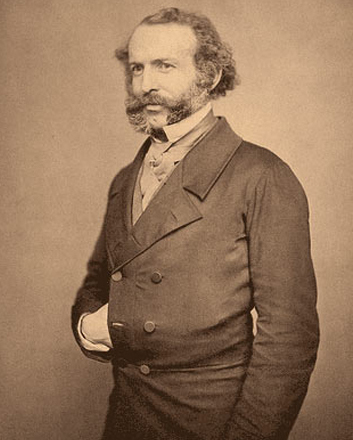
John Rae
Scottish surgeon and explorerWikipedia
23
MENTIONS
5
EPISODES
5
PODCASTS
Search complete. 23 mentions across 5 episodes found for "John Rae".
Oct 14, 2026

NickHOST
Franklin died, and the surviving crew eventually abandoned the vessels and attempted to escape southward.
NickHOST
Inuit witnesses later told explorer John Rae that the starving men had resorted to cannibalism.
NickHOST
But Victorian Britain reacted with outrage, partly because the idea that disciplined Royal Navy officers could have eaten one another seemed intolerable.
NickHOST
The bones eventually answered the argument when human remains associated with the expedition were found bearing cut marks consistent with defleshing, and later examination identified deliberate breakage and areas of polishing on broken bone edges.

Cheralyn DarceyHOST
She personally financed five search expeditions between 1850 and 1857.
Cheralyn DarceyHOST
The Royal Navy abandoned the official search in 1855 after an overland explorer named John Rae brought back artifacts from the Franklin ships acquired from Inuit people, along with accounts of men dying while trekking south and evidence of cannibalism.
Cheralyn DarceyHOST
The cannibalism accusation enraged Jane Franklin.
Cheralyn DarceyHOST
It enraged her not simply because it was her husband being accused, but because she was the one who would decide how John Franklin was remembered, and she was not going to allow him to be remembered this way.

Maddy PellingHOST
Mm-hmm, yeah.
Maddy PellingHOST
So Dr. John Rae is a Scottish explorer.
Maddy PellingHOST
He, in 1854, goes looking for the Erebus and the Terror, as many have done before and as many will do afterwards.
Maddy PellingHOST
Um, and this is, you know, this is why it's such a tantalizing, tantalizing mystery, because we have these different flash points, these different pieces and clues, bits of information that we can use to piece together what happened, but actually there's so much that we don't know.
Maddy PellingHOST
We know when they did it.
Maddy PellingHOST
We don't know why they splinter off into different groups.
Maddy PellingHOST
Um, so, so Dr. John Rae, um, meets a group of Inuit, um, and they describe that f- around about four winters ago, that's how they communicate it, so about 1850, they encountered at least 40, um...
Maddy PellingHOST
the word they use is, uh, Kabloona.

Joe BurimaHOST
Today in Canadian history for September 30th, I'm Joe Berimma.
Joe BurimaHOST
Have you heard the story of Dr. John Ray? Odds are that if you haven't, after this episode, you won't forget him or his story.
Joe BurimaHOST
Born in Scotland on this day back in 1813, he traveled as a young man to a little place across the pond known as Rupert's Land.
Joe BurimaHOST
He was working as a doctor for the Hudson's Bay Company.
Joe BurimaHOST
Oh, and in his spare time, he managed to solve the two greatest mysteries of 19th century exploration.
Joe BurimaHOST
He discovered the final missing link in the Northwest Passage and also discovered the fate of the famous Franklin Expedition.
Joe BurimaHOST
Ken McGugan is the author of Fatal Passage, the untold story of John Ray.
Ken McGooganGUEST
You see, when he was based at Moose Factory in Hudson Bay, he became an incredible overland traveler.

speaker_1NARRATOR
The islands sat where they had always sat, and the search parties moved through them like ants crossing a cathedral floor, their questions swallowed by the scale of the space around them.
speaker_1NARRATOR
Then, in 1854, a man named John Rae changed the story.
speaker_1NARRATOR
Rae was not a naval officer.
speaker_1NARRATOR
He was a surgeon and surveyor for the Hudson's Bay Company, the great fur trading enterprise that controlled much of northern Canada.
29 MINS LATER
speaker_1NARRATOR
They described the locations of camps and the disposition of remains along the route.
speaker_1NARRATOR
They described specific details about the ship's equipment, the type of boats, the nature of the provisions, the appearance of the officers' uniforms that they could only have known from direct observation or from the testimony of people who had directly observed.
speaker_1NARRATOR
And they told these accounts to multiple Western interlocutors over the course of more than a century, to John Rae in 1854, to Charles Francis Hall in the 1860s, to Frederick Schwatka in the 1870s, to Knud Rasmussen in the 1920s, and the accounts remained remarkably consistent across all of these tellings, even as the tellers changed and generations passed.
speaker_1NARRATOR
Charles Francis Hall was one of the first Westerners to take these accounts seriously, or at least to record them at length.