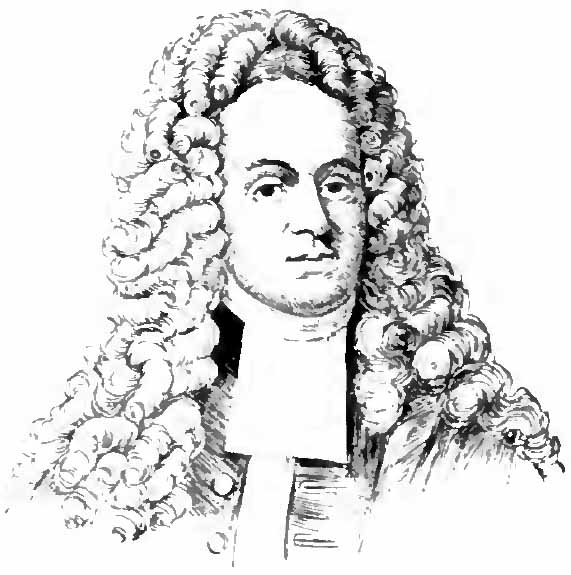
John Peter Zenger
German printer and journalistWikipedia
18
MENTIONS
9
EPISODES
7
PODCASTS
Search complete. 18 mentions across 9 episodes found for "John Peter Zenger".
Oct 21, 2026

Carson HollowayGUEST
I mean, there's some evidence.
Carson HollowayGUEST
I think that the founders thought that way on either side of the ratification of the constitution long before there's the, uh, Peter Zenger case early, like in colonial times, uh, And I talk about this in the book where the jury just wouldn't convict him because they thought the things that he had published against the royal governor were true.
Carson HollowayGUEST
You know, so that's like not a great precedent because it's basically an act of jury nullification.
Carson HollowayGUEST
They were not really respecting the existing standards, but that was a sign that in the American public mind, there really should be a truth defense.

Jeff KellickHOST
The jury Kyan is asking for is older than any of those cases and will run straight down the road to 1776.
Jeff KellickHOST
In August of 1735, in New York, a printer named John Peter Zenger stood trial for libel.
Jeff KellickHOST
His newspaper, the New York Weekly Journal, had spent nearly two years printing complaints against the royal governor, William Crosby.
Jeff KellickHOST
Zenger was arrested in November of 1734 and spent more than eight months in prison waiting for his trial.
Jeff KellickHOST
The two lawyers behind his paper tried to defend him and were disbarred for it, and the court assigned him a lawyer who supported the governor.
Jeff KellickHOST
As the Crown's attorney stated the law, criticism of the government was liable whether or not it was true, and the Chief Justice of the province agreed.
Jeff KellickHOST
The laws, in my opinion, are very clear, he told the jury.
Jeff KellickHOST
They cannot be admitted to justify a libel.

Chris ChapmanNARRATOR
In 1721, the editor of the Mercury in Philadelphia was called before the proprietary council and ordered to apologize for a political article, and for a later offense of a similar character, he was thrown into jail.
Chris ChapmanNARRATOR
A still more famous case was that of Peter Zenger, a New York publisher, who was arrested in 1735 for criticizing the administration.
Chris ChapmanNARRATOR
Lawyers who ventured to defend the unlucky editor were deprived of their licenses to practice, and it became necessary to bring an attorney all the way from Philadelphia.
Chris ChapmanNARRATOR
By this time the tension of feeling was high, and the approbation of the public was forthcoming, when the lawyer for the defense exclaimed to the jury that the very cause of liberty itself, not that of the poor printer, was on trial.
Chris ChapmanNARRATOR
The verdict for Zenger, when it finally came, was the signal for an outburst of popular rejoicing.
Chris ChapmanNARRATOR
Already the people of King George's province knew how precious a thing is the freedom of the press.
Chris ChapmanNARRATOR
Thanks to the schools, few and scattered as they were, and to the vigilance of parents, a very large portion, perhaps nearly one half, of the colonists could read.

Ali VelshiHOST
They needed somewhere to tell their side of the story, but the Gazette, of course, was controlled by Governor Cosby.
Ali VelshiHOST
So the political opponents turned to John Peter Zenger, a German immigrant who made a modest living printing religious tracts.
Ali VelshiHOST
The first issue of Zenger's New York Weekly Journal came out in November of 1733.
Ali VelshiHOST
Zenger did not write the criticism of Governor Cosby himself, but he did print it, and under English law, that was enough to prosecute him for seditious libel, the crime of criticizing the government.
Ali VelshiHOST
The verdict did not change the law, but it planted a seed.
Ali VelshiHOST
It changed the thinking in the colonies around freedom of expression and government control.
Ali VelshiHOST
John Peter Zenger's jury was not following the law of the time.
Ali VelshiHOST
The law of the time protected the governor from news he didn't like.

Emily GlanklerHOST
Now our story starts before there was even a first amendment.
Emily GlanklerHOST
Back in the 1730s in colonial New York with a German American printer named Peter Zenger.
Emily GlanklerHOST
Zenger published an article criticizing New York's royal governor.
Emily GlanklerHOST
Now, for publishing the article, Zenger was put on trial for seditious libel, which outlawed publishing any statements that criticize, defame, or undermine the authority of the government.
Ali VelshiHOST
The adversarial relationship between the press and the people in power in the United States goes back to before there even was a United States.
Ali VelshiHOST
In fact, back in 1733, in this city, a man named John Peter Zenger began publishing New York's first independent newspaper.
Ali VelshiHOST
It was called the New York Weekly Journal.
Ali VelshiHOST
It was founded to compete with the colony's other newspaper, the New York Gazette, which was supportive of William Cosby, the man who was appointed by the king to be the governor of New York.
Ali VelshiHOST
The adversarial relationship between the press and the people in power in the United States goes back to before there even was a United States.
Ali VelshiHOST
In fact, back in 1733, in this city, a man named John Peter Zenger began publishing New York's first independent newspaper.
Ali VelshiHOST
It was called the New York Weekly Journal.
Ali VelshiHOST
It was founded to compete with the colony's other newspaper, the New York Gazette, which was supportive of William Cosby, the man who was appointed by the king to be the governor of New York.

Kevin McCorryHOST
And Will, before we go to break, uh, just a minute or so, uh, your reaction to Charlotte.
Kevin McCorryHOST
Can you put some historical context here? Like, what has the freedom of the press meant over the c- the centuries? I'm grateful to Charlotte for her call 'cause it allows me to invoke John Peter Zenger.
Kevin McCorryHOST
Uh, back in the colonial, uh, times in New York, criticized the then governor of New York, uh, the, the colonial governor.
Kevin McCorryHOST
Uh, his name was William Cosby, and he was thrown in jail, and this is kind of a, a proto-revolutionary moment where, uh, the jury refused to convict him of, uh, criminal libel.

Trish ReganHOST
If you criticize the government back then, you could land in jail.
Trish ReganHOST
Back in 1734, a New York newspaper publisher named John Peter Zenger printed articles accusing the colony's royal governor of corruption and abuse of power.
Trish ReganHOST
This is the paper, the New York Weekly Journal, as it was known.
Trish ReganHOST
And the governor's response was pretty simple.
Trish ReganHOST
Arrest the publisher.
Trish ReganHOST
And now Mr. Zenger wound up spending months in jail awaiting trial.
Trish ReganHOST
And here was the extraordinary part.
Trish ReganHOST
Under the law at the time, it didn't necessarily matter whether what he published was true or not.