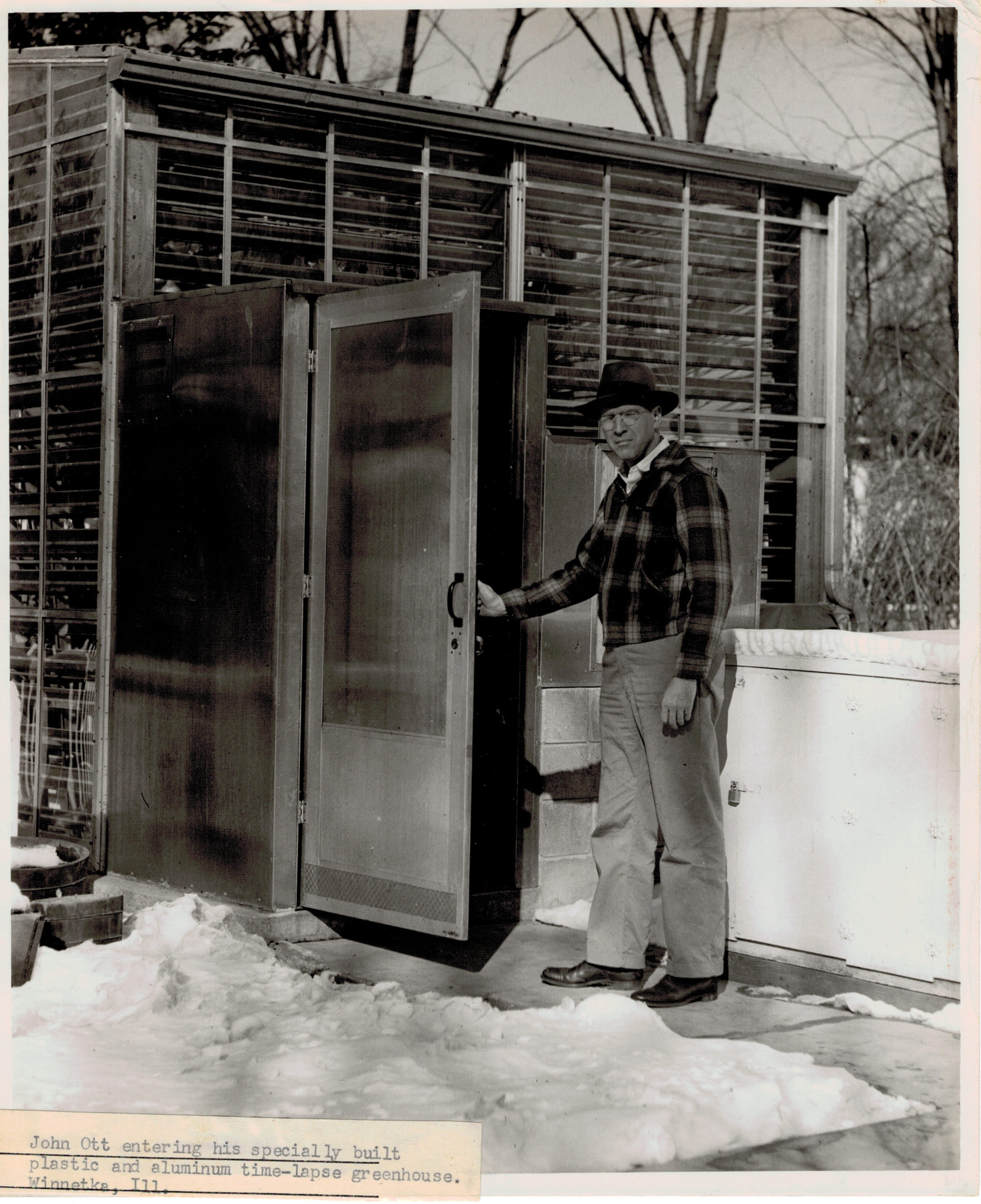
John Ott
Writer and photographerWikipedia
8
MENTIONS
5
EPISODES
5
PODCASTS
Search complete. 8 mentions across 5 episodes found for "John Ott".
Nov 4, 2026

Nasha WintersHOST
And so some of these names I'm going to throw out, folks can go down the rabbit holes and read up on any of these.
Nasha WintersHOST
But people like John Ott, Robert Becker, Fritz Albert Popp, these were guys who were originally considered a bit... controversial and yet now we have people like dr martin picard and his partner nushin and i slaughter her last name that are out of columbia who are doing amazing research in this concept here you you know these guys started out the ones that were kind of the controversials they were not they um And you, I should say, you started out and then they helped confirm or guide you.
Nasha WintersHOST
And now the research today is sort of affirming or confirming this, that you didn't start out studying light as something we see.
Nasha WintersHOST
You know, that is something that... those folks that you started learning from came to understand.
Dan StachofskyGUEST
I think our body works the same way.
Dan StachofskyGUEST
So when Fritz Pop talked about bio photons that our bodies produce that, and that's how our body communicates, That was an epiphany for me.
Dan StachofskyGUEST
John Ott's research is phenomenal.
Dan StachofskyGUEST
He's a photobiologist and he learned that the different fluorescent lights, different colors would affect the way the plants grew or germinated or how big the fruit was produced or small just based on if it was a blue fluorescent light or a pink light or a white light.

Allie MillerHOST
but
Ethan OkunasGUEST
overall it applies for everything you're eating and overall your health I already talked about John Ott and the nutrients having specific wavelengths.
Ethan OkunasGUEST
So if you can eat outside, I highly recommend that.
Ethan OkunasGUEST
And we didn't even talk about it, but just really quickly, like Glenn Jeffrey, the researcher, he basically shined a red light on people's shoulders for three minutes and then they ate a meal versus a placebo group that had no red light shining them and they had a 25% lower blood glucose response just by three minutes of red light.

speaker_2NARRATOR
Some of this was first observed decades ago.
speaker_2NARRATOR
Dr. Mer Kola highlights John Ott, a time-lapse photography pioneer who realized the plants he filmed were reacting to the light he filmed them under.
speaker_2NARRATOR
In his work, 97% of mice born under natural light survive to maturity compared to 61% under pink fluorescent lights.
speaker_0NARRATOR
Ott's work reached classrooms, too.

John KempfHOST
But you opened a can of worms that I can't leave untouched.
John KempfHOST
Twenty-some years ago, I read several books on the quality of light by John Ott.
John KempfHOST
I forget what they're called, Health and Light.
John KempfHOST
And folks can look them up.
John KempfHOST
John Ott, last name is OTT.
John KempfHOST
They were kind of the original, original research on quality of light.
John KempfHOST
And you just mentioned something that's important that I don't want to lose sight of.

Patrick ColesGUEST
Yeah, that makes sense.
Aastha JainHOST
And then on the John Ott experiments, um, he actually does mention that when people blocked UV light with sunglasses or sunscreen, they didn't see the same benefits, and he had an, a case of arthritis, and when he was wearing prescription glasses which also block UV, he would, he still, he would notice the pain, but when he started exposing his eyes to full UV spectrum, his arthritis symptoms- ... practically went away.
Aastha JainHOST
So I do think there is something to UV, and one of the reasons I ask you- asked you as well was because you mentioned melanin.
Patrick ColesGUEST
Mm.