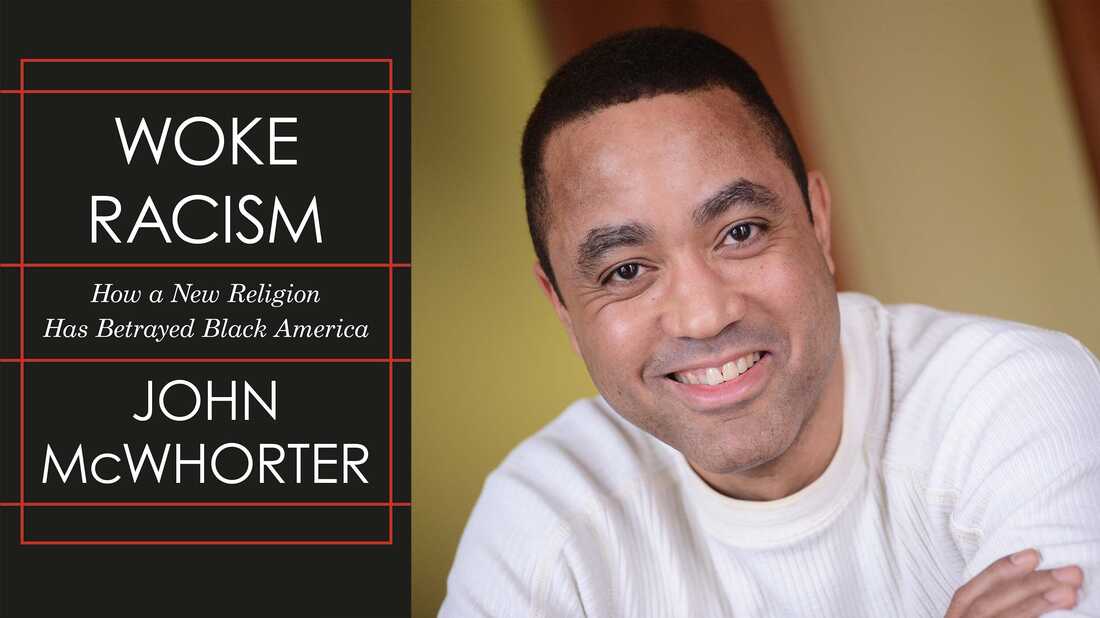
John McWhorter
American linguistWikipedia
44
MENTIONS
26
EPISODES
22
PODCASTS
Search complete. 44 mentions across 26 episodes found for "John McWhorter".
Oct 20, 2026

Clayton SmithHOST
You had a lot of faculty members.
Clayton SmithHOST
You know, like I think John McWhorter is one who's someone I really admire.
Clayton SmithHOST
And I thought, oh, that's great.
Clayton SmithHOST
So to hear that it has taken such a nasty left turn is it really is very disappointing.

Kerby AndersonHOST
In his article, Professor Riley takes the time to deal with several of the cases often mentioned.
Kerby AndersonHOST
He also cites New York Times reporter John McWhorter, who is also skeptical of the lynching narrative.
Kerby AndersonHOST
McWhorter noted that eight of the ten cases mentioned this year have officially been ruled a suicide, and the other two, no white suspect has been named.
Kerby AndersonHOST
Riley then asked the key question, is the United States actually facing a contemporary epidemic of lynching? His answer is, obviously not.
Kerby AndersonHOST
In his article, Professor Riley takes the time to deal with several of the cases often mentioned.
Kerby AndersonHOST
He also cites New York Times reporter John McWhorter, who is also skeptical of the lynching narrative.
Kerby AndersonHOST
McWhorter noted that eight of the ten cases mentioned this year have officially been ruled a suicide, and the other two, no white suspect has been named.
Kerby AndersonHOST
Rather than ask the key question, is the United States actually facing a contemporary epidemic of lynching? His answer is, obviously not.

Steve HaywardHOST
What prompts this is, uh, just a brief rant, and if you guys wanna pick up on it, fine.
Steve HaywardHOST
Uh, but Jon McWhorter, who normally writes fairly sensible stuff, uh, even when I don't always agree with him, he has a column in The New York Times this week in praise of land acknowledgements, and it's the dumbest thing he's ever written.
Steve HaywardHOST
I, I...
Steve HaywardHOST
What, did he phone it in or what? It was all very emotive and, "Gosh, you know, I used to deal with Native Americans when I was a teenager in Maine, and I felt bad.

Steve HaywardHOST
What prompts this is just a brief rant, and if you guys want to pick up on it, fine.
Steve HaywardHOST
But John McWhorter, who normally writes fairly sensible stuff, even when I don't always agree with him, he has a column in the New York Times this week in praise of land acknowledgements, and it's the dumbest thing he's ever written.
Steve HaywardHOST
What, did he phone it in or what? It was all very emotive and, gosh, you know, I used to deal with Native Americans when I was a teenager in Maine and I felt bad.
Steve HaywardHOST
And so if we can do this as a way of, you know, being sensitive, I guess.

Eli AmdurHOST
I don't know if your earth shattered, but mine sure did.
Eli AmdurHOST
Until, that is, I read and reread with incredulity Columbia University Associate Professor of Linguistics John McWhorter's op-ed piece in The New York Times against the sentence-ending preposition rule.
Eli AmdurHOST
Essentially, if this is okay with Professor McWhorter, it's okay with me, although not without a little resistance on my part, because old habits die hard.
Eli AmdurHOST
You know, rules are rules until they're not.

CamHOST
Yeah.
CamHOST
Do you, do you just try and pull yourself up by your bootstraps and pull yourself up the socioeconomic ladder in very traditional ways? And I mean, to Rich's point, there'd be many Black academics today saying, "Yeah, that's exactly what you should be doing," right? This would echo the sort of criticisms of like Thomas Sowell or Glenn Loury or Roland Fryer, John McWhorter, like these sorts of voices who are like, "Uh, you should play the game.
CamHOST
You should play the traditional game, and you should play it really well." Um, and there's a reason that game is successful as well, 'cause this is-- I guess this is what I meant at the beginning by it's in some ways a story about tradition.
CamHOST
Like how much do you hew to the tradition of people who have made it playing this game previously? And a lot of that has just been like, yeah, um, nuclear family, working your way up the, up the corporate ladder.
Kerby AndersonHOST
And in his article, Professor Wilford Riley takes some time to deal with some of the cases that have been mentioned.
Kerby AndersonHOST
He also quotes from John McWhorter, a reporter for the New York Times, who then took the time to even look at the 10 cases we've been hearing about this year, 2026.
Kerby AndersonHOST
McWhorter says eight of the ten cases that have been mentioned this year are officially ruled as a suicide, and the other two in which there's no white suspect that's been named.
Kerby AndersonHOST
Now, could we have a further investigation? I'm always up for any investigation, although I get tired of wasting tax money on investigations or research that people already have answers to, but So what? But the point I'm making is these claims can be made, even if later it turns out to be false.

Benjamin RyanGUEST
This isn't yours.
Benjamin RyanGUEST
And his, you know, John, Liverpool John Morris University, who gave him his PhD thesis, they apparently exonerated him.
Benjamin RyanGUEST
They analyzed his work and said it was all due to sort of mistakes and like understandable errors.
Benjamin RyanGUEST
And he chalked it up to his autism, et cetera.
8 MINS LATER
Benjamin RyanGUEST
It doesn't help gay men to pretend that they're not the ones who are overly at risk for monkeypox.
Benjamin RyanGUEST
And similarly, holding up Jason Arday ultimately is going to make all black academics look bad and make everyone suspect them more and suspect that they don't deserve to be there.
Benjamin RyanGUEST
And that, you know, you hear from like John McWhorter is an argument against affirmative action in general, because it creates a Paul where people don't pay as much respect to black people in general.
Benjamin RyanGUEST
And they've, you know, you see that in the way that people talk about Michelle Obama and talk about Katonji Brown Jackson, that they're DEI hires, et cetera, that they don't deserve the positions that they've earned.

Eric KaufmannGUEST
Now, of course, racism was awful in the Jim Crow South and in segregated northern U.S. cities.
Eric KaufmannGUEST
We needed a norm against it, but moving to a taboo where it's sudden social death, to quote John McWhorter, very irrational thing.
Eric KaufmannGUEST
There's no proportionality.
Eric KaufmannGUEST
There's no more worse racism that's more serious and less serious.
16 more episodes mention John McWhorter.
Create an account to see the whole feed, search across every transcript, and follow the entities you care about.