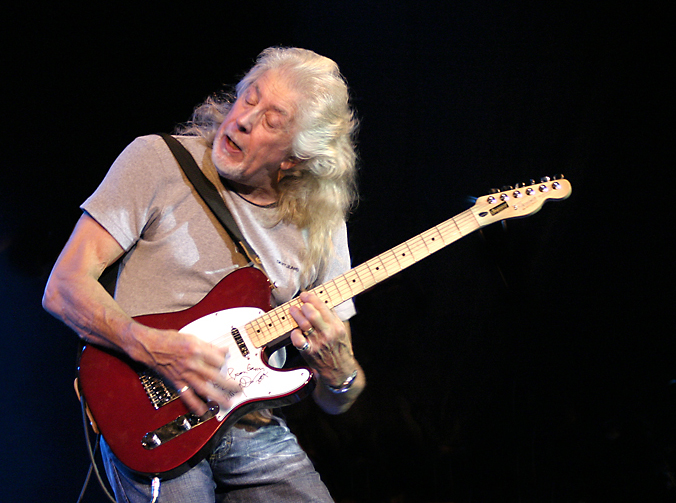
John Mayall
Musician and songwriterWikipedia
31
MENTIONS
20
EPISODES
19
PODCASTS
Search complete. 31 mentions across 20 episodes found for "John Mayall".
Sep 11, 2026

Karl SorochinskiHOST
The Rolling Stones, a young Mick Jagger played harp, and Brian Jones played harp right there on the early records.
Karl SorochinskiHOST
John Mayall played harmonica.
Karl SorochinskiHOST
The Yardbirds used it.
Karl SorochinskiHOST
And there was one band that mattered more than almost any other for the harps specifically, the Paul Butterfield Blues Band.

Terry ChimesHOST
This is Rock and Roll Confessions.
Terry ChimesHOST
We're talking to a real character today, the son of John Mayall, Gaz Mayall, who's got the longest-running club night probably in the world.
Terry ChimesHOST
So, Gaz Mayall, thank you so much for coming down.
Terry ChimesHOST
I've been wanting to meet you because you've got this club night been going for 46 years.
8 MINS LATER
Terry ChimesHOST
it was...
Gaz MayallGUEST
there was a succession of really great musicians that came through the ranks.
Gaz MayallGUEST
But at the end of the day, it was kind of the John Mayall show.
Gaz MayallGUEST
And I think if anybody kind of didn't get that at the time, they didn't mind kind of like going through there almost like they were going to a kind of like blues school or something.

Stephen HydenGUEST
Right, because I think that was the band that Clapton left because they were too poppy.
Stephen HydenGUEST
Because they did For Your Love, and he thought, oh, this is too poppy for me, so I'm going to join the Blues Breakers with John Mayall, and then he went into Cream after that.
Stephen HydenGUEST
But it is ironic, yeah, considering this is the same guy that was... you know, doing Tears in Heaven and Babyface collaborations, you know, 20 years after that.
Stephen HydenGUEST
Pretending.

Jazzy JeffHOST
This person isn't.
Jazzy JeffHOST
Oh, John Mayall's Blues Breakers.
Jazzy JeffHOST
Well, no.
Stinky PeteHOST
Just John
Jazzy JeffHOST
Mayall.
Stinky PeteHOST
Just John Mayall.
Stinky PeteHOST
Right.
Stinky PeteHOST
Okay.

Housley CarrNARRATOR
The flows from the Permian to Corpus are still packed, but these projects will help as production growth continues, especially if export demand remains elevated.
Housley CarrNARRATOR
Room to Move was written by John Mayall and appears as the third song on side two of his 11th album, Turning Point.
Housley CarrNARRATOR
After the breakup of the latest version of his band, The Blues Breakers, Mayall wanted to have an acoustically oriented band.
Housley CarrNARRATOR
Turning Point is a live album featuring his new group at the time.
Housley CarrNARRATOR
The live song features breakdowns with funky handclaps, yelps and hand percussion, making for a unique presentation.
Housley CarrNARRATOR
It received heavy rotation on American underground FM radio stations at the time.
Housley CarrNARRATOR
Personnel on the record were John Mayall, lead vocals, blues harp, hand percussion, John Mark, acoustic guitar, Steve Thompson bass and Johnny Almond, tenor and alto saxophone, flute, mouth percussion.
Housley CarrNARRATOR
Turning Point was a departure album for Mayall, featuring an acoustic presentation that differed from his previous fully electrified blues bands.
Karl SorochinskiHOST
And Clapton was just one of a whole pack of British blues fanatics who each took the guitar somewhere new.
Karl SorochinskiHOST
Peter Green, who replaced Clapton in John Mayall's band and then founded Fleetwood Mac, had maybe the most vocal, tender, aching tone of any of them.
Karl SorochinskiHOST
B.B. King himself said Peter Green was the one white player who gave him cold sweats, whose tone truly moved him.
Karl SorochinskiHOST
Jeff Beck was the restless experimenter, always chasing new sounds, bending the guitar into vocal cries and weird textures nobody else thought of.

BullfrogHOST
Also in the band, on guitar, Eric Bell, who was the founder of Thin Lizzy.
BullfrogHOST
Victor Brock, over the course of his career, Brock's work with Clapton, Hendrix, Blackmore, Ian Gillen, Deep Purple, Screamin' Lord Such, Charlie Mingus, Memphis Slim, Ainsley Dunbar, Dr. John, Graham Bond, and John Mayall.
BullfrogHOST
And that's just a list of a few of them.
BullfrogHOST
Dick Hextall Smith played sax, and he was in the Graham Bond organisation, and formed the Coliseum.

Todd HunterGUEST
Yeah.
Todd HunterGUEST
I saw John Mayall.
Todd HunterGUEST
I saw theater.
Todd HunterGUEST
I saw Anthony Newley.

Trip KeeperHOST
You mentioned songs.
Trip KeeperHOST
I listened to The Supernatural by John Mayall and the Blues Breakers from 1967.
Trip KeeperHOST
Peter Green, the original Fleetwood Mac guitarist, is the guitarist during this album and that song.
Trip KeeperHOST
It's instrumental, but it's a very...

Kevin BrownHOST
It was more an off-hours kind of thing, so I wanted to bring that out.
Kevin BrownHOST
The records I was listening to were early Jeff Beck group, John Mayall, Peter Green, Muddy Waters, that kind of stuff.
Kevin BrownHOST
I wanted to make a record like that.
Kevin BrownHOST
So, the artists he's referencing here all share a very specific feature.
10 more episodes mention John Mayall.
Create an account to see the whole feed, search across every transcript, and follow the entities you care about.