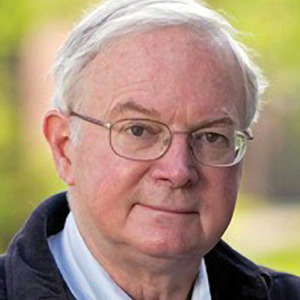
John M. Darley
American social psychologist and professorWikipedia
10
MENTIONS
7
EPISODES
7
PODCASTS
Search complete. 10 mentions across 7 episodes found for "John M. Darley".
Oct 22, 2026

Anish CharyanHOST
Common sense might suggest more witnesses means more help available.
Anish CharyanHOST
Darley and Latins suspected the opposite.
Anish CharyanHOST
In the 1968, they designed careful experiments to test it directly.
Anish CharyanHOST
putting people in situation with a stage emergency, sometimes believing they were the only witness, sometimes believing others were also present, but unable to see or hear each other's.
20 MINS LATER
Anish CharyanHOST
When a task belongs to everybody, it can feel as though it belongs to nobody, right? The challenge is is learning when the pattern become
speaker_2HOST
dangerous and how to break it, right?
speaker_1HOST
In the year 1960s, social psychologists, John Darley and Bim
Anish CharyanHOST
Blatine.

Alona FerberHOST
The idea that I want to bring to the table today is the idea of the bystander effect.
Alona FerberHOST
So this was first coined by social psychologists, Beeb Latanay and John Darley, after the murder in 1964 of Kitty Genovese, a 28-year-old woman in New York City.
Alona FerberHOST
She was stabbed to death outside her flat, and it was reported at the time that neighbours didn't intervene or call the police.
Alona FerberHOST
The bystander effect occurs when the theory is that the presence of others discourages an individual from intervening in a situation such as an assault or a crime or against a bully.

Alona FerberHOST
The idea that I want to bring to the table today is the idea of the bystander effect.
Alona FerberHOST
So this was first coined by social psychologists, Beeb Latané and John Darley, after the murder in 1964 of Kitty Genovese, a 28-year-old woman in New York City.
Alona FerberHOST
She was stabbed to death outside her flat, and it was reported at the time that neighbours didn't intervene or call the police.
Alona FerberHOST
The bystander effect occurs when the theory is that the presence of others discourages an individual from intervening in a situation such as an assault or a crime or against a bully.

Janne RobinsonHOST
... nothing became a national symbol, and it launched, launched this research into bystander apathy.
Janne RobinsonHOST
So bystander apathy, um, a psychologist, there's a psychologist named John Darley and Bibb Latané who studied why people sometimes don't step in when others are around.
Hannah HallerHOST
Mm.
Janne RobinsonHOST
Their experiments showed people were much less likely to help in an emergency when they believed others were also watching.

Lance StillHOST
A room full of people waiting for a signal will take one from somewhere, even if the only signal available is that no one else is moving.
Lance StillHOST
In the late 1960s, psychologists Bibb Latané and John Darley tested this by quietly piping smoke into a room where people were sitting filling out questionnaires.
Lance StillHOST
They wanted to know what people do when something seems wrong and no one else seems bothered.
Kayley EstesGUEST
So in that experiment, that classic smoke room experiment, three-quarters of people who were by themselves reported the smoke.

DeniseHOST
And there's real psychology behind why this happens.
DeniseHOST
Researchers call diffusion of responsibility, and it comes from that classic bystander effect research from psychologists Bibb L- Latane and John Darley that was done back in the 1960s.
DeniseHOST
So people have been watching this for a while.
DeniseHOST
And it followed the infamous case of Kitty Genovese, a woman who was murdered in New York in front of her neighbors, who never intervened.