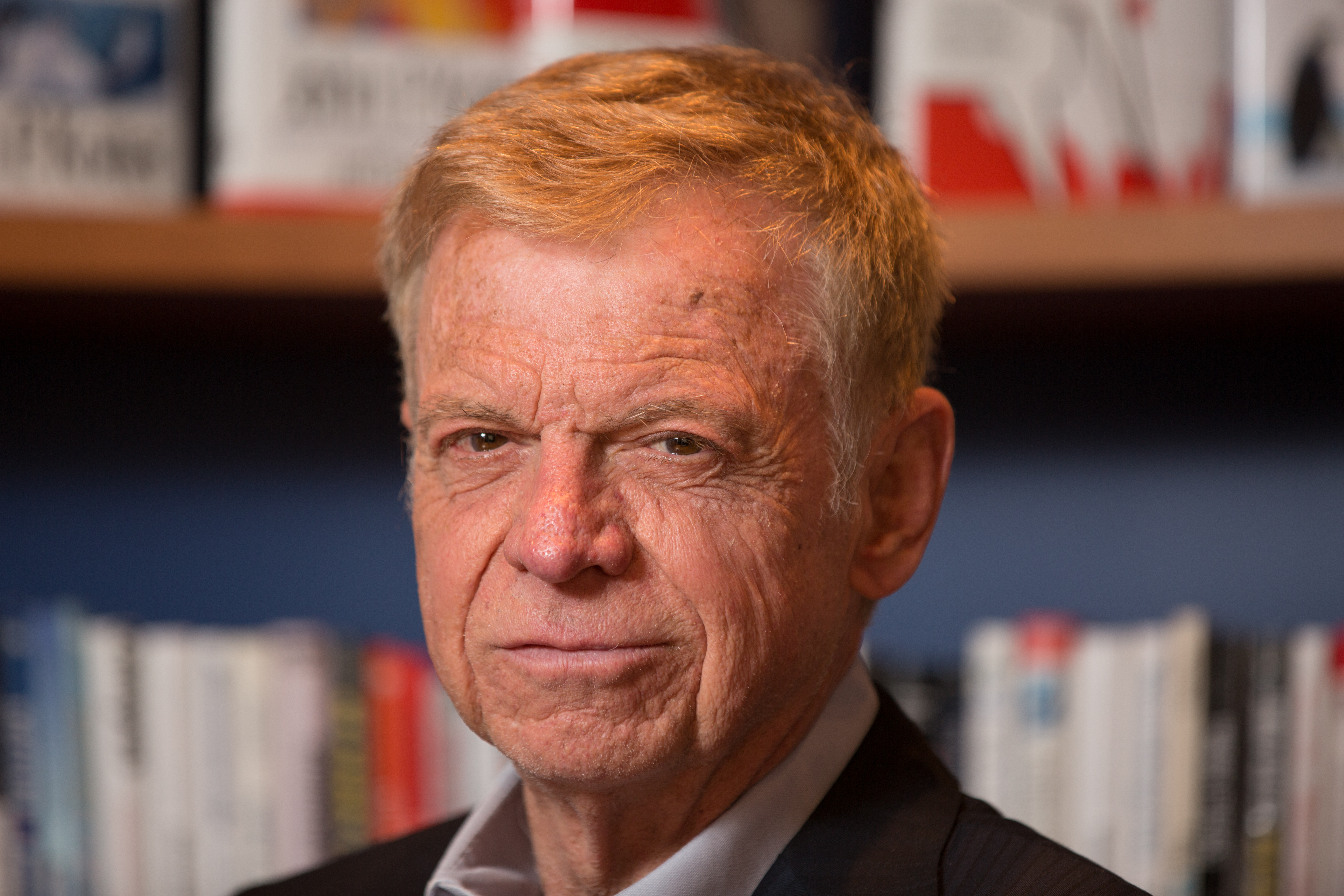
John Kotter
ProfessorWikipedia
47
MENTIONS
26
EPISODES
23
PODCASTS
Search complete. 47 mentions across 26 episodes found for "John Kotter".
Nov 2, 2026

Joshua SolowayGUEST
Um, and so I think it's, it's important to look at, uh, and to be ready for the realignment that needs to happen afterwards.
Joshua SolowayGUEST
John Kotter and his Leading Change book and his book, A Sense of Urgency, which Sense of Urgency then became a key component or maybe grew out of, I can't remember the order, as a key component of that book, Leading Change, really talks a lot about a sense of urgency, right? And if you're going to drive change, I think doing things in decisive fashion is important.
Joshua SolowayGUEST
It's hard to do because You're coming into a new environment, right, where, as I said, people have been together a long time.
Joshua SolowayGUEST
People in general are resistant to change, particularly if they've been somewhere for a long time and they've been together for a long time.

David FrostGUEST
absolutely.
David FrostGUEST
So change management 101. of Kotter's framework is build the guiding coalition.
David FrostGUEST
Well, in an organization, everyone's in the guiding coalition.
David FrostGUEST
There might be a task force, but the whole organization has to shift for a transformation.

Sean AdamsGUEST
And this is where the change, again, change management.
Sean AdamsGUEST
Kotter's rules of change.
Sean AdamsGUEST
Repeat.
Sean AdamsGUEST
Repeat the message.

Curtis PetersonGUEST
that your school maybe has done or is a massive shift, there's a lot of tools out there that you can use.
Curtis PetersonGUEST
Like Kotter does a great job of showing the different steps that are needed to do massive or larger changes within schools, for example.
Curtis PetersonGUEST
There's things that you can do, but you need to really make sure that this is where you want to go as a school.
Curtis PetersonGUEST
and then start planning it out from there.

Gidion PetersGUEST
So maybe there still needs to be some stable platform amongst this flotilla or how do you call that a flagship boat that can organize at skill because the skill will still be needed in some parts of the organization now it's always of course on those intermediary frames right in the interfaces between the smaller boats and the bigger ones that you run into problems because how do they connect and how do we make sure that they they synchronize at the right points in the right times
Dave ChapmanHOST
Your description is very akin, I think, to John Kotter's hybrid organization, I think.
Dave ChapmanHOST
Are you familiar with That's Not How We Do It Here? Where he basically talks about an aspect of networked organization, which is a looser, more entrepreneurial, more decentralized, like a flotilla of speedboats.
Dave ChapmanHOST
And then in the background of that, you have to have stable structure that then is going to kind of optimize your operation.

Dave WennergrenHOST
That the challenges we face are increasingly complex, and they inevitably span the borders of society.
Dave WennergrenHOST
organizations and we face a world of continuing uncertainty and that will be the case for some time to come so the imperative to lead through uncertainty and change reinforces the need for agility and resiliency and it requires a willingness for us all to question the continued relevancy of processes jobs and even some entire organizations and so it's important for all of us to be able to recognize and face change and successfully changing is about more than just solving problems John Kotter's latest book is titled Change, and he notes that our brains are hardwired for two things.
Dave WennergrenHOST
A survive channel that's fast and has been with us since prehistoric days and helped protect us with our peripheral vision from threats amongst us, from saber-toothed tigers to whatever else.
Dave WennergrenHOST
And we're really good at doing that.

Ricardo LevyGUEST
It's the manager in you who does the right.
Ricardo LevyGUEST
Again, I refer you to the article by Kotter.
Ricardo LevyGUEST
I'm going to run very quickly through this just to give you a little flavor of what we're talking about.
Ricardo LevyGUEST
But I recommend you go into the article, which goes into it in much more detail.

Samantha ArmstrongGUEST
but a lot of regional things as well that are bringing us together through our IUs and just making sure our PD is really giving exploration time, but it's also honoring everybody's entry points because we aren't all in the same place even today.
Samantha ArmstrongGUEST
And if we don't have that psychological safety, if we don't recognize Kotter's change framework, which when I took an AI for Education course, Those two pieces really, really have made the biggest difference.
Samantha ArmstrongGUEST
You know, we need to honor everybody and this can feel like fear for some people because it's actually challenging supposedly who you are, but it's actually just challenging where we are and what we're doing.
Samantha ArmstrongGUEST
and how we're going to respond to this moment.

Diane DyeGUEST
So my BRAVER model is a breathing change model.
Diane DyeGUEST
that fits on top of ADKAR, Kotter, McKinsey, any of the linear models, because change is not linear.
Diane DyeGUEST
So where you get that chaos is when people say, well, well, things have changed within the change.
Diane DyeGUEST
And what are we going to do? We're in this step of it.

Jim VaselopulosHOST
It's like, yeah, these are the things you should pay attention to because they're showing up in more than one place.
Jim VaselopulosHOST
Much like Jan stated earlier with, you know, Kotter's principles and stuff like that.
Jim VaselopulosHOST
So all this stuff is like, you know, pay attention.
Jim VaselopulosHOST
This is good stuff.
16 more episodes mention John Kotter.
Create an account to see the whole feed, search across every transcript, and follow the entities you care about.