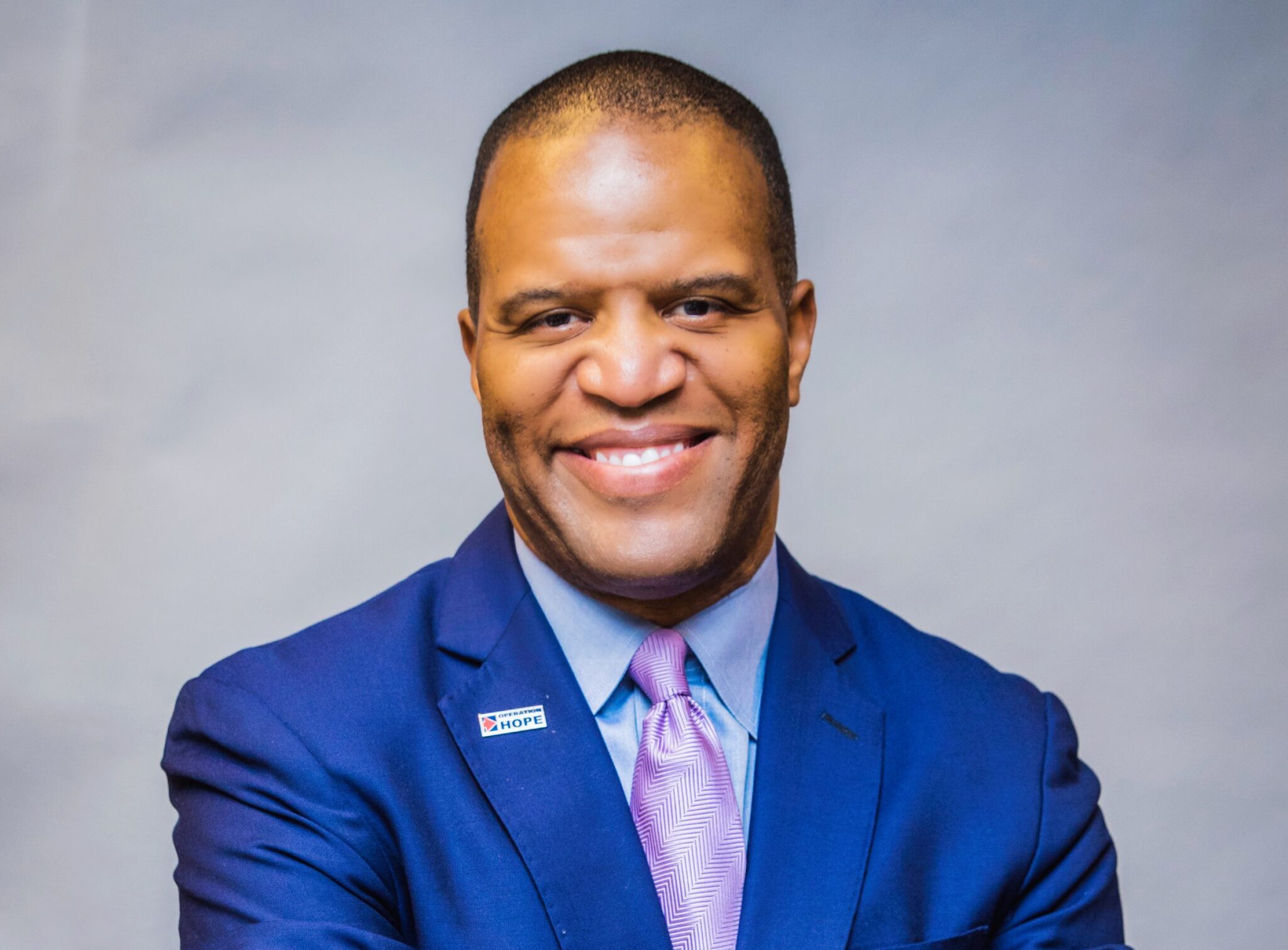
John Hope Bryant
CEO of Operation HOPE, Inc.
16
APPEARANCES
11
PODCASTS
Sep 2, 2026


John Hope BryantGUEST
You know, I don't wake up and hear somebody with my American Express black card knocking on my door.
8 MINS LATER


John Hope BryantGUEST
It's almost like we have PTSD or something and don't wanna talk about the fact that there was a pandemic.
John Hope BryantGUEST
There's a lot of things that are, they're, you know, makes you feel better.
6 MINS LATER


John Hope BryantGUEST
When she died, it was a surge of $40 million in revenue, uh, it, af- and, and she ran that.
John Hope BryantGUEST
But that, that's a real perverted example of this, but I wanted a dramatic example.
John Hope BryantGUEST
Sorry, but I wanted to really make the point that whether you're living, that cash flow, money, the bag, the dollar is overrated.
John Hope BryantGUEST
That if you're an NFL player, 75%, 70% of all NFL players, and about that of NBA players, are bankrupt five years after retirement.
John Hope BryantGUEST
About 70% of those who win the lottery, bankrupt five years after receipt.
21 MINS LATER


Brian SullivanHOST
Are you convinced this housing affordability bill that you believe will get passed will also increase housing

speaker_7ADVERTISER
If
John Hope BryantGUEST
you're going to get a no, why would you want to get a no from the branch manager? No disrespect intended from the branch manager.
speaker_2ADVERTISER
That's why you


Carol MassarHOST
What do they say without giving who? What are they saying to you privately, John, that gives you


John Hope BryantGUEST
Um, but I couldn't p-pay the property taxes easily, and I rented it out to a, a, a police officer, a Black police officer, to be specific, in LA.
John Hope BryantGUEST
But I held onto it, and it went from 200,000, I bought it for 200,000, down to 160 or something.
John Hope BryantGUEST
People, everybody, "Sell, sell, sell." I hold, held onto it, and five years later I looked up, it's worth $750,000 and I sold it and got a capital gains.
John Hope BryantGUEST
Took that money, 1031 tax-free exchange, flipped it into a property now worth five million.

John Hope BryantGUEST
Okay, but let's go back to your point.Uh, so in 1972, women, a white woman, could not get a bank account.

John Hope BryantGUEST
And so I, I really had a sense that this system could work for everybody, but it's what people don't know that they don't know, but they think they know, right? People can...
John Hope BryantGUEST
We get that dollar." This is, uh, you say you have young listeners, they're focusing on this.
30 MINS LATER
JoelHOST
First, do you think that's true, and then, and then two, what does it look like to bring ladders down for those people to help them move up?

John Hope BryantGUEST
King was assassinated, the FBI told him the instructions for the shooter, "If you miss the dreamer, kill the strategist." He's been, this, all this time, UN ambassador, first Black UN ambassador in the history of the United States under Carter, first congressman f- since Reconstruction in the South.
16 MINS LATER
John Hope BryantGUEST
By the way, when he became mayor, just a point about play- people playing their roles, when he became [laughs] mayor of Atlanta, the Civil Rights leaders, his friends, the t- second day he was mayor, they picketed him.
John Hope BryantGUEST
So he went outside, he's like, "What are you guys doing?" They said, "Well, you the mayor now, so we, you know, we, you got your job, we got ours."

Andrew YoungGUEST
'Cause they, they c- they can come in with their girlfriends, and they spend money by the thousands of dollars.
John Hope BryantGUEST
By the way, it wasn't we got the, the, the business people to take down the whites only signs.
14 MINS LATER

speaker_0HOST
Yes.
John Hope BryantGUEST
If I have a dollar that I earned and I put a dollar in the bank, that I can access that dollar through digital money.
6 MINS LATER
speaker_0HOST
What's your take on all of this?
John Hope BryantGUEST
King was assassinated, the FBI told him the instructions for the shooter: If you miss the dreamer, kill the strategist.
John Hope BryantGUEST
He's been this, all this time UN ambassador, first Black UN ambassador in history of United States under Carter, first congressman since reconstruction in the South.
15 MINS LATER
John Hope BryantGUEST
By the way, when he became mayor, just a point about peop- people playing their roles, when he became [laughs]mayor of Atlanta, the Civil Rights leaders, his friends, the tw- second day he was mayor, they picketed him.
John Hope BryantGUEST
So he went outside, he said, "What are you guys doing?" They said, "Well, you the mayor now, so we, you know, we, you got your job, we got ours.”
John Hope BryantGUEST
What did Martin Luther- But the point is, the point is that, that he was playing a very important role.
26 MINS LATER

speaker_13UNKNOWN
(claps)
John Hope BryantGUEST
A really nasty situation.So, so one of the- one of the (sighs) one of the problems I have with him is he doesn't take credit properly.
John Hope BryantGUEST
So, what you just heard basically was talk without being offensive, listen without being defensive, and always leave even your adversary with your- with their dignity.
John Hope BryantGUEST
Because if you don't, they'll spend the rest of their life work- working to make you miserable.
John Hope BryantGUEST
Okay, how does that relate? So, he didn't tell you the story properly about what happened when he was hired.
33 MINS LATER
speaker_29UNKNOWN
(applause)

John Hope BryantGUEST
A- And if you're, if you've paid into Social Security your whole life, this country owes you. It- it has made a promise to you. It owes you a debt. You've done nothing wrong. And the average person who misses a payment is not gonna say, "Eh, you know, I think I'll wait till next month." They're, rightly so, wondering why the government has not kept their promise. The government made a promise, it should keep it. And if the Secretary of Commerce went to one of his clients in his business who didn't make a bond payment on time, or a commercial payment on time, he wouldn't say, "Oh, we'll catch you next quarter." He'd say, "You had a contract and I expect you to keep it." On the one hand, we have the rule of law. On the other hand, we've got common sense. Um, most of these people in this country literally cannot afford to wait till next month. So they're not whining, they're not complaining, and they're not fraudsters. They are... They worked their whole life, and all they want is to retire with some dignity. And his ina- inability to see all of that is not his fault. It's- it's- it's his environment. And when you have an administration, uh, who is 99% uber wealthy, and I'm- I'm wealthy, but you know, uber wealthy, you can't help but have a blind spot for the 90% of people who are living with 50% of their paychecks.
14 MINS LATER

Stephanie RuhleHOST
Okay. So, so right there, physically safe, financially secure, uh, socially free. Yet the president has gotten all these people to focus on DEI as the bogeyman, and once DEI is flushed from our system, we are going to see businesses and society and culture rise and rise and rise.
John Hope BryantGUEST
I don't care about DEI. I could care less about DEI. It's been weaponized. It's been made political, as I've said before. Um, I care about diversity. I love diversity. And in 1972, our mother couldn't get an auto loan or a car loan without their husband cosigning it. Not 1872, 1972. And America made the right choice, uh, and said, "No, women need to be part of the economy," where today women are a third of GDP, $7 trillion plus. It was the right choice. Without that, we'd be a third-rate nation today. We're at this inflection point again, and it's a bit of a ridiculous conversation because 40% of this country is Black, brown and other. Within 10 years, it'll be a majority of minorities. My rich friends need my poor friends do better if only to stay rich. The color's green, as I keep saying. And so we're having really a ridiculous argument, and we, we, we really should be looking at, is diversity is the farm club, the GDP of the future, the farm club of the GDP of the future economy, and t- trying to once again equip the bottom of the pyramid to become capitalists and contributors that adds to the top. We're not doing that. And so let's go back to tariffs for a minute. Um, I'm happy to, to go deep, deeper in the DEI thing, but I think it's a, I think it's a distraction. Uh, I, I think it's, it's a smokescreen. Uh, I mean, let me just, let me just say this. This whole thing about, well, somebody's not qualified and somebody... Look, if, as a Black man in America, I wake up pro- on probation. I got to be twice as smart, twice as intelligent, twice as well-dressed, get up twice as early, sleep twice as late, and work twice as hard to get half of the success, and I'm fine with it. But that just makes me better. Everybody I know who's a person of color or a woman has to be twice as good in order to compete a- and to keep your seat. So, that's ridiculous, but put that aside for a moment. I meet average people all the time in corporate America, because it's about relationship capital. Why do you go to Harvard? Because Harvard's gonna make you three times smarter than the state university? Probably not. The class of night- of, of, of 2025 is gonna hook each other up for 40 years.