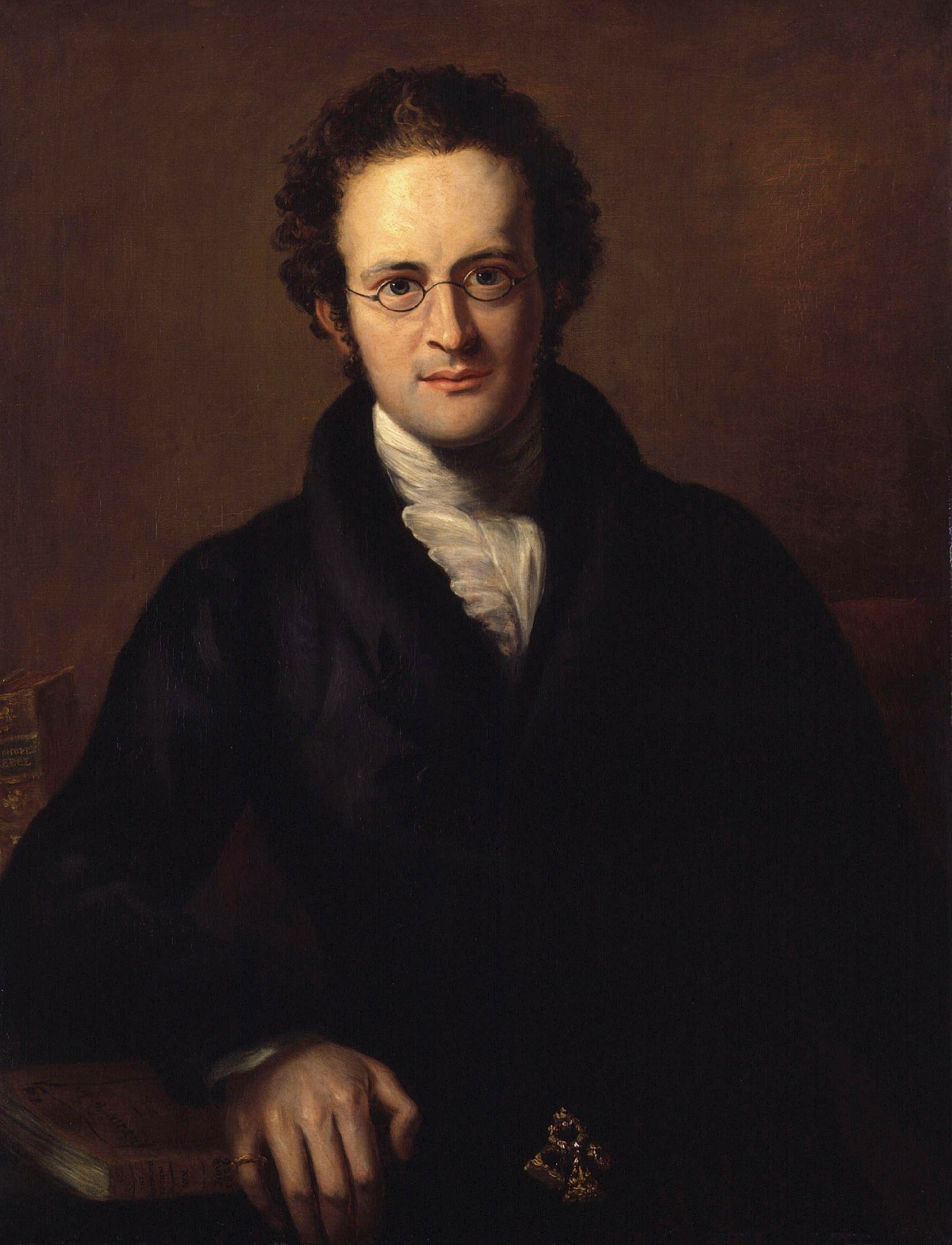
John Bowring
Political economist and former Governor of Hong KongWikipedia
15
MENTIONS
13
EPISODES
13
PODCASTS
Search complete. 15 mentions across 13 episodes found for "John Bowring".
Sep 8, 2026

Bill BorstNARRATOR
These persons became radicals because they saw immense practical evils existing in the government and social condition of this country, and because the same examination which showed them the evils showed also that the cause of those evils was the aristocratic principle in our government.
Bill BorstNARRATOR
the subjection of the many to the control of a comparatively few who had an interest or fancied they had an interest in perpetuating those evils these inquirers looked still farther and saw that in the present imperfect condition of human nature nothing better than this self preference was to be expected from a dominant few that the interests of the many were sure to be in their eyes a secondary consideration to their own ease or emolument perceiving therefore that we are ill governed and perceiving that so long as the aristocratic principle continued predominant in our government we could not expect to be otherwise these persons became radicals and the motto of their radicalism was enmity to the aristocratical principle the period of mr mill's most intimate connection with the london and westminster review forms a brilliant episode in the history of journalism and his relations then and afterwards with the other men of letters and political writers some of them as famous as mr carlyle and coleridge charles buller and sir henry taylor sir william molesworth sir john bowring and mr roebuck yield tempting materials for even the most superficial biography but we must pass them by for the present and here we shall content ourselves with enumerating in the order of their publication those lengthier writings with which he chiefly occupied his leisure during the next quarter of a century though that work was frequently diversified by important contributions to the edinburgh and the westminster review fraser's magazine and other periodicals his first great work was a system of logic the result of many years previous study which appeared in eighteen forty three that completed he seems immediately to have paid chief attention to politico-economical questions in eighteen forty four appeared essays on some unsettled questions of political economy which were followed in eighteen forty eight by the principles of political economy After that there was a pause of ten years, though the works that were issued during the next six years show that he had not been idle during the interval.
Bill BorstNARRATOR
In 1857 were published two volumes of the Dissertations and Discussions, consisting solely of printed articles, the famous Essay on Liberty, and the Thoughts on Parliamentary Reform.
speaker_6ADVERTISER
Oh, I have had no luck lately.

David WalesNARRATOR
These persons became radicals because they saw immense practical evils existing in the government and social condition of this country, and because the same examination which showed them the evils showed also that the cause of those evils was the aristocratic principle in our government.
David WalesNARRATOR
the subjection of the many to the control of a comparatively few who had an interest or fancied they had an interest in perpetuating those evils these inquirers looked still farther and saw that in the present imperfect condition of human nature nothing better than this self preference was to be expected from a dominant few that the interests of the many were sure to be in their eyes a secondary consideration to their own ease or emolument perceiving therefore that we are ill governed and perceiving that so long as the aristocratic principle continued predominant in our government we could not expect to be otherwise these persons became radicals and the motto of their radicalism was enmity to the aristocratical principle the period of mr mill's most intimate connection with the london and westminster review forms a brilliant episode in the history of journalism and his relations then and afterwards with the other men of letters and political writers some of them as famous as mr carlyle and coleridge charles buller and sir henry taylor sir william molesworth sir john bowring and mr roebuck yield tempting materials for even the most superficial biography but we must pass them by for the present and here we shall content ourselves with enumerating in the order of their publication those lengthier writings with which he chiefly occupied his leisure during the next quarter of a century though that work was frequently diversified by important contributions to the edinburgh and the westminster review fraser's magazine and other periodicals his first great work was a system of logic the result of many years previous study which appeared in eighteen forty three that completed he seems immediately to have paid chief attention to politico-economical questions in eighteen forty four appeared essays on some unsettled questions of political economy which were followed in eighteen forty eight by the principles of political economy After that, there was a pause of ten years, though the works that were issued during the next six years show that he had not been idle during the interval.
David WalesNARRATOR
In 1857 were published two volumes of the dissertations and discussions, consisting solely of printed articles, the famous Essay on Liberty, and the Thoughts on Parliamentary Reform.
David WalesNARRATOR
winning

Phil SchampfNARRATOR
Jeremy Bentham, 1748 to 1832.
Phil SchampfNARRATOR
From Sir John Bowring's Autobiographical Recollections.
Phil SchampfNARRATOR
In the very center of the group of persons who originated the Westminster Review stands the grand figure of Jeremy Bentham.
Phil SchampfNARRATOR
Though closely resembling Franklin, his face expresses a profounder wisdom and a more marked benevolence than the bust of the American printer.
Phil SchampfNARRATOR
Simplex munditis best describes his garments.
Phil SchampfNARRATOR
When he walks, there is a restless activity in his gait, as if his thoughts were, let me walk fast, for there is work to do, and the walking is but to fit me the better for the work.
Phil SchampfNARRATOR
From Sir John Bowring's Life of Bentham.
Phil SchampfNARRATOR
The striking resemblance between the persons of Franklin and Bentham has been often noticed.

Graham ArrowsmithNARRATOR
Thence he had to travel up the Makmudi Canal to the Nile, push on towards Cairo, and finally spend 18 cramped and weary hours in an omnibus crossing the desert to Suez, where he got one steamer as far as Gao, and another, the Pottinger from Bombay, which called there took him on to his destination.
Graham ArrowsmithNARRATOR
He remained three eventful months in Hong Kong as student interpreter at the Superintendency of Trade, awaiting the return of Sir John Bowring, HBM's minister to China, who was away at Taku trying to open negotiations with the Peking government.
Graham ArrowsmithNARRATOR
It was this same Sir John Bowering, by the way, who first aroused Robert Hart's interest in Chinese life and customs, subjects on which so many foreigners in China remain pitifully ignorant all their lives.
Graham ArrowsmithNARRATOR
"'Study everything around you,' said he to the young man.

speaker_5NARRATOR
Voyage aux Indes orientales et à la Chine, Paris, 1782, volume 3.
speaker_5NARRATOR
There are a number of travelers' accounts written in the last century, of which may be mentioned Sir John Bowring's Visit to the Philippine Islands, 1859, and Jagor's Reisen in der Philippinen, Travels in the year 1859 and 1860, which has received translation into both English and Spanish.
speaker_5NARRATOR
Bibliographies For the historical student, a bibliographical guide is necessary.
speaker_5NARRATOR
Such a volume was brought out in 1898 by Retana, Catálogo Abreviado de la Biblioteca Filipina.

Bill BorstNARRATOR
These persons became radicals because they saw immense practical evils existing in the government and social condition of this country, and because the same examination which showed them the evils showed also that the cause of those evils was the aristocratic principle in our government.
Bill BorstNARRATOR
the subjection of the many to the control of a comparatively few who had an interest or fancied they had an interest in perpetuating those evils these inquirers looked still farther and saw that in the present imperfect condition of human nature nothing better than this self preference was to be expected from a dominant few that the interests of the many were sure to be in their eyes a secondary consideration to their own ease or emolument perceiving therefore that we are ill governed and perceiving that so long as the aristocratic principle continued predominant in our government we could not expect to be otherwise these persons became radicals and the motto of their radicalism was enmity to the aristocratical principle the period of mr mill's most intimate connection with the london and westminster review forms a brilliant episode in the history of journalism and his relations then and afterwards with the other men of letters and political writers some of them as famous as mr carlyle and coleridge charles buller and sir henry taylor sir william molesworth sir john bowring and mr roebuck yield tempting materials for even the most superficial biography but we must pass them by for the present and here we shall content ourselves with enumerating in the order of their publication those lengthier writings with which he chiefly occupied his leisure during the next quarter of a century though that work was frequently diversified by important contributions to the edinburgh and the westminster review fraser's magazine and other periodicals his first great work was a system of logic the result of many years previous study which appeared in eighteen forty three that completed he seems immediately to have paid chief attention to politico-economical questions in eighteen forty four appeared essays on some unsettled questions of political economy which were followed in eighteen forty eight by the principles of political economy After that, there was a pause of ten years, though the works that were issued during the next six years show that he had not been idle during the interval.
Bill BorstNARRATOR
In 1857 were published two volumes of the dissertations and discussions, consisting solely of printed articles, the famous Essay on Liberty, and the Thoughts on Parliamentary Reform.
Dave PortnoyADVERTISER
Dave Portnoy here.

Leon HarveyNARRATOR
First generation, two brothers.
Leon HarveyNARRATOR
One, Jeremy Bentham, jurist of the highest rank, life by Sir J. Bowring, prefixed to the collected works edited by him.
Leon HarveyNARRATOR
Two, General Sir Samuel Bentham, whose early manhood was spent in the Russian service, distinguished for his numerous administrative reforms and singular inventive power.
Leon HarveyNARRATOR
Afterwards Inspector-General of Naval Works in England, life by his widow, 1862.

Leon HarveyNARRATOR
First generation, two brothers.
Leon HarveyNARRATOR
One, Jeremy Bentham, jurist of the highest rank, life by Sir J. Bowring, prefixed to the collected works edited by him.
Leon HarveyNARRATOR
Two, General Sir Samuel Bentham, whose early manhood was spent in the Russian service, distinguished for his numerous administrative reforms and singular inventive power.
Leon HarveyNARRATOR
Afterwards Inspector-General of the Naval Works in England, life by his widow, 1862.

Bill BorstNARRATOR
The London was next year amalgamated with the Westminster, and then the nominal, if not the actual, editorship passed into the hands of Mr. John Robertson.
Bill BorstNARRATOR
mr mill continued however to be one of its most constant and able contributors until the review passed into other hands in eighteen forty he aided much to make and maintain its reputation as the leading organ of bold thought on religious and social as well as political matters besides such remarkable essays as those on civilization on armand carrel on alfred de vigny on bentham and on coleridge which with others have been republished in his collection of minor writings he contributed many of great importance one in mr tennyson which was published in eighteen thirty five is especially noteworthy others referred more especially to the politics of the day from one which appeared in eighteen thirty seven reviewing albany von blanc's england under seven administrations and speaking generally in high terms of the politics of the examiner we may extract a few sentences which define very clearly the political ground taken by mr mill mr fontblanc and those who had then come to be called philosophical radicals there are diverse schools of radicals said mr mill there are the historical radicals who demand popular institutions as the inheritance of englishmen transmitted to us from the saxons or the barons of runnymede there are the metaphysical radicals who hold the principles of democracy not as means to good government but as corollaries from some unreal abstraction from natural liberty or natural rights there are the radicals of occasion and circumstance who are radicals because they disapprove the measures of the government for the time being there are lastly the radicals of position who are radicals as somebody said because they are not lords those whom in contradistinction to all these we call philosophical radicals are those who in politics observe the common manner of philosophers that is who when they are discussing means begin by considering the end and when they desire to produce effects think of causes these persons became radicals because they saw immense practical evils existing in the government and social condition of this country and because the same examination which showed them the evils showed also that the cause of those evils was the aristocratic principle in our government the subjection of the many to the control of a comparatively few who had an interest or fancied they had an interest in perpetuating those evils these inquirers looked still farther and saw that in the present imperfect condition of human nature nothing better than this self-preference was to be expected from a dominant few that the interests of the many were sure to be in their eyes a secondary consideration to their own ease or perceiving therefore that we are ill governed and perceiving that so long as the aristocratic principle continued predominant in our government we could not expect to be otherwise these persons became radicals and the motto of their radicalism was enmity to the aristocratical principle the period of mr mill's most intimate connection with the london and westminster review forms a brilliant episode in the history of journalism and his relations then and afterwards with the other men of letters and political writers some of them as famous as mr carlyle and coleridge charles buller and sir henry taylor sir william molesworth sir john bowring and mr roebuck yield tempting materials for even the most superficial biography but we must pass them by for the present and here we shall content ourselves with enumerating in the order of their publication those lengthier writings with which he chiefly occupied his leisure during the next quarter of a century though that work was frequently diversified by important contributions to the edinburgh and the westminster review fraser's magazine and other periodicals his first great work was a system of logic the result of many years previous study which appeared in eighteen forty three that completed he seems immediately to have paid chief attention to politico-economical questions in eighteen forty four appeared essays on some unsettled questions of political economy which were followed in eighteen forty eight by the principles of political economy after that there was a pause of ten years though the works that were issued during the next six years show that he had not been idle during the interval in eighteen fifty seven were published two volumes of the dissertations and discussions consisting solely of printed articles the famous essay on liberty and the thoughts on parliamentary reform considerations on representative government appeared in eighteen sixty one utilitarianism in eighteen sixty three august comte and positivism and the examination of sir william hamilton's philosophy in eighteen sixty five After that, besides the very welcome inaugural address at St. Andrews in 1867, his only work of importance was The Subjection of Women, published in 1869.
Bill BorstNARRATOR
A fitting conclusion to his more serious literary labors appeared also in 1869 in his annotated edition of his father's Analysis of the Phenomena of the Human Mind.
Bill BorstNARRATOR
when we remember how much and what varied knowledge is in those learned books it is almost difficult to believe that during most of the years in which he was preparing them mr mill was also a hard worker in the india house passing rapidly and as the reward only of his assiduity and talent from the drudgery of a junior clerk to a position involving all the responsibility if not quite all the dignity of a secretary of state

Bill BorstNARRATOR
Perceiving, therefore, that we are ill-governed, and perceiving that so long as the aristocratic principle continued predominant in our government, we could not expect to be otherwise, these persons became radicals, and the motto of their radicalism was enmity to the aristocratical principle.
Bill BorstNARRATOR
The period of Mr. Mill's most intimate connection with the London and Westminster Review forms a brilliant episode in the history of journalism, and his relations then and afterwards with the other men of letters and political writers, some of them as famous as Mr. Carlyle and Coleridge, Charles Buller and Sir Henry Taylor, Sir William Molesworth, Sir John Bowring, and Mr. Roebuck, yield tempting materials for even the most superficial biography.
Bill BorstNARRATOR
But we must pass them by for the present, and here we shall content ourselves with enumerating in the order of their publication those lengthier writings with which he chiefly occupied his leisure during the next quarter of a century, though that work was frequently diversified by important contributions to the Edinburgh and the Westminster Review, Fraser's Magazine, and other periodicals.
Bill BorstNARRATOR
His first great work was A System of Logic, the result of many years' previous study, which appeared in 1843.
3 more episodes mention John Bowring.
Create an account to see the whole feed, search across every transcript, and follow the entities you care about.