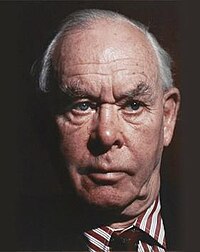
John Bowlby
British psychiatrist and psychoanalystWikipedia
109
MENTIONS
70
EPISODES
63
PODCASTS
Search complete. 109 mentions across 70 episodes found for "John Bowlby".
Oct 28, 2026

Ramani DurvasulaHOST
So the empowerment consciousness is something that's, it's hard.
Ramani DurvasulaHOST
I mean, again, you also get into the concept of co-regulation, which is a very, it's such an important concept because it is, I mean, co-regulation is exactly what Bowlby and everyone else wrote about attachment, about that infant, like how, why, how we are with infants and how that sets the groundwork for everything that's going to come and how we even walk into a room and co-regulate.
Ramani DurvasulaHOST
It's very difficult for people who've been in a distorted sick, twisted house of mirrors that have been, especially if they have more than one of these narcissistic relationships in their lives, because a narcissistic relationship by definition is a disempowered relationship.
Ramani DurvasulaHOST
So I'm going to ask you about two more things and make one more point.

Zo WilliamsGUEST
I take that philosophy and lay it on top of attachment theory.
Zo WilliamsGUEST
John Bowlby in the 50s, Mary Ainsworth in the 70s and 80s created this attachment theory, which basically says, based on the quality of care you get from your primary caregiver...
Zo WilliamsGUEST
That is going to let us know what type of child you become in terms of attachment style.
Zo WilliamsGUEST
If the parent is present, always there for you when you need something as a child, you have a great chance of becoming securely attached.
10 MINS LATER
Tavis SmileyHOST
I use the balance of my time.
Tavis SmileyHOST
Dizzo Williams, go.
Zo WilliamsGUEST
Well, John Bowlby said in his research that the attachment styles are a survival mechanism.
Zo WilliamsGUEST
This is a child.
Zoe WilliamsHOST
And the word kata in the Japanese sense means form or style.
Zoe WilliamsHOST
Well, fast forward to John Bowlby, Mary Ainsworth, attachment theory, there are styles.
Zoe WilliamsHOST
Right? Attachment styles.
Zoe WilliamsHOST
Four of them.

speaker_7HOST
Exactly.
speaker_7HOST
In this state, the therapist must act as a secure base, which is a core concept from John Bowlby's attachment theory.
speaker_6HOST
So by acting as a secure base, the therapist is essentially loaning the patient their prefrontal cortex.
speaker_6HOST
The patient can borrow the therapist's mentalizing capacity, their ability to see a future and regulate emotion, until the patient's own nervous system calms down enough to regain those functions.

Diane Poole HellerGUEST
I realized that I wanted to go to the very beginning, like how do we start our relational imprint, you know? And attachment theory was really beautiful for that.
Diane Poole HellerGUEST
And I loved John Bowlby's perspective that it's biological.
Diane Poole HellerGUEST
We come with it as part of our biology, just like you have thirst and hunger and all these other things that are natural to us.
Diane Poole HellerGUEST
Attachment and connection is actually biologically connected.

Kristyn VitaleGUEST
So the really cool thing about the origins of attachment was it really grew out of work with human infants and with non-human animals, mainly primates.
Kristyn VitaleGUEST
So John Bowlby and Mary Ainsworth, two of the pioneers of human attachment, they were really informed also by the work of Harry Harlow, who worked with non-human primates.
Kristyn VitaleGUEST
And what they saw is that both humans and many non-human animals are born with sets of behaviors that help to promote their survival.
Kristyn VitaleGUEST
So if you think about a human infant or even a monkey or something like that, they're born altricial, meaning they're completely helpless and dependent on a caregiver to provide food.

John EldredgeHOST
And so Robert Caron wrote a book on attachment.
John EldredgeHOST
It's based largely on Bowlby's work, you know, in the fifties.
John EldredgeHOST
And
Blaine EldredgeHOST
the good news is this,
John EldredgeHOST
Like you're not forever damaged goods.
Blaine EldredgeHOST
Yeah.
Blaine EldredgeHOST
And speaking of Bowlby...
Blaine EldredgeHOST
That experiencing wounds to your attachment and then rebuilding your attachment is actually healthier and stronger, measurably, than never having gone through any serious thing.

Sarah HensleyGUEST
And it's really solid psychological science.
Sarah HensleyGUEST
It's been around since John Bowlby introduced the theory in 1958.
Sarah HensleyGUEST
And so we've had thousands of empirical studies that have validated the theory, tested the theory, and it stood the test of time in science, which is one of the reasons that I love it so much because in science, sometimes things pan out for a little while until we falsify it and then we move on to a new theory.
Sarah HensleyGUEST
So attachment science is really solid psychological science because we've been able to study it for so long.

Shazia DatoobhoyHOST
But I believe it has its merits as long as we don't look at it too rigidly.
Shazia DatoobhoyHOST
So the attachment theory was first developed by a man called John Bowlby, who used an experiment called the special situations experiment.
Shazia DatoobhoyHOST
to identify how people relate to, especially in a romantic relationship, but based on their dynamic with their primary caregivers as in their childhood.
Shazia DatoobhoyHOST
So, for example, this is, you know, this explains why love feels calm for some people and absolutely terrifying for others.

Ramani DurvasulaHOST
So it's not just one thing, it's many, many pathways coming together.
Ramani DurvasulaHOST
Now in the 1950s, a psychiatrist named John Bowlby and a psychologist named Mary Ainsworth laid out a developmental model called attachment theory.
Ramani DurvasulaHOST
This model focused on our earliest relationships, typically with parents or other early primary caregivers.
Ramani DurvasulaHOST
they showed that a child needs a solid secure consistent relationship with just one solid safe secure and available adult caregiver to set the foundation for normal development that adult becomes a sort of base camp for the child and if the child is at all stressed Where do they want to be? They want to be near their safe base.
Ramani DurvasulaHOST
You may have learned about it in school.
Ramani DurvasulaHOST
But suffice it to say, a child, all children, need a consistent, safe person in their lives to develop a healthy sense of self and a healthy psychological development.
Ramani DurvasulaHOST
Bowlby and Ainsworth and other researchers subsequent to them described different attachment styles, including a secure attachment, anxious attachment, and avoidant attachment.
Ramani DurvasulaHOST
Since then, others have also added what's called a disorganized attachment style.
60 more episodes mention John Bowlby.
Create an account to see the whole feed, search across every transcript, and follow the entities you care about.