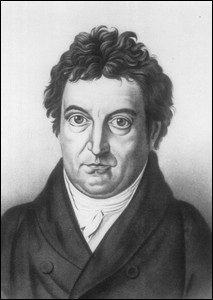
Johann Gottlieb Fichte
German philosopherWikipedia
290
MENTIONS
61
EPISODES
53
PODCASTS
Search complete. 290 mentions across 61 episodes found for "Johann Gottlieb Fichte".
Sep 23, 2026

Pamela NagamiNARRATOR
We have now to trace, within the limits prescribed by the nature of this work, the development of philosophy under Kant's German successors.
Pamela NagamiNARRATOR
Fichte, Schelling, Hegel, Schopenhauer, Herbart.
Pamela NagamiNARRATOR
the critical philosophy won its first success in germany less as a new epistemology than as what in fact its author mended to be a rehabilitation of religious belief the limits of reason had been drawn so closely only to make room for faith but the current of rationalism was running too strongly to be so summarily stopped and so with kant's ablest successors faith is altogether abandoned while the claims of reason are pushed relentlessly through Among these more logical thinkers, the first is J. G. Fichte, 1762 to 1814.
Pamela NagamiNARRATOR
In him, for the third time in modern history, for the first and last time in Germany, the hero as philosopher finds a worthy representative.
Pamela NagamiNARRATOR
born in silesia like kant of humble parentage and bred in circumstances of more oppressive poverty he also received a severely religious and moral training as a preparation for the pastoral office The bounty of an aristocratic patron gave him an excellent public school education, but as a university student, first at Jena and then at Leipzig, he had to earn a scanty living by private tuition, finally abandoning his destined career to accept a post in a Swiss family at Zurich.
Pamela NagamiNARRATOR
Dr. Temple long afterwards used much the same phrase when Bishop at Exeter, finding it presumably compatible with official theism.
Pamela NagamiNARRATOR
But such was not the impression created in Saxony.
Pamela NagamiNARRATOR
a cry of atheism arose much to the disgust of fichte whose position would have been better described as pantheistic but what incensed him most was the suspicion of an attempt to interfere with the liberty of academic teaching with his usual impetuosity he talked about resigning his chair with a hint that others would follow his example were the authorities at weimar to permit such an outrage goethe who was then minister observed that no government could allow itself to be threatened and fichte was at once relieved of his post settling at berlin he became professor of philosophy in the new university founded after the french conquest of prussia having previously done much to revive the national spirit by his addresses to the german nation eighteen o seven eighteen o eight these were in appearance the programme of a new educational utopia but their real purpose was so evident that the speaker lived in daily expectation of being summoned before a french court-martial and shot Unlike his countrymen, Goethe, Hegel, and Schopenhauer, Fichte passionately resented the Napoleonic despotism, throwing himself heart and soul into the great uprising by which it was finally overthrown.

Larry WilsonNARRATOR
End of An Ascent of Kilauea by Anna Brassy.
speaker_1NARRATOR
Fichte and Kant on Censorship by Johann Fichte and Immanuel Kant.
speaker_1NARRATOR
This is a LibriVox recording.
speaker_1NARRATOR
All LibriVox recordings are in the public domain.
speaker_1NARRATOR
For more information or to volunteer, please visit LibriVox.org. Fichte to Kant, 22nd January 1792.
speaker_1NARRATOR
A friend whom I respect has written to me a kind and touching letter upon this subject, in which he requests that in the event of a possible revision of the work during the delay which has occurred in printing, I should endeavor to set two points upon which we are at issue in another light.
speaker_1NARRATOR
I have said that faith in a given revelation cannot reasonably be founded upon belief in miracles, because no miracle is demonstrable as such.
6 MINS LATER
speaker_1NARRATOR
But you will not easily make this distinction acceptable to a censor who, it is to be feared, makes historical belief an unconditional religious duty.

Chufi GaleazziNARRATOR
Tales of Hebrew history it is also in her mind to compose.
Chufi GaleazziNARRATOR
Becoming convinced that some fixed opinion on the subject of metaphysics is an essential aid to systemic culture, she addresses herself to the study of Fichte and Jacobi, of Brown and Stuart.
Chufi GaleazziNARRATOR
The first of these appeared to her incomprehensible.
Chufi GaleazziNARRATOR
Of the second, she conjectures that his views are derived from some author whom she has not read.
1 HR 31 MINS LATER
Chufi GaleazziNARRATOR
While this movement was, in a good degree, one of simple protest and reaction, it yet drew much of its inspiration from foreign countries and periods of time remote from our own.
Chufi GaleazziNARRATOR
From the standpoint of the present, it looked deeply into the past and into the future.
Chufi GaleazziNARRATOR
Its leaders studied Plato, Seneca, Epictetus, Plutarch, among the classic authors, and Divette, Hegel, Kant, and Fichte, among the prophets of modern thought.
Chufi GaleazziNARRATOR
The Weltgeist of the Germans was its ideal.

Don W. JenkinsNARRATOR
Our comrade Dufar had not when this book was published made his appearance in public life as a lawyer.
Don W. JenkinsNARRATOR
The translator of Fichte, the expositor and friend of Balanche, was already interested, as I myself was, in metaphysical questions.
Don W. JenkinsNARRATOR
We often talked nonsense together about God, ourselves, and nature.
Don W. JenkinsNARRATOR
He at that time affected Pyrrhonism.

Matthew Raphael JohnsonGUEST
and it's just that means that we have to suffer
Thomas777GUEST
no indeed Something, too, and this is a bit tangential, but Fichte, a lot of concepts that people attribute to Hegel and Hegelian thought originated with Fichte.
Thomas777GUEST
I have noticed that.
Thomas777GUEST
Like that's an E. Michael Jones made that point.
Thomas777GUEST
Um, so there's that too.
Thomas777GUEST
And, and sort of the, even, even in like in the academic mind, even among people who have a pretty sophisticated understanding of the subject matter, there's, uh, There's there's other theorists who they associate with Hegel.
Thomas777GUEST
And sometimes I think they in their mind, they they think a lot of stuff that was put to paper by Fichte was actually a Hegelian enterprise.
Thomas777GUEST
So is that too? And Fichte is not the only case of that.

ThomasGUEST
No, indeed.
ThomasGUEST
Something too, and this is a bit tangential, but Fichte, a lot of, a lot of, a lot of concepts that people attribute to Hegel and Hegelian thought originated with Fichte.
ThomasGUEST
And I've noticed that.
ThomasGUEST
Like that's-
ThomasGUEST
I thought that might've just been one of his conceptual prejudices, but I started deep diving into it, and he, I, I think he's right.
ThomasGUEST
Um, so there's that too.
ThomasGUEST
You know, and, and sort of the, even, even in, like in the academic mind, even among people who have a, a pretty sophisticated understanding of the subject matter, there's a, there's, there's other theorists who they associate with Hegel, and sometimes I think they, in their mind, they, they think a lot of stuff that was put to paper by Fichte was actually a Hegelian enterprise.
ThomasGUEST
So there's that too.

Alyse SteinNARRATOR
At the moment of their concentration into a movement, the German romanticists found this boon in the Berlin salons presided over by the enthusiastic, inspiring women, the sibyls of the Romantic movement.
Alyse SteinNARRATOR
Among the habitués at Henriette's receptions were Schadow, the sculptor, Fichte, Gentz, the two Humboldts, Tieck, Jean Paul Richter, Friedrich Schlegel, Engel, Moritz, Rahel, and Varnhagen von Ense, Schleiermacher.
Alyse SteinNARRATOR
Moses Mendelssohn was her fatherly friend, and his daughter, Dorothea Veit, met in her salon Friedrich Schlegel, whose wife she afterwards became.
Alyse SteinNARRATOR
The episode of Friedrich and Dorothea caused great excitement in Romantic circles.
39 MINS LATER
Alyse SteinNARRATOR
In France, the revolution and its train of writers, thinkers.
Alyse SteinNARRATOR
In Germany, Lessing uttered his great parable of religious tolerance, Nathan der Weise.
Alyse SteinNARRATOR
Herder, Kant, Fichte, all taught and proclaimed freedom, the unloosening of mental fetters.
Alyse SteinNARRATOR
Goethe and Schiller were raising German poetry to undreamed-of heights.

TriciaGNARRATOR
It was otherwise with his successors, the idealists, for whom his system was the point of departure, though they rejected its essential feature, the limitation of human thought.
TriciaGNARRATOR
With Fichte and Hegel, progressive development was directly deduced from their principles.
TriciaGNARRATOR
If their particular interpretations of history have no permanent value, it is significant that in their ambitious attempts to explain the universe a priori, history was conceived as progressive, and their philosophies did much to reinforce a conception which on very different principles was making its way in the world.
TriciaGNARRATOR
But the progress which their systems involved was not bound up with the interest of human happiness, but stood out as a fact which, whether agreeable or not, is a consequence of the nature of thought.
TriciaGNARRATOR
The process of the universe, as it appeared to Fichte, tends to a full realization of freedom.
TriciaGNARRATOR
That is its end and goal, but a goal that always recedes.
TriciaGNARRATOR
It can never be reached, for its full attainment would mean the complete suppression of nature.
TriciaGNARRATOR
The process of the world, therefore, consists in an indefinite approximation to an unattainable ideal.

Steven SeitelNARRATOR
It was otherwise with his successors, the idealists, for whom his system was the point of departure, though they rejected its essential feature, the limitation of human thought.
Steven SeitelNARRATOR
With Fichte and Hegel, progressive development was directly deduced from their principles.
Steven SeitelNARRATOR
If their particular interpretations of history have no permanent value, it is significant that in their ambitious attempts to explain the universe a priori, history was conceived as progressive, and their philosophies did much to reinforce a conception which, on very different principles, was making its way in the world.
Steven SeitelNARRATOR
But the progress which their systems involved was not bound up with the interest of human happiness, but stood out as a fact which, whether agreeable or not, is a consequence of the nature of thought.
Steven SeitelNARRATOR
The process of the universe, as it appeared to Fichte, tends to a full realization of freedom.
Steven SeitelNARRATOR
That is its end and goal, but a goal that always recedes.
Steven SeitelNARRATOR
It can never be reached, for its full attainment would mean the complete suppression of nature.
Steven SeitelNARRATOR
The process of the world, therefore, consists in an indefinite approximation to an unattainable ideal.

Dale GrothmanNARRATOR
The end of The Most Popular Book of the Month by Robert C. Benchley Read by Dale Grothman
speaker_12NARRATOR
Excerpt from The Destiny of Man by Johann Gottlieb Fichte, published in 1800, translated by Frederick H.
speaker_12NARRATOR
Hedge.
speaker_12NARRATOR
Book 3, Faith This is a LibriVox recording.
7 MINS LATER
speaker_12NARRATOR
This then is my whole sublime destination, my true essence.
speaker_12NARRATOR
I am a member of two systems, a purely spiritual one in which I rule by pure will alone, and a sensuous one in which I work by my deed.
speaker_12NARRATOR
End of excerpt from The Destiny of Man by Johann Gottlieb Fichte, published in 1800.
speaker_12NARRATOR
Book Three, Faith.
51 more episodes mention Johann Gottlieb Fichte.
Create an account to see the whole feed, search across every transcript, and follow the entities you care about.