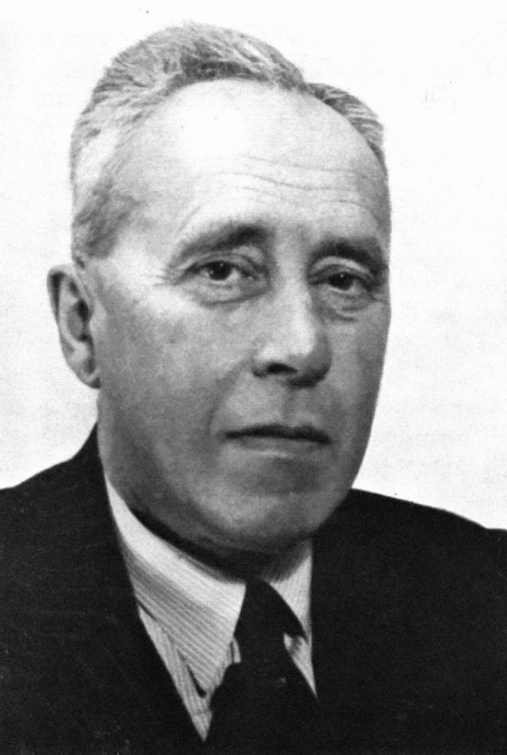
Johan Huizinga
Dutch historianWikipedia
13
MENTIONS
8
EPISODES
8
PODCASTS
Search complete. 13 mentions across 8 episodes found for "Johan Huizinga".
Sep 17, 2026

Jay HughesGUEST
I would say that care is what dominates what we do.
Jay HughesGUEST
So there was a philosopher, and by the way, a series of articles that Keith Whitaker and I wrote on the culture of care, which can be found on the foundation website, if anybody's interested, by James E. Hughes Jr.
Jay HughesGUEST
Foundation website.
Jay HughesGUEST
The great philosophers said, well, care is a virtue, not a value, a virtue.
Jay HughesGUEST
And then the great question is, what do you care about? And what we're saying in this book, and people have been saying for decades, thousands of years, if we care about the other's well-being, we have some possibility of having well-being ourselves.
Jay HughesGUEST
So this well-being idea and caring about well-being, we feel, my co-authors and I and many of us, is the core question, what do we care about? We care about each other's well-beings.

Gay HendricksGUEST
And you can actually play with it, you know? And so pretty soon everybody's playing their version of golf millions of years ago.
Gay HendricksGUEST
But there was a famous book written by a philosopher named Huizinga.
Gay HendricksGUEST
It's called Homo Ludensis.
Gay HendricksGUEST
And that means, like Homo sapiens means wise man, Homo ludensis means playful man.

Devin PersonHOST
I've been researching this for months now, and this is a pretty heady philosophical territory that people have a lot of different theories ranging from sociology and psychology and beyond.
Devin PersonHOST
But I'm just going to talk about one definition of play, and that is one that comes to us from Johan Huizinga, the Dutch author who wrote the book Homo Ludens, that really advanced this field of study.
Devin PersonHOST
And so I'm going to read the definition and then I'm going to break it down piece by piece.
Devin PersonHOST
So Huizinga says, "...play is a free activity standing quite consciously outside ordinary life as being not serious, but at the same time absorbing the player intensely and utterly." It is an activity connected with no material interest, and no profit can be gained by it.
Devin PersonHOST
It proceeds within its own boundaries of time and space, according to fixed rules and in an orderly manner.
Devin PersonHOST
It promotes the formation of social groupings, which tend to surround themselves with secrecy and distress their difference from the common world by disguise or other means." So before I break it down piece by piece, I want to be clear.
31 MINS LATER
Devin PersonHOST
So go have a spontaneous dance party in the park at midnight.
Devin PersonHOST
When you're at your house, see if you can come up with a fun game to play with your roommates where it's not about competing with each other or punishing each other, but it's something more radical and different and open and free.

Ben RiggsHOST
In an age when we're all supposed to be scared shitless at the thought of losing our jobs, and therefore we should devote our every waking moment to the good of the company or self-improvement or keeping up in this economy, play looks at all of that and flips the table before setting it on fire.
Ben RiggsHOST
The extravagantly named Dutch academic Johan Huizinga put it this way.
Ben RiggsHOST
Play is, quote, superfluous, end quote, and serves no material interests or biological needs.
Ben RiggsHOST
But.

speaker_1NARRATOR
The metric ate the meaning.
speaker_1NARRATOR
The Dutch historian and cultural critic Johan Huizinga saw this coming almost a century ago.
speaker_1NARRATOR
In Homo Ludens, 1938, he argued that play is not marginal to civilization, but rather generative of it.
speaker_1NARRATOR
For Huizinga, law, philosophy, poetry, and war all emerge from play's magic circle, the bounded space where ordinary rules are suspended and something else becomes possible.

Mario PinedaNARRATOR
For more information or to volunteer, please visit LibriVox.org. Recording by Mario Pineda.
Mario PinedaNARRATOR
Erasmus and the Age of Reformation by Johan Huizinga.
Mario PinedaNARRATOR
Translated by Frederick John Hoffman.
Mario PinedaNARRATOR
Chapter 12.
2 HRS 4 MINS LATER
Rita ButrosNARRATOR
All LibriVox recordings are in the public domain.
Rita ButrosNARRATOR
For more information, or to volunteer, please visit LibriVox.org. Recording by Rita Butros.
Rita ButrosNARRATOR
Erasmus and the Age of Reformation by Johan Huizinga.
Rita ButrosNARRATOR
Translated by Frederick Jan Hopman.

IreneHOST
What buyers of the period did want was pictures of the figures in domestic interiors, recognizable people doing recognizable things at leisure or at work, surrounded by traces of their lives: babies, animals, furniture, pots and pans, musical instruments, pieces of fabric, jewelry.
IreneHOST
"Seventeenth-century artists must indeed have had an irrepressible need to grasp things," the cultural historian Johan Huizinga has observed.
IreneHOST
Nothing in their environment was too slate to be noticed.
IreneHOST
Like his, [clears throat] excuse me.

Holly EverettHOST
But then for a lot of adults that play time is.
Holly EverettHOST
that play you know those moments of rest and respite that we give ourselves are spent in front of screens so often and um you know in a sense spent sort of socially isolated i love that i don't love it but i think that's a very powerful word the sort of sedentarified what is that how you pronounced it anyway we're having it we're owning it it's the thought boxes in the dictionary um is so true that that kind of not being in our own bodies anymore not being just letting ourselves be playful and joyful and and and the impact that has and you know I think um I think it's really interesting you know you can tell I've been nerding out about this because I've got all these quotes from all these different researchers but but you know there's a guy called Huizinga who um was writing I think almost 100 years ago or so and he says you know nature you could just as easily have given her children all these useful functions of discharging superabundant energy or of relaxing or training for the demands of life or compensating for unfulfilled longings in the form of purely mechanical exercises.
Holly EverettHOST
But no.
Holly EverettHOST
She gave us play with its tension, its mirth and its fun.
Holly EverettHOST
And that's to the absolute deficit of our survival.
Holly EverettHOST
And as we're seeing, you know, on a larger cultural scale, it's had a huge ripple impact.
Holly EverettHOST
And that's another one of kind of Huizinga's kind of famous things is he actually talks about play being intrinsic to human civilizations and that without play, human civilizations become brittle and they crumble.
Holly EverettHOST
Yeah.