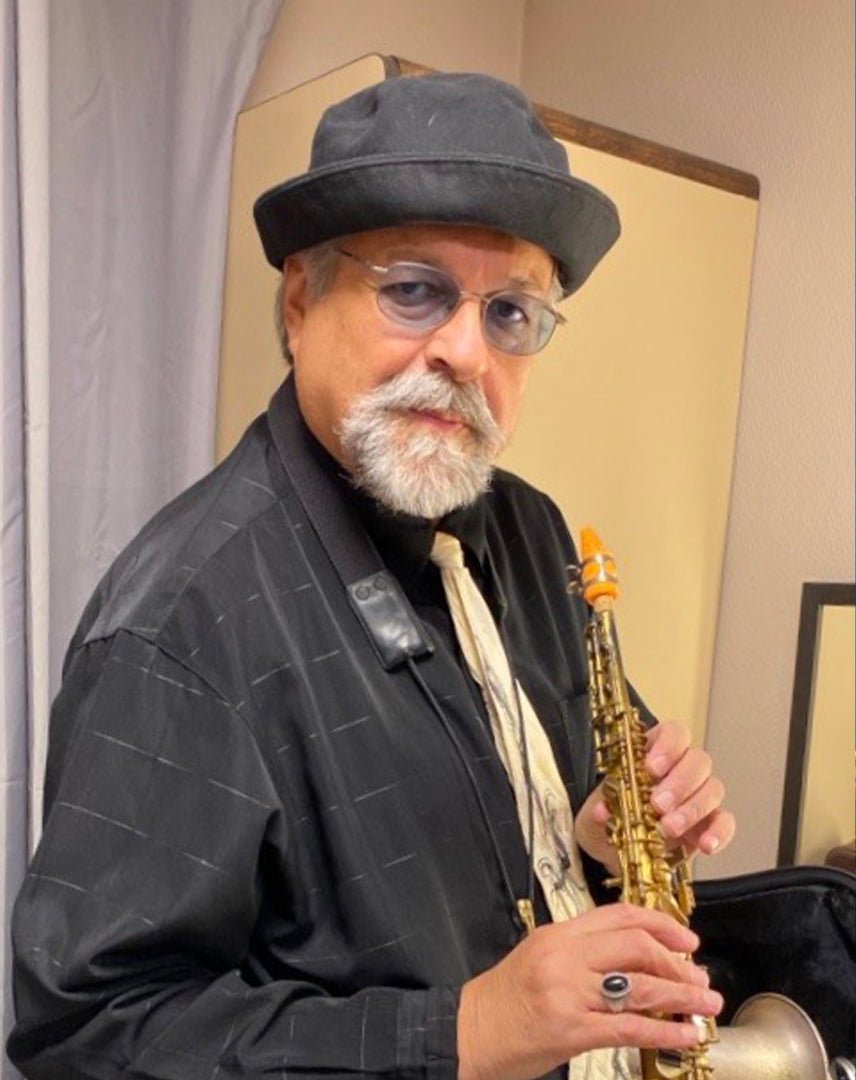
Joe Lovano
American multi-instrumentalistWikipedia
21
MENTIONS
14
EPISODES
13
PODCASTS
Search complete. 21 mentions across 14 episodes found for "Joe Lovano".
Oct 9, 2026

Andrew McAnshGUEST
the Berkeley Global Jazz Institute in 2017.
Andrew McAnshGUEST
When I came back to Toronto, I had an interesting time sort of integrating back into, you know, back into Toronto because I was on this crazy inspiration sort of ride from studying with people like Danilo Perez, Terry Lynn Carrington, John Patitucci, Joe Lovano, and the list goes on and on.
Andrew McAnshGUEST
And, And so one of the things that they got me to think about is to figure out what is the sound of the land that you're from? What is the real cultural identity of where you are taking into effect the history of the country? And so...
Andrew McAnshGUEST
Right when I was really deep in thought about that, I was around Spadina and Bloor, right around the Native Center, and there were these two Indigenous artists that were selling their artwork right on the corner of Spadina and Bloor, and one of them is named Melanie Montour, and she's an absolute... an absolute beautiful human being with an incredible story.

Taylor EigstiGUEST
It was a tribute to McCoy Tyner with McCoy.
Taylor EigstiGUEST
So there was, uh, it was myself, Kenny Barron, Benny Green, Chick Corea, McCoy Tyner, uh, Joe Lovano, Jerry Allen, and Marcus Roberts.
Taylor EigstiGUEST
And, uh, but I just remember sitting on the piano with Chick Corea, and I'm looking across the, at McCoy Tyner, and I'm like, you know, it's just, it felt, felt like I was hallucinating.
Taylor EigstiGUEST
And, um, and, and yeah.

Bobby BroomHOST
I recall a backstage meeting between Gary and Sonny after a Sonny concert, and I could tell the fondness they had for each other, as did this gentleman who was also in attendance celebrating Sonny.
Bobby BroomHOST
Here's Joe Lovano.
Bobby BroomHOST
¶¶
speaker_4SOUNDBITE_SPEAKER
Thank you.
10 MINS LATER
speaker_4SOUNDBITE_SPEAKER
Thank you.
Bobby BroomHOST
Bassist Rufus Reed featuring Sullivan Fortner at the piano from It's Nights Like These, and the tune was Bigfoot.
Bobby BroomHOST
And before that, we heard saxophonist Joe Lovano from his 52nd Street Themes recording, and he did Tad's Delight.
Bobby BroomHOST
Now we're going to hear one from drummer Billy Hart, who was in attendance that evening.

Doran StambaughHOST
Guitarist John Scofield, born December 26, 1951, first rose to prominence as a member of Miles Davis' Band, but he had a number of good credits prior to the three and a half years he spent with Davis, including stints with Chet Baker, Hal Galper, Charles Mingus, Bill Cobham, and George Duke.
Doran StambaughHOST
His own groups have featured such luminaries as Steve Swallow, Adam Nussbaum, Bill Stewart, Joe Lovano, and Charlie Haden.
Doran StambaughHOST
He has been nominated for nine Grammy Awards and won three.
Doran StambaughHOST
We're featuring John Scofield this week.
6 MINS LATER
Joey CaranoPANELIST
Uh, harmonically, you know, he seemed to wonderfully play all the wrong notes, you know? And, and then also sonically, he would use some distortion and some effects, and so he, he, he was very much influenced by, well, jazz music, yes, but also R&B and the blues.
Joey CaranoPANELIST
So then I started to buy records of his, and, uh, he's had a bunch of interesting bands.
Joey CaranoPANELIST
He, he had a quartet with Joe Lovano and, uh, well, and he played a bunch of duos and, and there are guitar players, uh, there were guitar players before him who were starting to use sounds in, uh, in this music that was coined as fusion, you know.
Joey CaranoPANELIST
So they would use distortion and use bend strings and stuff like that, and he certainly would bend strings and all that kind of stuff, which is not typical f- uh, from a jazz guitar player.

Josh NelsonGUEST
I chose kind of a lesser played one.
Josh NelsonGUEST
Uh, actually I learned it from Joe Lovano from his Live at the Vanguard quartet actually, and Monk's version of course.
Josh NelsonGUEST
It's called Reflections.
Robert MillerHOST
Uh-huh.

Ken LasterHOST
We're going to start with another fine tenor saxophone player.
Ken LasterHOST
His name is Joe Lovano.
Ken LasterHOST
His album is the Paramount Quartet.
Ken LasterHOST
This is a brand new release.
Ken LasterHOST
It features Joe Lovano on tenor saxophone, Julian Lodge on guitar, Asante De Bruyano on bass, and Will Calhoun drums.
Ken LasterHOST
The name of this track is Amsterdam.
Ken LasterHOST
Thank you.
16 MINS LATER
Ken LasterHOST
an album that was just released, but it was recorded back in June of 2022 in Lisbon.

Andrew FordHOST
And so it's astonishing in a way to think what an impact Coltrane made in those 40 years.
Andrew FordHOST
I remember a conversation with Gunther Schuller, who played in the kind of blue sessions with Miles Davis, saying that he thought that really every tenor sax player after Coltrane, with the possible exception of Joe Lovano, had tried to sound like Trane himself. . We'll finish with John Sheinfeld, the director of Chasing Train.
John ScheinfeldSOUNDBITE_SPEAKER
The thing that characterized Coltrane more than anything was his continual efforts to move beyond, to try something new, to experiment, to push the envelope, irrespective of what effect it might have had on his fan base or his record sales.
John ScheinfeldSOUNDBITE_SPEAKER
People call it free jazz period.
Andrew McAnshGUEST
the Berkeley Global Jazz Institute in 2017.
Andrew McAnshGUEST
When I came back to Toronto, I had an interesting time sort of integrating back into, you know, back into Toronto because I was on this crazy inspiration sort of ride from studying with people like Danilo Perez, Terry Lynn Carrington, John Patitucci, Joe Lovano, and the list goes on and on.
Andrew McAnshGUEST
And, And so one of the things that they got me to think about is to figure out what is the sound of the land that you're from? What is the real cultural identity of where you are taking into effect the history of the country? And so...
Andrew McAnshGUEST
Right when I was really deep in thought about that, I was around Spadina and Bloor, right around the Native Center, and there were these two Indigenous artists that were selling their artwork right on the corner of Spadina and Bloor, and one of them is named Melanie Montour, and she's an absolute... an absolute beautiful human being with an incredible story.

Joey BaronGUEST
And so, uh, Boston, uh, at that time was a, um, it s- it was a place where I could meet other people, other peers, um, who were also interested.
Joey BaronGUEST
So there was this guy walking around there named Joe Lovano, and [laughs] there's another guy named John Scofield, and, um, Chip Jackson and James Williams, and, uh, yeah, a, a lot of friends, you know, that are still around, those that are st- are still around today.
Joey BaronGUEST
Um, yeah, we all met there 'cause we were all trying to do the same thing.
Brad WilliamsHOST
Wow.

speaker_3UNKNOWN
Thank you.
Kevin LawrenceHOST
And that is music by Joe Lovano.
Kevin LawrenceHOST
That's music from his Blue Note album, Joyous Encounter.
Kevin LawrenceHOST
And the name of the song is called Quiet Lady.
Kevin LawrenceHOST
It features Joe Lovano on tenor sax, Hank Jones on piano, George Mraz on bass, and Paul Motion on drums.
Kevin LawrenceHOST
Now, Joe Lovano was a side man for Woody Herman.
Kevin LawrenceHOST
Also, he's influenced by John Coltrane and Ornette Coleman.
Kevin LawrenceHOST
And we gave you a double dose of my favorite jazz rock band, Blood, Sweat & Tears.
4 more episodes mention Joe Lovano.
Create an account to see the whole feed, search across every transcript, and follow the entities you care about.