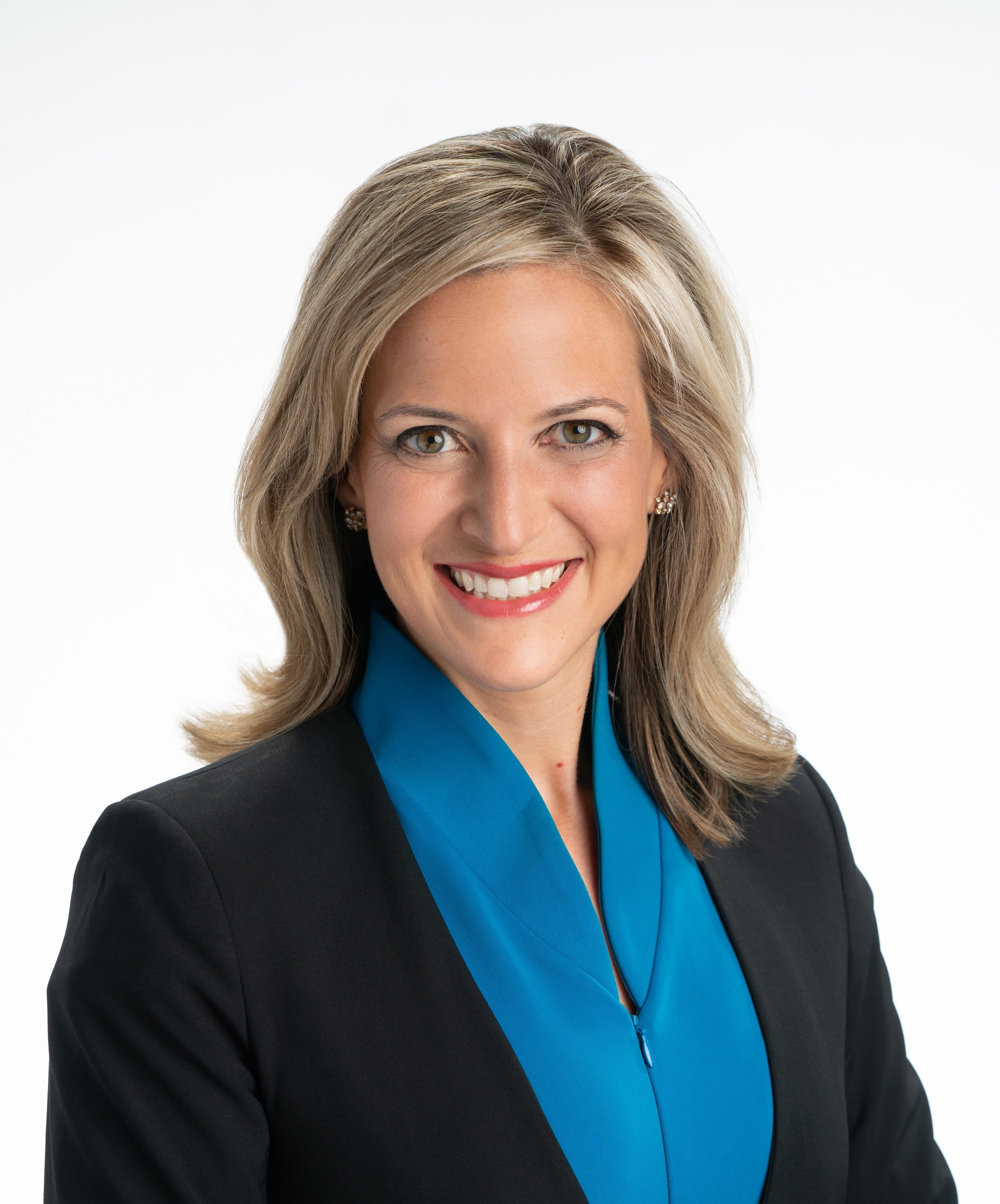
Jocelyn Benson
Secretary of State of Michigan
40
APPEARANCES
26
PODCASTS
Sep 16, 2026

Jocelyn BensonGUEST
We implement a Michigan education guarantee to ensure every kid is college or career ready when they graduate with science-based curriculum, reading reforms, and the like.
Jocelyn BensonGUEST
And then we train and support our educators who actually have to implement that curriculum.
Jocelyn BensonGUEST
We pass the curriculum reforms, but then we never connect the dots to ensure our educators have the tools, resources, and financial support they need to actually implement the curriculum reforms.
Jocelyn BensonGUEST
And then I'll also invest in early childhood development because we know literacy starts before they get to kindergarten.
Jocelyn BensonGUEST
And so we have to expand pre-K and ensure that we're preparing our youngest kids from the minute they come into kindergarten to be able to read.
Jocelyn BensonGUEST
So I've got a comprehensive education plan that is science-based and based on what's worked in Mississippi and what's worked You know, I'm so tired of the Mississippi miracle.

Paul W. SmithHOST
And there are parents who do not read to their kids, whether it's because they can't read or they don't feel it's important.
Jocelyn BensonGUEST
We implement a Michigan education guarantee to ensure every kid is college or career ready when they graduate with science-based curriculum, reading reforms, and the like.
Jocelyn BensonGUEST
And then we train and support our educators who actually have to implement that curriculum.
Jocelyn BensonGUEST
We pass the curriculum reforms, but then we never connect the dots to ensure our educators have the tools, resources, and financial support they need to actually implement the curriculum reforms.
Jocelyn BensonGUEST
And then I'll also invest in early childhood development because we know literacy starts before they get to kindergarten.
Jocelyn BensonGUEST
And so we have to expand pre-K and ensure that we're preparing our youngest kids from the minute they come into kindergarten to be able to read.
Jocelyn BensonGUEST
So I've got a comprehensive education plan that is science-based and based on what's worked in Mississippi and what's worked You know, I'm so tired of the Mississippi miracle.
Paul W. SmithHOST
And there are parents who do not read to their kids, whether it's because they can't read or they don't feel it's important.


Margaret BrennanHOST
But practically speaking, how at the state level can you do anything to cancel out the costs coming from the federal government's dispute?
Jocelyn BensonGUEST
Well, first, it's important to note my opponent could talk a good game, but the bottom line is he's either been silent or he's voted for these tariffs.
Jocelyn BensonGUEST
And that means we call these tariffs in Michigan the John James tax because of his actions, because of his inability to stand up to the president as a congressman.
Jocelyn BensonGUEST
But in addition to that, some national agreements are things that governors and other states have already talked about and negotiated to drive down costs when the federal government won't do that.

Jocelyn BensonGUEST
Well, certainly, you know, I often joke that I run the Department of Motor Vehicles, so I'm obviously very popular.
Jocelyn BensonGUEST
But at the same time, what we've been able to do is transform this massive state agency that is the butt of so many jokes across the nation and actually transform it into one of the most efficient, well-run government agencies in the nation.
Jocelyn BensonGUEST
We have mobile offices that show up at senior centers and community events, actually meeting people where they are.


Eugene DanielsHOST
how you, as you're moving forward in your campaigning, you will still continue to do your current job as Secretary of State, what are the specific things you guys are doing to make sure that no matter what Trump does, you are prepared?
Jocelyn BensonGUEST
That was the case in 2020 and why we were in the spotlight then and why we're in the spotlight now.
Jocelyn BensonGUEST
And particularly cities like Detroit, Grand Rapids, others that have been under that scrutiny are ones where you see high turnout that oftentimes influence the outcome of the statewide vote.
Jocelyn BensonGUEST
So no surprise that in his effort to interfere with elections and make voters feel that they don't have the power as they do.
Jocelyn BensonGUEST
No surprise that Trump continues to lie about the security and safety of our elections, which, by the way, are ranked number two in the nation for safety and security.


Jocelyn BensonGUEST
Are they working for the people? Are they trying to protect their voices? Are they trying to protect our jobs? Are they trying to prepare our young people for the jobs of tomorrow, whether they be in tech or elsewhere? I mean, that's again where we're focused.
Jocelyn BensonGUEST
And I know there's a lot of unknowns, particularly when it call, comes to technological advancements and, and AI, and that's where government also has to come in with guardrails to actually protect the people.
Jocelyn BensonGUEST
Uh, protect them against deception, protect them against misuse and abuse of their own likeness and image and other things.
Jocelyn BensonGUEST
Uh, and again, that's why having state leaders or all leaders who are squarely focused not on what corporations want or tech billionaires want, but what the people need, uh, is a critical role for government to play.

13:53

I want to begin with what you know, if anything, at this point about what Donald Trump's agents, federal agents, were doing in Michigan yesterday and last night.
Jocelyn BensonGUEST
Well, first, thanks so much for having me, Lawrence, uh, and for that wonderful overlay of everything [laughs] that we've lived through in Michigan for the last six years up until yesterday.
Jocelyn BensonGUEST
Uh, and yes, uh, yesterday during, uh, election day, primary day, there were federal observers at the polls.
Jocelyn BensonGUEST
Uh, and there were also observers, nonpartisan observers from various other entities watching the observers to make sure nothing went awry.
Jocelyn BensonGUEST
Because look, in Michigan, we welcome scrutiny, we welcome transparency, we welcome people coming and seeing just how secure our elections are.
Jocelyn BensonGUEST
Where we draw the line is when people try to disrupt, interfere, or lie about the process.
17:00
Uh, what does that tell you about the way your service as Secretary of State has been perceived by Michigan voters?

Jocelyn BensonGUEST
I've been really excited to see the momentum all around the state for, in this primary election.
Jocelyn BensonGUEST
Uh, and really, uh, achieve support from, from business leaders, labor leaders, uh, Jewish community leaders, Arab American, Muslim community leaders.
Jocelyn BensonGUEST
We are building a unifying effort to ensure I'm able to lead the state with a trifecta of leaders all across Michigan that are focused on driving down costs, dri- driving up wages, and protecting the rights and safety of every community.
Jocelyn BensonGUEST
Governors are the ones that can and must stand up to the President of the United States when he tries to terrorize communities or, or terrorize our economy with, with tariffs that are irresponsible and driving up costs and hurting our working people in our state.

Al SharptonHOST
How have you been responding to these instances now in your current role, and how would you continue that work as governor?


Jocelyn BensonGUEST
We just had an electrifying event and out here and headed to Holland, up and down the west side of the state.
Jocelyn BensonGUEST
I mean, we have already in this primary election, 750,000 Michigan citizens have cast their ballots and early voting over the weekend, which just started on Saturday.
Paul W. SmithHOST
What are your thoughts about that as a good, strong, old-line, I guess, moderate Democrat?
Jocelyn BensonGUEST
We just had an electrifying event and out here and headed to Holland, up and down the west side of the state.
Jocelyn BensonGUEST
I mean, we have already in this primary election, 750,000 Michigan citizens have cast their ballots and early voting over the weekend, which just started on Saturday.
Paul W. SmithHOST
What are your thoughts about that as a good, strong, old-line, I guess, moderate Democrat?


Andy OstroyHOST
How do you respond to those criticisms? And do you worry that election misinformation has become a permanent campaign strategy?
Jocelyn BensonGUEST
I think election misinformation at a time where it's increasingly difficult to find trusted sources of information about just about everything, that's one of the biggest threats to election security today.
Jocelyn BensonGUEST
Not non-citizens voting, which we know the facts say isn't actually happening in any significant way.
Jocelyn BensonGUEST
It's lies and misinformation designed to cause citizens to lose the faith that they should have in our democracy, in their voices, and in their votes, and in our elections.
Jocelyn BensonGUEST
And every time misinformation is spread, it doesn't just harm citizens' faith in our elections.
8 MINS LATER

Jocelyn BensonGUEST
Yeah, again, it's another bullying tactic, and the irony is that in 2020 in particular, we had one of the most secure elections in our country's history because of the investments in CISA and a number of other security protections and funding that we in every state were able to utilize to protect our systems and ensure they were secure.
Jocelyn BensonGUEST
And so, so to actually dismantle all of those protections, what the president did when he came back into office, uh, last year, uh, and then, uh, sort of suggest to do more, uh, sh- really underscores how they're actually not talking about securing our elections at all, but instead trying to scare and intimidate election officials into doing their bidding and doing their work, while also sowing seeds of doubt among the American people about the, the security of our elections.
Jocelyn BensonGUEST
So for us in the states, that means continuing, frankly, to knit together our own security protocols and protections and doing even more than we've done before, and to work together, as we are, state to state, to share information and to work to input best practices in place.
Jocelyn BensonGUEST
And we have to do all this because the federal government, again, under President Trump, dismantled the very security protections that we relied on to ensure our elections were, are protected from any attempted foreign interference.

John KingHOST
Uh, what did you make of the president bringing that up last night, six years later?
Jocelyn BensonGUEST
Yeah, quite frankly, I was stunned because here we are seeing this build-up, right? There are all these attempts to shake people's faith in the election systems that we know to be secure, uh, and protected, uh, and, and make people doubt the results, not just of the 2020 election, but future ones as well.
Jocelyn BensonGUEST
And then to bring up one of the most widely debunked conspiracy theories [laughs] that was debunked years ago, uh, that was actually an example of the security protocols we have working, was stunning to me because it really just underscores that there's actually no evidence of any wrongdoing, that the systems are secure, and if there was any actual evidence, we would have heard it by now.


Jake SullivanHOST
Um, d- how do you think about the role of the federal government right now, and particularly this administration, and do any of these kinds of scenarios that, uh, you know, have been floated in the press give you cause for concern? Uh, do you think the president m- may try something coming down the stretch here in the closing months before the midterms beyond what he's already tried to do?
Jocelyn BensonGUEST
Essentially, in our work, we say we always hope for the best but prepare for every contingency.
Jocelyn BensonGUEST
Uh, and that's exactly what, uh, is, is required and what has enabled us, frankly, to go through not one, not two, but three election cycles, in 2020, '22, and 2024, with these very same threats, with this multinational, uh, potential threat to our democracy, not just in, in actuality, but in, sort of in our minds.
Jocelyn BensonGUEST
Uh, and it's come f- certainly, particularly in presidential years, that threat has been amplified by foreign governments, we've seen, um, but we know that domestic interference can be just as problematic, uh, and possible as international efforts to undermine our elections.
Jocelyn BensonGUEST
So with that in mind, we actually scenario plan, and we have been doing this since 2020, uh, where we partner at the local level with local clerks, law enforcement, first responders, to go through every possible scenario.
8 MINS LATER
Jake SullivanHOST
Can, can you explain what's actually going on with the SAVE Act? What, what concerns you, and, and what should concern our listeners?

Jocelyn BensonGUEST
Well, first of all, any allegations in the Justice Department's letters are completely and factually baseless.
Jocelyn BensonGUEST
Our elections in Michigan, including in Detroit, are among the most secure and accessible in the nation.
Jocelyn BensonGUEST
Recognizing, however, that transparency is our friend, we welcome anyone to see up close and personal just how secure and accurate our elections are.

Alicia MenendezHOST
What does crossing that line actually look like? How do you know when it's been crossed?

3:12

First, what is your reaction to this news that the Department of Justice could send election monitors to Michigan for the primaries? Have, have the Department of Justice spoken directly to you or your office?
Jocelyn BensonGUEST
The President and his administration continues to, uh, sow seeds of doubt, baseless, evidence-free, as you said, uh, about our elections, which are, in Michigan and else- and everywhere else, our m- our elections are transparent, accurate, accessible, and secure.
Jocelyn BensonGUEST
Uh, but what we're seeing here is, uh, the President and the Department of Justice continuing to pursue these baseless allegations to confuse voters about the facts.
Jocelyn BensonGUEST
Uh, now, in this case, you see where we have stood firm in the Department of State statewide and said, "No, and we'll see you in court every time the President tries to break the law or intimidate me, uh, or anyone else in our office." Uh, now they're going to local officials to try to pressure them, uh, to be afraid or scared or worried, uh, and through that, pressure voters in these critical c- uh, communities in Michigan, East Lansing, Lansing, Detroit, uh, into worrying about the elections process or worrying about whether they m- they might face intimidation or worse if they show up to vote.
6:02
You actually did a review of the 2024 vote, and you found that out of 5.7 million ballots cast in the Michigan general election, there were only 15 credible cases of election fraud? Do I have that right?
Jocelyn BensonGUEST
Yeah, you know, everywhere I go in Michigan, and we're on day two of this statewide tour, I hear stories about families struggling to make ends meet and how too often government's kind of showing up where we don't want it and nowhere where we actually need it.
Jocelyn BensonGUEST
And secretary of state, as you know, I've tried to streamline how government works.
Jocelyn BensonGUEST
I want you as governor invest in economic growth so that we're driving up wages as well.
Jocelyn BensonGUEST
You know, we've got some of the lowest per capita income in the nation and with costs skyrocketing on everything from gas to healthcare to housing with stagnant wages, it's untenable for everybody, no matter what side of the aisle you are, you're on.
Jocelyn BensonGUEST
I'm going to be a governor who works with everyone to try to drive down costs, make government work better.

Jocelyn BensonGUEST
Yeah, you know, everywhere we go in Michigan and we're on day two of this statewide tour, I hear stories about families struggling to make ends meet and how too often government's kind of showing up where we don't want it and nowhere where we actually need it.
Jocelyn BensonGUEST
And Secretary of State, as you know, I've tried to streamline how government works.
Jocelyn BensonGUEST
I want to, as governor, invest in economic growth so that we're driving up wages as well.
Jocelyn BensonGUEST
And with costs skyrocketing on everything from gas to healthcare to housing, with stagnant wages, it's untenable for everybody, no matter what side of the aisle you're on.

Jocelyn BensonGUEST
It's dir- Uh, our education system is directly linked to our economic prosperity, and we are far too low on too many rankings.
Jocelyn BensonGUEST
And, you know, I was just talking with Governor Wes Moore of Maryland, who is in town to, to work with my team and campaign for me this week, and he is ...
Jocelyn BensonGUEST
He's leading a state, Maryland, that went from being ranked 40th to number two in public education.
Jocelyn BensonGUEST
And he had a blueprint, a comprehensive blueprint, that among other things raised teacher salaries, uh, and invested in professional support for educators so that they have the tools they need to actually get the right curriculum to their kids and have the resources needed to do that.

Ryan ErmanniHOST
What do you say to, to, to that, uh, type of argument, where we've gotta fix something, uh, about when we count our votes?
Jocelyn BensonGUEST
Yeah, well, I think three things that we can uniquely do in this state, number one is stop price gouging, really investigate claims of price gouging and make sure that greedy corporations are not taking advantage of this moment by driving costs up even more and holding them accountable if they do.
Jocelyn BensonGUEST
Hopefully in partnership with this legislature, I'll do the same to make sure we are finding temporary ways to drive down costs or provide different cuts that could really help people's pocketbooks.
Jocelyn BensonGUEST
And the third thing we can also do is invest in ways for other ways to get around, whether it's making it more affordable to purchase energy efficient vehicles, whether they be hybrid or electric vehicles, but also investing in public transit.
Jocelyn BensonGUEST
Those are more long-term goals that can help us enable people to get around in a more affordable way when gas prices spike or become out of reach or unaffordable for too many families.
5 MINS LATER
Ryan ErmanniHOST
What do you say to that type of argument where we've got to fix something about when we count our votes?


Alex WittHOST
Are you confident, Secretary, that that's the end of it? And if not, what can Democrats do to stop millions of eligible voters from losing access to mail-in ballots before the midterms?
Jocelyn BensonGUEST
What we have to recognize is this is a multi-year coordinated effort that has been going on for a long time now to try to not just interfere with our elections and confuse citizens about the validity of the process and how to vote and whether to trust the results.
Jocelyn BensonGUEST
This is also an effort to get us to feel so exhausted of defending democracy that we give up on the concept altogether.
Jocelyn BensonGUEST
They are piecemeal attempts bit by bit to cause us to doubt the validity of our elections and the power of our own voices as voters to hold elected officials accountable.
Jocelyn BensonGUEST
So in this case, where if the Postal Service were to deny delivery of mail-in ballots, that would be illegal.
Alex WittHOST
What does it say that Trump is willing to hold a bill lowering costs for Americans, hold that bill hostage in order to get his elections bill passed?

1:04

And I'm curious where you think these solutions have either gone wrong or not gone far enough and what should Michigan do differently?
Jocelyn BensonGUEST
Well, I think one of the challenges in a moment like this where we're trying to define how government can be helpful and make your life easier is ensuring that government agencies are helping to ease the affordability crisis as opposed to creating obstacles to stand in the way.
Jocelyn BensonGUEST
And right now in Michigan, as in all across the country, a lot of families are struggling to make ends meet.
Jocelyn BensonGUEST
And it feels kind of like government is showing up everywhere we don't need it and where we actually do need it.
Jocelyn BensonGUEST
And so for me, our housing plan actually will ensure government's actually showing up and making your life easier by fighting to increase housing availability and affordability through streamlining regulations that slow down construction.
Jocelyn BensonGUEST
Right now in Michigan, it can cost over $100,000 to build a single family home before you even put a brick in the ground because of the duplicative and onerous laws and regulations and inspection requirements that draw out the process and make it really difficult to build.
8 MINS LATER
10:12
But how was that? That must have been really scary for you, first of all.
Paul W. SmithHOST
How did you find out that you were being endorsed by Detroit Mayor Mary Sheffield?
Jocelyn BensonGUEST
You know, the Detroit mayor has done so many great things already in her short tenure.
Jocelyn BensonGUEST
Ever since I was working as a teacher at Wayne State and she was starting out on the city council.
Jocelyn BensonGUEST
So our friendship goes back a long way and you're going to see a real partnership between her and I.
Jocelyn BensonGUEST
I'm going to continue living in Detroit as governor and continue to make sure she and frankly mayors all around our state have the support they need.
Paul W. SmithHOST
How did you find out that you were being endorsed by Detroit Mayor Mary Sheffield?
Jocelyn BensonGUEST
You know, the Detroit mayor has done so many great things already in her short tenure.
Jocelyn BensonGUEST
Ever since I was working as a teacher at Wayne State and she was starting out on city council.
Jocelyn BensonGUEST
So our friendship goes back a long way and you're going to see a real partnership between her and I.
Jocelyn BensonGUEST
I'm going to continue living in Detroit as governor and continue to make sure she and frankly mayors all around our state have the support they need to do their jobs in the communities they represent.


Nicolle WallaceHOST
Um, first tell us what's happening, and then tell us what you make of this moment.
Jocelyn BensonGUEST
I mean, we've been talking about these types of tactics for the better part of the last six years, right? A president who's unwilling to accept he lost an election in 2020 and determined to try to dismantle democracy to stop...
Jocelyn BensonGUEST
to prevent voters from holding accountable now, when he's extraordinarily unpopular in the midterm elections, is continuing to use his administration to target local election officials, uh, and try to intimidate them and us into, I don't know, complying with whatever wish he has, whether it's turning over the private information of our voters to turning over our ballots.
Jocelyn BensonGUEST
Uh, and it really underscores why it's so important to have local officials and state officials, governors, attorneys general, secretaries of state, with the backbone to know the law and stand with the truth and stand with the voters and say, "No, you can't have our voters' private data.
Jocelyn BensonGUEST
You can't have our ballots, and we know you're only asking for it because you want to be able to overturn or sow seeds of doubt about our elections in the future.
Nicolle WallaceHOST
Um, how do these, um, continued efforts to sow doubt about our elections intersect with threats of political violence in your state?
Scroll for more appearances