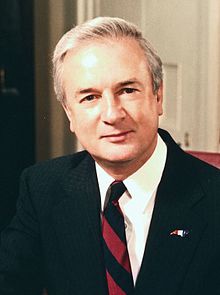
Jim Hunt
American PoliticianWikipedia
22
MENTIONS
12
EPISODES
12
PODCASTS
Search complete. 22 mentions across 12 episodes found for "Jim Hunt".
Oct 12, 2026

Mike FergusonHOST
How much was it for? Yeah, we don't have that information.
Mike FergusonHOST
On November 28th, 1983, North Carolina Governor Jim Hunt announced that the state was offering rewards for information leading to the arrests of those responsible for the murder of 59-year-old Clarence David Jay, who was shot during a robbery on Halloween of that year, and the disappearance of Polly Melt.
Mike FergusonHOST
Polly was declared legally dead in 1988.
Mike FergusonHOST
Her father, Fred, died in December 1990 at the age of 98, but he never gave up hope she might be found, and he never allowed a memorial service.

Pat McCroryGUEST
I mean, I had to sue my own Republican legislature trying to take power away from me.
Pat McCroryGUEST
By the way, the Democrats did the same thing to Jim Hunt.
Pat McCroryGUEST
The Democrats did to Jim Martin.
Pat McCroryGUEST
And they're doing it now to Governor Stein.
24 MINS LATER
Pat McCroryGUEST
It just doesn't make any difference.
Pat McCroryGUEST
It's a sad reality.
Pat McCroryGUEST
I've been to Jim Hunt's funeral recently, and Governor Holzhauer.
Pat McCroryGUEST
Everyone's planning lunch the next day.

Gerod StevensHOST
So when I was in North Carolina, that was in the early 80s.
Gerod StevensHOST
The governor there was Jim Hunt.
Gerod StevensHOST
And he served two terms.
Gerod StevensHOST
And then I left, and there was another governor.
Gerod StevensHOST
I can't even tell you what his name was.
Gerod StevensHOST
But then Jim Hunt came back and ran again and won.
Gerod StevensHOST
So is it that they should just serve two terms, or should they serve because they know what they're doing and they're good at what they did?
Suzette BagnerisHOST
And the people want to reelect them.

Bill ClintonSOUNDBITE_SPEAKER
[audience applauding] Second, second, all states and school districts must turn around their worst performing schools or shut them down.
Bill ClintonSOUNDBITE_SPEAKER
That- [audience applauding] That's the polies-- policy established in North Carolina by Governor Jim Hunt.
Bill ClintonSOUNDBITE_SPEAKER
North Carolina made the biggest gains in test scores in the nation last year.
Bill ClintonSOUNDBITE_SPEAKER
Our budget includes two hundred million dollars to help states turn around their own failing schools.
1 HR 7 MINS LATER
William CooperHOST
You're on the air.
Jim TaylorAUDIENCE
Hey, Bill.
Jim TaylorAUDIENCE
It's Jim Taylor over in Kentucky.
Jim TaylorAUDIENCE
How you doing tonight?

Rufus EdmistenHOST
But he was on the justice.
Rufus EdmistenHOST
And one of Jim Hunt's head of the Department of Public Safety.
Rufus EdmistenHOST
Carlton, Phil Carlton.
Mike RaleyHOST
Yeah, that's right.

Mack PaulGUEST
There was this continued effort to like, how do we, improve upon what we have? How do we make ourselves more attractive to new tech companies? And so by the 1980s, you know, we went into a pretty severe recession in the early 1980s.
Mack PaulGUEST
We had a new governor at that time, Governor Jim Hunt, who very much followed in the footsteps of Hodges and Sanford as an activist, pro-economy, like economic development, making North Carolina attractive to outside companies.
Mack PaulGUEST
And he put together a task force to look at both biotechnology and microelectronics.
Mack PaulGUEST
And biotech at that time, hard to remember, 1980, I mean, you know, it was like the first IPO, one of the first, you know, Nobel Prize is awarded for gene sequencing.
Mack PaulGUEST
So he was excited about that opportunity.
Mack PaulGUEST
And his way of doing that was to go.
Mack PaulGUEST
He met with Jim Hunt and Jim Hunt said, what do you need? He said, I need seventy five million dollars to hire to bring the best labs in the world to RTP.
Mack PaulGUEST
And he called him back like a week later and said, OK, I got your 40 million dollars.

Mack PaulGUEST
There was this continued effort to, like, how do we improve upon what we have? How do we make ourselves more attractive to new tech companies? And so by the 1980s, you know, we went into an, a pretty severe recession in the early 1980s.
Mack PaulGUEST
We had a g- a new governor at that time, Governor Jim Hunt, who very much followed in the footsteps of Hodges and Sanford as an activist, pro-economy, like economic development, making North Carolina attractive to, to outside companies.
Mack PaulGUEST
And he put together a task force to look at both biotechnology and microelectronics.
Mack PaulGUEST
And biotech at that time is hard to remember.
Mack PaulGUEST
So very, you know, um, accomplished scientist.
Mack PaulGUEST
He knew a lot of the top scientists in biotech in the world, and his philosophy when he came to North Carolina, and the reason he came to North Carolina, he actually pitched this idea to Virginia, and they, they didn't bite, of, like, creating a biotech industry from the ground up.
Mack PaulGUEST
So he was excited about that opportunity, and his way of doing it was to go, he met with Jim Hunt, and Jim Hunt said, "What do you need?" He said, "I need $75 million, um, to hire the, to bring the best labs in the world to RTP." And he called him back like a week later and said, "Okay, I got you $40 million.
Mack PaulGUEST
Get started.

Mack PaulGUEST
There was this continued effort to, like, how do we improve upon what we have? How do we make ourselves more attractive to new tech companies? And so by the 1980s, you know, we went into an, a pretty severe recession in the early 1980s.
Mack PaulGUEST
We had a, a g- new governor at that time, Governor Jim Hunt, who very much followed in the footsteps of Hodges and Sanford as an activist, pro-economy, like economic development, making North Carolina attractive to, to outside companies.
Mack PaulGUEST
And he put together a task force to look at both biotechnology and microelectronics.
Mack PaulGUEST
And biotech at that time is hard to remember.
Mack PaulGUEST
He knew a lot of the top scientists in biotech in the world, and his philosophy when he came to North Carolina, and the reason he came to North Carolina, he actually pitched this idea to Virginia, and they, they didn't bite, of, like, creating a biotech industry from the ground up.
Mack PaulGUEST
So he was excited about that opportunity, and his way of doing that was to go...
Mack PaulGUEST
He met with Jim Hunt, and Jim Hunt said, "What do you need?" He said, "I need $75 million to hire the, to bring the best labs in the world to RTP." And he called him back like a week later and said, "Okay, I got you $40 million.
Mack PaulGUEST
Get started.

Mack PaulGUEST
There was this continued effort to like, how do we, improve upon what we have? How do we make ourselves more attractive to new tech companies? And so by the 1980s, you know, we went into a pretty severe recession in the early 1980s.
Mack PaulGUEST
We had a new governor at that time, Governor Jim Hunt, who very much followed in the footsteps of Hodges and Sanford as an activist, pro-economy, like economic development, making North Carolina attractive to outside companies.
Mack PaulGUEST
And he put together a task force to look at both biotechnology and microelectronics.
Mack PaulGUEST
And biotech at that time, hard to remember, 1980, I mean, you know, it was like the first IPO, one of the first, you know, Nobel Prize is awarded for gene sequencing.
Mack PaulGUEST
So he was excited about that opportunity.
Mack PaulGUEST
And his way of doing that was to go.
Mack PaulGUEST
He met with Jim Hunt and Jim Hunt said, what do you need? He said, I need seventy five million dollars to hire to bring the best labs in the world to RTP.
Mack PaulGUEST
And he called him back like a week later and said, OK, I got your 40 million dollars.
2 more episodes mention Jim Hunt.
Create an account to see the whole feed, search across every transcript, and follow the entities you care about.