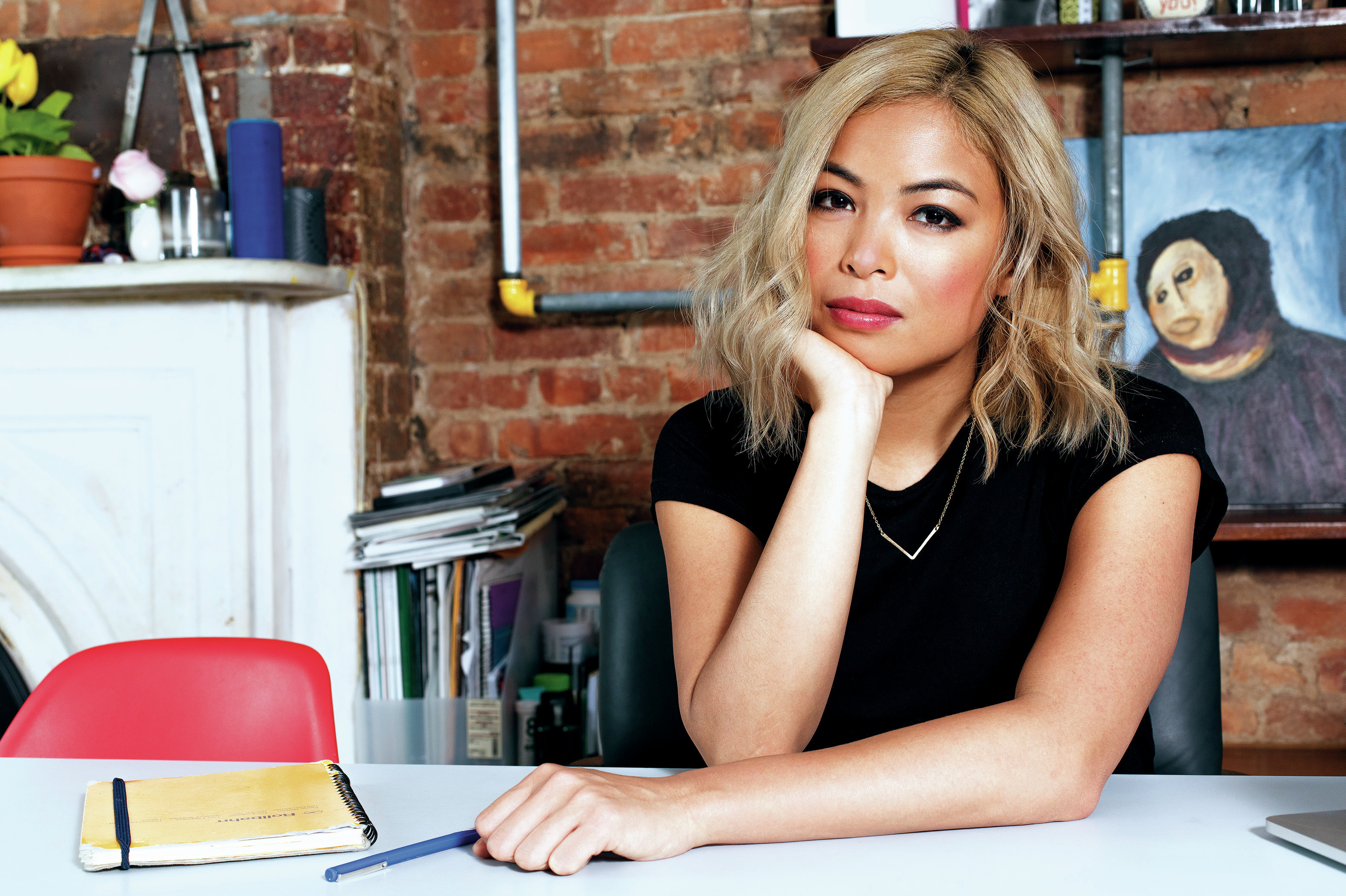
Jia Tolentino
American writer and editor
16
APPEARANCES
13
PODCASTS
Sep 13, 2026

Bill SimmonsADVERTISER
Yeah.

Jia TolentinoGUEST
It was a face that people would click on and like, and people were kind of getting it slowly on mass.
Jia TolentinoGUEST
And as such, I mean, and so I wrote about it because it seemed then like the most visible fulcrum of this larger thing that was happening in which the corporate incentives of trillion-dollar social media companies were kind of s- be- beginning to seem to many people like deeply personal desires.
9 MINS LATER

Jia TolentinoGUEST
We all get lost in the sauce, but w- my, one of my few real hopes for them is that they retain the ability to look at the world and other people, including themselves in it, and see them the way that a human would see them-
Jia TolentinoGUEST
And so I wrote about it because it seemed then like the most visible fulcrum of this larger thing that was happening in which the corporate incentives of trillion-dollar social media companies were kind of s- be- beginning to seem to many people like deeply personal desires.
9 MINS LATER

Brian BuckmireHOST
Jia Tolentino, a staff writer at The New Yorker, says the reactions to Thompson's killing indicated at the time that many Americans believe the private healthcare system is a, quote, "large scale purveyor of death."
Jia TolentinoGUEST
The CEO of a giant corporation gets shot on the street, and people celebrate it as if a violent, murderous dictator had just been taken out by a military team.

Brian BuckmireHOST
Gia Tolentino, a staff writer at The New Yorker, says the reactions to Thompson's killing indicated at the time that many Americans believe the private health care system is a, quote, large-scale purveyor of death.
Gia TolentinoGUEST
The CEO of a giant corporation gets shot on the street and people celebrate it as if a violent, murderous dictator had just been taken out by a military team.


Jia TolentinoGUEST
I mean, it seems like, like you were saying, there are plastic surgeons on Instagram and TikTok.
Jia TolentinoGUEST
There are all of these influencers that are just for kind of forensically analyzing what people may and may not have done.
Jia TolentinoGUEST
But increasingly online, especially if you are a girl or you're a woman, your in, your feed is likely tailored towards these sort of things.
12 MINS LATER

Jia TolentinoGUEST
So, so women have, due to misogyny, [laughs] women have been, you know, there has been this extraordinary pressure on women to be beautiful, you know, this, to capitalize upon their looks, to, there's this way in which women are expected to be pretty as kind of a barrier of entry to humanity.
Jia TolentinoGUEST
And, and in the last decade, you know, this part has to do with all the culture wars of the 2010s, of the rise of things like dating apps which allowed, you know, men and women to both openly scrutinize each other with contempt, you know, with the rise of mainstream feminism.
Jia TolentinoGUEST
All of these things kind of coalesced, and a reactionary core of men's rights activists, um, you know, kind of correlated with the incels, all of these wonderful political developments of the internet in the 2010s.
Jia TolentinoGUEST
There's this, there's this niche of them that call themselves looksmaxxers, and they, you know, there is a, the most famous one, his name is Clavicular.

Bianna GolodrygaHOST
So what, what does all of this mean i- in terms of dating, intimacy? I mean, th- they were always seen as going hand-in-hand, someone wanting to look good so that they can get into a relationship and fall in love, and that doesn't seem to always, uh, be the natural goal now.
Jia TolentinoGUEST
I mean, it seems like, you know, like you were saying, there are plastic surgeons on Instagram and TikTok.
Jia TolentinoGUEST
There are all of these influencers that are just for kind of forensically analyzing what people may and may not have done.
Jia TolentinoGUEST
But increasingly online, especially if you are a girl or you're a woman, your in, your feed is likely tailored towards these sort of things.
35 MINS LATER


Nadja SpiegelmanHOST
Have you noticed this around you online? Have you noticed more people talking about stealing in this way?
Jia TolentinoGUEST
I mean, I have, I have not seen people talking about micro-looting or such, you know, whatever action that this is online.
Jia TolentinoGUEST
But I think, I mean, it kind of speaks to an attenuation of the tactical language of direct action.
Jia TolentinoGUEST
You know what I mean? Like, it's like it doesn't work for me as a form of direct action because it's, it's concealed, right? Like, uh, any successful direct action in history has to be ostentatious, has to make itself known, is ideally collective, and this is sort of necessarily individual and hidden.
Jia TolentinoGUEST
Like, let's take this energy and let's move it into some other thing." Like, I think it's great that the valence of property is kind of on the table as something to be toyed with in terms of direct action.
Jia TolentinoGUEST
I feel like we've forgotten there's a long and storied history of sabotage and sort of engagement with property destruction even, which is abhorrent to people.

Hasan PikerGUEST
They lack the class consciousness to recognize their position in society and, and lack the capacity, unfortunately, to engage in some kind of organized disruption that would be infinitely more effective.


Chris HayesHOST
That, I feel defeated by it, and I have to do f- I have to work full-time to keep me touching reality as my full-time job.
Jia TolentinoGUEST
Like, like I think about th- the, that sort of horseshoe that we were talking about at the beginning.
8 MINS LATER

speaker_0UNKNOWN
(applause)
Jia TolentinoGUEST
Um, who's here, you know, flexing his talents in a new realm in a way that I think we can all agree is incredibly annoying, as many of us would be happy to merely excel at one thing, if we were ever so lucky to get that.
Jia TolentinoGUEST
Um, but you know, just like his fiction, the poems in this book, About Time, they are expansive and funny and a little absurd and poignant and very human and often quite sad.
Jia TolentinoGUEST
Um, so we'll talk for, like, half an hour, a little bit more before we open it up to questions.
24 MINS LATER

David DuchovnyHOST
so it was kind of a- a fun, a fun time for me back then, uh, uh, just really exercising my curiosity.


Jia TolentinoGUEST
to?I had this moment, I was watching the Cuarón Little Princess movie with my older daughter a month ago maybe, and she had her first grown-up cry.
Jia TolentinoGUEST
There's this climactic scene at the end, and, and I, I was crying, and my five-year-old was crying, and she was, like, shocked by the nature of this cry.
Jia TolentinoGUEST
Like, she was like, "But I feel happy," and she was giggling, but she was also really crying.
Jia TolentinoGUEST
And she was experiencing what it was like to have a, an overpowering emotional experience that had nothing to do with something in her own life, kind of.
Chris HayesHOST
That, I feel defeated by it, and I have to do f- I have to work full-time to keep me touching reality as my full-time job.
Jia TolentinoGUEST
Like, like I think what w- th- that sort of horseshoe that we were talking about at the beginning, it's like it can't be real because it is so unbelievably horrible.
Jia TolentinoGUEST
One's brain flinches away, swipes to the next thing, is like, "I can't, this can't be real." You know? And then it's like a video of s- a, a guy in Antarctica riding a, a Ski-Doo, and I'm like, "This can't be real." You know? And then it's an image...
8 MINS LATER


Adam GrantHOST
You've written about that in the past, I'm curious about whether you still think it's inevitable.
Jia TolentinoGUEST
The thing that is inescapable is the fact that, like, Facebook, Instagram, TikTok, whatever, all of these social media platforms are based around making every user feel that their personality is a market commodity, that, like, the purpose of being on these things is to be seen, liked, approved by as many people as possible in a way that ideally translates into you getting some sort of economic benefit.
Jia TolentinoGUEST
Then you have these other platforms where other aspects of our selfhood, like me googling at 3:00 AM the super deep borehole in Siberia or whatever, all of that is tracked and monetized by corporate entities.
Jia TolentinoGUEST
There are probably a thousand companies that have tagged each of us with a unique digital ID number, with a matrix of data points about what we are most likely to be able to be manipulated into buying, doing, voting for, whatever.
Jia TolentinoGUEST
Every single search, every single purchase, we have been functionally branded and isolated and targeted by all of these companies that seek to make money off of us in various ways.
5 MINS LATER

Jia TolentinoGUEST
The thing that is inescapable is the fact that, like, Facebook, Instagram, TikTok, whatever, all of these social media platforms are based around making every user feel that their personality is a market commodity, that, like, the purpose of being on these things is to be seen, liked, approved by as many people as possible in a way that ideally translates into you getting some sort of economic benefit, and that's the entire framework of the major social media platforms.
Jia TolentinoGUEST
Then you have these other platforms where other aspects of our selfhood, like me googling at 3:00 AM the super deep borehole in Siberia or whatever, all of that is tracked and monetized by corporate entities.
Jia TolentinoGUEST
There are probably a thousand companies that have tagged each of us with a unique digital ID number with a matrix of data points about what we are most likely to be able to be manipulated into buying, doing, voting for, whatever.
Jia TolentinoGUEST
Every single search, every single purchase, we have been functionally branded and isolated and targeted by all of these companies that seek to make money off of us in various ways.
Jia TolentinoGUEST
Our participation with the willing self-surveillance, that is the optional thing.


Jia TolentinoGUEST
And, [laughs] you know? And, and it was, and it was any number of things, right? Like, it was, like, the, the fact that, like, so many fake images of kids in Gaza have gone viral alongside a bunch of other AI slop, and whether something is real or whether something is fake, there is just this, like-...
Jia TolentinoGUEST
mushroom cloud of, uh, stuff generated every millisecond that is there to cloud whether it is real or fake for anyone else or something like that.
Jia TolentinoGUEST
And, and I think, yeah, you, you, like, look at enough Temu ads or whatever, and you're just like, and [laughs] you know, and like, and you log on to x.com, and every single paid advertisement is, you know, someone that's in the middle of a psychotic break, and every reply is someone who's also in the middle of a psychotic break, and that's literally what the platform is prioritizing.
Jia TolentinoGUEST
And, and you're just like, "Wow, the world's kind of incomprehensible." And you could...
Jia TolentinoGUEST
You detach for, whatever, five seconds, 30 seconds, five minutes, the rest of that day, that week, you have a weird week, or it can go on for longer.
11 MINS LATER


Jia TolentinoGUEST
I feel actively bad about my participation in labor chains that are exploitative, and- and I have plenty of points of participation in that, and that's the one that is, seems the most intractable, like I'm not gonna stop buying out-of-season fruit at the grocery store.
Jia TolentinoGUEST
I feel shame about participation in the childcare market, like we found out yesterday, you know, when I enrolled, um, my kid started going to daycare when she was one, and the only question I asked at the, at the interview was, you know, "Do the teachers get full benefits?" And the childcare director said, "Yes, you know, this is a great place to work," blah, blah, blah.
Jia TolentinoGUEST
And then I found out a year and a half later after we'd already transferred her that she had been lying and the teachers don't get benefits.
Jia TolentinoGUEST
Um, and I recently found out that at our current daycare, the teachers don't get benefits.
14 MINS LATER
speaker_6UNKNOWN
Mm-hmm.