Jeremiah Horrocks
English astronomerWikipedia
5
MENTIONS
2
EPISODES
2
PODCASTS
Search complete. 5 mentions across 2 episodes found for "Jeremiah Horrocks".
Oct 12, 2026

AvayiNARRATOR
All LibriVox recordings are in the public domain.
AvayiNARRATOR
For more information or to volunteer, please visit LibriVox.org. Recording by Avayi in March 2020 History of Astronomy by George Forbes Chapter 6 Galileo and the Telescope Notions of Gravity by Horrocks, etc.
AvayiNARRATOR
It is now necessary to leave the subject of dynamical astronomy for a short time in order to give some account of work in a different direction originated by a contemporary of Kepler's, his senior, in fact, by seven years.
AvayiNARRATOR
Galileo Galilei was born at Pisa in 1564.
8 MINS LATER
AvayiNARRATOR
He was born at Merchiston, near Edinburgh, in 1550, and died in 1670.
AvayiNARRATOR
By this system the tedious arithmetical operations necessary in astronomical calculations, especially those dealing with the trigonometrical functions of angles, were so much simplified that Laplace declared that by this invention the life-work of an astronomer was doubled.
AvayiNARRATOR
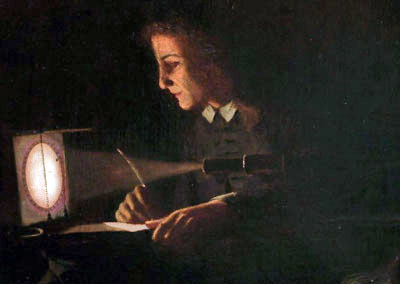
Jeremiah Horrocks, born 1619, died 1641, was an ardent admirer of Tycho Brahe and Kepler, and was able to improve the Rudolphine tables so much that he foretold the transit of Venus in 1639, which these tables failed to indicate, and was the only observer of it.
AvayiNARRATOR
His life was short, but he accomplished a great deal, and rightly ascribed the lunar inequality called "evection" to variations in the value of the eccentricity and in the direction of the line of apses, at the same time correctly assigning the "disturbing force of the sun" as the cause.

Sky CarambaHOST
Another astronomer predicted that transit, though.
Sky CarambaHOST
That was Jeremiah Horrocks.
Sky CarambaHOST
He wasn't entirely certain about what time it would happen, and clouds troubled his view.
Sky CarambaHOST
But the sky cleared up enough just in time to reveal the black dot of Venus on the Sun's disk.