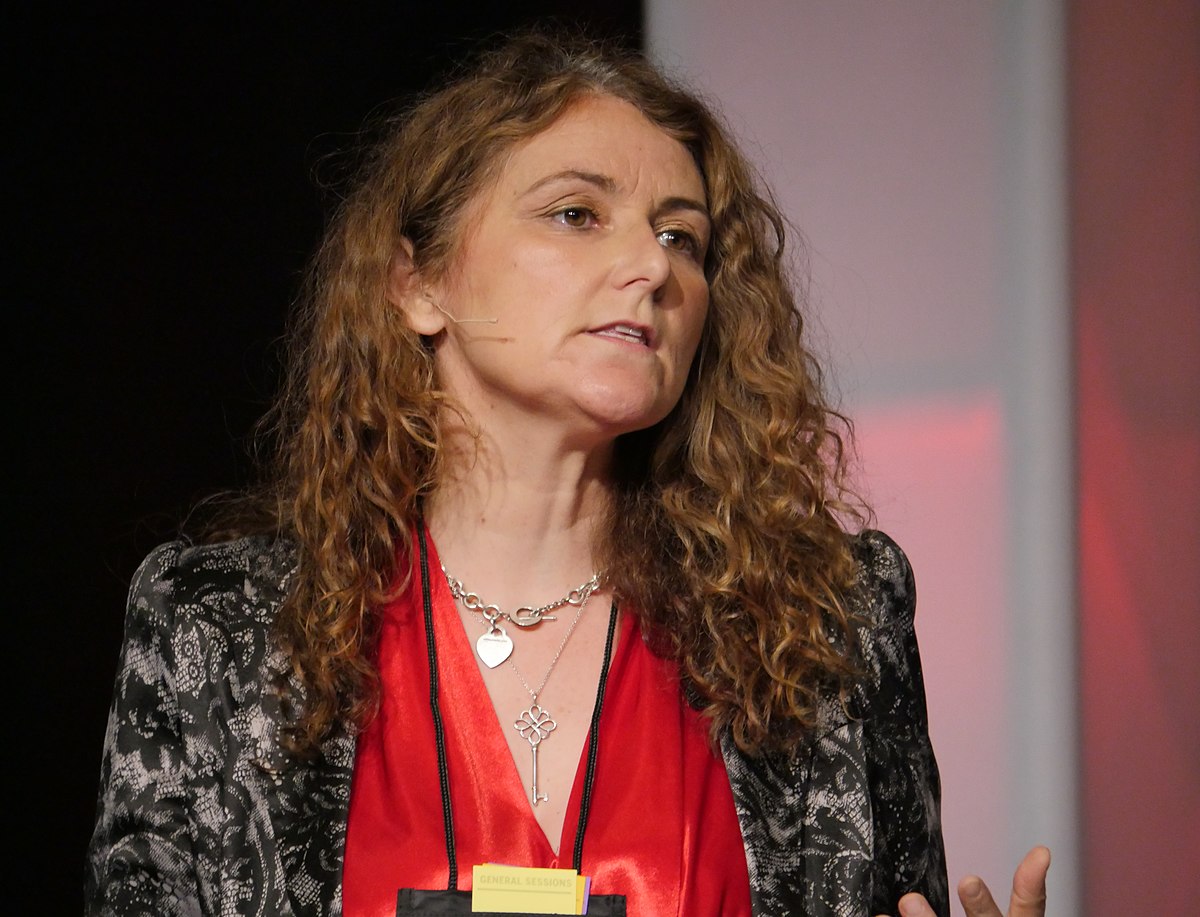
Jen Gunter
Canadian gynecologist
4
APPEARANCES
4
PODCASTS
Jun 22, 2026


Bruce OutridgeHOST
Let's, uh, find out all about how it went at Woodstock in 2025 when Chris and Jen Gunter came around to see Phil Couch.

Jen GunterGUEST
And what that meant was I wanted somebody that, um, competes in the Special Olympics to choose a truck.
Jen GunterGUEST
Um, there's no, there's no, um, checklist of anything that that truck has to meet.


Ayesha SherzaiHOST
It's a really negative r- Have you, have you experienced that? I have experienced that in my clinic.
Jen GunterGUEST
We teach people enough how to do that in medicine, because if you say to somebody, "Well, you know, you've, you've been misled," they've devoted a lot of time and effort, and that might even have become part of their identity.
Jen GunterGUEST
So you can't just say, like, "You need to switch." You know, you have to say, "Okay, well, yeah, how can I meet someone where they are, and how can I sort of gradually work backwards from there? H- what's the first do no harm, you know, approach, and then gain somebody's trust?" I think a lot of people who talk about the Women's Health Initiative, people talk about it as if it's the worst possible thing ever, but then they cherry-pick from it.
Jen GunterGUEST
Before the Women's Health Initiative, there was a lot of observational data that suggested that menopause hormone therapy reduced the risk of cardiovascular disease.
30 MINS LATER
Ayesha SherzaiHOST
Coming back to your beautiful work and what you're doing to empower women, if a woman feels, say, dismissed or minimized when, you know, when they talk about, uh, menopause symptoms, what do you suggest the practical steps would be for them to take to get the best help when they're sitting across a physician?


Jen NovakovichHOST
In terms of challenges, how do you handle criticism, whether constructive or not, in feedback? Oh, and then maybe I'll ask her two questions, and then how do you find balance with other aspects of your per- per- professional and personal endeavors?
Jen GunterGUEST
So I, I always look, is this a valid criticism or not? And that's the very first thing I do.
Jen GunterGUEST
And I think, I can't remember when I've had a valid criticism about the science.
Jen GunterGUEST
You know, when things are unsettled in the science, I always say they're unsettled.
15 MINS LATER
Jen NovakovichHOST
And then my final question: What advice would you give to another woman wanting to enter science communication?


Jen GunterGUEST
So, um, ibuprofen, um, nonsteroidal anti-inflammatory drugs, Naproxen, um, and even starting them a day before, like if you have an idea when your period is gonna start, so they can be very effective at reducing menstrual cramps. I think it's important to point out that, um, if those don't work, it could be because you have something else going on like endometriosis, which is a condition where tissue very similar to the lining of the uterus is growing outside in the pelvic cavity, but also, I think it's about 10% of people that these drugs just don't work for them, so it's just, just kind of they don't help. Um, then all of the hormonal methods of birth control can be very effective, and so a hormonal IUD, um, the birth control pill, the Nexplanon implant, um, the Depo-Provera injection, those are all very effective, um, ways, and they, they work by one, um, the, the implant, the injection, and the pills work 'cause they stop ovulation, but also there's a hormone in them called progestin which is a synthetic form of progesterone, and progestin keeps the lining of the uterus very, very thin, so when there's less lining to come out, there tends to also be less cramping. So, and you can take these medications every single day so you don't even get a period, so that's also an advantage.
Jonathan WolfHOST
Um, and I've also, I've got Sarah as well. So both of you here, I really wanna make sure we follow up. That sounds like very actionable advice. Like, what, what can you do about this?
Jen GunterGUEST
Yeah, so if you are someone who menstruates, and you have symptoms like fatigue, brain fog, hair loss, you just don't feel right, you need, you know, and you get a period. So if you're somebody who hasn't had a period for five years 'cause you've gone on a hormonal IUD, then, you know, you could have iron deficiency for another reason, but most of the younger ones are related to menstrual. You need to not just get a blood count to check for anemia. You need to also get a ferritin level, 'cause a ferritin is a reflection of the iron stores in their body. Because you don't wanna be brushed off. You can have a nor- you can have a normal blood count and not have anemia, and still have severe iron deficiency. I s- I diagnose that maybe every single day in my practice, um, because iron deficiency's associated with a lot of other symptoms. So I'm often testing people because of those other symptoms. And the number of women that I identify every week, you know, who have iron deficiency is pretty staggering, which fits with the, with the data that we see. And so, um, so I think people need to get their ferritin level checked, and if their ferritin level is low, they shouldn't accept that that's normal, that that's okay. It needs treatment. And if oral iron's not working, then there's intravenous iron, which is actually really very eff- uh, very safe intravenous iron now. And also, the reason for the iron deficiency needs to be investigated. So someone needs to ask you about your periods, and if you're soaking pads, if, all these things, because there's oth- there's treatment for heavy periods as well, and there, investigations may need to happen too.