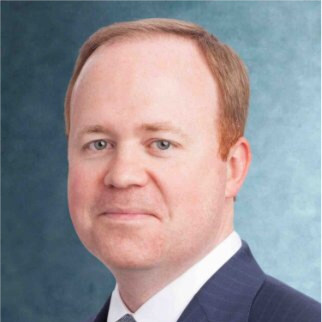
Jeff Wall
Attorney and former Principal Deputy Solicitor General of the United States
5
APPEARANCES
5
PODCASTS
Sep 22, 2026


Leonard GraszPANELIST
So the fact that Walgreens and Amazon are not affected doesn't undermine your analysis?

Jeffrey WallGUEST
What I'm saying is you have to run the analysis, and what you have to say is, all right, look, Hazeltine, you had two of the four factors.
Jeffrey WallGUEST
The text of the law, which is rarely ever the case in a dormant commerce clause challenge.
Jeffrey WallGUEST
It says on the face of it they're trying to protect locally operated pharmacies.
Jeffrey WallGUEST
They've never made any argument about operated versus owned, but the only reasonable way to read that term is a pharmacy that is owned and operated in Arkansas.
8 MINS LATER

David StrasPANELIST
So does discriminatory effect really work that well in the economy we have today? I know we have to apply it, but it's slippery.


Jimmy HooverHOST
What do you make of the, the, this new aspect of emergency litigation or interim litigation at the Supreme Court and potentially some of the criticism that we've seen from, say, you know, the three liberal Democratic appointees on the court? Any thoughts on that?
Jeff WallGUEST
As you're questioning now, the emergency docket's been with us for a while, and it had been sort of slowly growing.
Jeff WallGUEST
But I think you're right that in the first Trump administration, there was a, a, a really broad expansion in the docket.
Jeff WallGUEST
You know, I'm not an expert on it, but I think it happened for a number of different reasons.
Jeff WallGUEST
Part of it was the rise of nationwide injunctions and universal vacature under the APA.
11 MINS LATER
Jimmy HooverHOST
You know, what is it about having that Supreme Court practice at the top that helps the overall litigation practice of, you know, a major law firm?


Amy Coney BarrettPANELIST
So what defines suit at common law for purposes of the Seventh Amendment?
Jeffrey WallGUEST
In other words, I think when an agency determines liability, that is the sort of thing that triggers the Seventh Amendment.
Jeffrey WallGUEST
And I don't think the agency then gets to say, but look, it's just non-binding or advisory and we'll let it hang out there.
Jeffrey WallGUEST
We were branded an egregious lawbreaker, a willful and repeat violator, and told we had to pay the government $100 million.
55 MINS LATER
John RobertsMODERATOR
Rebuttal, Mr. Wall?


Jeffrey WallGUEST
The FCC imposed more than one hundred million dollars of civil penalties on AT&T and Verizon, and the companies had no way to demand a jury trial.
Jeffrey WallGUEST
That's a straightforward violation of the Seventh Amendment and this Court's decision in Jarkasi.
Jeffrey WallGUEST
They were just invitations to pay one hundred million dollars if you want, and that's wrong for at least four reasons.
1 HR 20 MINS LATER

Jeffrey WallGUEST
Chief Justice, and may it please the Court, the FCC imposed more than one hundred million dollars of civil penalties on AT&T and Verizon, and the companies had no way to demand a jury trial.
Jeffrey WallGUEST
That's a straightforward violation of the Seventh Amendment and this Court's decision in Jarkesy.
Jeffrey WallGUEST
They were just invitations to pay one hundred million dollars if you want, and that's wrong for at least four reasons.
Jeffrey WallGUEST
First, the statute says that the FCC issues a charging document, considers the party's response, and then assesses and imposes penalties.
1 HR 20 MINS LATER