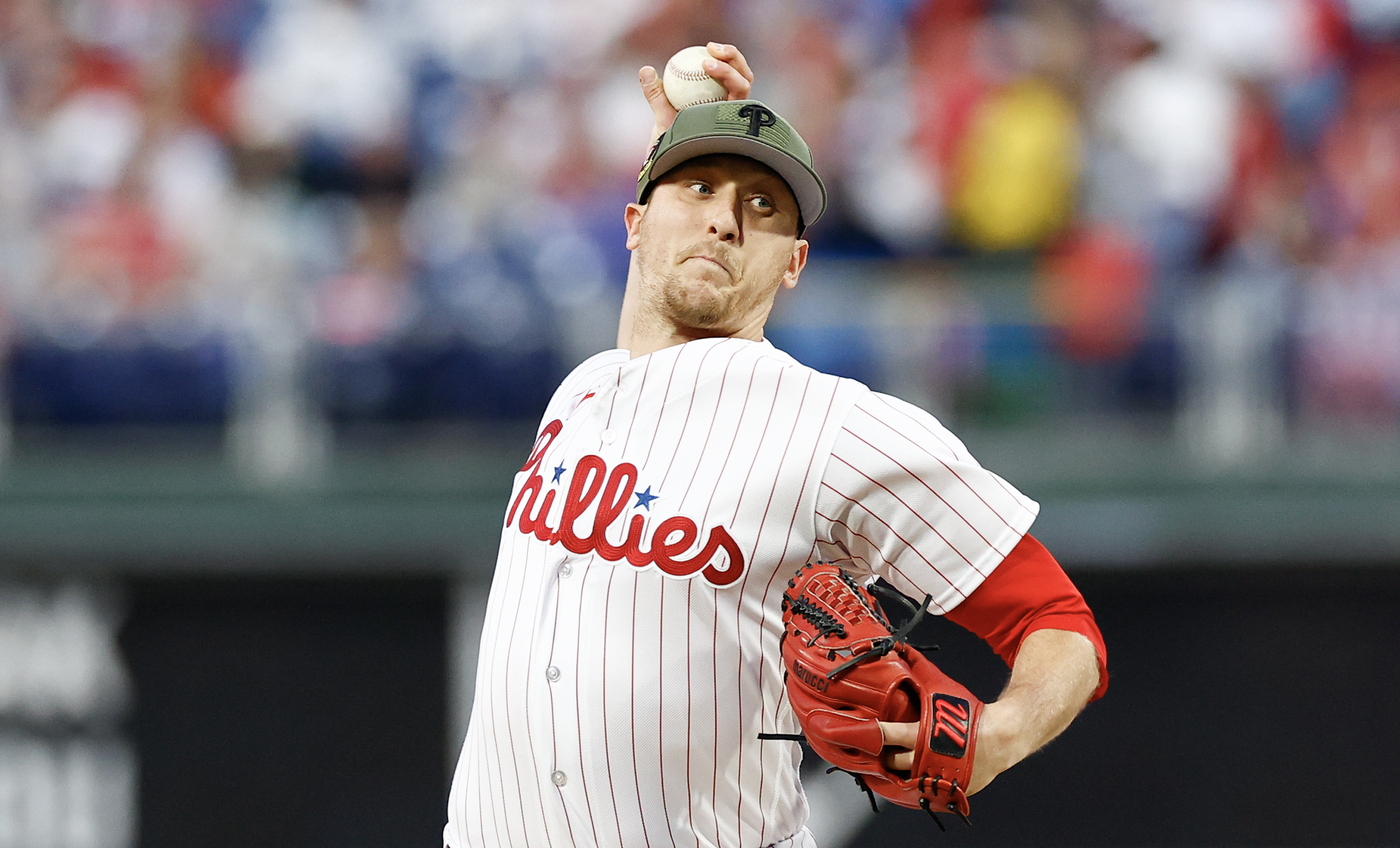
Jeff Hoffman
Toronto Blue Jays pitcher
8
APPEARANCES
7
PODCASTS
Sep 5, 2026

MoHOST
Disney World.

Jeff HoffmanGUEST
And when you come out of the theater, this is a moment I realize, just accept who you are, good or bad, right? Just be you.
Jeff HoffmanGUEST
But we come out of the theater and down at the end of a long hall, because it's hundreds of people, are four glass doors.
15 MINS LATER
MoHOST
you ever pause to reflect on how you measure success outside of money valuation?


Jeff HoffmanGUEST
The cap rate is the amount of return that I expect to get off of the campground, and it's gonna going to be based off of a percentage of your net operating income, which is revenue minus expenses, take out depreciation and interest, or amortization if you have it, but most campgrounds don't.
Jeff HoffmanGUEST
And that's, we end up with the NOI number, and that's mainly, that's my area that I work in.
Jeff HoffmanGUEST
You can have the prettiest park in the world, but if your occ- occupancy is 13%, it's not pretty to me.


Ovidiu BujoreanHOST
Qu'est-ce qui sépare les entreprises qui croissent de celles qui stagnent ? Quel schéma as-tu trouvé dans les entreprises qui ont réussi et qu'est-ce que cela indique aux apporteurs de capitaux sur les points à privilégier lorsqu'ils évaluent une opportunité de démarrage ?
Jeff HoffmanGUEST
Trop d'entreprises-- et tu sais, c'est un discours que je tiens aux fondateurs du monde entier.
Jeff HoffmanGUEST
Trop d'entreprises, et tu sais, c'est un discours que je tiens aux fondateurs du monde entier.
18 MINS LATER
Ovidiu BujoreanHOST
Si tu devais concevoir l'architecture d'un écosystème entrepreneurial pour un marché émergent aujourd'hui, avec tout ce que tu sais maintenant, qu'est-ce que tu bâtirais en premier, en deuxième et qu'est-ce que tu ne bâtirais pas du tout ? Et je crois que tu as déjà mentionné que globalement, tous les écosystèmes évoluent mais si tu devais choisir un pays où tu pourrais avoir le plus d'impact grâce aux connaissances que tu as acquises en travaillant dans tant de pays différents.


Jeff HoffmanGUEST
We started building ammunition for the Army Marksmanship Unit, and did well there.
Jeff HoffmanGUEST
So then the government came to us and, and said, you know, "We need something for..." At that time it was the Mark 12, a brand-new scoped rifle.
Jeff HoffmanGUEST
It was basically an M16A1 suppressed, accur- accurized and, and, uh, scope sighted.
Jeff HoffmanGUEST
They said, "We need ammunition that's effective and, and accurate at 600." And I said, "Well, we, we can certainly do the accuracy.
Ovidiu BujoreanHOST
What does a successful bridge look like when it works and who has built one that others should be studying?
Jeff HoffmanGUEST
in many cases, but scaling a business requires learning the lessons from the people who have been there and done that.
Jeff HoffmanGUEST
And so in a lot of these places, they just don't have education on the scale up part.
Jeff HoffmanGUEST
They don't know how to, at the beginning, You're trying to get your prototype out and your first product and your first customer and your first market.
Jeff HoffmanGUEST
What it takes to prep a business for scale and rapid and affordable scale and for it to make sense for investors to fund scale is another whole set of dynamics and experiences.
13 MINS LATER
Ovidiu BujoreanHOST
if you were designing the architecture for an emerging market entrepreneurship ecosystem today with everything you know now what would you build first what would you build second and what you you would not build at all and i think you already mentioned that overall all ecosystems evolve but if you were to pick one country where you could have the most impact with the insights you know now from working across so many countries

speaker_9CORRESPONDENT
Can you sort of elaborate on what that process looked like from your end, the types of things that the league was looking into, and also why it might have taken the time that it did?
Jeff HoffmanGUEST
I can tell you that we got a unanimous vote yesterday by by the or two days ago by by the NHL Board of Governors in support of the deal.
Jeff HoffmanGUEST
There are a lot of factors in a transaction of this magnitude that just require time and it's not about one particular instance or there's a lot of facets that went into it.
Jeff HoffmanGUEST
But fortunately, I think that time allowed us to really get to know the organization and to understand and to be able to jump in with both feet as we're sitting here today.
Jeff HoffmanGUEST
I've gotten to know, we've all gotten to know a bunch of our staff members on the hockey ops side, on the business ops side.
7 MINS LATER

Shelby CassassiCORRESPONDENT
What have you identified when looking at this team as this is an area we can really hone in on to make the entire experience better?


Ben ShulmanHOST
What was that process like of getting to know him and him getting to know you at the beginning of the season and throughout the year?
Jeff HoffmanGUEST
Um, Vally's a really bright kid and, um, obviously has all the tools necessary to, to be a, a good big league catcher for a long time and, um, I think the big thing for us was getting those inning, just innings under our belt.
Jeff HoffmanGUEST
Um, spring training innings aren't really the same as, like, innings that we have here, uh, now at this point in the year and, um, so once he was added to the roster and, um, you know, he was playing a lot pretty much right off the bat.
Jeff HoffmanGUEST
Uh, so it was, it was fun to, uh, kinda see him grow on the fly and, um, he really...
Jeff HoffmanGUEST
You know, a-anything we've brought to him, um, from a pitch calling standpoint, from a targeting standpoint, from really anything, um, that involves his game, um, he's been able to make the adjustments, like, super quick and, uh, it's really cool to see because now you add a guy like Kirk back to the mix and, um, now you got me kind of one A, one B situation where, you know, obviously it's still so early in, in Vally's career, but what he's shown us so far is that he can handle the load and, um, I think it'll be really important for us to have guys like that that can...
Jeff HoffmanGUEST
I mean, when Kirk needs a blow, you know, we can gut-- uh, we really don't miss a, miss a beat.
Ben ShulmanHOST
What is that process like mentally, not just game to game, but also sometimes that position can be up and down year to year? What is that like trying to bury past negative ones or build on positive ones and, and try and move throughout what, what can be a, a pretty volatile job at times?


Kevin PillarHOST
Kind of just take me through this kind of full circle moment that you've had to be drafted by the Blue Jays in the first round, be traded, go on a couple other places throughout your career, now coming back home to Toronto and now closing out games to allow your team to advance to the next round.
Jeff HoffmanGUEST
Um, you know, I, e- everything obviously happens for a reason and, and everything's going to be, uh, hopefully good at the end of the day.
Jeff HoffmanGUEST
But, um, yeah, going through that time, I mean, obviously at that time, the Blue Jays were, were good and I was really excited to be a part of that organ- the organization at that time.
Jeff HoffmanGUEST
And, um, to see them go on and, and, you know, make some noise in the playoffs that year was, was tough.
Jeff HoffmanGUEST
But, um, you know, I, I look back on that time as, you know, that was, you know, my development as a player and, and I went and, and learned a lot of things trying to pitch at high altitude and, um, then moving on and trying to pitch in a small b- ballpark in, in Cincinnati and, um, making my way to Philly and all that good stuff.
Jeff HoffmanGUEST
So, you know, none of that would have happened if I didn't get traded out of here in the first place.
11 MINS LATER

Scott BraunHOST
I don't wanna say young pitcher, 'cause you gotta wait until the arms develop, but do you think that most pitchers should learn a splitter based on what we've seen from you, from Trey, from Kevin [laughs] and others?