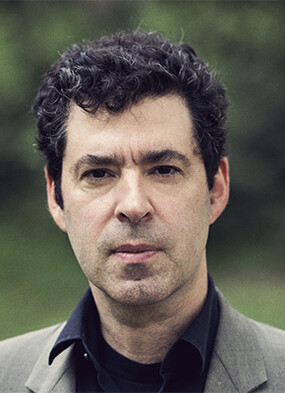
Jason Stanley
American philosopher
32
APPEARANCES
17
PODCASTS
Sep 12, 2026


Jason StanleyGUEST
So it's important to recognize that an ideology takes the form of representations and practices.
Jason StanleyGUEST
So whenever you see representations of something, you have to think, what are those representations justifying? So this administration is bringing back Confederate monuments.
Jason StanleyGUEST
Those Confederate monuments represent the fact that it's targeting black people, that it's white supremacists.
Jason StanleyGUEST
The practices are its targeting of various people, basically, because they're black people in positions of power.

Jacob SoboroffHOST
What is it like to see all of this unfold from there, from your vantage point in Canada?


Jason StanleyGUEST
in the United States and worldwide than there was in 2018 when Moscow Fascism Works came out.
Jason StanleyGUEST
And note that my book Erasing History came out in September 2024 before Trump was elected.
6 MINS LATER


Ali VelshiHOST
It's about setting the stage to possibly deny the results of an election on the way they're disenfranchising a lot of people.
Jason StanleyGUEST
They already gerrymandered with the help of the Supreme Court getting rid of the Voting Rights Act and giving the Republicans a 10-seat advantage.
Jason StanleyGUEST
And, and there, and what you're seeing, o- one has to sort of, a- and again, this is sort of, I think, a discussion we just had with the Supreme Court.
Jason StanleyGUEST
One has to think about what the, what the billionaire oligarchs are doing and what the Trump regime is doing.
7 MINS LATER

Jennifer WelchHOST
There's things that are gonna live on if Trump drops dead today, these evil forces are still here doing these things.

Scott HarrisHOST
Uh, Professor Stanley, you've been following this, and something I hadn't seen that you brought to my attention as well, which is, uh, President McInnis' response to this new, uh, demand by the Trump regime.
Jason StanleyGUEST
So, uh, Linda McMahon, the, the Secretary of Education, uh, has, uh, uh, issued a c- a, a, a letter to ask universities to prominently, uh, post on their websites Uh, how they're addressing the crisis of higher education.
Jason StanleyGUEST
Uh, and, and the, uh, and, you know, and, uh, uh, statements of trans-principles will be posted prominently on institutional websites.
Jason StanleyGUEST
Uh, they, they call for, uh, for intellectual pluralism, uh, which here is, of course, uh, you know, calling essentially to hire, uh, conservatives.
Jason StanleyGUEST
It, it, it calls for depoliticizing academia, but at the very same time, uh, it calls...
13 MINS LATER
Scott HarrisHOST
So I guess the question is, uh, Professor Stanley, what do you think can be done now to mitigate all these multiple threats from the Trump regime to the November election, uh, to, to prevent the kind of interference and, you know, to, to really stop what may be in the works here for the first time in American history to, uh, derail a free and fair election?


Scott HarrisHOST
Here, Professor Stanley discusses his fierce opposition to Yale or any other university, surrendering their independence to the Trump regime's demand for political and ideological alignment.
Jason StanleyGUEST
Linda McMahon, the Secretary of Education, has issued a letter to ask universities to prominently post on their websites how they're addressing the crisis of higher education.
Jason StanleyGUEST
and statements of principle to be posted prominently on institutional websites.
Jason StanleyGUEST
uh they're manifestly completely incoherent they they call for uh intellectual pluralism uh which here is of course uh you know calling essentially to hire uh conservatives it calls for depoliticizing academia but at the very same time it says that american universities must put americans and american interests first and orient the research enterprise to support the country's economic and security needs and putting American success and societal success out of global commitments.
Jason StanleyGUEST
I just want to say that this is what far-right movements, including the Nazis, said universities were for, to promote national interests.
Jason StanleyGUEST
Authoritarians regularly call on universities to promote national interests above, say, interests of truth, knowledge, freedom, human rights.
Scott HarrisHOST
Is there any chance that the organizing of faculty, staff, students will have some impact, have some positive effect on President McInnes and the Board of Trustees and how all these negotiations or what may be, as you described, capitulations will turn out?
Ali VelshiHOST
Um, people who thought, "This is crazy, and it'll go away, and how bad can it get?" It's all playing itself out, and you and I puzzle about the fact that why, how can this happen in 2026? How can we watch authoritarianism set in and not have a, a, an adequate response?
Jason StanleyGUEST
I've been on these networks for eight years now saying, "This is a would-be fascist dictator.
Jason StanleyGUEST
They know what they're doing." And the reason that it's not going to succeed is because of journalists like you, Ali, uh, and your colleagues, because of, uh, police officers who will refuse to do orders, uh, that are immoral and illegal, uh, because of military officers that will refuse to follow, uh, unconstitutional orders.
Jason StanleyGUEST
It's been clear from the beginning, and in particular, as you point- pointed out, it's been clear from the very beginning of this regime, Trump's second term, that, uh, he has no intention of broadening his popular support.

Jason StanleyGUEST
Uh, what we witnessed tonight was an attempt to justify actions that will do that.
Jason StanleyGUEST
We, you know, Steve Bannon has said that ICE will flood the, will be, uh, in, essentially intimidating, intimidating voters at the polls.
Jason StanleyGUEST
Uh, if you noticed, he, he talked about, uh, he talked about, you know, how we're gonna really punish people who, who try to fraudulently vote.
Jason StanleyGUEST
Well, many voters, uh, will think, "Okay, uh, maybe I shouldn't even try to vote," because who knows what, [laughs] what he means by fraudulent voters, uh, votes.
37:36
I- I'm curious, um, how this fits into the, the broader context, your research on the authoritarian and dictatorial mold.
Ali VelshiHOST
Feels kinda like things we've seen in history in terms of, uh, of dictatorships and totalitarianism.
Jason StanleyGUEST
That's, they're already stealing the midterms, which is why they're not trying to broaden their popular support.
Jason StanleyGUEST
JD Vance is going through this normalization tour right now, but we know he is the one who urged Trump to break, to invoke the Insurrection Act.
9 MINS LATER
Jason StanleyGUEST
No, Ira- Iran is a horrific regime, and nobody should be under any illusions about that, which is not to say a war on them was justified by international law or even by US law.
Jason StanleyGUEST
Uh, so it is, it is really an incredibly tragic and horrific thing that Trump did this.
Jason StanleyGUEST
The whole thing has been an exercise in incompetence, uh, an exercise in ki- And you can see how incompetence leads to cruelty, right? To needless cruelty.
Jason StanleyGUEST
This whole pointless ex- incredibly expensive adventure was just needless cruelty, uh, exhibiting massive incompetence just so Trump could, you know, experiment with his whims.
Jason StanleyGUEST
And that really is what the literature on authoritarianism will tell you happens under strongman rule.

Jason StanleyGUEST
As they're showing when they're taking down S- 60 Minutes, they're taking down 60 Minutes, uh, because it's dangerous.
9 MINS LATER
Ali VelshiHOST
If you agree to break it for me, I will be good to you, and if you don't, you're out of a job.
Jason StanleyGUEST
Yeah, so this is the personalist regime that Trump has long, uh, sought, and the symbols go along with the policy.
Jason StanleyGUEST
You can't disentangle the sy- the symbols we're seeing, uh, the face of Washington DC and the country, from the corruption that's endemic to his regime.
Jason StanleyGUEST
So what he's trying to do is he's trying to justify that corruption by personalizing the United States.
Ali VelshiHOST
It's startling when you're in DC, especially if you've been to the Topography of Terror Museum in Berlin, where they have an exhibition outside that shows you the changes in the streets of Berlin over time, and that's what DC looks like to me.
Jason StanleyGUEST
I mean, my father was in Berlin at the time, and the effect of that change of the streets of Berlin, uh, I mean, he was too young to understand that it was about him, that it was targeted at him.

Gal BeckermanGUEST
And, you know, I, I did look, you know, to see if there were American presidents who, in their lifetime, built statues to themselves, you know, worked to put their names on things, and, and there really, really isn't a, a, a record of that.
Jason StanleyGUEST
No, I agree, so we've got this issue of in their lifetimes versus not in their lifetimes.
Jason StanleyGUEST
I think when we return, if and when we return to, uh, to, you know, post-Trump era, we've got to change our earlier practices of venerating great men so as to avoid this happening again.
Jason StanleyGUEST
The, the, the in their lifetime is part of an ideology of personalism, an ideology of dictatorship.
Jason StanleyGUEST
What I'm saying is this veneration of the great men of the past, uh, enabled this, and so we can't do that again.
Jason StanleyGUEST
But an ideology is a set of practices and representations, and obviously, the practices of the Trump regime are just kleptocratic.
21:18

Um, I mean, is it as simple as the people surrounding the leader saying, "Well, I can curry favor with him if I, you know, if I approve this statue to show up in the, i- in, in the town square of, of where I, of where I, where I live?" Is, I mean, is that part of how this, the system perpetuates itself, Jason?


Sam SederHOST
one.[music] Can you, um, uh, make explicit this concept of soft authoritarianism? And what, w- why is some era, uh, w- why not, why w- d- does soft authoritarianism always turn into hard authoritarianism? Uh, and why did some start at soft and then go to hard as opposed to hard and hard?
Jason StanleyGUEST
Um, I think the concept we, that is super useful here is my colleague Lucan Way's concept of competitive authoritarian, competitive authoritarianism.
Jason StanleyGUEST
A country like Russia is just an authoritarian, hard authoritarian country in your terminology.
Jason StanleyGUEST
So, uh, competitive authoritarianism is when you've got gerrymandered seats, control of the media.
5 MINS LATER
Sam SederHOST
I mean, is that what it is? 'Cause I feel like that's what's happening with Trump on some level.
Jason StanleyGUEST
He's used the apparatus of the state to target, uh, to target the scapegoats, to target particularly anything associated, um, with, uh, LGBTQ, uh, Hungarian life.
Jason StanleyGUEST
Um, now, uh, you know, and he's done this, he's done this to supposedly to preserve the white Christian family, uh, to...
Jason StanleyGUEST
Uh, he's done this, uh, you know, to save whiteness and Christianity and European civilization, and this is exactly what JD Vance, uh, has taken over.


Sam SederHOST
D- does soft authoritarianism always turn into hard authoritarianism? Uh, and why did some start at soft and then go to hard as opposed to hard and hard?
Jason StanleyGUEST
Um, I think the concept we, that is super useful here is my colleague Lucan Way's concept of competitive authoritarian, competitive authoritarianism.
Jason StanleyGUEST
A country like Russia is just an authoritarian, hard authoritarian country in your terminology.
Jason StanleyGUEST
So, uh, competitive authoritarianism is when you've got gerrymandered seats, control of the media.
5 MINS LATER
Sam SederHOST
I mean, is that what it is? Because I feel like that's what's happening with Trump on some level.

Jason StanleyGUEST
Right now we have an explicitly fascist white supremacist regime whose president is saying that, uh, Black Americans, Somali Americans are inferior, are low IQ, on the world stage.
Jason StanleyGUEST
It's like they're, uh, validating this communist propaganda about the United States.
Jason StanleyGUEST
It is patriotism itself to stand on the streets of the United States and g- and to stand against this, to say, "This is not us.
Jason StanleyGUEST
Uh, he's part of this cabal of, uh, autocrats, uh, Putin, Trump, uh, uh, uh, and, and some others, uh, and this is not a democracy we're partnering with.
Jason StanleyGUEST
We are full partners with Israel in a war, and you... and Jon-Jonathan Greenblatt is going around saying, "You can't say that.
Jason StanleyGUEST
You can't say that we're under the influence of a foreign nation." Look, I am as pro-Ukrainian as we can get, as you can get.
12 MINS LATER
Ali VelshiHOST
If you don't actually have a legacy, but you just sort of imprint one, it, it doesn't have staying power.
Jason StanleyGUEST
There's two ways of looking at this: looking at the past, looking at leaders in the past and, uh, who did this kind of thing, and what that behavior correlated with, and then the immediate future of that.
Jason StanleyGUEST
But presumably, Trump wants to protect against his legacy being removed, right? So let's look at the future and see what that means.
Jason StanleyGUEST
What that means is he cannot ever have, uh, any Democrat in power again, because that would be the end of his legacy.
Jason StanleyGUEST
He has to make sure that he does not fall into disrepute, and so the only way to ensure that, and Donald Trump definitely wants to ensure that, is by an author- by, by preventing, by, by making sure that his successor regime, uh, will, will prohibit his name from coming into disre- disrepute.
Jason StanleyGUEST
Of course, he will come into disrepute, because Nero-like, he has, uh, extraordinary corruption, extraordinary immorality, so he will come into disrepute.
6 MINS LATER
Ali VelshiHOST
But we're only- we're not that many stages away from Donald Trump writing a book that we all have to read.
Ali VelshiHOST
We're just not a society that was based on proving your citizenship in any area of, of civil life in America.
Jason StanleyGUEST
Well, I wish I could agree with you on that, Ali, but actually, this harkens back to that most American of institutions, Jim Crow.
Jason StanleyGUEST
The idea that Black Americans are somehow corrupt in cities with majority Black American populations, and Black American city officials, uh, have a corrupt vote, dates back to the end of Reconstruction.
Jason StanleyGUEST
It was used to rob Black Americans of s- of civil liberties, uh, inc- including voting.
Jason StanleyGUEST
And so that very old structure, where, uh, where Black Americans w- uh, were used as an excuse to divide America into me- uh, into the members, white Americans, and the non-members, uh, that's what we're being returned to, and I think we should call that out.
Ali VelshiHOST
Once you've convinced the system that you're a citizen, that should be in perpetuity.
Jennifer WelchHOST
So from your professional, like, you've studied this, you're an expert in this, if you go back, how big of a role did the sane-washing of the media play in priming the public for this?
Jason StanleyGUEST
Basically, you know, uh, the, the, the, [clears throat] you know, the, the New York- Bret Stephens of The New York Times published in December, uh, a, a column, No More Never Trump.
Jason StanleyGUEST
In October 2020, Ross Douthat published a piece in The New York Times, There Will Be No Trump Coup.
11 MINS LATER
Jennifer WelchHOST
And rule number one, I believe, is never obey in advance, and will you tell us how we keep coalescing and keep building this resistance to this regime to save our country?


Al LetsonHOST
So, how would you advise other universities given, you know, where we are in the world, but also the desire within those universities to protect the institution?
Jason StanleyGUEST
Uh, I mean, you could say Yale predates the, uh, American democracy, which is true.

Jason StanleyGUEST
I don't agree with your initial, uh, analysis that this is throwing spaghetti at the wall.
Ali VelshiHOST
Where's the 50,000 bucks? And her answer was, "Are you impugning the integrity of Tom Homan?" It's a United States senator asking the attorney general a question in Congress.


Chris HayesHOST
But- but that, Jason, how- how important do you think the sort of expressive part of this, as- as, that Ben is saying, this kind of intimidation factor to do it publicly, to, you know, to- to not have any kind of, even the thinnest kind of fig leaf that this is all on the level?
Jason StanleyGUEST
There's a distinction we make in the literature on propaganda between soft propaganda and hard propaganda.
Jason StanleyGUEST
Soft propaganda is sort of the bending of facts, uh, the use of emotions to manipulate your audience, uh, to convince them of things.
Jason StanleyGUEST
In a democracy, that's just normal politics as usual, and the role of media is to point that out.
Jason StanleyGUEST
Donald Trump's, uh, chief thinks that the chief enemy of America are his political opponents, and he's bo- behaving appropriately.
Jason StanleyGUEST
He's relying on a background stereotype, racist stereotype, that cities with large Black populations, uh, with Black politicians who, who are powerful in those cities are crime-ridden.
Ali VelshiHOST
I- it's all becoming muddled in this idea that Donald Trump's police do what Donald Trump's political will is.
Scroll for more appearances