Japhetites
38
MENTIONS
15
EPISODES
10
PODCASTS
Search complete. 38 mentions across 15 episodes found for "Japhetites".
Oct 14, 2026

EnochVOICE_ACTOR
Linguistically, Japheth's influence extends beyond the religious realm.
EnochVOICE_ACTOR
The Indo-European language family, which includes languages such as English, German, Russian, Ukrainian, French, Spanish, and many other European languages, is also referred to as the Japhethite language family.
EnochVOICE_ACTOR
This naming refers to the biblical ancestor of the European peoples, reinforcing the connection between biblical genealogy and the formation of Western civilizations.
EnochVOICE_ACTOR
This relationship between linguistics and biblical tradition demonstrates that the cultural and historical traits of European peoples were not only recorded in sacred texts but also left deep marks on how languages and identities were shaped over the centuries.
EnochVOICE_ACTOR
In these passages, we find Japheth's lineage, which includes his seven sons and grandsons.
EnochVOICE_ACTOR
Through the names of these descendants, it is possible to trace the origins of the ancient Europeans.
EnochVOICE_ACTOR
In antiquity, the Israelites themselves referred to the European peoples as Japhethites And in some cases, as Javanites, especially when referring to the inhabitants of the region of Greece, who were called the children of Javan.
EnochVOICE_ACTOR
In the Book of Genesis, the descendants of Japheth are mentioned by name.
speaker_0NARRATOR
The coexistence and exchange between Afro-Dravidians, Iranians, and Indo-Aryans not only resulted in diverse genetics, but also in a unique cultural tapestry where traditions, languages, and knowledge intertwined to form the foundation of modern Indian identity.
speaker_0NARRATOR
The Indo-Aryan languages belong to the Indo-Iranian branch of the vast Indo-European language family, historically also referred to as the Japhetic family.
speaker_0NARRATOR
The term Japhetic refers to Japheth, one of Noah's sons, believed to be the ancestor of many European and Iranian peoples.
speaker_0NARRATOR
The Indo-Iranians, in turn, upon migrating and settling in the Indian subcontinent, interacted genetically and culturally with the local Dravidians or Afro-Dravidians, albeit to a lesser extent compared to the Aryans.
speaker_0NARRATOR
This fusion significantly contributed to India's rich population and cultural diversity.
11 MINS LATER
speaker_0NARRATOR
These historical and genetic nuances highlight the complex ancestry of the Roma people, reflecting a unique blend of cultural and genetic influences from India and the Middle East.
speaker_0NARRATOR
As is common on this channel, when we discuss biblical origins, we often look at the origins of peoples through Chapter Ten of Genesis in the Holy Bible and ancient Judeo-Semitic traditions.
speaker_0NARRATOR
The Roma, a fascinating and enigmatic group, have their origins in Northern India and carry with them a rich Japhetic heritage.
speaker_0NARRATOR
But who were these mysterious giants? Curiously, the Bible does not include them in the Table of Nations found in Genesis 10, which outlines the genealogies descending from Noah's three sons, Shem, Ham, and Japheth.
speaker_0NARRATOR
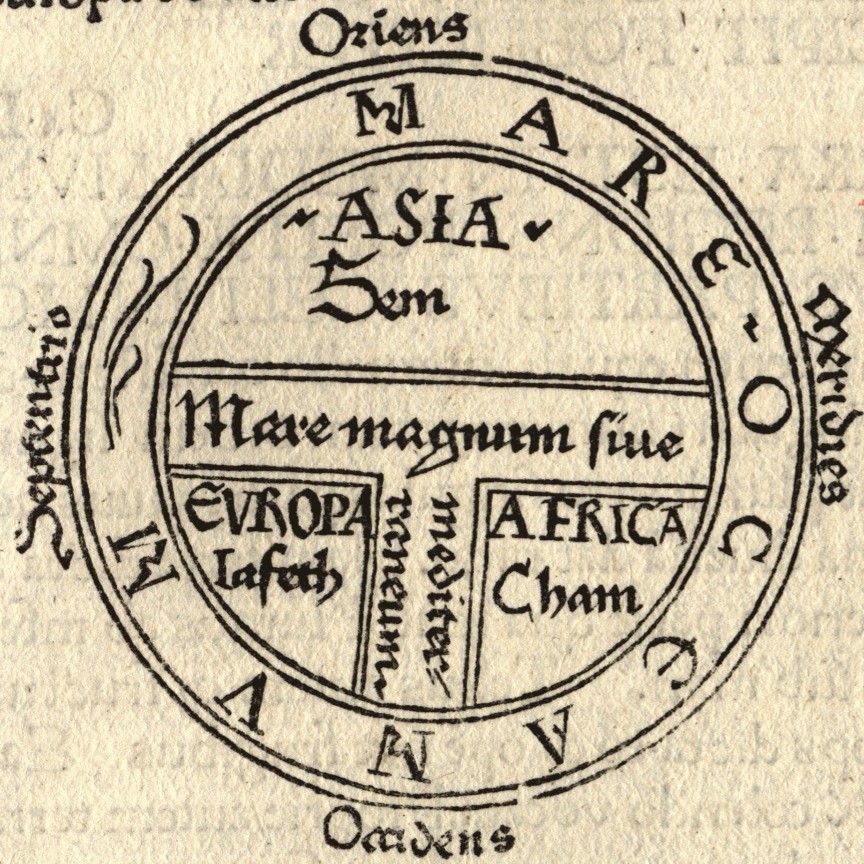
There we find the Hamites, such as the Canaanites, Egyptians, and Cushites, the Japhethites, including the Ashkenazim and the Greeks descended from Javan, and the Semites, like the Hebrews and Arabs.
speaker_0NARRATOR
Yet the Rephaim, Zuzim, and Emim appear outside this genealogical framework.
speaker_0NARRATOR
According to some interpretative traditions, these giants were descended from the so-called fallen angels, the Nephilim, mentioned in Genesis 6.
speaker_1NARRATOR
The term Ashkenazim originates from the biblical figure Ashkenaz, mentioned as the first son of Gomer, grandson of Japheth.
speaker_1NARRATOR
Japheth, in turn, was one of Noah's sons, recognized as the patriarch of the Japhetic populations as described in the Table of Nations in Genesis chapter ten.
speaker_1NARRATOR
Gomer's name is often associated with the Cimmerians, an ancient people.
speaker_1NARRATOR
The name Ashkenaz is generally understood to be derived from the Assyrian Ashkuza, which appears in cuneiform as Ashkuzai or Ishkuzai.

Chris RoseboroughHOST
"Ham and Cana are joined by blood to Shem.
Chris RoseboroughHOST
Therefore, although we Japhethites are somewhat more foreign, yet we have come into fellowship and unity of Christ by the same right as the Assyrians and the Egyptians." Now, this is an amazing thing, that Lu- that Luther says that, that you have these three sons of Noah, Shem, Ham, and Japheth, and that, and that Jesus wanted to be born not just from Shem, but also from Ham.
Chris RoseboroughHOST
And so he arranged it so that there's all these Gentile Hamite moms who come into his own lineage so that he can claim them all.
Chris RoseboroughHOST
And then Luther says, "Now we're from Japheth," who isn't included in the...
Chris RoseboroughHOST
There's no descendant of Japheth who's included in the genealogy of Christ, but still the Lord kind of lets us in.
Chris RoseboroughHOST
[laughs] So far, so, I, I mean, so far from giving, like, priority to the Japhethites, he, he says, look, he's giving, he's, he's assu- he's assured if you're from Ham, the Lord Jesus wants you to know that it doesn't matter.
Chris RoseboroughHOST
He's got you.
Chris RoseboroughHOST
He's got, by grace, by faith, and also by blood, He has you, that you're part of his, his genealogy.
Christopher NeuendorfGUEST
But within a few decades of the original edition of Webster's Dictionary, a different sense of the word race was introduced that was explained as an ethnographer's term, and this was a series of much larger divisions of the human race.
Christopher NeuendorfGUEST
One possible division that an ethnographer might work with in the mid-19th century would be Semitic, Hamitic, and Japhetic.
Christopher NeuendorfGUEST
So Semitic would be Arabs and, of course, Jews, Japhetic would be white Europeans, and Hamitic would be Black Africans.
Christopher NeuendorfGUEST
I believe Oriental peoples would be considered part of the Semitic group, but I'm not sure because there is a sense in which some of this is pseudoscience.
Christopher NeuendorfGUEST
Well, race in those broad categories is one of the things with which Stone Choir is obsessed.

Dale PartridgeHOST
Um, think about, like, the Dominican Republic or Cuba.
Dale PartridgeHOST
Um, and the same is true for several major Asian populations, right? So Koreans and Japanese share ancestral lineages that are rooted in the Japhethite migrations after the flood, making them, again, falling into that white category as a macro race level.
Dale PartridgeHOST
Um, so again, the word race is the linguistic tool used to describe related people groups.
Dale PartridgeHOST
Generally in our context, it's Black, it's white.
13 MINS LATER
Dale PartridgeHOST
Um, but people descended from Japheth, the European and white populations, uh, they average somewhere around 100, even up to, you know, on average, depends on certain countries, is 105.
Dale PartridgeHOST
Now, people that descended from Shem, uh, Middle Eastern Semitic peoples, uh, you know, some Jews have higher I- IQs.
Dale PartridgeHOST
Uh, some Arabs are somewhere between Africans and Japhethites.
Dale PartridgeHOST
If you just look at...

Dale PartridgeHOST
Um, think about, like, the Dominican Republic or Cuba.
Dale PartridgeHOST
Um, and the same is true for several major Asian populations, right? So Koreans and Japanese share ancestral lineages that are rooted in the Japhethite migrations after the flood, making them, again, falling into that white category as a macro race level.
Dale PartridgeHOST
Um, so again, the word race is the linguistic tool used to describe related people groups.
Dale PartridgeHOST
Generally in our context, it's Black, it's white.
13 MINS LATER
Dale PartridgeHOST
Um, but people descended from Japheth, the European and white populations, uh, they average somewhere around 100 even up to, you know, on average, depends on certain countries, as 105.
Dale PartridgeHOST
Now, people that descended from Shem, uh, Middle Eastern Semitic peoples, uh, you know, some Jews have higher I- IQs.
Dale PartridgeHOST
Uh, some Arabs are somewhere between Africans and Japhethites if you just look at...
Dale PartridgeHOST
You can look up all of this IQ data and understand some of this, but they often fall somewhere in between.
Joel WebbonHOST
Of the earth.
Dale PartridgeHOST
Which, yeah, so this is, when you look at the Old Testament, you have this breakout of, you have the Japhethites, which are generally the white people.
Dale PartridgeHOST
You have, but you also have the Shemites, or as we know them as the Semites.
Dale PartridgeHOST
which create the Arab Jewish world.
Dale PartridgeHOST
Yeah.
Dale PartridgeHOST
Yeah.
Dale PartridgeHOST
And this is so having a conversation around like, again, understanding like the Japanese historically would be viewed as Japhethites, white people.
Dale PartridgeHOST
Now, that's why their skin is light, right? They're northern peoples.

Justin VarisNARRATOR
But Blumenbach later, 1795, fell back on Lenin's four varieties, which however he distributed somewhat differently, assigning to the Caucasic most of the Europe, Cisgenic Asia, and the region stretching northward from Amir Basin to the Mongolic Transgenic Asian north to the Amir, with the islanders and great part of the Austral lands to the Ethiopic Africa, and to the American all the New World, except the northern coastlands, that is, the Eskimo domain, which he includes in the Mongolic division.
Justin VarisNARRATOR
Then ensued a period of orthodox reaction against the Lemkarian ideas, headed by Cuvier, 1773 to 1838, who held by fixality of species, but inconsistently admitted three races, the Caucasic, Mongolic, and African, supposed to answer to the biblical Japhetic, Semite, and Hamatic families.
Justin VarisNARRATOR
In 1801, Viriery, 1775 to 1840, reduced Cuvier's three divisions to two distinct species, white and black, each with three main races or subspecies, which again prized a number of secondary groups.
Justin VarisNARRATOR
But this could not satisfy thoroughgoing polygenicists.
Justin VarisNARRATOR
Bory de Saint-Vincent, who in 1827 discovered 15 species, including such nebulous groups such as Cathays, Neptunians, Columbians.
Justin VarisNARRATOR
Lastly, the American school, which is hands of Morton Glilden, Knox, Azgazi, and others brought about an inevitable reaction by threatening to increase the number of species indefinitely.
Justin VarisNARRATOR
Other groupings, which were marked by greater sobriety, and which still possess some historic interest, were those of Hamilton Smith, Caucasic Mongolic Tropical, Latham, Japhetic Mongoloid Atlantiades, Carl G. Karis, four divisions somewhat fantastically named, Nakathamessen, Nightmen, the Negro, Tagmenchesen, Damon, the Caucasian, Ostlich Dashmergenschen, men of the Eastern Twilight, Mongoloid Melo-Hindu peoples, and the Westlich Dammerschmermen, men of the Western Twilight and the American Aborigines, and Preschel, Australian with Tasmanian, Papuan, Mongoloid with Mayo Polynesian and American, Dravidian, Hottentot with Bushmen, Negro, Mediterranean, i.e. Blumenbach's Caucasian.
Justin VarisNARRATOR
A fresh element of confusion, which still clings to the ethnological studies, arose out of Frederick Siegel's little treatise on the language and wisdom of the Hindus, 1808, which was later declared by Max Mueller to have revealed a new world and to have shown what unexpected services anthropology might derive from the science of language.
5 more episodes mention Japhetites.
Create an account to see the whole feed, search across every transcript, and follow the entities you care about.