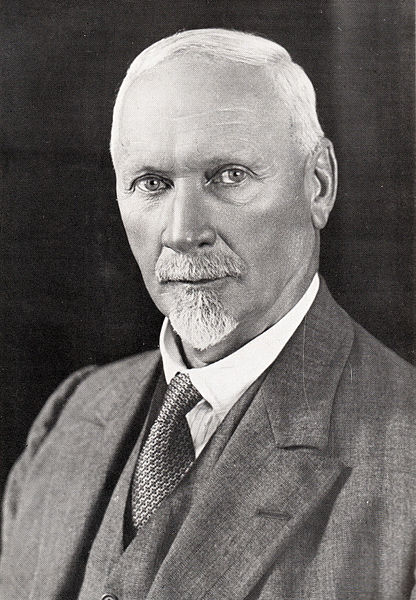
Jan Smuts
Statesman and former Prime Minister of South AfricaWikipedia
25
MENTIONS
14
EPISODES
14
PODCASTS
Search complete. 25 mentions across 14 episodes found for "Jan Smuts".
Oct 21, 2026

Carl NelsonHOST
He's talking about Johannesburg International Airport, the Oliver Tambo Airport, that's what he's calling now.
Carl NelsonHOST
Before it was called Jan Smuts Airport.
Carl NelsonHOST
When we went there with Jesu on the way to get Mandela's freedom, it was a Jan Smuts Airport.
Carl NelsonHOST
That was one of the Afrikaners.
Carl NelsonHOST
And there was all police, the SAPs as they called them, they were out there watching us when we came in.
Carl NelsonHOST
And getting off the plane and going there and watching all these white Afrikaners watching us when we got off the plane, you know, because we had no one to greet us.
Carl NelsonHOST
When we stopped in Zambia, we had a motorcade.
Carl NelsonHOST
So we came directly from Zambia to South Africa and stopped at Jan Smuts.

Greg JacksonHOST
On May 15th, Allied leaders, still preparing for the hundreds of different ways in which everything could go wrong, once again returned to St. Paul's School, London.
Greg JacksonHOST
Some 150 guests sit on crowded wooden benches behind a single row of chairs at the front reserved for King George VI, Winston Churchill, Field Marshal and Prime Minister of South Africa Jan Smuts, and Sir Alan Brooke, who serves as Winston's chief military advisor.
Greg JacksonHOST
They face the stage where a map of the Normandy beaches and surrounding area is tilted at an angle for all to see.
Greg JacksonHOST
As Ike will later note, during the whole war, I attended no other conference so packed with rank as this one.

Jay DyerHOST
What's wrong with y'all? What's wrong with y'all? So who was uniting the UN, the communists, and the capitalists? Big money.
Jay DyerHOST
Big state capitalism is behind all of this in a singular push for What Jan Smuts, who was one of the key figures in the establishment of the United Nations, said would be a world government.
Jay DyerHOST
Yalta was key because Yalta allowed the UN to plan for the way that the world would be divvied up.
Jay DyerHOST
And by the way, Karl Marx was a supporter of and a fan of entities like the UN.

Tim McGarryHOST
And they could have come slightly earlier, 'cause there were proposals on the table, weren't there, from the South African, uh-
Cormac MooreHOST
Well, no, Jan Smuts, you know, he, he was involved in, uh, in-
Tim McGarryHOST
There were previous talks with the IRA where they said the IRA had to give up their weapons.
Cormac MooreHOST
Yeah, but that, but that wasn't, that wasn't Jan Smuts.
Cormac MooreHOST
That was in, uh, um, when, uh, in autumn and, uh, early winter of 1920.
Tim McGarryHOST
'20, yeah.

Clement ManyathelaHOST
Mm-hmm.
Dirk KotzeGUEST
Uh, and the parties of Jan Smuts was, was, was the governing party.
Dirk KotzeGUEST
So he is very-- though he's seen by many as a liberal or was in his, for his time, a liberal person, the, the foundations actually started there.
Dirk KotzeGUEST
And what later became grand apartheid built on those, uh, 1930 and 1936 acts.
14 MINS LATER
Dirk KotzeGUEST
Yeah.
Dirk KotzeGUEST
The, the first question is not correct.
Dirk KotzeGUEST
Um, the person who did that was Jan Smuts.
Clement ManyathelaHOST
Mm-hmm.

AlistairNARRATOR
From the outset the Boers dominated the Union government.
AlistairNARRATOR
Botha himself served as Union premier from nineteen ten until his death in nineteen nineteen, and was followed by General Jan Smuts, who had been a comrade-in-arms in the campaigns against the British during the Boer War and right-hand man of Botha in politics since the war.
AlistairNARRATOR
Botha and Smuts alike believed, as practical statesmen, that in friendly cooperation with the British in South Africa and under the protecting aegis of the Empire, the Boer people could best prosper, and why not? They were now masters of all British South Africa.
AlistairNARRATOR
Botha and Smuts came increasingly under the spell of British imperialism.
AlistairNARRATOR
Botha conquered German South West Africa during the war, and as a delegate at the Peace Conference insisted that it be given to South Africa as a mandate.
AlistairNARRATOR
Smuts served as British commander in the campaign to conquer German East Africa, not for the Boers, but for the Empire.
AlistairNARRATOR
He was an influential member of Lloyd George's War Cabinet and a trusted advisor of the London government in imperial affairs.
speaker_3ADVERTISER
Crown Coins Casino.

Jesse Lee PetersonHOST
[laughs]
James HakeCORRESPONDENT
Jan Smuts.
James HakeCORRESPONDENT
J-A-N is his first name, Smuts was his last name, S-M-U-T-S, in his book Holism and Evolution.
Jesse Lee PetersonHOST
Amazing.

Mark RaphaelyGUEST
... ally ourselves with in the war.
Mark RaphaelyGUEST
And fortunately, a guy called Jan Smuts, one of our earlier prime ministers, won the battle for Parliament, and we ended up fighting with the British.
Mark RaphaelyGUEST
But Smuts lost his election in 1948, and that was the official beginning of the apartheid era.
Mark RaphaelyGUEST
And so, as I say, it wasn't lost on the Jewish community that the people who were running the country were certainly no friends of ours.

Aubrey MasangoHOST
Uh, uh, it, it started out as the League of Nations, right? I mean, it started out as the League of Nations that had a lot of contributions by a, a former South African, uh, politician who played a, a, a pivotal role in, I suppose, the conceptualization of it.
Aubrey MasangoHOST
I'm talking about Jan Smuts.
Aubrey MasangoHOST
Uh, when it was still the League of Nations, later became as we now know it, the, the, the, the United Nations.
Aubrey MasangoHOST
What was its mandate? And I, I love the fact that you point to the fact that the power structures in the UN reflect the power structures of the victors of the Second World War in many way, many ways, and of course, the, the value systems that they hold, uh, worldviews that they hold in terms of the power structures that exist.

Dave RobbinsHOST
How's that sound to you, all of you out there that are patriots, the land of the free, the home of the brave? You want to yield up your sovereignty to a foreign entity or to a United Nations? Well, this is the goal.
Dave RobbinsHOST
And so Woodrow Wilson's 14 points in the draft prepared by Edward House and by British figures such as Lord Robert Cecil and Jan Smuts, they were folded into the covenant signed at Versailles in 1919.
Dave RobbinsHOST
And the League, the League of Nations, had an assembly of all members, a council of the great powers, a secretariat, a provision for a permanent court, and the structural skeleton later copied into the United Nations.
Dave RobbinsHOST
Members were expected to submit disputes to arbitration and limit armaments.
4 more episodes mention Jan Smuts.
Create an account to see the whole feed, search across every transcript, and follow the entities you care about.