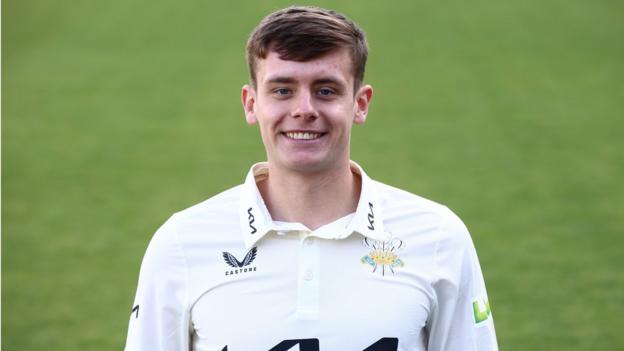
Jamie Smith
English cricketer
17
APPEARANCES
9
PODCASTS
Sep 10, 2026

Jamie SmithGUEST
Um, obviously, in that process, they might be able to identify and label and, and diagnose specifically what's going on.
Jamie SmithGUEST
But even with that, like, you go into testing and imaging and all of those sort of things, like, um, is, is the specific diagnosis that important? Um, is it, is it going to make or break the, uh, the rehab process, the decision-making, the, the application, the loading side of things? Like, I think a lot of that is a bit more blurry than people want to sort of give it credit to.
Jamie SmithGUEST
So I kind of operate in that world where I'm trying not to diagnose anything, um, because I don't want to.
30 MINS LATER
Jamie SmithGUEST
I think really behind the scenes, President Trump talked about lowering energy prices for Americans.
Jamie SmithGUEST
He talked about how this was, you know, gaining access to Venezuelan oil reserves.
Jamie SmithGUEST
But really what this deal is about is that the Trump administration is really disappointed that few oil groups have agreed to come in and commit the capital that's needed to really develop Venezuelan assets, which are very dilapidated.
Jamie SmithGUEST
And since this deal was announced on Friday, there's been an ominous silence from the major US companies that invested in Venezuela previously.
Jamie SmithGUEST
They have not commented on whether they're now interested in going back into Venezuela.
Jamie SmithGUEST
I think really, you know, there's political risks inherent in this type of an arrangement, saying that the US is gonna control 65 billion barrels of proven Venezuelan reserves is likely to raise heckles in Venezuela.


Jamie SmithGUEST
Um, I think it's not the sort of surface where you sort of feel you're always in and you can go and, and play shots and sort of bowl one.
Jamie SmithGUEST
But when you sort of get that opportunity to score, you sort of have to s- make it count, and I guess take a little bit of a risk at times to, to either drive a ball that might not be there or try and find some whip somewhere to score off.
Jamie SmithGUEST
Um, as I said, credit to Pakistan, they bowled really nicely and kept it quite tight throughout the day.

Alison MitchellHOST
Have you felt over the recent innings that, you know, you want to be getting some more big scores under your belt?


Jamie SmithGUEST
Um, you know, I, I will say the, you know, the getting the coach and whatnot, again, I'm on the girls side.
Jamie SmithGUEST
Um, so, at least here, you know, we're, we're pretty experienced [laughs] right now.
Jamie SmithGUEST
Um, and to be honest, it's helped me out a lot from a emotional, mental standpoint.


Jamie SmithGUEST
So, you know, and I think that's what we... we learned with when we were doing the glass bottles argon doesn't save the world it's a it's a good preservative and it helps but the wine is already damaged or i say damaged if the wine's already had that contact with the air or the yeast or the bacteria that argon it's not penicillin it just creates a blanket so we have obviously we've put everything into a clean room So that brings, you know, by a magnitude down any level of atmospheric yeast or bacteria or any contaminants.
Jamie SmithGUEST
But we then have a secondary process if you're looking for long shelf life, which is a pressure process on these pouches, which will basically inactivate anything that could have possibly got in there.
Jamie SmithGUEST
And because it's a pressure process, You can't do it on a glass bottle, on a can, on a PET bottle, because it will pop.

DaveHOST
still for a moment
Jamie SmithGUEST
The idea of two different people receiving the same quote-unquote program, the same method, the same protocol, whatever you want to call it.
Jamie SmithGUEST
Because I think this is a misconception or at least a misunderstanding within, I don't think you have this, but definitely younger coaches, even younger allied health professionals, because I do mentor a lot of allied health professionals.
Jamie SmithGUEST
is that the specific protocol, the specific technique, the specific exercise, the specific volume and intensity is actually not what changes people.
11 MINS LATER
DaveHOST
Right.


Jamie SmithGUEST
A lot of the things that Vincent talked about really resonated with me, but it has been a relatively good crop and very quick.
Jamie SmithGUEST
I think we will harvest probably between the hives on the farm and my hives something like 500 or 600 pounds.


Jamie SmithGUEST
And there was, I think during lockdown, every man and their dog wanted to do sampling.
Jamie SmithGUEST
And we saw wine in all kinds of vessels, whether it was a plastic pouch bought off Amazon, a hotel room shampoo bottle, a glass bottle with a screw cap on.
Jamie SmithGUEST
any you know kids food pouches and i think there was a lot of people who did that and went all in saying we're doing this and there's not very many people left doing the sampling so i think really where we are at scale is we've built a product and we've got to the stage that we are happy that it works um and as a sommelier If the samples didn't taste the same coming out of the pouch as a real bottle, there's no point doing it.
17 MINS LATER

Jamie SmithGUEST
So in my opinion, uh, and actually when I say my opinion, also I have two PhDs that I'm co-founders with, so it's mostly their op- their opinions here, let's be honest here.
Jamie SmithGUEST
But, um, when you're looking at a best in class gut health experience, there's really three things that you need to be looking at.
Jamie SmithGUEST
Um, the biomarkers that we look at, so those are what we call, like, our functional biomarkers, right? So how the gut is functioning, if there's things like inflammation, immunity issues, leaky gut.
Jamie SmithGUEST
We've got the Saudi Aramco boss, Amin Nasser, and I think they'll really want to persuade the US officials that are present at this conference to try and deescalate this crisis, prevent more attacks on their oil and gas infrastructure.
Jamie SmithGUEST
I think we'll see the US officials, Chris Wright, the US Energy Secretary, Doug Burgum, the Interior Secretary, they'll come to CERAWeek, and they'll probably be urging US producers to drill more to boost supply in a market which is really constrained at the minute.
Jamie SmithGUEST
Their goal is to drive down oil prices and the price of petrol in the US before the midterm elections in November.
Jamie SmithGUEST
And then finally, maybe the US oil and LNG companies, which don't have operations in the Middle East, well, they'll be presenting themselves to customers here as the safe, reliable partners, and I'd expect a lot of Japanese and Asian buyers to flock to this conference to see what type of spare capacity is available in the United States and snap that up.

Victoria CraigHOST
But actually, the conflict you've written has given China a bit of an advantage.
Jamie SmithGUEST
So it's fascinating because Trump's big thing was energy dominance, and then we've got this huge crisis in the Middle East, which to a certain extent has shown that the US can be insulated a bit from a fossil fuel crisis because it is the largest producer of oil and gas in the world, but it is still affected quite significantly by this crisis.
Jamie SmithGUEST
We've got several hundred tankers waiting to try and get through the Strait of Hormuz.
Jamie SmithGUEST
If you add up the potential liability for all these tankers, you know, you could get a huge figure, somewhere in the region of three hundred and fifty billion dollars.
Jamie SmithGUEST
That's because you've got to cover, you know, the potential loss of the tanker, but also extremely expensive oil spills, third party liability, loss of life.
Jamie SmithGUEST
And actually, the maximum contingent liability under law for the Development Finance Corporation is only two hundred and five billion dollars.
Victoria CraigHOST
But Jamie, if passage through the Strait of Hormuz remains effectively cut off, what does that mean for crucial energy supplies that are destined for some of the world's biggest manufacturing economies?
Mark FilippinoHOST
So, tell us about these private investors who are chomping at the bit to get into Venezuelan oil.
Jamie SmithGUEST
One of the most prominent is a former Chevron executive, Ali Moshir, who had previously worked in Venezuela, and his fund has actually been seeking to raise two billion dollars to try and invest in different assets there.
Jamie SmithGUEST
He told me that he thinks he can possibly buy and acquire between 20,000 to 50,000 barrels of oil per day production from the state oil company.
Jamie SmithGUEST
Harold Hamm, the US shale tycoon, a close associate of Donald Trump, he told me that he is considering looking at Venezuela.
Jamie SmithGUEST
So there are two potentials, and there are lots of other players that are, maybe have had previous experience in Venezuela or are just eyeing up this opportunity, so I'd expect to see a lot more people come out of the woodwork over the following days and weeks.
Mark FilippinoHOST
Just out of curiosity, Jamie, why aren't we seeing that type of enthusiasm from oil majors?
Jamie SmithGUEST
Yeah, what we've really seen in the last couple of weeks is this huge increase in the wholesale gas prices across the USA.
Jamie SmithGUEST
They're up over 50% on this time last year, and they breached the $5 mark, which is for the first time since 2022.
Jamie SmithGUEST
So, we're getting this big increase in the wholesale rate and that is putting pressure on retail rates, particularly for electric power utilities, which generate electricity by burning natural gas.
Jamie SmithGUEST
They will be protected to some extent because they get their gas from regulated utilities generally, and so the increases there will be a lot less in terms of the gas price.
Jamie SmithGUEST
But even there, when we look at the statistics in the 12 months to the end of September, there was an 11.7% increase in piped gas into people's homes.
Marc FilippinoHOST
And why is this happening? Does it have anything to do with the fact that I'm wearing a jacket over my sweater right now?
Mark FilippinoHOST
So, why did Trump decide now is the time to take such a substantial step, especially given that his predecessor, Joe Biden, decided to avoid it altogether?
Jamie SmithGUEST
What we see now is a completely different oil market than we had during President Biden's term.
Jamie SmithGUEST
The price of crude has really tumbled, and this has given Trump the ability to intervene in this way and impose sanctions without, you know, the fear that it's gonna be politically damaging by pushing up domestic petrol prices here in the US.
Jamie SmithGUEST
Because when you- you do impose sanctions like this, it shocks the market, and as you've seen, the oil price has spiked up 6% since the sanctions were announced.
Mark FilippinoHOST
How big of a deal would that be?

Mark FilippinoHOST
Just out of curiosity, Jamie, why did OPEC suddenly do a 180 on all this?
Jamie SmithGUEST
So, Saudi Arabia has borne most of the output cuts over the last couple of years, and it really wants to reclaim market share from the US and other non-OPEC producers, but also from OPEC producers within the cartel itself.
Jamie SmithGUEST
You know, Trump was pushing very hard in and around the April timeframe for lower energy prices, and some analysts think that Saudi Arabia responded to that by pushing ahead with these production increases.
Jamie SmithGUEST
So, by putting this extra supply in the market, that kept prices at a reasonable level.
Mark FilippinoHOST
He's been saying since the campaign trail that he wants US oil to "drill, baby, drill." Now, what does this mean for US oil long-term?
Marc FilippinoHOST
What would a revival in the nuclear sector do to the larger main energy sector?
Jamie SmithGUEST
Well, at the minute in the US, nuclear provides about 18 to 20% of the electricity into the energy mix.
Jamie SmithGUEST
What we're seeing is that the electricity demand in the US is really surging at the minute, in particular because of the rollout of internet data centers to power this artificial intelligence boom.
Jamie SmithGUEST
You know, one of the big drivers for the increased funding into SMRs is that last October, Google signed a power supply deal with Kairos Power, and Amazon signed a big power supply deal with X-energy.
Jamie SmithGUEST
These two deals really demonstrated, I think, that the big tech companies really see nuclear as a viable way to supply them with power to fuel this artificial intelligence boom.
Marc FilippinoHOST
Jamie, this sounds all well and good, but I have to assume that there might be some risks to this kind of investment.
Jamie SmithGUEST
Well, I think executives are generally happy that Donald Trump and a Republican administration is now in place, but they are not suggesting that they're going to do their bidding in terms of the drill baby drill slogan that Trump has been espousing.
Jamie SmithGUEST
There's really several reasons why they don't think they're gonna be able to produce a lot more in the short term.
Jamie SmithGUEST
I mean, one reason is the US is actually already producing at record levels, and for the last six years has been the biggest producer of crude oil in the world.
Jamie SmithGUEST
But we're getting to a period where it's difficult and expensive for these producers to push ahead and boost production.
Jamie SmithGUEST
So big producers like Chevron and Conoco, they've said they will cut spending this year, and in the Permian, the heartland of US oil production, more than half of producers have signaled they will cut spending in 2025.
4:32
All right, so cheaper oil might be, you know, good news for green energy advocates right now, but do you think we'll see renewed investment in shale eventually?
Jamie SmithGUEST
I think one thing about these repeal of environmental laws, Trump is saying he's gonna make a big push on permitting.