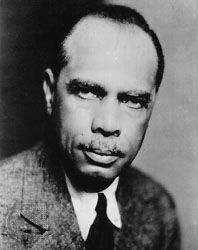
James Weldon Johnson
American author and politicianWikipedia
40
MENTIONS
24
EPISODES
19
PODCASTS
Search complete. 40 mentions across 24 episodes found for "James Weldon Johnson".
Oct 14, 2026

Rick SmithHOST
The protest came in the aftermath of the July 2nd East St. Louis race riot and a number of lynchings in Texas.
Rick SmithHOST
Organized by Black scholar and activist W.E.B. Du Bois, James Weldon Johnson, and the NAACP, the Silent Parade protested lynchings and anti-Black violence.
Rick SmithHOST
Children led the march dressed in white.
Rick SmithHOST
Women, who were also dressed in white, followed them.
Rick SmithHOST
But Wilson took no action.
Rick SmithHOST
In fact, he opposed anti-lynching legislation and continued segregationist policies in federal offices.
Rick SmithHOST
In an editorial for The New York Age, James Weldon Johnson pointed out, quote, "That their brothers and sisters, people just like them-
James Weldon JohnsonSOUNDBITE_SPEAKER
them-were Jim Crowed and segregated and disenfranchised and oppressed and lynched and burned alive in this, the greatest republic in the world, the great leader in the fight for democracy and humanity.

speaker_0NARRATOR
The Harlem Renaissance is a term for the efflorescence of Black culture that really exploded in the post-World War I period, especially in New York.
Brent Hayes EdwardsGUEST
York.You had writers like Claude McKay, James Weldon Johnson, Langston Hughes, Zora Neale Hurston emerging as prominent voices.
Brent Hayes EdwardsGUEST
The Renaissance is a term for that emergence, for that, uh, efflorescence that is a real shift from a period in the beginning of the 20th century which saw the birth of the Ku Klux Klan, which saw, um, an increase in incidents of racial violence and lynching, and a real...
Brent Hayes EdwardsGUEST
Rayford Logan, the historian, calls it the nadir of race relations in the US, the Jim Crow era, when, uh, Blacks were violently, um, crushed out of the paths of social mobility in American society.

William BarberSOUNDBITE_SPEAKER
And I think I read somewhere that we didn't create the water.
William BarberSOUNDBITE_SPEAKER
I remember when James Weldon Johnson took that creation story and wrapped it into the lingo of the black church, he
speaker_2UNKNOWN
said that God stepped out and spat out
William BarberSOUNDBITE_SPEAKER
the seeds.

Lola JaneyNARRATOR
Paul Laurence Dunbar's poem entitled Signs of the Times, a Thanksgiving poem, was read by one of the pupils, and also The Party, another of Dunbar's pieces, was rendered.
Lola JaneyNARRATOR
The Negro National Hymn, words by James W. Johnson and music by his brother Rosemond Johnson, was sung by a chorus of fifty voices.
Lola JaneyNARRATOR
At the opening of the service, the president's Thanksgiving proclamation was read and appropriate remarks were made by Mrs. Wilkins.
speaker_0ADVERTISER
You know what? It sucks to be bored.

David BlightHOST
There is no African American writer, and some white writers, from the 1870s and 80s right on through well into the twentieth century, who could ever avert their eyes from this story.
David BlightHOST
This is a passage from James Weldon Johnson's The Autobiography of an Ex-Colored Man.
David BlightHOST
If you've ever read that wonderful 1912 novel you'll know it's the story of a black man who's passing for white.
David BlightHOST
But because he's passing in the South, he gets to see things that people don't know he's seeing.
Rick SmithHOST
The year of 1919 was one of the deadliest years of violence against African Americans in U.S. history.
Rick SmithHOST
Civil rights activist James Weldon Johnson called those bloody months the Red Summer.
Rick SmithHOST
26 race riots left thousands of African Americans homeless and hundreds dead from Chicago to Washington, D.C. to Omaha.
Rick SmithHOST
[upbeat rock music]

Tim GilmoreSOUNDBITE_SPEAKER
But Stanton High School was, you know, the segregated black high school.
Tim GilmoreSOUNDBITE_SPEAKER
And this, of course, is where James Weldon Johnson was principal for a time period.
Ben BroatmarkleHOST
Following its closure in 1927, the Duval High School building was repurposed several times.
Ben BroatmarkleHOST
It was briefly a junior high school in the 1940s and was then used as administrative offices for Duval County Public Schools until 1971.

Tasliym MoralesGUEST
if you didn't have the first one.
Tasliym MoralesGUEST
And the other one would be The Autobiography of an Ex-Colored Man by James Weldon Johnson.
Bob Fabian ZinkaHOST
Why, why should people read this, this book?
Tasliym MoralesGUEST
Because number one, it allows you to see the extent that some, some people have to go through to gain access.
Tasliym MoralesGUEST
if you didn't have the first one.
Tasliym MoralesGUEST
And the other one would be The Autobiography of an Ex-Colored Man by James Weldon Johnson.
Bob Fabian ZinkaHOST
Why, why should people read this, this book?
Tasliym MoralesGUEST
Because number one, it allows you to see the extent that some, some people have to go to to gain-
14 more episodes mention James Weldon Johnson.
Create an account to see the whole feed, search across every transcript, and follow the entities you care about.