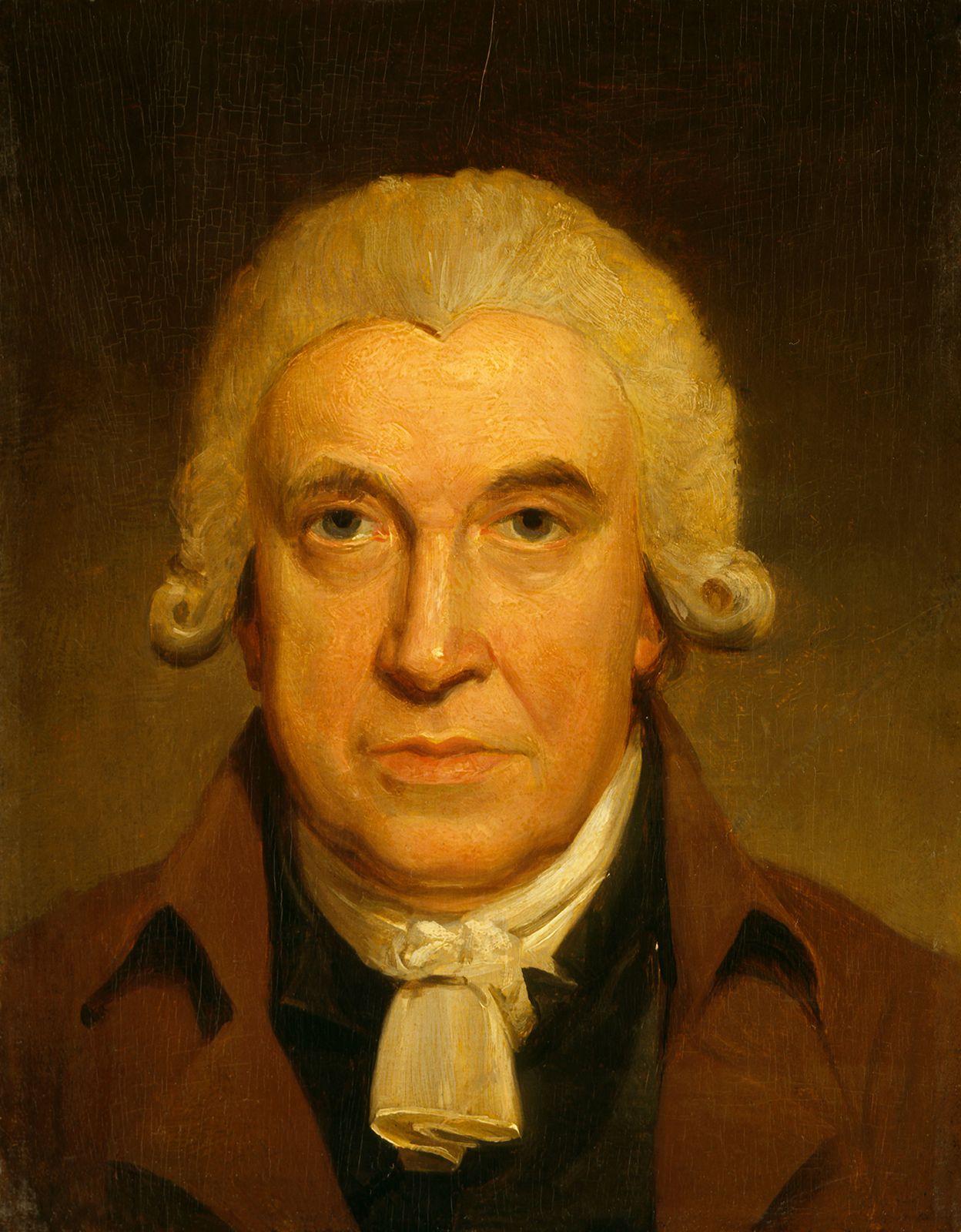
James Watt
Scottish inventor and engineerWikipedia
76
MENTIONS
34
EPISODES
32
PODCASTS
Search complete. 76 mentions across 34 episodes found for "James Watt".
Oct 27, 2026

Simon BaughHOST
Recorded history and the birth of writing starts on page 975.
Simon BaughHOST
And then, on the very last page, James Watt invents the steam engine, and the last paragraph includes the invention of nuclear weapons, the discovery of man-made climate change, and artificial intelligence.
Simon BaughHOST
Perhaps it's not surprising that Dario Amadei, the founder of Anthropic, opened an essay this year with a question borrowed from the film Contact about what should be the first thing we ask alien beings if we ever meet them.
Simon BaughHOST
His questions were, how did you do it? How did you evolve? How did you survive this technological adolescence without destroying yourself? But the 1000-page book analogy actually demonstrates acceleration, not extinction.

Betty B.NARRATOR
On the 18th day of May, I had my division organized and camps in running order.
Betty B.NARRATOR
The country was literally underwater, dry ground being the exception, and I look upon the feat of getting across the country at all as the engineering triumph of my life.
Betty B.NARRATOR
On May 20th, a genuine blizzard set in, lasting 24 hours, snowed five inches, and froze the sloughs over with half an inch of ice, a decidedly interesting event to the winner, as he was 18 miles from the nearest wood, therefore lay in his blankets and ate hardtack.
Betty B.NARRATOR
I stabled my ponies in the cook tent, and after they had literally eaten of the sod inside the tent, I divided my floor with them.
8 MINS LATER
speaker_6NARRATOR
The road was
Betty B.NARRATOR
built by the construction department before the operating department was asked to take it.
Betty B.NARRATOR
The engineering was organized in divisions of 30 miles each, and as each was finished, the parties moved ahead again to the front, the engineers usually finding men sitting on their shovels waiting for the work to be laid out for them.
Betty B.NARRATOR
It was as much as the locating parties could do to keep out of the way of the construction.

speaker_0NARRATOR
142.
speaker_0NARRATOR
Section I, James Watt and H.I.S. Inventions At the age of 18, Watt was sent to Glasgow, there to reside with Heismother's relatives, and to learn the trade of a mathematical instrument maker.
speaker_0NARRATOR
143.
speaker_0NARRATOR
The ore mines We had great faith in these mines, but to work them the railroad was necessary.
20 MINS LATER
speaker_0NARRATOR
243.
speaker_0NARRATOR
Section 2.
speaker_0NARRATOR
The contemporaries of James Watt William Murdoch was one of the men to whom Watt, no less than the world, was greatly indebted.
speaker_0NARRATOR
244.

Wallace GarneauHOST
Let's talk about people who were the equivalent of billionaires in their day.
Wallace GarneauHOST
In 1769, James Watt patented improvements to the steam engine that made it commercially viable for factories and industrial machinery.
Wallace GarneauHOST
Without the financial incentives that encouraged Watt and his business partner, Matthew Bolton, to develop and commercialize that technology, the Industrial Revolution might never have started, or it might have started much later.
Wallace GarneauHOST
Factories would have remained dependent on water power and the mass production of clothing.
Wallace GarneauHOST
People were not free, and progress was slow.
Wallace GarneauHOST
People became free and progress picked up.
Wallace GarneauHOST
So that was James Watts.
Wallace GarneauHOST
We consider that the Industrial Revolution, or people call it that.

Robert SuitsGUEST
We think about the Industrial Revolution, particularly environmental historians, but I also think economic historians and I think politicians.
Robert SuitsGUEST
Pretty much all non historians to we think of the industrial revolution is this time when like James watt invents the steam engine and suddenly we're able to turn coal into work right and before that you pretty much had to either.
Robert SuitsGUEST
manually Labor or you could maybe direct a horse to Labor or you could have wind power and water power but they're not super important.
Robert SuitsGUEST
And then after that, suddenly you have machines able to do all of the work and the machines start transforming life and getting involved in more and more sectors of the economy.

Mike WattHOST
And Grinick, you know, there's up the river, Clyde there, there's a town, there's a college.
Mike WattHOST
James Watt, my pop's name is that.
AlexGUEST
Oh, really? Yeah, yeah, yeah.
AlexGUEST
I wouldn't

Jason CrawfordGUEST
They were just developing a system of record keeping, right?
Ben Landau-TaylorHOST
Yeah, like I've read a bunch of the letters between Bolton and Watt when they were putting together, you know, what ended up being the steam engine that's usually taken as the start of the Industrial Revolution.
Ben Landau-TaylorHOST
And like, you know, they don't seem to realize how big it's going to be.
Ben Landau-TaylorHOST
They're like, oh, this is like a pretty cool invention.
17 MINS LATER
Ben Landau-TaylorHOST
Yes.
Ben Landau-TaylorHOST
And, you know, you had a bunch of these industrialists who were very involved in it, you know, you know, they were involved in the Lunar Society, which is this, you know, kind of this name that gets retroactively applied to this very Enlightenment style, just a bunch of guys getting together to sort of argue about.
Ben Landau-TaylorHOST
the fundamental scientific and philosophical issues, which, you know, James Watt was there, Wedgwood was there, you know, Benjamin Franklin passed through.
Ben Landau-TaylorHOST
Yeah.

Ike BarinholtzHOST
[laughs] Okay.
Ike BarinholtzHOST
The answer is James Watt.
Ike BarinholtzHOST
Okay.
Ike BarinholtzHOST
All right.
Ike BarinholtzHOST
I'm sorry-
Chris FlemingGUEST
Then they-
Ike BarinholtzHOST
... you're gonna start about James Watt?
Chris FlemingGUEST
Then they're gonna turn [laughs]...

Brad HarrisHOST
Now jump ahead to the 1760s, to the University of Glasgow in Scotland.
Brad HarrisHOST
A young instrument maker named James Watt gets a repair job.
Brad HarrisHOST
The university owns a small working model of a new Coleman engine, used for teaching, and it's broken.
Brad HarrisHOST
Picture that room for a moment, because Mokyr's whole argument is inside of it.
24 more episodes mention James Watt.
Create an account to see the whole feed, search across every transcript, and follow the entities you care about.