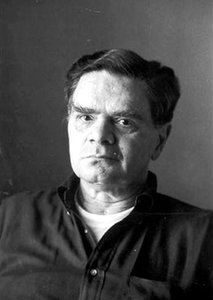
James Schuyler
American poetWikipedia
27
MENTIONS
8
EPISODES
8
PODCASTS
Search complete. 27 mentions across 8 episodes found for "James Schuyler".
Nov 17, 2026

Davy KnittleGUEST
Discourses about the built environment as well as to the social environment of cities.
Davy KnittleGUEST
So I assembled this archive that included both a kind of general attention to the city's built natural environment in the poetry of someone like the New York School writer James Schuyler, alongside explicit interest in planning tools that show up in June Jordan's early work and her collaboration with the studio of the architect Archibald Munster Fuller.
Davy KnittleGUEST
As I kept working on the project, I became more interested in how an attention to more than human life in the city shows up in queer and trans urbanist writing.
Davy KnittleGUEST
And so I thought about the work of David Wojnarowicz, who I discussed in the book's third chapter, which gave me a kind of hinge between the beginning of the book that's thinking about urban renewal era in New York as it shows up in the work of queer writers, and more recent trans literature about New York City that's really thinking about multi-species life as a way of indexing broader conversations about survival.
Davy KnittleGUEST
And so this group of writers are thought of usually as part of very different groups, very different cultural moments, very different kinds of aesthetic practices, but I think they have something important in common that's really only apparent by reading them together.
Davy KnittleGUEST
They're also a group of writers who are really spanning the range of how well-known they are.
Davy KnittleGUEST
So I'm pairing really canonical queer writers like David Wojnarowicz, differently like James Schuyler, with contemporary writers like Zain Juqadar, who really aren't as well-known.
Davy KnittleGUEST
And I thought that this kind of set of unlikely pairings, this unlikely set of queer and trans urbanists, brought something new to a conversation about what queer studies has to contribute to other fields, including more professional fields.

Davy KnittleGUEST
Discourses about the built environment as well as to the social environment of cities.
Davy KnittleGUEST
So I assembled this archive that included both a kind of general attention to the city's built natural environment in the poetry of someone like the New York School writer James Schuyler, alongside explicit interest in planning tools that show up in June Jordan's early work and her collaboration with the studio of the architect Arva Finster-Fuller.
Davy KnittleGUEST
As I kept working on the project, I became more interested in how an attention to more than human life in the city shows up in queer and trans urbanist writing.
Davy KnittleGUEST
And so I thought about the work of David Wojnarowicz, who I discussed in the book's third chapter, which gave me a kind of hinge between the beginning of the book that's thinking about urban renewal era in New York as it shows up in the work of queer writers, and more recent trans literature about New York City that's really thinking about multi-species life as a way of indexing broader conversations about survival.
Davy KnittleGUEST
And so this group of writers are thought of usually as part of very different groups, very different cultural moments, very different kinds of aesthetic practices, but I think they have something important in common that's really only apparent by reading them together.
Davy KnittleGUEST
They're also a group of writers who are really spanning the range of how well known they are.
Davy KnittleGUEST
So I'm pairing really canonical queer writers like David Wojnarowicz, differently like James Schuyler, with contemporary writers like Zain Juqadar, who really aren't as well known.
Davy KnittleGUEST
And I thought that this kind of set of unlikely pairings, this unlikely set of queer and trans urbanists, brought something new to a conversation about what queer studies has to contribute to other fields, including more professional fields.

Davy KnittleGUEST
Discourses about the built environment as well as to the social environment of cities.
Davy KnittleGUEST
So I assembled this archive that included both a kind of general attention to the city's built natural environment in the poetry of someone like the New York School writer James Schuyler, alongside explicit interest in planning tools that show up in June Jordan's early work and her collaboration with the studio of the architect Archibald Munster Fuller.
Davy KnittleGUEST
As I kept working on the project, I became more interested in how an attention to more than human life in the city shows up in queer and trans urbanist writing.
Davy KnittleGUEST
And so I thought about the work of David Wojnarowicz, who I discussed in the book's third chapter, which gave me a kind of hinge between the beginning of the book that's thinking about urban renewal era in New York as it shows up in the work of queer writers, and more recent trans literature about New York City that's really thinking about multi-species life as a way of indexing broader conversations about survival.
Davy KnittleGUEST
And so this group of writers are thought of usually as part of very different groups, very different cultural moments, very different kinds of aesthetic practices, but I think they have something important in common that's really only apparent by reading them together.
Davy KnittleGUEST
They're also a group of writers who are really spanning the range of how well-known they are.
Davy KnittleGUEST
So I'm pairing really canonical queer writers like David Wojnarowicz, differently like James Schuyler, with contemporary writers like Zain Juqadar, who really aren't as well-known.
Davy KnittleGUEST
And I thought that this kind of set of unlikely pairings, this unlikely set of queer and trans urbanists, brought something new to a conversation about what queer studies has to contribute to other fields, including more professional fields.

Davy KnittleGUEST
Discourses about the built environment as well as to the social environment of cities.
Davy KnittleGUEST
So I assembled this archive that included both a kind of general attention to the city's built natural environment in the poetry of someone like the New York School writer James Schuyler, alongside explicit interest in planning tools that show up in June Jordan's early work and her collaboration with the studio of the architect Arthur McMinster Fuller.
Davy KnittleGUEST
As I kept working on the project, I became more interested in how an attention to more than human life in the city shows up in queer and trans urbanist writing.
Davy KnittleGUEST
And so I thought about the work of David Wojnarowicz, who I discussed in the book's third chapter, which gave me a kind of hinge between the beginning of the book that's thinking about urban renewal era in New York as it shows up in the work of queer writers, and more recent trans literature about New York City that's really thinking about multi-species life as a way of indexing broader conversations about survival.
Davy KnittleGUEST
And so this group of writers are thought of usually as part of very different groups, very different cultural moments, very different kinds of aesthetic practices, but I think they have something important in common that's really only apparent by reading them together.
Davy KnittleGUEST
They're also a group of writers who are really spanning the range of how well known they are.
Davy KnittleGUEST
So I'm pairing really canonical queer writers like David Wojnarowicz, differently like James Schuyler, with contemporary writers like Zain Juqadar, who really aren't as well known.
Davy KnittleGUEST
And I thought that this kind of set of unlikely pairings, this unlikely set of queer and trans urbanists, brought something new to a conversation about what queer studies has to contribute to other fields, including more professional fields.

Davy KnittleGUEST
Discourses about the built environment as well as to the social environment of cities.
Davy KnittleGUEST
So I assembled this archive that included both a kind of general attention to the city's built natural environment in the poetry of someone like the New York School writer James Schuyler, alongside explicit interest in planning tools that show up in June Jordan's early work and her collaboration with the studio of the architect Archibald Munster Fuller.
Davy KnittleGUEST
As I kept working on the project, I became more interested in how an attention to more than human life in the city shows up in queer and trans urbanist writing.
Davy KnittleGUEST
And so I thought about the work of David Wojnarowicz, who I discussed in the book's third chapter, which gave me a kind of hinge between the beginning of the book that's thinking about urban renewal era in New York as it shows up in the work of queer writers, and more recent trans literature about New York City that's really thinking about multi-species life as a way of indexing broader conversations about survival.
Davy KnittleGUEST
And so this group of writers are thought of usually as part of very different groups, very different cultural moments, very different kinds of aesthetic practices, but I think they have something important in common that's really only apparent by reading them together.
Davy KnittleGUEST
They're also a group of writers who are really spanning the range of how well-known they are.
Davy KnittleGUEST
So I'm pairing really canonical queer writers like David Wojnarowicz, differently like James Schuyler, with contemporary writers like Zain Juqadar, who really aren't as well-known.
Davy KnittleGUEST
And I thought that this kind of set of unlikely pairings, this unlikely set of queer and trans urbanists, brought something new to a conversation about what queer studies has to contribute to other fields, including more professional fields.

Davy KnittleGUEST
So the five chapters are single author chapters.
Davy KnittleGUEST
They focus on, in chronological order, the New York school poet, James Schuyler, the Black feminist writer, June Jordan, the AIDS activist and multi-genre cultural producer, often thought of as an artist, David Wojnarowicz, Julian Talamantes-Brolasky, who is a trans and two-spirit poet who wrote a collection called Gowanus Atropolis in 2011 about their relationship to thinking about the toxicity of the Gowanus Canal in the 2000s.
Davy KnittleGUEST
And then Zayn Jukadar's wonderful 2020 novel, The Thirty Names of Night.
Davy KnittleGUEST
Those are the main texts I'm thinking about over the arc of the book.
15 MINS LATER
Lina MatthewsHOST
Would you maybe like to speak a bit about your writing about neurodiversity and disability in the book?
Davy KnittleGUEST
Sure, I'm happy to.
Davy KnittleGUEST
So the first chapter is focused on the New York school poet, James Schuyler, who's often written about as part of the cohort of New York school poets, but writes very differently.
Davy KnittleGUEST
So if the sort of paradigmatic New York school example is Frank O'Hara's walking through the city, Schuyler isn't doing a lot of that for reasons of both neurodiversity and later physical disability.

Vinson CunninghamHOST
She's very good.
Vinson CunninghamHOST
I think that a sort of critic of yore, of last century, sadly deceased, whose work would be really great is, does anybody love like James Schuyler? His work would just be majestic, I think, because it's all about these like quotidian, it's like about looking out the window.
Vinson CunninghamHOST
It's like, I feel like it would, the sort of our hunger for reality, our sort of non-fictional present would be really well represented by a poet that likes to look out the window, but then also tell you about going to the bathroom and stuff like that.
Vinson CunninghamHOST
So, there you go.