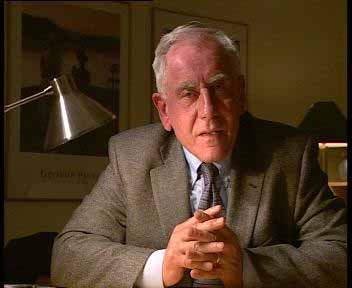
James Reason
British professor and psychologistWikipedia
10
MENTIONS
10
EPISODES
10
PODCASTS
Search complete. 10 mentions across 10 episodes found for "James Reason".
Sep 23, 2026

Ben HutchinsonHOST
And then they actually ran some completed cases with this redesigned JC process.
Ben HutchinsonHOST
Now, James Reason defined just culture as an atmosphere of trust where people provide us safety information while understanding the boundary between acceptable and unacceptable behavior.
Ben HutchinsonHOST
His nineteen ninety-seven decision tree was intended to help managers distinguish from genuine errors from conduct warranting accountability.
Ben HutchinsonHOST
The diagonal line represented diminishing culpability from intended harm through to system-induced or what was called blameless error.

Adam ShehataHOST
And if we fix those issues, which is probably easier said than done, of course, but the only way that we can start to fix them is by identifying them.
Adam ShehataHOST
If we do fix them, then we get closer to what James Reason and Martin Bromley have been saying about how we make it easier then for people to get it right and harder for them to get it wrong.
Adam ShehataHOST
I think it really speaks to the idea of, yes, individual clinicians and people at the front end can be more vigilant and can improve their practice and so on.
Adam ShehataHOST
But really, the system that they work in can be improved and we can really help a lot of people in that way.

Sanjay AryaHOST
To understand why reporting is mandatory, we have to look at the Swiss cheese model of accident causation.
speaker_0HOST
Which was developed by James Reason.
Sanjay AryaHOST
Correct.
Sanjay AryaHOST
Imagine several slices of Swiss cheese stacked together.

Stavros PrineasGUEST
Well, that's a very, very big topic.
Stavros PrineasGUEST
I mean, there's a whole host of factors, um, and those of us who are in the ergonomics field c- you know, we, we talk about performance shaping factors, right? And ergonomists like to invoke, um, James Reason's three-bucket model.
Stavros PrineasGUEST
So, so we've got, so we've got, you know, task factors, person factors, context factors.
Stavros PrineasGUEST
Now, in, in healthcare, we can, we can break that down a little bit further.

JonHOST
But there may be several decisions downstream from the people who created the conditions under which they are expected to drive.
JonHOST
Just would hope that the transport industry would learn more from aviation and Professor James Reason's model of causation, the Swiss cheese.
JonHOST
National Application The HVNL applies in Victoria, New South Wales, Queensland, South Australia, Tassie, and the Australian Capital Territory.
JonHOST
WA and the NT have not adopted the HVNL domestically, although vehicles from those jurisdictions become subject to the HVNL when operating in participating jurisdictions, with some obligations potentially arising before the border is crossed.

Nils VeskGUEST
Well, you know, to be honest, this is going to sound a bit academic, but it's not.
Nils VeskGUEST
There are three types of mistakes, and this comes from a guy called James Reason, and he was a professor in organizational psychology.
Nils VeskGUEST
He worked with... airplane crashes? What is it that makes pilots have massive accidents? There are three types of mistakes.
Nils VeskGUEST
There's one that's called a blackout, which is I forget to do something.

Herman PoppleberryHOST
I do.
Herman PoppleberryHOST
James Reason's model, originally developed for healthcare actually, the idea is that every layer of defense has holes, like slices of Swiss cheese.
Herman PoppleberryHOST
Normally the holes don't line up.
Herman PoppleberryHOST
But when they do, the hazard passes through every layer and you get an accident.

Todd ConklinGUEST
And it's been a super interesting journey.
Todd ConklinGUEST
Because one of the things, Musa, that's very interesting to me is that when we started this discussion, With Tony Machara and some of the info guys, James Reason, the original Clambake clan.
Todd ConklinGUEST
I mean, all kind of the people, Jens Rasmussen, all those guys were a part of this discussion a long time ago.
Todd ConklinGUEST
And when we started this discussion, it's really funny because we started thinking we could manage human error.

Adam ShehataHOST
And if we fix those issues, which is probably easier said than done, of course, but the only way that we can start to fix them is by identifying them.
Adam ShehataHOST
If we do fix them, then we get closer to what James Reason and Martin Bromley have been saying about how we make it easier than for people to get it right and harder for them to get it wrong.
Adam ShehataHOST
I think it really speaks to the idea of Yes, individual clinicians and people at the front end can be more vigilant and can improve their practice and so on.
Adam ShehataHOST
But really, the system that they work in can be improved and we can really help a lot of people in that way.