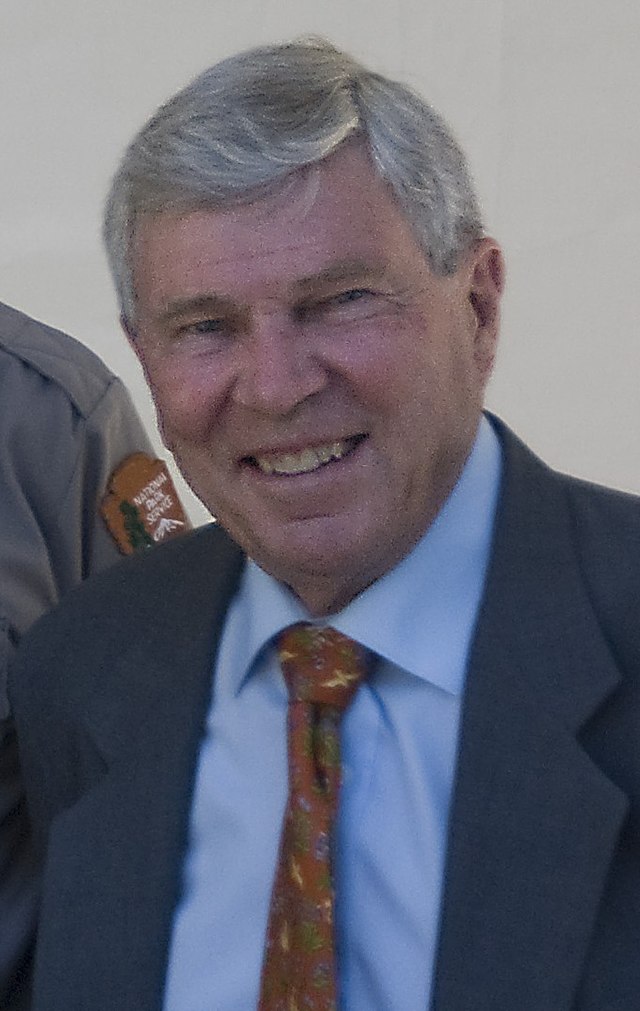
James M. McPherson
American historian and former president of the American Historical AssociationWikipedia
10
MENTIONS
7
EPISODES
6
PODCASTS
Search complete. 10 mentions across 7 episodes found for "James M. McPherson".
Oct 29, 2026

Whitney TerrellHOST
I wanted to mention that I also learn from these episodes, things that change the way that I think about stuff.
Whitney TerrellHOST
And I would mention an episode that we did with Ben Passmore about his graphic novel, Black Arms to Hold You Up, which like his take on black history is very different than James McPherson, who is sort of our leading professor that Suki and I both had at Iowa.
Whitney TerrellHOST
And so there were a lot of challenging ideas in Ben's work that for me, like caused me to rethink stuff that I had thought and read before and caused me to go back and relook at, for instance, the history of the Black Panthers in Kansas City.
Whitney TerrellHOST
And so that, like, I appreciate it when guests come on that I, that challenged me, my preconceptions and thoughts and ideas.
David BennerHOST
Now Karl, I wanna transition to Lincoln, because Lincoln is often called the Great Emancipator.
David BennerHOST
You know, children going through government schools learn from the mantra of James McPherson, Doris Kearns Goodwin, Eric Foner, and others that purport that Lincoln was like a uniquely moral individual that only operated to free the slaves.
David BennerHOST
But can you talk about Lincoln's, uh, you know, conceptions of slavery, maybe even leading up to the Civil War? Before we get into the Civil War, we can talk about, you know, his attitudes towards slavery in the states, the colonies, and what was the Corwin Amendment.
David BennerHOST
Can you talk a little bit about that?

Brion McClanahanHOST
You're always going to find something.
Brion McClanahanHOST
Look, I will tell you the same thing about some of the leftist kooks that write on the war and other things like James McPherson.
Brion McClanahanHOST
Read James McPherson.
Brion McClanahanHOST
You're going to find nuggets in there that are pretty worthwhile.
Brion McClanahanHOST
And McPherson's a good writer.

Josh JohnsonHOST
So you have this propagandist view of what the institution is, and therefore, because you have sort of this propagandized understanding of what it is, it shapes how policy is considered.
Josh JohnsonHOST
Historian James McPherson writes about the general misunderstanding of what the Emancipation Proclamation is, how it was understood at the time, and how it's even understood now.
Josh JohnsonHOST
McPherson writes this, quote, "Lincoln acted under his war powers to seize enemy resources.
Josh JohnsonHOST
He had no constitutional power to act against slavery in areas loyal to the United States.
35 MINS LATER
Josh JohnsonHOST
Six times, Giles writes, the Federal infantry stormed that fatal Gibraltar.
Josh JohnsonHOST
Six times they were driven back, torn, bleeding, and dying," end quote.
Josh JohnsonHOST
James McPherson writes that the Federal troops never got closer than 50 yards to that stone wall.
Josh JohnsonHOST
Shelby Foote says they never got closer than 100 yards.

David BennerHOST
Now Karl, I wanna transition to Lincoln, because Lincoln is often called the Great Emancipator.
David BennerHOST
You know, children going through government schools learn from the mantra of James McPherson, Doris Kearns Goodwin, Eric Foner, and others that purport that Lincoln was, like, a uniquely moral individual that only operated to free the slaves.
David BennerHOST
But can you talk about Lincoln's, uh, you know, conceptions of slavery, maybe even leading up to the Civil War? Before we get into the Civil War, we can talk about, you know, his attitudes towards slavery in the states, the colonies, and what was the Corwin Amendment? Can you talk a little bit about that?
Carl JonesGUEST
Yeah, the Corwin Amendment, uh, and, and it had Lincoln's fingerprints all over it.

Clint SmithHOST
The Freedmen's Bureau set up schools for Black people of all ages.
Clint SmithHOST
According to historian James McPherson, by 1870, there were more than 1,000 schools for freedmen in the South.
Clint SmithHOST
Bureau initiatives also allowed African Americans to gain political power.
Clint SmithHOST
An important outgrowth of the 15th Amendment was an influential Black voting bloc that translated into real political power.

PeterHOST
up another one volume that I was curious about McPherson is that right yeah
MattHOST
yeah James McPherson's good
PeterHOST
yeah I almost wanted to read it because we're going to get to it later
MattHOST
some of my other stuff I got little you know when you read something And you're like, oh, I want to learn everything about this now.