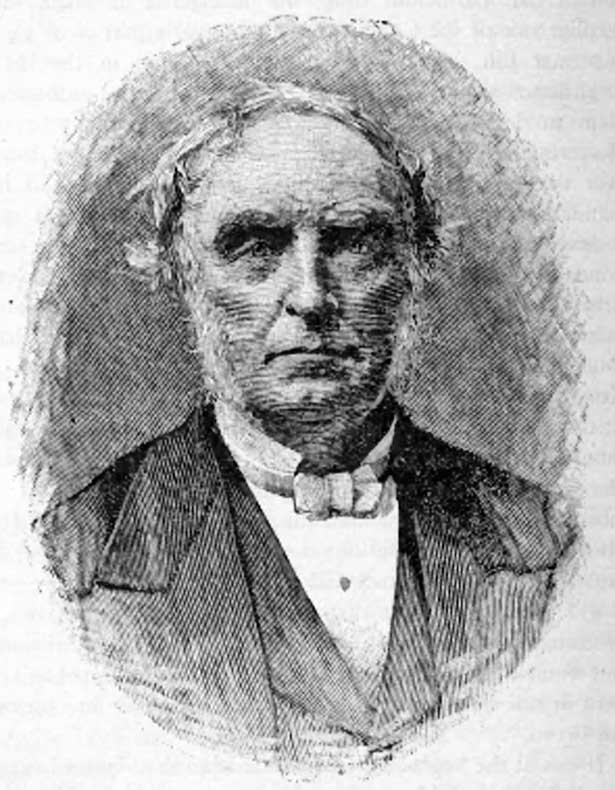
James Legge
Linguist and missionaryWikipedia
40
MENTIONS
10
EPISODES
8
PODCASTS
Search complete. 40 mentions across 10 episodes found for "James Legge".
Sep 30, 2026

speaker_0NARRATOR
And they do not care whether you find the result useful.
speaker_0NARRATOR
In the translation by James Legge, published in eighteen ninety-one and now in the public domain, the tree in the first chapter is an ailanthus, a tree that other translators have called the shoe tree, the tree of heaven, the stink tree.
speaker_0NARRATOR
It is, by most accounts, an unglamorous species.
speaker_0NARRATOR
It grows fast and crooked.
speaker_0NARRATOR
The second chapter of the Dao De Jing opens with a statement that seems, at first glance, almost too obvious to bother with.
speaker_0NARRATOR
It says, in the translation by the 19th century scholar James Legge, that when everyone in the world recognizes beauty as beauty, there is already ugliness.
speaker_0NARRATOR
When everyone recognizes goodness as good, there is already its opposite.
speaker_0NARRATOR
The chapter continues by pairing a series of concepts, being and non-being, difficult and easy, long and short, high and low, and presents them not as independent facts, but as mutual constructions.

Li JingNARRATOR
I will be afflicted that I do not know men.
Li JingNARRATOR
End of Book 1 Recording by Li Jing Book 2 of Confucian Analects by Confucius Translated by James Legge This LibriVox recording is in the public domain.
Li JingNARRATOR
唯证 第二 Book II 唯证 第一章 子曰,唯证以德,辟入北辰,居其所,而众心共之。 chapter i the master said he who exercises government by means of his virtue may be compared to the north polar star which keeps its place and all the stars turn towards it Chapter 2 The Master said, In the book of poetry are three hundred pieces, but the design of them all may be embraced in one sentence, having no depraved thoughts.
Li JingNARRATOR
子曰,道之以正,其之以行,明免而无耻。 道之以德,其之以理,有耻且格。 Chapter 3 The Master said, If the people be led by laws and uniformity sought to be given them by punishments, they will try to avoid the punishment but have no sense of shame.
10 MINS LATER
Li JingNARRATOR
Let him advance the good and teach the incompetent, then they will eagerly seek to be virtuous.
Li JingNARRATOR
二十一章 霍卫孔子曰,子惜不为振? 子曰,书云笑乎,为笑有余兄弟, 诗余有振,事亦为振,喜其为为振? chapter 21 someone addressed a Confucius saying sir why are you not engaged in the government the master said what does the shooting say of failure piety you are failure you discharge your brotherly duties these qualities are displayed in government this then also constitutes the exercise of government why must there be that making one be in the government our sergeant the master said i do not know how a man without truthfulness is to get on how can a large carriage be made to go without the crossbar for yoking the oxen to or a small carriage without the arrangement for yoking the horses 23 子张问,十世可知也? 子曰,因,因于夏里,所损益可知也? 周,因于阴里,所损益可知也? 其或继周者,虽百世可知也? Chapter 23 子张 asked whether the affairs of ten ages after could be known.
Li JingNARRATOR
Confucius said, the ying dynasty followed the regulations of the shah wherein it took from or added to them may be known the chou dynasty has followed the regulations of ying wherein it took from or added to them may be known some other may follow the chou but though it should be at the distance of a hundred ages its affairs may be known twenty four zi yue fei qi gui er ji zhi chan ye jian yi bu wei chapter 24 the master said for a man to sacrifice to a spirit which does not belong to him is flattery to see what is right and not to do it is want of carriage end of book 2 book 3 of Confucian Analects by Confucius Translated by James Legge.
Li JingNARRATOR
This LibriVox recording is in the public domain.
Li JingNARRATOR
I will be afflicted that I do not know men.
Li JingNARRATOR
End of Book 1 Recording by Li Jing Book 2 of Confucian Analects by Confucius, translated by James Legge.
Li JingNARRATOR
This LibriVox recording is in the public domain.
Li JingNARRATOR
唯正 第二 Book 2 唯正 第一章 子曰,唯正以德,辟如北辰,居其所,而眾心共之。 chapter i the master said he who exercises government by means of his virtue may be compared to the north polar star which keeps its place and all the stars turn towards it Chapter 2 The Master said, In the book of poetry are three hundred pieces, but the design of them all may be embraced in one sentence, having no depraved thoughts.
13 MINS LATER
Li JingNARRATOR
The Zhou dynasty has followed the regulations of Ying, wherein it took from or added to them may be known.
Li JingNARRATOR
Some other may follow the Zhou, but though it should be at the distance of a hundred ages, its affairs may be known.
Li JingNARRATOR
chapter twenty four the master said for a man to sacrifice to a spirit which does not belong to him is flattery to see what is right and not to do it is want of carriage book two Book 3 of Confucian Analects by Confucius, translated by James Legge.
Li JingNARRATOR
This LibriVox recording is in the public domain.

Phil BensonNARRATOR
this equilibrium is the great root from which grow all the human actings in the world and this harmony is the universal path which they all should pursue Let the states of equilibrium and harmony exist in perfection and a happy order will prevail throughout heaven and earth, and all things will be nourished and flourish.
Phil BensonNARRATOR
James Legge's Note In the first chapter, which is given above, Zi Si states the views which had been handed down to him as the basis of his discourse.
Phil BensonNARRATOR
First it shows clearly how the path of duty is to be traced to its origin in heaven, and is unchangeable, while the substance of it is provided in ourselves and may not be departed from.
Phil BensonNARRATOR
next it speaks of the importance of preserving and nourishing this and of exercising a watchful self-scrutiny with reference to it finally it speaks of the meritorious achievements and transforming influence of sage and spiritual men in their highest extent the wish of tzu si was that hereby the learner should direct his thoughts inwards and by searching in himself there find these truths so that he might put aside all outward temptations appealing to his selfishness and fill up the measure of the goodness which is natural to him This chapter is what the writer Yang called it, the sum of the whole work.
1 HR 4 MINS LATER
Phil BensonNARRATOR
The doings of the supreme heaven have neither sound nor smell.
Phil BensonNARRATOR
That is perfect virtue.
Phil BensonNARRATOR
James Legge's Note the above is the thirty-third chapter having carried his descriptions to the extremest point in the preceding chapters turns back in this and examines the source of his subject and then again from the work of the learner free from all selfishness and watchful over himself when he is alone he carries out his description till by easy steps he brings it to the consummation of the whole empire tranquilized by simple and sincere reverentialness he farther eulogizes its mysteriousness till he speaks of it at last as without sound or smell he here takes up the sum of his whole work and speaks of it in a compendious manner most deep and earnest was he in thus going again over his ground admonishing and instructing men Shall the learner not do his utmost in the study of the work?

Bill BoerstNARRATOR
Let the states of equilibrium and harmony exist in perfection and a happy order will prevail throughout heaven and earth, and all things will be nourished and flourish.
Bill BoerstNARRATOR
James Legge's Note In the first chapter, which is given above, Zi Si states the views which had been handed down to him as the basis of his discourse.
Bill BoerstNARRATOR
First it shows clearly how the path of duty is to be traced to its origin in heaven, and is unchangeable, while the substance of it is provided in ourselves and may not be departed from.
Bill BoerstNARRATOR
next it speaks of the importance of preserving and nourishing this and of exercising a watchful self-scrutiny with reference to it finally it speaks of the meritorious achievements and transforming influence of sage and spiritual men in their highest extent the wish of tzu si was that hereby the learner should direct his thoughts inwards and by searching in himself there find these truths so that he might put aside all outward temptations appealing to his selfishness and fill up the measure of the goodness which is natural to him This chapter is what the writer Yang called it, the sum of the whole work.

speaker_3NARRATOR
Thus they expressed their reverence for spiritual beings.
speaker_3NARRATOR
Sacrifices, according to the Book of Rites, Legge's translation, should not be frequently repeated.
speaker_3NARRATOR
Such frequency is indicative of importunateness, and importunateness is inconsistent with reverence.
speaker_3NARRATOR
Nor should they be at distant intervals.

speaker_1NARRATOR
this equilibrium is the great root from which grow all the human actings in the world and this harmony is the universal path which they all should pursue Let the states of equilibrium and harmony exist in perfection, and a happy order will prevail throughout heaven and earth, and all things will be nourished and flourish.
speaker_1NARRATOR
James Legge's Note In the first chapter, which is given above, 子思 states the views which had been handed down to him as the basis of his discourse.
speaker_1NARRATOR
First it shows clearly how the path of duty is to be traced to its origin in heaven, and is unchangeable, while the substance of it is provided in ourselves and may not be departed from.
speaker_1NARRATOR
next it speaks of the importance of preserving and nourishing this and of exercising a watchful self-scrutiny with reference to it finally it speaks of the meritorious achievements and transforming influence of sage and spiritual men in their highest extent the wish of tzu si was that hereby the learner should direct his thoughts inwards and by searching in himself there find these truths so that he might put aside all outward temptations appealing to his selfishness and fill up the measure of the goodness which is natural to him This chapter is what the writer Yang called it, the sum of the whole work.

Duncan BarfordHOST
A lot of Crowley's biographers and critics don't really have a lot to say about Crowley's translation of the Tao Te Ching because it just looks like any other rendition, doesn't it? And Crowley didn't know any Chinese, [laughs] so he was basically dealing with texts that were already translations.
Duncan BarfordHOST
So the idea I came up with was why don't we put Crowley's version next to the version that he was using, which was by a guy called James Legge.
Alan ChapmanHOST
Mm.
Duncan BarfordHOST
Um, and this came out I think in the 1890s, Legge's version.

Chris StewartHOST
Their leader was Joseph Edkins of the London Missionary Society, and he carried with him, along with the usual freights of tracts and hopes, a personal errand.
Chris StewartHOST
Word had dried up about Hong Run Gan, and their mutual friend, James Legge, in Hong Kong, wanted to know what had become of him.
Chris StewartHOST
So, when the party fell in with the detachment of Taiping cavalry on the riverbank, Edkins' first question was whether they knew the name.
Chris StewartHOST
The answer, that the man in question was now Prime Minister of the Heavenly Kingdom, second only to the Heavenly King himself, landed on the travelers as a thunderclap.
7 MINS LATER
Chris StewartHOST
What he wanted was to lead the Taiping to a right understanding of religion.
Chris StewartHOST
And beside that work, the fate of dynasties was secondary.
Chris StewartHOST
In Hong Kong, James Legge, the friend whose errand had started all of this, wrote what the news meant to him.
Chris StewartHOST
End quote.