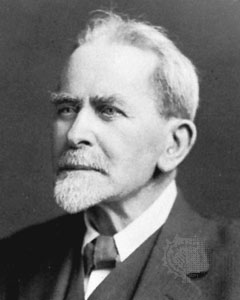
James George Frazer
Scottish anthropologist and folkloristWikipedia
24
MENTIONS
16
EPISODES
14
PODCASTS
Search complete. 24 mentions across 16 episodes found for "James George Frazer".
Oct 9, 2026

CerriHOST
Yeah
DamhHOST
... by Robert Graves and The Golden Bough by James Frazer.
CerriHOST
Mm.
DamhHOST
And, and I di- I didn't read the whole of The Golden Bough.

Jonathan PageauHOST
And so obviously it is just one more example of that universal myth.
Jonathan PageauHOST
Or is it? I mean, there's been a lot of discussion about this, and very provocative scholars like James Frazer at the beginning of the 20th century, he kind of started this.
Jonathan PageauHOST
But other k- scholars have tackled this, like Jung and Joseph Campbell, and they've all attempted to show the similarity between Christ's story and the other ancient myths.
Jonathan PageauHOST
And you know, and then they're discussed and debated and they're argued about, and you find Christian apologists who are fighting against these people, you know, as if to defend the accusation that, you know, that Christ's story is, is analogical to other ancient story.

Decoding TrollsHOST
That is what the rest of this, um, this piece shows.
Decoding TrollsHOST
So a hundred and fifty years ago, the anthropologists Edward Taylor and James Frazer named the laws of sympathetic magic.
Decoding TrollsHOST
I did that five-episode series on the laws of sympathetic magic last, uh, almost a year ago now.
Decoding TrollsHOST
Four decades of laboratory work by the psychologists Paul Rozin and Carol Nemeroff showed that educated, scientifically literate adults reason by the laws of sympathetic magic every day.

Sookie SooksonHOST
So the bodies found in many of these ancient kind of makeshift graves had been ritually bound before the burial, and the custom of binding the dead persists, for example, in rural Ana- Anatolia.
Sookie SooksonHOST
Nineteenth century anthropologist James Frazer stated in his classic work, The Golden Bough, that souls were seen as the creative within the animated, as the creature within that animated the body.
Sookie SooksonHOST
Although the human soul was something symbolically or literally depicted in ancient cultures as a bird or another animal, it appears to have been widely held that the soul was an exact reproduction of the body in every feature, even down to the clothing the person wore.
Sookie SooksonHOST
This is depicted in artwork from various ancient cultures, including such works as the Egyptian Book of the Dead, which shows deceased people in the afterlife appearing much as they did right before their death, including their specific style of dress.

Heidi WongHOST
He just knew it affected him.
Heidi WongHOST
Years later, when he read a book called The Golden Bough, a study in comparative religion by James George Frazer, the image of JonBenét's doll came back to him.
Heidi WongHOST
The Golden Bough is a 19th century book about ancient religions and myths.
Heidi WongHOST
It's all about how humans have always tried to control fate through rituals, sacrifices, and magic.

speaker_2NARRATOR
It is the philosophic analogue of the hat and omelet trick.
speaker_2NARRATOR
In this connection, some well-considered words of Sir James Fraser are well worth noting.
speaker_2NARRATOR
He says, By a God I understand a superhuman and supernatural being of a spiritual and personal nature who controls the world or some part of it on the whole for good, and who is endowed with intellectual faculties, moral feelings, and active powers, which we can only conceive on the analogy of human faculties, feelings, and activities, though we are bound to suppose that in the divine nature they exist in an infinitely higher degree than the corresponding faculties, feelings, and activities of man.
speaker_2NARRATOR
In short, by a God I mean a beneficent supernatural spirit, the ruler of the world or of some part of it, who resembles man in nature, though he excels him in knowledge, goodness, and power.

Joe McCormickHOST
Now, after this basic discussion of terminology, uh, in, in this chapter, Pinch gets into some different scholarly frameworks that have been used by anthropologists over the years to understand what magic is, and then she talks about the extent to which these frameworks do and do not accurately describe the examples of heka and akhu in ancient Egypt.
Joe McCormickHOST
So one idea she gets into is James Frazer's distinction between magic and religion, made famous in his highly influential work on the anthropology of religion called The Golden Bough.
Joe McCormickHOST
Uh, we've talked about this work many times on the show before.
Joe McCormickHOST
Uh, you know, Frazer is, Frazer is a great read, but many of his, his ideas are no longer considered like the best way to think about- [laughs]
Robert LambHOST
Mm-hmm
Joe McCormickHOST
... uh, anthropology of religion by, by, uh, anthropologists today.
Joe McCormickHOST
It's kind of like it's still a great book to read in many ways to understand its place in the history of scholarship, and it's very interesting, but many of its theories have been superseded.
Robert LambHOST
Yeah.

Christopher FeinsteinHOST
That part is solid.
Christopher FeinsteinHOST
But the Celtic New Year and the great Festival of the Dead largely trace back to two Victorian scholars, Sir John Rhys and Sir James Frazer.
Christopher FeinsteinHOST
Frazer in particular was confident that All Souls was nothing but an old pagan feast of the dead that the church decided to tolerate.
Christopher FeinsteinHOST
The historian Ronald Hutton had spent a good part of his career poking holes in that.
Robert LambHOST
Uh, it's not purely history or folklore, but rather a Jungian anthropological work arguing that the Jungian archetype of the werewolf connects with a primal evolutionary split that saw humans develop into opposing groups of peaceful and violent individuals, ultimately proposing his own version of, to borrow a term used by Terence McKenna, archaic revival, a return to primordial ways of human behavior in an attempt to prevent our own continual self-destruction.
Robert LambHOST
Indeed, Eisler does discuss the Kornwolf, Rywolf, Beanwolf, and Peawolf, and related entities as imaginative creatures, archetypes of, quote, "The disguised outlaw and werewolf hiding and feeding in the ripe cornfield." Dream analysis and Jungian theory aside, the traditions presented here are fascinating and do match up with what I've read elsewhere, such as in James Frazer's section, uh, of The Golden Bough on the corn spirit as a wolf or dog, as well as more contemporary writings in folklore and belief.
Robert LambHOST
You might also remember our past Stuff to Blow Your Mind episodes on beans, in which we discussed the very old traditions of supernatural danger associated both with legumes as something you might eat, and also as haunted fields of legumes, uh, where you might, uh, dare to venture.
Robert LambHOST
And all of this brings us back once more to Stephen King.

Andrew LazoGUEST
It's been found difficult and left untried." And in Surprised by Joy and elsewhere, Lewis talks about being taught by people who assumed that Christianity just was wrong.
Andrew LazoGUEST
One of several religions, you know, Sir James Fraser, the Golden Bough, other things like this.
Andrew LazoGUEST
And it's an age where everybody assumes that Christianity is not true and the scientific method wins and Nietzsche is right that God is dead and Freud is right that guilt is just neurosis.
Andrew LazoGUEST
And Lewis had never really met belief, and so he tries to find answers to questions, and he reads everything he can to get away from Christianity.
6 more episodes mention James George Frazer.
Create an account to see the whole feed, search across every transcript, and follow the entities you care about.