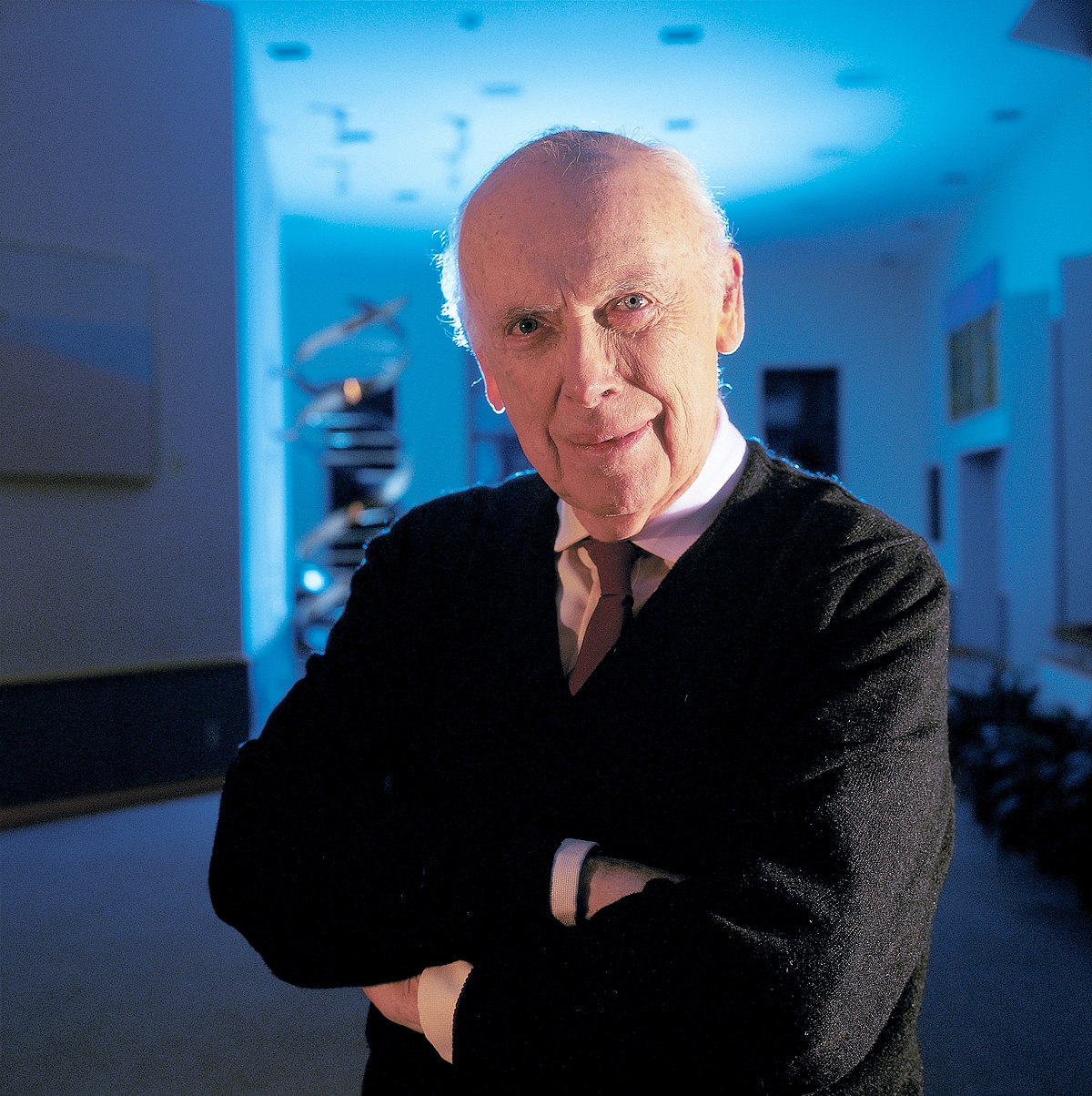
James D. Watson
American molecular biologist and geneticistWikipedia
57
MENTIONS
28
EPISODES
27
PODCASTS
Search complete. 57 mentions across 28 episodes found for "James D. Watson".
Nov 3, 2026

Tom WeaverGUEST
I got out a book.
Tom WeaverGUEST
I read The Double Helix, which people will know that was James Watson, his version of the discovery of the structure of DNA, which happened in Cambridge in the 1950s, the early 1950s.
Tom WeaverGUEST
He was an American being in England.
Tom WeaverGUEST
And I just loved it.

Robyn WilliamsHOST
Now, one of my heroes is Francis Crick.
Robyn WilliamsHOST
And then, of course, there's James Watson.
Robyn WilliamsHOST
What did you make of James Watson?
Rebecca SearGUEST
James Watson was promoting the same ideas that race scientists do, that black people are innately less intelligent than white people.
Rebecca SearGUEST
That is, it's pseudoscience.
Rebecca SearGUEST
There is no scientific basis for that.

Marilyn AndersonGUEST
I think a couple of things because I think we're losing that in Australia today.
Marilyn AndersonGUEST
So James Watson, who I worked with in the United States at Cold Spring Harbour, said to me, you must ask a big question.
Marilyn AndersonGUEST
Don't do the small stuff, just tackle a big question.
Marilyn AndersonGUEST
But you have to be brave to tackle a big question.
Marilyn AndersonGUEST
But this was a new question.
Marilyn AndersonGUEST
Adrian hadn't worked on it before.
Andrew NashHOST
I heard two or three things there, and I'm a bit of a science nerd, and I love the way, first of all, you just dropped James Watson.
Andrew NashHOST
Of course everybody knows who James Watson is, right? Just drop that in the statements.

Santosh KrinskyHOST
They are remembered, recounted, and persist long-term, while the evanescent, daily incoherent dream sequences disappear and are quickly forgotten.
Santosh KrinskyHOST
Some noted examples of dream experiences includes the discovery of the periodic table of elements by Dmitri Mendeleev, or James Watson's famous description of the double helix of DNA, both of which eventuated from dream experiences.
Santosh KrinskyHOST
Mary Shelley wrote Frankenstein after a particularly frightening dream experience.
Santosh KrinskyHOST
Some transcriptions of dream experiences come in symbolic forms and require interpretation.

Mark GagnonHOST
ah, here it comes.
Mark GagnonHOST
I was thinking about, was it James Watson or James Crick? Yes.
Mark GagnonHOST
I forget.
Mark GagnonHOST
I think it was Crick.

Tim AppenzellerGUEST
Hi, Sarah.
Sarah CrespiHOST
Can you briefly outline the story as it's been told over the decades, you know, the roles of Rosalind Franklin, James Watson, Francis Crick in the structure of DNA?
Tim AppenzellerGUEST
Rosalind Franklin was a crystallographer who was working on the structure of DNA in even before Watson and Crick got to work on it.
Tim AppenzellerGUEST
And the story has been that some of her data were crucial in their final determination of the structure of the molecule of life.
Tim AppenzellerGUEST
Part of the story was told by James Watson himself in his book, The Double Helix, which became notorious because of the way he talked about some of his colleagues and other people who contributed to the breakthrough, including Rosalind Franklin.
Tim AppenzellerGUEST
But it was also an extremely well-told story and really has dominated the way people think about this.
Tim AppenzellerGUEST
People have criticized it, people have reacted to it, but a lot of the narrative really comes from Watson.

Edward ParkHOST
So I know Blackburn, the Aussie, she never even gave it to her dog, I don't think.
Edward ParkHOST
But in contradistinction, I think James Watson, he was taking it for a long time, if not still taking it.
Edward ParkHOST
So that mean old guy is still alive and
Steve AdamsGUEST
kicking.

Naomi WolfHOST
little
Anna HarpleyGUEST
bit? James Watson, the novelist who described the DNA helix, he spent the last part of his life studying these molecules.
Anna HarpleyGUEST
Well, not this product.
Anna HarpleyGUEST
I don't even know if he knew about it.

Andrew HubermanHOST
One tends to be a little bit more outspoken, one a little bit more, uh, you know.
Andrew HubermanHOST
Watson and Crick, I'm sure there are just as many examples that don't fit.
Andrew HubermanHOST
Uh, but in thinking about leaders, not just religious leaders, can we, um, make any kind of generalization about, um, pairings, uh, two very, um, complementary people that are especially effective in getting escape velocity on their, on their leadership, their message?
Jared DiamondGUEST
I don't think so.
36 MINS LATER
Andrew HubermanHOST
Let's talk about birds.
Jared DiamondGUEST
Yeah.
Andrew HubermanHOST
Um, the only other two birders, uh, I know from science are Jim Watson-
Jared DiamondGUEST
Hmm

James CarterHOST
Number 13, the Carpool Karaoke host was James Corden.
James CarterHOST
Number 14, the Nobel Prize winner was James Watson.
James CarterHOST
And number 15, the member of Metallica is James Hetfield.
speaker_0UNKNOWN
Round four.
18 more episodes mention James D. Watson.
Create an account to see the whole feed, search across every transcript, and follow the entities you care about.