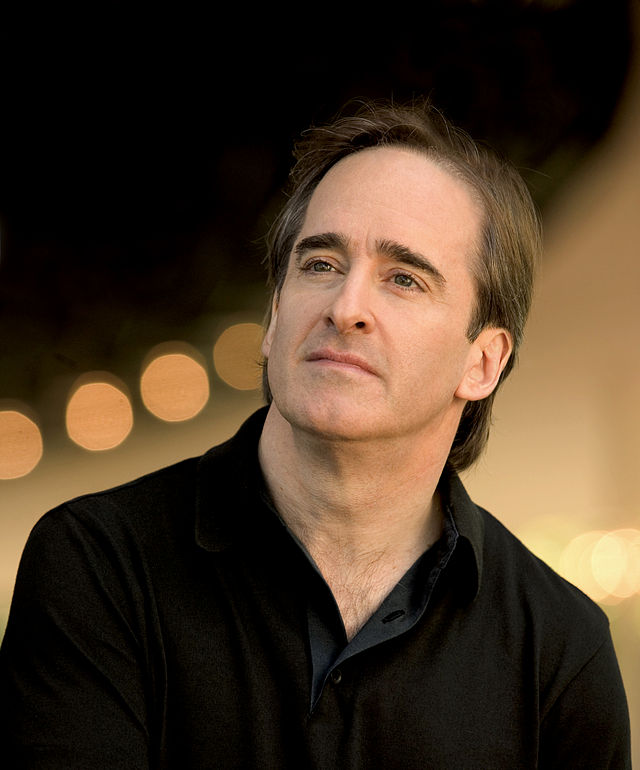
James Conlon
American conductor
4
APPEARANCES
3
PODCASTS
Aug 25, 2026

speaker_1HOST
Can you talk a little bit about how he's using art to speak to a specific time, but also timelessness?

James ConlonGUEST
I mean, Voltaire as well as Bernstein, there's a timelessness because it deals with philosophical issues, really.
James ConlonGUEST
And so at the end of these adventures and these incredible lives, as exaggerated and impossible as some of it is, the questions are, is life good? Is life bad? Should you be optimistic? Should you be pessimistic? The answer is life is life.
James ConlonGUEST
I mean, we have to find meaning or search for meaning or give up looking for meaning in our lives because life is life.
speaker_1HOST
Do you think he ever came to a sense of completeness, a sense of, yeah, this is finished now with Candide?


Sebastian ConlonGUEST
I'm curious what your favorite show in Europe was specifically in that area.
James ConlonGUEST
I was conducting in Paris in the opera the night that France won the World Cup.
James ConlonGUEST
And I could remember the screaming from outside the theater was so loud that we knew when France had won.
Gail EikenthalHOST
May I ask, when did you first discover this treasure trove that had been left out of the standard repertoire? Was there a particular composer or experience?
James ConlonGUEST
The door towards this whole subject opened up to me in the early 1990s, right at the beginning of what was to become a 13-year-long tenure at the Cologne Opera.
James ConlonGUEST
Well, I shouldn't say just the Cologne Opera, as general music director of the city, because I was also the orchestra's conductor.
James ConlonGUEST
I had only the vaguest of notions that there was music that was composed and suppressed by the Nazis.
James ConlonGUEST
Thanks to those years, thanks to the seriousness of the German music public, I became familiar with it, fell in love first with Alexander Zemlinsky, which then led me on to Franz Schraker, to Victor Ullmann, to Erwin Schulhof, and eventually to the whole subject of the music that we don't know and has been neglected primarily because it lost its place in history.
James ConlonGUEST
And how tragic that is, of course, for the individuals, but also tragic for us, because as a civilization, we've lost a piece of a puzzle of which we have the other parts.
24 MINS LATER
Gail EikenthalHOST
What do you think the most important criteria are to excel as an opera singer, to break through? Well,

speaker_4UNKNOWN
But there's something about the way he writes that really does feel like it's responding so much to the text, and it's, it's disregarding our notions of form.
James ConlonGUEST
Well, I think that Zemlinsky, who was identified by none less than Arnold Schoenberg as probably being the greatest, uh, composer of German opera in the 20th century.
James ConlonGUEST
Uh, that's a big statement, and I'm a, I'm, uh, prepared to go a long way with it.
James ConlonGUEST
One is Der Zwerg, which is, means The Dwarf, and the other one is, uh, A Florentine Tragedy, both based on texts by Oscar Wilde.
James ConlonGUEST
So, um, I think that his music is so compelling, so dramatic, and I've done both of those works on multiple occasions.
speaker_4UNKNOWN
[laughs] But why Mozart?