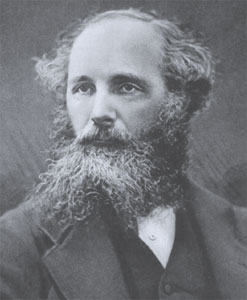
James Clerk Maxwell
Scottish physicist and mathematicianWikipedia
193
MENTIONS
51
EPISODES
44
PODCASTS
Search complete. 193 mentions across 51 episodes found for "James Clerk Maxwell".
Sep 11, 2026

speaker_2NARRATOR
It's likely there will
Rich MosesHOST
always be debate over who is the father of radio, but there is very little doubt about its grandfather, Scottish physicist and mathematician James Clerk Maxwell.
Rich MosesHOST
Maxwell's theory of electromagnetic radiation laid the foundation for all modern electronic communication techniques, yet the average person knows little or nothing about him.
Rich MosesHOST
The community where he is buried hopes to change that, as does the James Clerk Maxwell Radio Society, MM0PMS.
Rich MosesHOST
Maxwell died in 1879 and is buried at the Kirk, or church, in Parton, Scotland.
Rich MosesHOST
The Church of Scotland is trying to consolidate its properties and has put Parton Kirk up for sale.
Rich MosesHOST
The community has been given priority to purchase the building, but has a November 1st deadline to raise the roughly US$95,000 needed to do so.
Rich MosesHOST
According to James Clerk Maxwell Radio Society co-founder Richard Hopkins, MM1BHO, the town has what he calls an ambitious vision to preserve the Kirk and develop it as a James Clerk Maxwell Science and Community Center, celebrating his life and scientific legacy while providing a valuable facility for the local community.

Thomas FretwellHOST
Most of the founders of the modern branches of science were believers who were doing their scientific work because they wanted to explore God's creation.
Thomas FretwellHOST
Newton, Faraday, Clark Maxwell, Boyle, Louis Pasteur, Pascal, Leibniz, the founders on and on.
Thomas FretwellHOST
The founders of these modern fields of science, biology, physics, chemistry, mathematics, physics, all of them were believers and all of them were creationists in fact too.
Thomas FretwellHOST
But on and on, I could go.

David SchmidtGUEST
He had said that light is effectively a particle, and another school of thought is saying light is a wave.
David SchmidtGUEST
Now, 200 years go by, and around 1875 you have James Clerk Maxwell, one of the most brilliant scientists of all time- Yeah ... who definitively shows that light is a wave and that electromagnetic waves travel at the speed of light.
David SchmidtGUEST
So Maxwell was able to show that light is a narrow band of electromagnetic radiation.
David SchmidtGUEST
So problem solved.

David GrierGUEST
Scientists were thinking about this in the centuries that came after.
David GrierGUEST
Like, is it possible that a wave could exert a force? The person who brought it all together was James Clerk Maxwell.
David GrierGUEST
He worked out that that wave can exert forces on illuminated objects that push them.
David GrierGUEST
The force that we're talking about, that Maxwell was talking about, is repulsive.

ErinNARRATOR
I would urge your readers to consider donating to the appeal or sharing information about it.
ErinNARRATOR
To find out more or donate, visit shelterbox.org. yours etc alice jefferson head of emergency response and preparedness shelter box stance on statues sir so the un thinks that to atone for slavery britain should erect more statues honoring people selected on account of their ethnicity frankly this is racism far better to put up statues of some of the greatest thinkers of all time not a few of whom were british Men such as Sir Isaac Newton, Adam Smith, James Hutton, James Clerk Maxwell, Charles Darwin, and Isambard Kingdom Brunel.
ErinNARRATOR
Their achievements stand as an inspiration to people of every race and religion.
ErinNARRATOR
Yours, etc.

Sabine HossenfelderHOST
He then checked every step of the final proof himself.
Sabine HossenfelderHOST
Another recent example goes all the way back to James Clerk Maxwell.
Sabine HossenfelderHOST
Imagine a collection of electric charges in random places.
Sabine HossenfelderHOST
There'll be some places where their electric forces exactly cancel, kind of like Lagrange points in gravity.

Tonya CherukuriGUEST
Yes.
Tonya CherukuriGUEST
So I have a little dog named Maxwell.
Tonya CherukuriGUEST
So he's a Shih Tzu and he's named after James Clerk Maxwell.
Tonya CherukuriGUEST
But, you know, he doesn't really take after his namesake.
Tonya CherukuriGUEST
So on one hand, you have the physicist who fundamentally described electromagnetism.

Lisa LaizureHOST
They are pondered by all who delight in them.
Lisa LaizureHOST
This goes on to say the verse in Latin was carved in oak over the original entrance when the laboratory was established in 1874 by Cavendish professor of physics, James Clerk Maxwell.
Lisa LaizureHOST
1831 to 1879.
Lisa LaizureHOST
Maxwell was known for numerous achievements in mathematical physics, including formulating the classical theory of electromagnetic radiation.
7 MINS LATER
Lisa LaizureHOST
There's not a big job market out there for pastors who are atheists, but I couldn't help it.
Lisa LaizureHOST
Life became too painful.
Lisa LaizureHOST
One night in a last-ditch effort to salvage whatever remnant of faith I had left, I called a mentor and professor of mine from college and shared my struggle with him.
Lisa LaizureHOST
I told him my faith in God right now is like a walk on the beach.

Jeevan MatharuHOST
Physical reality is not described by mathematics, it is mathematics.
Jeevan MatharuHOST
James Clark Maxwell developed his equations describing electromagnetism in the 1860s.
Jeevan MatharuHOST
The equations predicted that electromagnetic waves should exist and travel at the speed of light.
Jeevan MatharuHOST
They implied the existence of radio waves, something that had yet to be experimentally observed.

AvailleNARRATOR
Already before the war, Einstein had immense fame among physicists and among all who are interested in the philosophy of science because of his principle of relativity.
AvailleNARRATOR
Clark Maxwell had shown that light is electromagnetic and had reduced the whole theory of electromagnetism to a small number of equations, which are fundamental in all subsequent work.
AvailleNARRATOR
but these equations were entangled with the hypothesis of the ether, and with the notion of motion relative to the ether.
AvailleNARRATOR
Since the ether was supposed to be at rest, such motion was indistinguishable from absolute motion.
41 more episodes mention James Clerk Maxwell.
Create an account to see the whole feed, search across every transcript, and follow the entities you care about.