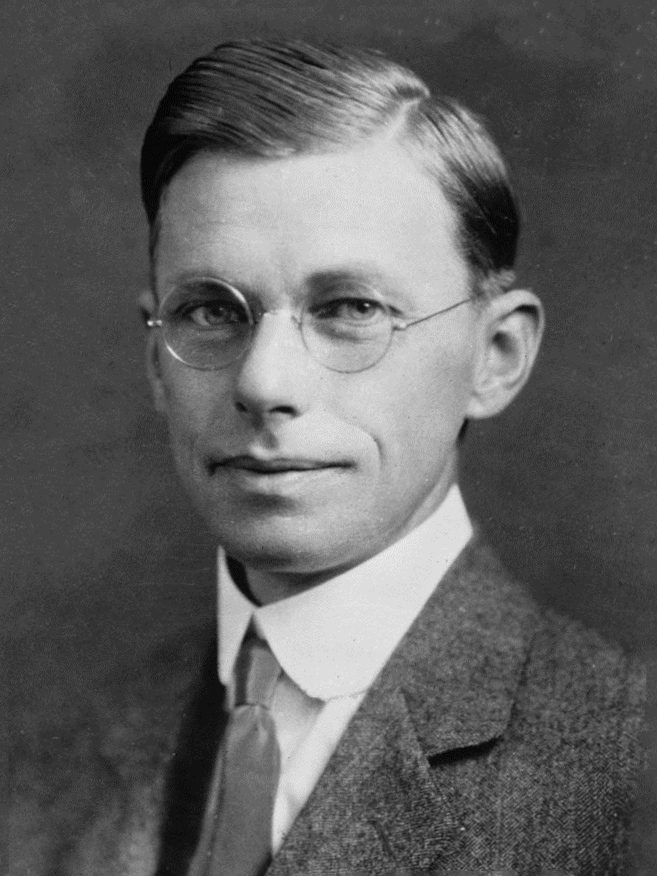
James B. Conant
Chemist and former United States Ambassador to GermanyWikipedia
8
MENTIONS
7
EPISODES
7
PODCASTS
Search complete. 8 mentions across 7 episodes found for "James B. Conant".
Oct 20, 2026

speaker_0NARRATOR
Minutes before the Trinity test in July nineteen forty-five, people were still joking about it, and Enrico Fermi reportedly took bets, understood as a joke, on whether the blast would destroy just New Mexico or the whole world.
speaker_0NARRATOR
When the flash came, James Conant later wrote, his first thought was that the atmosphere really had caught fire.
speaker_0NARRATOR
The formal answer arrived in nineteen forty-six in a Los Alamos report numbered LA-six-hundred-and-two: Ignition of the Atmosphere with Nuclear Bombs.
speaker_0NARRATOR
It concluded a runaway reaction was unreasonable to expect.

Eric WalkerHOST
The theatrical piece draws from a mix of Shakespearean drama, 19th century fraternal lodge and mystery plays, and druidic mythology and traditional allegories it is performed in an opening night theatrical drama to symbolically cremate or banish the dull cares stresses and responsibilities of everyday life for the club's wealthy and influential members before they begin their retreat so it's a cleansing basically yeah
Tanner JohnsonHOST
well it says in uh um 1942 is when um s1 committee scientist ernest lawrence harold uri james conant arthur compton met at the grove and made key uranium project decisions a lawrence berkeley lab photo it's been documented that they did that there oppenheimer was put in charge of the bomb in the very next month after being there.
Tanner JohnsonHOST
And it says, also in 1967, Richard Nixon and Governor Ronald Reagan reached an understanding.
Tanner JohnsonHOST
Nixon would run in 1968.

Matt KieltyHOST
Um, and I remember when we first spoke, you had a personal connection to how this all began for you.
Jennet ConantGUEST
Yeah, I was writing a book about my grandfather, James B. Conant, and he was a brilliant chemist, president of Harvard, and one of the famous warrior scientists of World War II.
Jennet ConantGUEST
He was tapped by President Roosevelt to head the Manhattan Project, and he was Oppenheimer's boss.
Jennet ConantGUEST
You know, he was personally oversaw the development of the bomb.
13 MINS LATER
Jennet ConantGUEST
And he says he's gonna recruit all of the chemical warfare experts to help carry out this revolutionary idea of using not just nitrogen mustard, but a whole array of toxic chemicals to attack cancer, and this would pave the way for a modern treatment known today as chemotherapy.
Matt KieltyHOST
That's crazy.
Matt KieltyHOST
And this full circle, this is how your grandfather shows up on the board.
Matt KieltyHOST
Jenny, thank you so much.

David BrooksGUEST
I would say I've a few problems with the system that we've set up, and really inherited from the 1970s, or actually really the 1930s to 1950s.
David BrooksGUEST
A guy named James Conant at Harvard decided we were gonna sort people not by who their fathers were, which is good, but we were gonna sort people by intelligence, and we defined intelligence academically.
David BrooksGUEST
And to me, the problem with that is first, the game is rigged, so the children of rich families have an advantage every step of the way.
David BrooksGUEST
By eighth grade, their rich kids are four grade levels above poor kids.

Richard ToyeHOST
But this is crucial because this enormous military industrial project is growing and the Americans freeze Britain out.
Richard ToyeHOST
And in fact, Late 1942, James Conant, one of the administrators, issued strict security rules which restricted information to an absolutely kind of need-to-know basis for immediate wartime use.
Richard ToyeHOST
And so British scientists found themselves suddenly locked out of American laboratories.
Richard ToyeHOST
Now, bear in mind, of course, that the British had shared their knowledge.

David BrooksHOST
Yeah.
David BrooksHOST
I mean, they got selected into that aristocracy by an admissions process w- which was designed largely by a guy named James Bryant Conant at Harvard in the 1940s.
David BrooksHOST
The 1940s was the second-most important high water mark of rationalism.
Jonathan HaidtGUEST
Hmm.

Alexander J. FieldGUEST
And so they pass an act that's mandating it's got to be ethanol and it can't be ethanol from petroleum and also tries to take control of rubber away from Roosevelt.
Alexander J. FieldGUEST
So Roosevelt vetoes it and he appoints this committee with Bernard Baruch and Carl Compton, who's head of MIT, and James Conant, head of Harvard, the Rubber Survey Committee.
Alexander J. FieldGUEST
And they say, OK, mistakes were made, but not by us.
Alexander J. FieldGUEST
What we need is a heck of a lot of what they called GRS, what the Germans called BUNA-S.