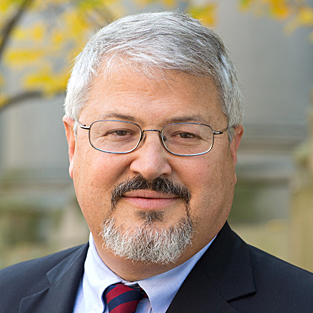
Jack Goldsmith
Legal professional and former United States Assistant Attorney General for the Office of Legal CounselWikipedia
19
MENTIONS
10
EPISODES
8
PODCASTS
Search complete. 19 mentions across 10 episodes found for "Jack Goldsmith".
Sep 21, 2026

speaker_2NARRATOR
So somebody who's very much been in the room on exactly these kinds of discussions.
speaker_2NARRATOR
And he's the author with Jack Goldsmith of After Trump, Reconstructing the Presidency.
speaker_2NARRATOR
It's a popular word in the air these days, it seems.
speaker_2NARRATOR
But that's one of the most detailed reform plans about concrete, actionable specifics.

Jennifer BrineyHOST
In it, Assistant Attorney General Bybee dismissed numerous U.S. federal laws, treaties, and international laws that prohibited the use of torture, essentially defining the term torture out of existence.
Jennifer BrineyHOST
In his book, The Terror Presidency, Jack Goldsmith, who later took over the Justice Department's Office of Legal Counsel and rescinded the infamous 2002 Bybee torture memo, he summed up the legal conclusions in that memo this way.
Jennifer BrineyHOST
He said, "...violent acts aren't necessarily torture.
Jennifer BrineyHOST
If you do torture, you probably have a defense.

Bob BauerHOST
Uh, I'm here to discuss yesterday evening's, uh, court ruling in the Postal Service case involving election mail.
Bob BauerHOST
I'm not here, as I normally am, with my colleague Jack Goldsmith.
Bob BauerHOST
This time I'm solo, and I'm just gonna make a few brief observations about the case.
Bob BauerHOST
The first is that we are conjecturing about the future to some extent when we try to draw out the implications of the case, because not much other than by the dissent and briefly by Justice Kavanaugh was said.

Jane HarmanGUEST
And later, uh, John Yoo, who was the head of the Office of Legal Counsel, uh, in the White House, wrote a memo about this, um, saying, um, these techniques were not torture because torture is only organ failure or imminent death.
Jane HarmanGUEST
And someone else in that office, a guy named Jack Goldsmith, whom I am v- very much still in touch with, who now teaches at Harvard Law School, said that memo was, uh, um, really poor scholarship, and Goldsmith ended up getting fired.
Jane HarmanGUEST
And I think I've got this right.
Jane HarmanGUEST
I mean, some of you were there, so, you know, this is just my memory from decades ago.

speaker_0NARRATOR
So in this episode of Interesting Times, Christopher Caldwell sits down with Harvard Law professor Jack Goldsmith to discuss something pretty troubling, whether the presidency itself is becoming a profit center under Donald Trump.
speaker_1NARRATOR
And Goldsmith doesn't pull punches here.
speaker_1NARRATOR
He points out that what's normal for presidents is strict separation from personal finances, usually through a blind trust.

Jane HarmanGUEST
And later, uh, John Yoo, who was the head of the Office of Legal Counsel, uh, in the White House, wrote a memo about this, um, saying, um, these techniques were not torture because torture is only organ failure or imminent death.
Jane HarmanGUEST
And someone else in that office, a guy named Jack Goldsmith, whom I am very much still in touch with, who now teaches at Harvard Law School, said that memo was, uh, uh, really poor scholarship, and Goldsmith ended up getting fired.
Jane HarmanGUEST
And I think I've got this right.
Jane HarmanGUEST
I mean, some of you were there, so, you know, this is just my memory from decades ago.

Michael MoynihanHOST
That, why...
Michael MoynihanHOST
The, I have a book for you, is that there's a guy who I knew in the political world named Jack Goldsmith.
Michael MoynihanHOST
He worked for Obama.
Michael MoynihanHOST
He worked for Bush.
Michael MoynihanHOST
But he had this other side.
William ShatnerGUEST
Yeah.
Michael MoynihanHOST
But, uh, Jack Goldsmith's book is very good.
Michael MoynihanHOST
Very, very good.
Jack GoldsmithHOST
Can you give us a sense of how one would be thinking about bio threats before November of 2022 when OpenAI announced and released ChatGPT? What was the bio threat environment like? What was the kind of infrastructure and technology for bio threats around then?
Elizabeth Sherwood-RandallGUEST
Well, in the last decade, we've seen a dramatic change, Jack.
Elizabeth Sherwood-RandallGUEST
So I would say they're the traditional bio threats that we dealt with during the Cold War and following the Cold War, largely focused on Russian programs, Soviet programs before Russian.
Elizabeth Sherwood-RandallGUEST
And that has been transformed by initially the CRISPR-Cas9 gene editing technology that emerged around 2014, 2015 as a genuinely powerful capability.
Elizabeth Sherwood-RandallGUEST
You could have an adversary who is planning to launch a major military campaign and decides to do what the Pentagon would call preparing the battlefield by releasing an illness-causing disease vector into the homeland while they secretly inoculate their own population against it.
Elizabeth Sherwood-RandallGUEST
And the objective of that would be to disable the deployment of the American military and cause societal panic just when unity of effort is required.
Elizabeth Sherwood-RandallGUEST
So I'll note to you on this list, Jack, that one of the things I've seen in my study of this challenge is that 25 years ago, next month, we experienced 9-11 and the after action analysis of how we had failed to prevent it included as the first of four reasons, a failure of imagination.
Elizabeth Sherwood-RandallGUEST
And what we need to do here is imagine based on the science and technology as it's evolving, what the potential use cases could be by a malicious actor, and then take the steps necessary to ensure that we're ready to prevent them if we can, and to respond to them effectively if we cannot.

Michael MoynihanHOST
I have a book for you.
Michael MoynihanHOST
There's a guy who I knew in the political world named Jack Goldsmith.
Michael MoynihanHOST
He worked for Obama.
Michael MoynihanHOST
He worked for Bush.
Michael MoynihanHOST
And he writes this book.
Michael MoynihanHOST
It's a kind of thin, quick read that is an investigation of Hoffa's death, but also about the personal relationship he had with him as a stepfather, which is much more complicated than the stuff that you usually get about Hoffa being a gangster, which he was, but he had this other side.
Michael MoynihanHOST
But Jack Goldsmith's book is very good.
Michael MoynihanHOST
Very, very good.
Bob BauerHOST
Good morning, Bob.
Bob BauerHOST
Good morning, Jack.
Bob BauerHOST
Today, we're going to discuss the Trump administration's efforts to use the post office as leverage to impose executive branch standards on mail-in ballots and maybe some related requirements in connection with federal elections.
Bob BauerHOST
You're an expert on this, so please tell us what's going on and how we should think about
Jack GoldsmithHOST
On standing and ripeness grounds, it concluded that it was not going to reach the merits of the matter.
Jack GoldsmithHOST
And it made a point of saying that it wasn't expressing or implying an opinion on the merits.
Jack GoldsmithHOST
Two dissenting opinions filed, one by Justices Kagan and Sotomayor and the other by Justice Jackson.
Jack GoldsmithHOST
On the Friday before the Monday that that opinion was issued, the United States Postal Service then issued a final rule and specified the kinds of requirements that would impose as a condition for transmitting ballots through the mail.