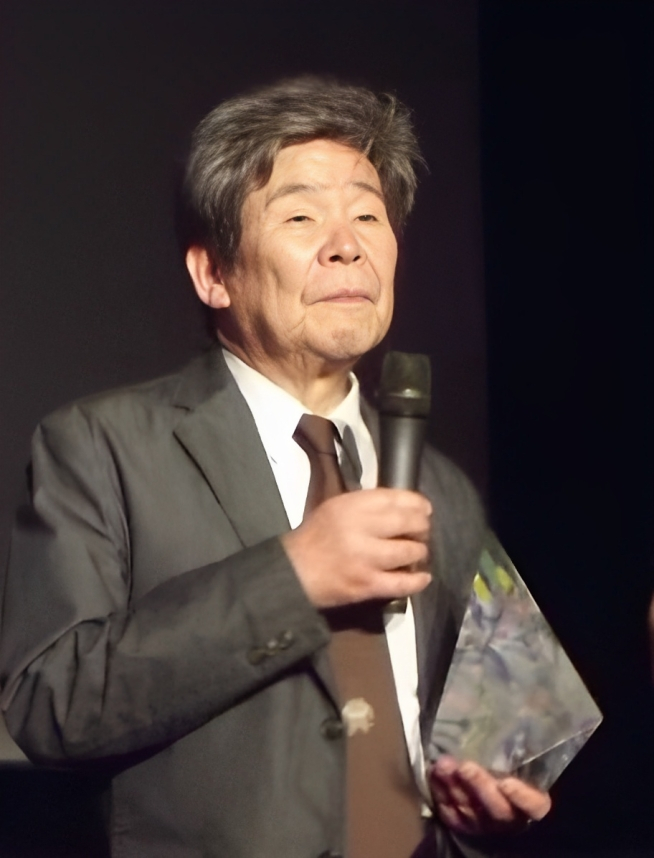
Isao Takahata
Japanese director and screenwriterWikipedia
52
MENTIONS
14
EPISODES
9
PODCASTS
Search complete. 52 mentions across 14 episodes found for "Isao Takahata".
Sep 14, 2026

Adam VolerichHOST
Each week on our podcast, we explore a movie by finding the scene at its core.
Dom NeroHOST
In 1985, Hayao Miyazaki, Isao Takahata, and Toshio Suzuki formed a studio that would change animation forever.
Dom NeroHOST
Join us as we explore the films of Studio Ghibli.
Adam VolerichHOST
Welcome to Eye of the Duck presents The Studio of Dreams and Madness.
59 MINS LATER
Adam VolerichHOST
It's a real thing that happened on South Park last season.
Dom NeroHOST
In the Bloomberg article, "Anyone positioning Ghibli in the vanguard of the AI backlash," Goro says, "was twisting events for their own purposes.
Dom NeroHOST
The studio itself was essentially AI agnostic." He says, it says, "If the late co-founder Isao Takahata were still alive," Goro says, "he'd probably be the first in line to give it a whirl." Wow, burning Takahata, bring him down with you.
Dom NeroHOST
He, Goro said, "He was someone who was very interested in the latest technology.

Rachel WagnerHOST
It doesn't fit those definitions that a lot of people... put for anime.
Rachel WagnerHOST
The two I would most compare to are Grave of the Fireflies, which is by Takahata, which is devastating.
Rachel WagnerHOST
Also, In This Corner of the World, which is also devastating.
Rachel WagnerHOST
In This Corner of the World, that one has a slower pace.

Callum EwingHOST
I think it was in the...
Callum EwingHOST
Was it 1963 or something he started at Toei Animation, where of course he met, um, Isao Takahata, and then they set up Studio Ghible-
Tom ManningHOST
Takahata, yes.
Callum EwingHOST
Yeah.

Sean ChapmanHOST
You know, may- maybe someday, maybe someday we'll bring a frog into your life and, you know, and you'll just light up.
Jonathan LackHOST
I did have, we, i- in one of my first screenings in my, uh, uh, Miyazaki and Takahata class, we were showing the delightful, uh, films Panda Go Panda! and Panda Go Panda Rainy Day Circus, which are delightful kind of proto-Totoro pieces by Miyazaki and Takahata from the early '70s.
Jonathan LackHOST
Actually, proto-Ponyo pieces as well.
Jonathan LackHOST
The second movie has a, like the end of Ponyo is like taken right from that, if you've never seen it.
Sean ChapmanHOST
It's like, you know, I, I, I like my job, but there's sometimes like, fuck [laughs] I wish we could just swap shit out a little bit more than we do.
Jonathan LackHOST
Totally.
Jonathan LackHOST
Uh, the one weird, I guess you could call it weird thing I teach in the Miyazaki and Takahata class is I do show them the full documentary that Isao Takahata made in the '80s called The Story of Yanagawa's Canals, which is his three-hour live action documentary on the waterways of the city of Yanagawa that is the kind of thing that is impossible to explain and make sound exciting, which was also why they...
Jonathan LackHOST
Th- that is the movie that started Studio Ghibli.
Rachel WagnerHOST
So they have three movies for Studio Ghibli that are 100%.
Rachel WagnerHOST
And all three of them are Takahata movies, which surprised me.
Rachel WagnerHOST
So Princess Kaguya, Only Yesterday, and Grave of the Fireflies.
Rachel WagnerHOST
All three of those are all 100%.
Adam VolerichHOST
Each week on our podcast, we explore a movie by finding the scene at its core.
Dom NeroHOST
In 1985, Hayao Miyazaki, Isao Takahata, and Toshio Suzuki formed a studio that would change animation forever.
Dom NeroHOST
Join us as we explore the films of Studio Ghibli.
Adam VolerichHOST
Welcome to Eye of the Duck presents the Studio of Dreams and Madness.
Dom NeroHOST
All right, and you've heard the big three, Miyazaki, Takahata, Suzuki.
Dom NeroHOST
Now, uh, I guess Suzuki is...
Dom NeroHOST
Well, Suzuki and Miyazaki are very involved in this one, but, uh, this is not, this is not one of the big two at, at least.
Adam VolerichHOST
We're gonna have to do that one day.

Bob MackeyHOST
But I have to think other movies nominated that year, like The Box Trolls or How to Drain Your Dragon 2 or The Tale of Princess Kaguya, they might be better than this.
Henry GilbertHOST
Yes, you know, I haven't seen most of the ones it was nominated against either, but I feel like just because it was his final film and he'd be dead soon, I kind of wish Isao Takahata would have gotten a Best Picture win for one of his films, as opposed to Disney taking with love a lot of the tropes of Japanese animation, and instead why not have one of the, like, grandfathers of Japanese animation, a living legend like Takahata.
Henry GilbertHOST
Why not give him his flowers? Though he doesn't get all of the North American press that Miyazaki got back then.
Bob MackeyHOST
Yeah, I'm glad you mentioned that.

MaggieHOST
And a lot of these were... you know, across the country, a lot of different people experienced them.
MaggieHOST
Both Nosaka, who wrote this original novel, survived, I believe, the Kobe firebombings, and the director of the movie, Takahata Isao, also survived firebombings as well, and described it as the worst 48 hours of his life.
MaggieHOST
So these are, like, very, very, like, recognisant kind of scenes that lots of people of that generation were familiar with.
MaggieHOST
So...
26 MINS LATER
Zach Langley Chi ChiHOST
as you mentioned, and it's one on overseas as well, but it's probably the most famous piece of art depicting this.
Zach Langley Chi ChiHOST
And there's backlash to that because so many people think that because Japan were the aggressors in this conflict and associated with the Axis powers, associated is the wrong word, because they were in the Axis powers and had... a very violent presence in other countries during the war, that any depiction of tragedy in Japan during wartime is not allowed and is nationalist propaganda.
MaggieHOST
But one thing I think makes this story so interesting, and this is one of the reasons why Takahata chose to adapt it, is because the character of Seita is somebody who is... it's very possible to critique him.
MaggieHOST
And so I think that the goal is to think about the tragedy outside of morality.

TaylorHOST
And then as our kind of last send off, we'll talk about some movies that we weren't able to look at because of their accessibility.
TaylorHOST
And then Rank, I wish Kayla was here for this too, but rank the Isao Takahata movies based on our personal enjoyment of them.
TaylorHOST
I know I probably will have certain movies higher than others.
TaylorHOST
Zoe might have some.
TaylorHOST
We can ask Kayla next week when she comes on the podcast.
TaylorHOST
So today we are going to be talking about the Isao Takahata movie, My Neighbors the Yamadas.
TaylorHOST
um this movie is i got when this
ZoHOST
movie come
Adam VolerichHOST
Each week on our podcast, we explore a movie by finding the scene at its core.
Dom NeroHOST
In 1985, Hayao Miyazaki, Isao Takahata, and Toshio Suzuki formed a studio that would change animation forever.
Dom NeroHOST
Join us as we explore the films of Studio Ghibli.
Adam VolerichHOST
Welcome to Eye of the Duck presents The Studio of Dreams and Madness.
1 HR 6 MINS LATER
Adam VolerichHOST
But when we get to this film, we kind of go in the opposite direction.
Dom NeroHOST
direction.Right.
Dom NeroHOST
But because Miyazaki isn't as much of a freak as Takahata, uh, his...
Dom NeroHOST
This, this is sort of his Yamadas to me, of like-
4 more episodes mention Isao Takahata.
Create an account to see the whole feed, search across every transcript, and follow the entities you care about.