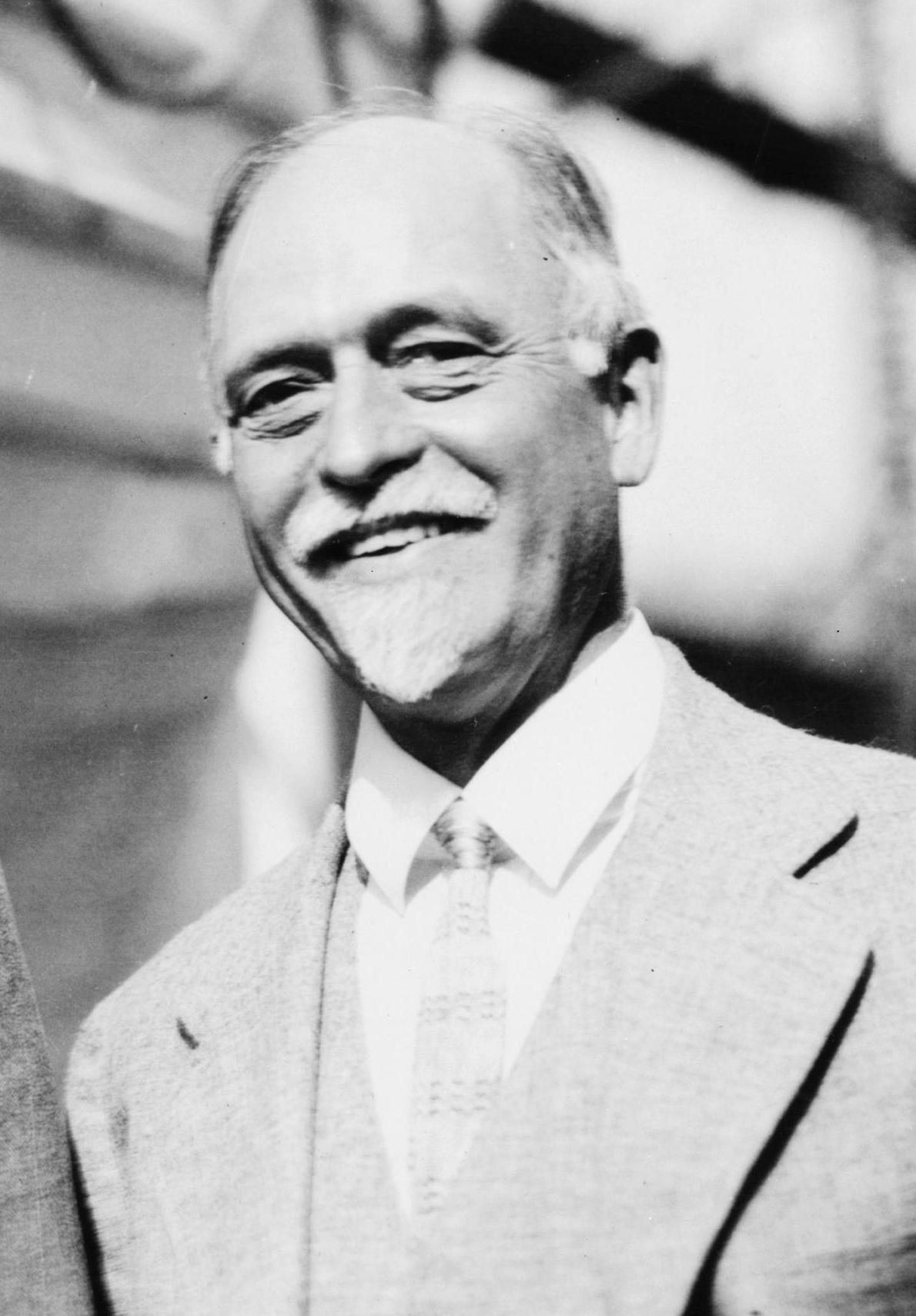
Irving Fisher
American economist and statisticianWikipedia
22
MENTIONS
14
EPISODES
14
PODCASTS
Search complete. 22 mentions across 14 episodes found for "Irving Fisher".
Sep 17, 2026

Ben AdamsNARRATOR
Tennis, used to smiles, M.A., various championships, etc.
Ben AdamsNARRATOR
Of special interest at the present moment are a series of tests and experiments recently carried out at Yale University, USA, under Professor Irving Fisher, with the object of discovering the suitability of different dietaries for athletes, and the effect upon the human system in general.
Ben AdamsNARRATOR
The results were surprising.
Ben AdamsNARRATOR
One of the most severe tests, remarks Professor Fisher, was in deep knee bending, or squatting.
9 MINS LATER
Ben AdamsNARRATOR
B. Mayer, Hon.
Ben AdamsNARRATOR
E. Littleton, Rev.
Ben AdamsNARRATOR
R. J. Campbell, Lord Charles Beresford, General Sir Edward Bulwer, etc., etc., etc., the following is a list of the medical and scientific authorities who have expressed opinions favoring vegetarianism m Baron Cuvier, Linnaeus, Professor Lawrence, FRS, Sir Charles Bell, FRS, Gassendi, Florence, Sir John Owen, Professor Howard Moore, Sylvester Graham, MD, John Ray, FRS, Professor H. Schaffhausen, Sir Richard Owen, FRS, Charles Darwin, LLD, FRS, Dr. John Wood, MD, Professor Irving Fisher, Professor A. Whitner-Blythe, FRCS, Edward Smith, MB, FRS, LLB, Adam Smith, FRS, Lord Playfair, MD, CB, Sir Henry Thompson, MB, FRCS, Dr. F.J. Sykes, BSC, Dr. Anna Kingsford, Professor G. Sims Woodhead, MD, FRCP, FRS, Alexander Haig, M.A., M.D., F.R.C.P., Dr. W.B. Carpenter, C.B., F.R.S., Dr. Josiah Oldfield, D.C.L., M.A., M.R.C.S., L.R.C.P., Virchow, Sir Benjamin W. Richardson, M.P., F.R.C.S., Dr. Robert Perks, M.D., F.R.C.S., Dr. Kellogg, M.D., Harry Campbell, M.D., Dr. Olson, etc., etc., before concluding this section it might be pointed out that the curious prejudice which is always manifested when men are asked to consider any new thing is as strongly in evidence against food reform as in other innovations For example, flesh-eating is sometimes defended on the ground that vegetarians do not look hale and hearty as healthy persons should do.
Ben AdamsNARRATOR
People who speak in this way probably have in mind one or two acquaintances who, through having wrecked their health by wrong living, have had to abstain from the deadly decoctions of flesh and adopt a simpler and purer dietary.

Steve KeenHOST
If you believe in equilibrium, you don't understand economics.
Steve KeenHOST
But nonetheless, he said the definition of equilibrium they use is the one developed by one Irving Fisher.
Steve KeenHOST
in 1907 in his PhD thesis, which is called The Theory of Interest.
Steve KeenHOST
And he republished that paper in 1930 when he was now a famous economist.
Steve KeenHOST
And they were all
Phil DobbieHOST
very over the top.
Phil DobbieHOST
And here's Steve Keen again with another one of his crazy theories, and Irving Fisher has bought out a new book.
Phil DobbieHOST
Yeah, it was all like that.

Steve KeenGUEST
Ben Bernanke wrote a book called Essays on the Great Depression that was regarded as an expert on the Great Depression.
Steve KeenGUEST
His entire consideration of Minsky and Irving Fisher in that book was to say that Hyman Minsky and Charles Kindleberger, the person who wrote the book Burns, Panics, and Crashes, have on occasions argued for the instability of the financial system, but in doing so have headed apart from the assumption of rationality.
Steve KeenGUEST
End of consideration.
Steve KeenGUEST
He then has a footnote.

Ben AdamsNARRATOR
Tennis, Eustace Miles, M.A., various championships, etc.
Ben AdamsNARRATOR
Of especial interest at the present moment are a series of tests and experiments recently carried out at Yale University, USA, under Professor Irving Fisher, with the object of discovering the suitability of different dietaries for athletes and the effect upon the human system in general.
Ben AdamsNARRATOR
The results were surprising.
Ben AdamsNARRATOR
One of the most severe tests, remarks Professor Fisher, was in deep knee bending or squatting.
10 MINS LATER
Ben AdamsNARRATOR
The following is a list of the medical and scientific authorities who have expressed opinions favoring vegetarianism.
Ben AdamsNARRATOR
M. Prouchet, Baron Cuvier, Linnaeus, Professor Lawrence F.R.S., Sir Charles Bell F.R.S., Gassendi, Florence, Sir John Owen, Professor Howard Moore, Sylvester Graham M.D., John Ray F.R.S., Professor H.
Ben AdamsNARRATOR
Schaffhausen, Sir Richard Owen F.R.S., Charles Darwin L.L.D. F.R.S., Dr. John Wood M.D., Professor Irving Fisher, Professor A.
Ben AdamsNARRATOR
Weitner Blyth F.R.C.S., Edward Smith M.B. F.R.S. L.L.B., Adam Smith F.R.S., Lord Playfair M.D. C.B., Sir Henry Thompson M.B. F.R.C.S., Dr. F.J. Sykes B.S.C., Dr. Anna Kingsford, Professor G. Sims Woodhead M.D. F.R.C.P. F.R.S., Alexander Hague M.A. M.D. F.R.C.P., Dr. W.B. Carpenter C.B. F.R.S., Dr. Josiah Oldfield D.C.L. M.A. M.R.C.S. L.R.C.P., Virchow, Sir Benjamin W. Richardson M.P. F.R.C.S., Dr. Robert Perks M.D. F.R.C.S., Dr. Kellogg M.D., Harry Campbell M.D., Dr. Olson, etc., etc.

Caelan ConradHOST
Yeah.
Caelan ConradHOST
One notable patient was Margaret Fisher, daughter of prominent Yale economist, Irving Fisher, who was a proponent of the era's hygienic movement.
Caelan ConradHOST
Um, The hygienic movement.
Caelan ConradHOST
After being diagnosed as schizophrenic at Bloomingdale Asylum, which sounds very fancy, but probably wasn't.

Janice Marie HuntNARRATOR
The original roaring 20s a century ago ended with a stock market crash and the Great Depression.
Janice Marie HuntNARRATOR
Mr. Yardini is fully aware of the unfortunate statement of Irving Fisher, an eminent Yale economist, who said October 15, 1929, that the stock market had reached what looks like a permanently high plateau.
Janice Marie HuntNARRATOR
The 1929 crash began two weeks later.
Janice Marie HuntNARRATOR
Professor Fisher's reputation has never entirely recovered.

Janice Marie HuntNARRATOR
The original roaring 20s a century ago ended with a stock market crash and the Great Depression.
Janice Marie HuntNARRATOR
Mr. Yardini is fully aware of the unfortunate statement of Irving Fisher, an eminent Yale economist, who said October 15, 1929, that the stock market had reached what looks like a permanently high plateau.
Janice Marie HuntNARRATOR
The 1929 crash began two weeks later.
Janice Marie HuntNARRATOR
Professor Fisher's reputation has never entirely recovered.

Ryan McMakenNARRATOR
While the concept stable price level may not sound menacing, the mechanism for achieving it was.
Ryan McMakenNARRATOR
The theory's proponents, which included such economics luminaries as Irving Fisher and John Maynard Keynes, weren't too concerned with price stability when prices tended to rise during a boom, especially if prices were rising on the stock market where they were heavily invested.
Ryan McMakenNARRATOR
The price stability priests were mostly concerned with falling prices during a bust And for that, they relied on government's creature, the central bank.
Ryan McMakenNARRATOR
Falling prices, in fact, were regarded as the cause of depressions.
Ryan McMakenNARRATOR
Using enlightened monetary policy, central banks needed to keep prices from falling to keep economies from collapsing.
Ryan McMakenNARRATOR
Yale and Harvard go boom and bust.
Ryan McMakenNARRATOR
Yale professor Irving Fisher helped popularize the view that the new era economy of the 1920s would last indefinitely.
Ryan McMakenNARRATOR
With the exception of stocks and real estate, prices were fairly level, and since the mainstream definition of inflation was and still is a general and progressive increase in prices, the 1920s were and still are said to be a period of inconsequential inflation.

Richard WernerGUEST
And it became a matter of international attention.
Richard WernerGUEST
Yale professor Irving Fisher sent his PhD research around to see this and write it up.
Richard WernerGUEST
It was then in American newspapers.
Richard WernerGUEST
Of course, that's the moment where the central planners decided, okay, well, this shouldn't get out of hand.

Rana MitterPANELIST
They put together a letter saying we should not have these tariffs imposed on the American economy.
Rana MitterPANELIST
Admittedly, one of those economists was a man called Irving Fisher, who I think managed to lose, he was at Yale.
Rana MitterPANELIST
I think he managed to lose most of his money in the stock market crash the year before.
Rana MitterPANELIST
So how reliable he was as an economic source, you might ask.
4 more episodes mention Irving Fisher.
Create an account to see the whole feed, search across every transcript, and follow the entities you care about.