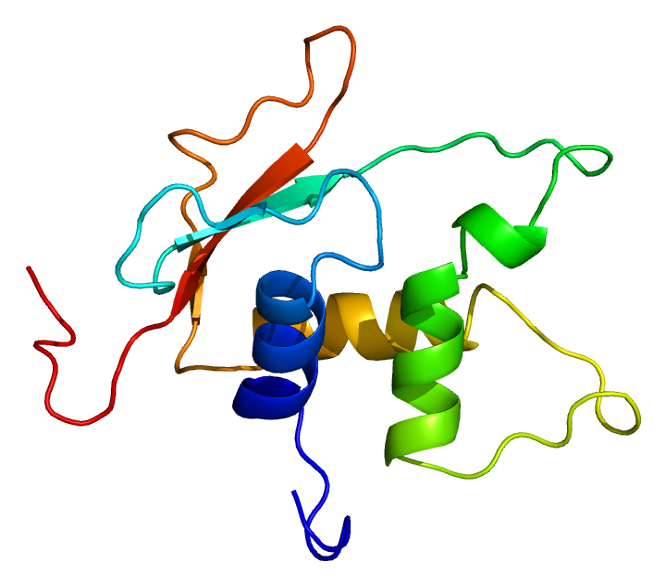
IRF4
ProteinWikipedia
6
MENTIONS
2
EPISODES
2
PODCASTS
Search complete. 6 mentions across 2 episodes found for "IRF4".
Oct 27, 2026

Jed KitsonGUEST
There are a few ways to do this, but by far the most common is something called the Hans algorithm, which you'll see on your reports.
Jed KitsonGUEST
This uses three markers, CD10, BCL6, and MUM1, to try and place the cell as a cell that has come from the germinal center, as opposed to a lymphoma with a cell of origin after the germinal center, such as an activated B cell, or ABC type.
BasharHOST
Technically, the Hans algorithm
Jed KitsonGUEST
can't sort into GCB and ABC, but instead it's a helpful surrogate for gene expression profiling, so we can identify the germinal center subtype versus the non-germinal center subtype.
37 MINS LATER
Jed KitsonGUEST
Send fresh tissue for flow cytometry and formalin-fixed tissue for histopathology, and avoid steroids before biopsy if possible.
KaleHOST
Diagnosis should include the usual B-cell markers of CD20, CD79A and PAX5.
KaleHOST
The HANDS algorithm by IHC for CD10, BCL6 and MUM1 is a surrogate that splits DOBCL into GCB versus non-GCB subtypes with about 80% accuracy.
KaleHOST
Gene expression profiling and NGS-based classifications exist, but they're not routine here in Australia.

Jason GoldsmithHOST
In Nature Immunology, it is published September 21st.
Jason GoldsmithHOST
Deletion of a distal IRF4 element prevents inflammation-induced reprogramming of human regulatory T-cell fake.
Jason GoldsmithHOST
First author is Patrick Ho, and last author was Kui-Zhi Tang.
Jason GoldsmithHOST
So...
Jason GoldsmithHOST
But basically, they say, hey, these Tregs, it's not that you're killing them.
Jason GoldsmithHOST
It's these things that were Tregs are being reprogrammed at a chromatin level to not be Tregs anymore.
Jason GoldsmithHOST
They really target this then down to the IRF4 loci and, you know, do some mutation knockouts to affect the loci to show that, you know, can this go away or not? And then figure out even it's the distal one because there's a proximal and the distal and around and really nail that, that it's the distal one driving it.
Jason GoldsmithHOST
But it gets interesting because they then look at various transcription factors involved and realize there's a specific combination.