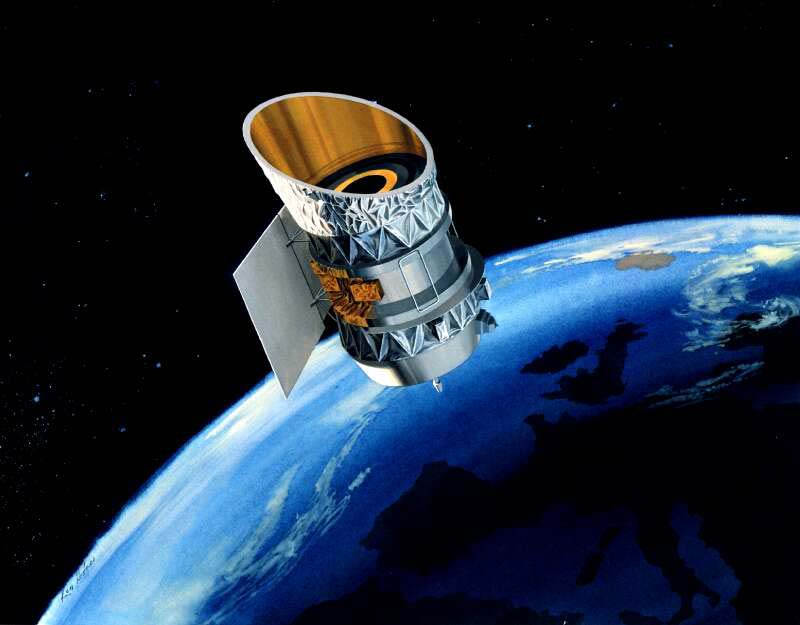
IRAS
Space shuttleWikipedia
4
MENTIONS
2
EPISODES
2
PODCASTS
Search complete. 4 mentions across 2 episodes found for "IRAS".
Oct 19, 2026

GorgorodHOST
How old is this data?
speaker_1HOST
He went back to data collected all the way back in 1983 by the Infrared Astronomical Satellite, or IRS.
speaker_1HOST
He theorized that at the 200 to 300 AU distance range proposed for Planet 9, the planet would be too cold to emit visible light, but it would emit a very faint heat signature.
GorgorodHOST
An infrared glow.
speaker_1HOST
That is quite the analogy, but mechanically, yes.
speaker_1HOST
He searched through a massive catalog of roughly 250,000 sources.
speaker_1HOST
Submifically, he focused on the IRS reject file.
GorgorodHOST
The reject file.

DrewHOST
The object at the center of this story has the wonderfully memorable name of IRAS 18293-0941.
DrewHOST
That name isn't exactly designed for podcasting, so after this, we'll just call it IRAS 18293.
DrewHOST
The first part of the name comes from the Infrared Astronomical Satellite, or I-R-A-S, IRAS, which cataloged the object way back in 1983.
DrewHOST
For more than four decades, it sat in the astronomical record largely unnoticed as anything extraordinary.
DrewHOST
It was hiding in a busy, dusty part of the Milky Way where visible light doesn't travel very well, and that's a recurring theme in astronomy.