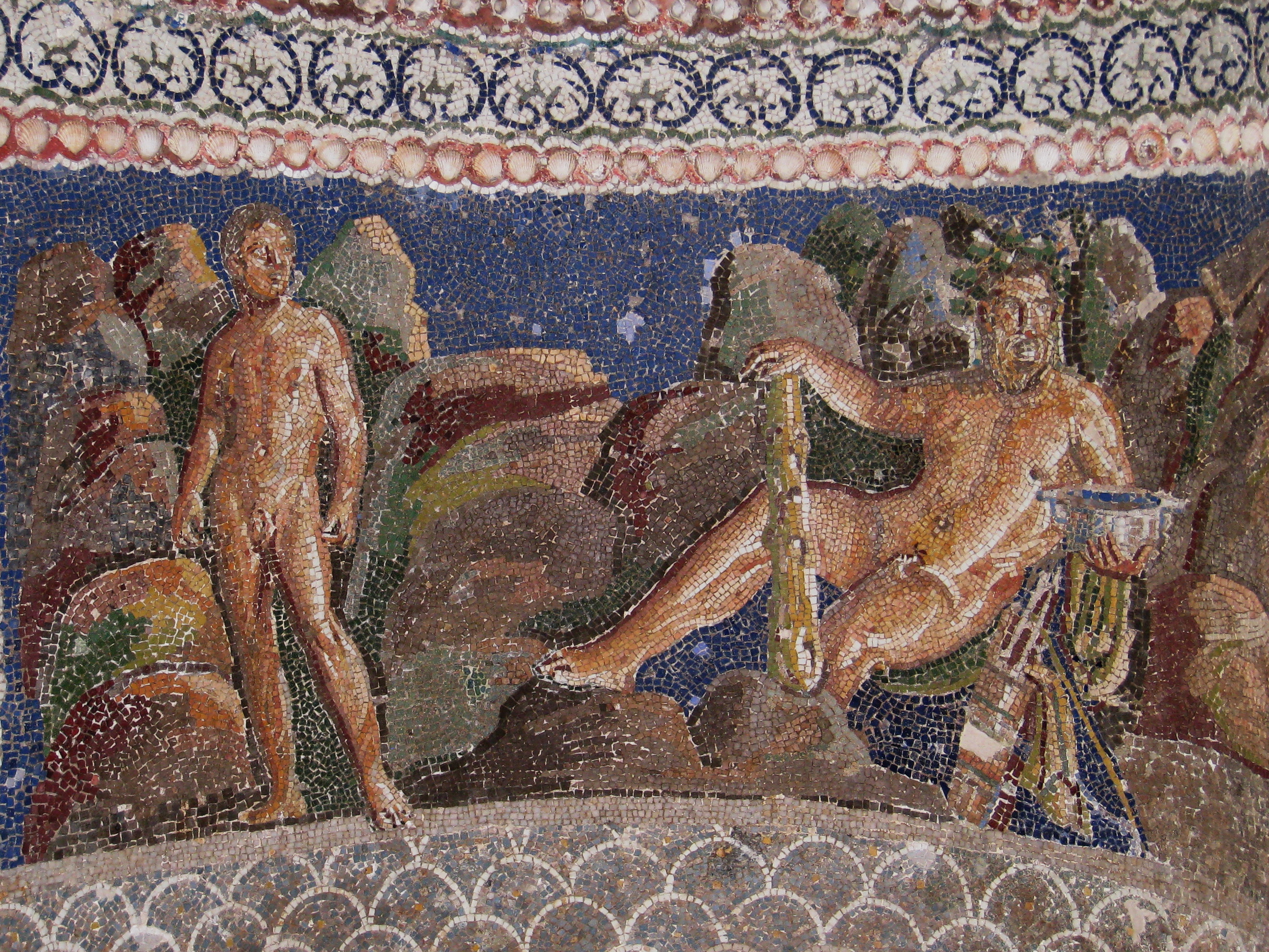
Iolaus
Greek heroWikipedia
9
MENTIONS
5
EPISODES
5
PODCASTS
Search complete. 9 mentions across 5 episodes found for "Iolaus".
Nov 21, 2026

speaker_0NARRATOR
In the centre was the boar.
speaker_0NARRATOR
On one side stood Atalanta, with Meliaga, Theseus, Telamon, Peleus, Polydeuces, Iolaeus, the companion of Heracles, Prophes and Cametes, the brothers of Olthea.
speaker_0NARRATOR
On the other side stood Ancaeus, wounded and dropping his axe, supported by his brother, Epocos, and Castor, Amphiraos, Hippothos, and Pyrrithos.
speaker_0NARRATOR
Some fragments of these sculptures, including a head of the boar and heads of some of the heroes, have been found by archaeologists and are now in the museums of Tygaea and Athens.

speaker_2NARRATOR
Hercules set out with high courage for this fight.
speaker_2NARRATOR
He mounted his chariot, and his beloved nephew Iolaus, the son of his stepbrother Iphicles, who for a long time had been his inseparable companion, sat by his side, guiding the horses.
speaker_2NARRATOR
And so they sped towards Lerna.
speaker_2NARRATOR
At last the hydra was visible on a hill by the springs of Amymone, where its lair was found.
7 HRS 50 MINS LATER
Chris RossaNARRATOR
But when the army had passed through the valley, they saw the fair land of Gascony, and as they saw it, thought of their homes and their wives and daughters.
Chris RossaNARRATOR
There was not one of them but wept for the tenderness of heart.
Chris RossaNARRATOR
But of all that company there were none sadder than the king himself, when he thought how he had left his nephew, Count Roland, behind him in the passes of Spain.
Chris RossaNARRATOR
And now the Saracen king, Marsilas, began to gather his army.

speaker_2NARRATOR
Hercules set out with high courage for this fight.
speaker_2NARRATOR
He mounted his chariot and his beloved nephew Iolaus, the son of his stepbrother Iphicles, who for a long time had been his inseparable companion, sat by his side guiding the horses, and so they sped towards Lerna.
speaker_2NARRATOR
At last the hydra was visible on a hill by the springs of Amymone, where its lair was found.
speaker_2NARRATOR
Here Iolaus left the horses stand.
2 HRS 53 MINS LATER
Anna SimonNARRATOR
The Golden Fleece you shall have if it lies within the power of my enchantments to get it for you.
Anna SimonNARRATOR
Wait for me here an hour before midnight."
Lucy LafaroNARRATOR
midnight."�落 (感受到 in-enz �菜rels campedBy his advice, the heroes had seated themselves on the benches of the galley with their oars held perpendicularly, ready to let fall into the water. As Jason drew near, he heard the talking image calling to him with more than ordinary eagerness in his grave, sweet voice, "Make haste, Prince Jason. For your life, make haste." With one bound, he leapt aboard. At sight of the glorious radiance of the Golden Fleece, the forty-nine heroes gave a mighty shout, and Orpheus, striking his harp, sang a song of triumph to the cadence of which the galley flew over the water, homeward bound, as if careering along with wings. Recording by Lucy Lafaro, New South Wales, Australia. Myths and Legends of All Nations by Logan Marshall. The Cyclops. When the great city of Troy was taken, all the chiefs who had fought against it set sail for their homes. But there was a wrath in heaven against them, for indeed they had borne themselves haughtily and cruelly in the day of their victory. Therefore they did not all find a safe and happy return. For one was shipwrecked, and another was shamefully slain by his false wife in his palace. And others found all things at home troubled and changed, and were driven to seek new dwellings elsewhere. And some whose wives and friends and people had been still true to them through those ten long years of absence were driven far and wide about the world before they saw their native land again. And of all, the wise Ulysses was he who wandered farthest and suffered most. He was well-nigh the last to sail, for he had tarried many days to do pleasure to Agamemnon, lord of all the Greeks. Twelve ships he had with him, twelve he had brought to Troy. And in each there were some fifty men, being scarce half of those that had sailed in them in the old days. So many valiant heroes slept the last sleep by Simoi and Scamander, and in the plain and on the seashore, slain in battle or by the shafts of Apollo. First they sailed northwest to the Thracian coast, where the Ciconians dwelt, who had helped the men of Troy. Their city they took, and in it much plunder, slaves and oxen, and jars of fragrant wine, and might have escaped unhurt but that they stayed to hold revel on the shore. For the Ciconians gathered their neighbors, being men of the same blood, and did battle with the invaders and drove them to their ship. And when Ulysses numbered his men, he found that he had lost six out of each ship. Scarce had he set out again when the wind began to blow fiercely. So, seeing a smooth sandy beach, they drove the ships ashore and dragged them out of reach of the waves, and waited till the storm should abate. And the third morning being fair they sailed again and journeyed prosperously till they came to the very end of the great Peloponnesian land, where Cape Malea looks out upon the southern sea. But contrary currents baffled them, so that they could not round it, and the north wind blew so strongly that they must fain drive before it. And on the tenth day they came to the land where the lotus grows, a wondrous fruit, of which whosoever eats cares not to see country or wife or children again. Now the lotus-eaters, for so they called the people of the land, were a kindly folk, and gave of the fruit to some of the sailors, not meaning them any harm, but thinking it to be the best that they had to give. These, when they had eaten, said that they would not sail any more over the sea, which when the wise Ulysses heard, he bade their comrades bind them and carry them, sadly complaining to the ships. Then, the wind having abated, they took to their oars and rowed for many days till they came to the country where the Cyclops dwell. Now a mile or so from the shore there was an island, very fair and fertile, but no man dwells there or tills the soil. And in the island a harbor where a ship may be safe from all winds, and at the head of the harbor a stream falling from the rock and whispering alders all about it. Into this the ships passed safely and were hauled up on the beach, and the crews slept by them, waiting for the morning. And the next day they hunted the wild goats, of which there was great store on the island, and feasted right merrily on what they caught, with draughts of red wine which they had carried off from the town of the Ciconians. But on the morrow Ulysses, for he was ever fond of adventure and would know of every land to which he came what manner of men they were that dwelt there, took one of his twelve ships and bade row to the land. There was a great hill sloping to the shore, and there rose up here and there a smoke from the caves where the Cyclops dwelt apart, holding no converse with each other. For they were a rude and savage folk, but ruled each his own household, not caring for others. Now very close to the shore was one of these caves, very huge and deep, with laurels round about the mouth, and in front a fold with walls built of rough stone, and shaded by tall oaks and pines. So Ulysses chose out of the crew the twelve bravest, and bade the rest guard the ship, and went to see what manner of dwelling this was, and who abode there.He had his sword by his side, and on his shoulder a mighty skin of wine, sweet-smelling and strong, with which he might win the heart of some fierce savage, should he chance to meet with such, as indeed his prudent heart forecasted that he might. So they entered the cave and judged that it was the dwelling of some rich and skillful shepherd. For within there were pens for the young of the sheep and of the goat, divided all according to their age. And there were baskets full of cheeses and four milk pails ranged along the wall. But the Cyclops himself was away in the pastures. Then the companions of Ulysses besought him that he would depart, taking with him, if he would, a store of cheeses and sundry of the lambs and of the kids. But he would not, for he wished to see, after his want, what manner of host this strange shepherd might be. And truly, he saw it to his cost. It was evening when the Cyclops came home, a mighty giant, twenty feet in height or more. On his shoulder he bore a vast bundle of pine logs for his fire, and threw them down outside the cave with a great crash, and drove the flocks within, and closed the entrance with the huge rock, which twenty wagons and more could not bear. Then he milked the ewes and all the she-goats, and half of the milk he curdled for cheese, and half he set ready for himself, when he should sup. Next he kindled a fire with the pine logs, and the flame lighted up all the cave, showing Ulysses and his comrades. Who are ye? cried Polyphemus, for that was the giant's name. Are ye traders, or haply pirates? For in those days it was not counted shame to be called a pirate. Ulysses shuddered at the dreadful voice and shape, but bore him bravely and answered, We are no pirates, mighty sir, but Greeks, sailing back from Troy, and subjects of the great king Agamemnon, whose fame is spread from one end of heaven to the other. And we are come to beg hospitality of thee in the name of Zeus, who rewards or punishes hosts and guests according as they be faithful the one to the other or no. Nay, said the giant, it is but idle talk to tell me of Zeus and the other gods. We Cyclops take no account of gods, holding ourselves to be much better and stronger than they. But come, tell me, where have you left your ship? But Ulysses saw his thought when he asked about the ship, how he was minded to break it and take from them all hope of flight. Therefore he answered him craftily, Ship we have none, for that which was ours King Poseidon brake, driving it on a jutting rock on this coast. And we whom thou seest are all that are escaped from the waves. Polyphemus answered nothing, but without more ado caught up two of the men, as a man might catch up the whelps of a dog, and dashed them on the ground, and tore them limb from limb, and devoured them with huge draughts of milk between, leaving not a morsel, not even the very bones. But the others, when they saw the dreadful deed, could only weep and pray to Zeus for help. And when the giant had ended his foul meal, he lay down among his sheep and slept. Then Ulysses questioned much in his heart whether he should slay the monster as he slept, for he doubted not that his good sword would pierce to the giant's heart, mighty as he was. But being very wise, he remembered that, should he slay him, he and his comrades would yet perish miserably, for who should move away the great rock that lay against the door of the cave. So they waited till the morning, and the monster woke and milked his flocks, and afterward, seizing two men, devoured them for his meal. Then he went to the pastures, but put the great rock on the mouth of the cave, just as a man puts down the lid upon his quiver. All that day the wise Ulysses was thinking what he might best do to save himself and his companions. And the end of his thinking was this. There was a mighty pole in the cave, green wood of an olive tree, big as a ship's mast, which Polyphemus purposed to use when the smoke should have dried it as a walking staff. Of this he cut off a fathom's length, and his comrades sharpened it and hardened it in the fire, and then hid it away. At evening the giant came back and drove his sheep into the cave, nor left the rams outside, as he had been wont to do before, but shut them in. And having duly done his shepherd's work, he made his cruel feast as before. Then Ulysses came forward with the wine skin in his hand and said, Drink, Cyclops, now that thou hast feasted. Drink and see what precious things we had in our ship. But no one hereafter will come to thee with such like, if thou dealest with strangers as cruelly as thou hast dealt with us. Then the Cyclops drank and was mightily pleased, and said, Give me again to drink and tell me thy name, stranger, and I will give thee a gift such as a host should give. In good truth this is a rare liquor.We too have vines, but they bear no wine like this, which indeed must be such as the gods drink in heaven. Then Ulysses gave him the cup again, and he drank. Thrice he gave it to him, and thrice he drank, not knowing what it was and how it would work within his brain. Then Ulysses spoke to him, Thou didst ask my name, Cyclops. Lo, my name is No Man. And now that thou knowest my name, thou shouldst give me thy gift. And he said, My gift shall be that I will eat thee last of all thy company. And as he spoke, he fell back in a drunken sleep. Then Ulysses bade his comrades be of good courage, for the time was come when they should be delivered. And they thrust the stake of olive wood into the fire till it was ready, green as it was, to burst into flame. And they thrust it into the monster's eye, for he had but one eye, and that in the midst of his forehead, with the eyebrow below it. And Ulysses leaned with all his force upon the stake, and thrust it in with the might and main. And the burning wood hissed in the eye, just as the red-hot iron hisses in the water when a man seeks to temper steel for a sword. Then the giant leapt up and tore away the stake and cried aloud, so that all the Cyclops who dwelt on the mountainside heard him and came about his cave, asking him, What aileth thee, Polyphemus, that thou makest this uproar in the peaceful night, driving away sleep? Is anyone robbing thee of thy sheep or seeking to slay thee by craft or force? And the giant answered, No man slays me by craft. Nay, but, they said, if no man does thee wrong, we cannot help thee. The sickness which great Zeus may send, who can avoid? Pray to our father, Poseidon, for help. Then they departed, and Ulysses was glad at heart for the good success of his device, when he said that he was no man. But the Cyclops rolled away the great stone from the door of the cave and sat in the midst, stretching out his hands to feel whether perchance the men within the cave would seek to go out among the sheep. Long did Ulysses think how he and his comrades should best escape. At last he lighted upon a good device, and much he thanked Zeus that for this once the giant had driven the rams with the other sheep into the cave. For these being great and strong, he fastened his comrades under the bellies of the beasts, tying them with ossier twigs, of which the giant made his bed. One ram he took and fastened a man beneath it, and two others he set, one on either side. So he did with the six, for but six were left out of the twelve who had ventured with him from the ship. And there was one mighty ram, far larger than all the others, and to this Ulysses clung, grasping the fleece tight with both his hands. So they waited for the morning, and when the morning came, the rams rushed forth to the pasture. But the giant sat in the door and felt the back of each as it went by, nor thought to try what might be underneath. Last of all went the giant ram, and the Cyclops knew him as he passed and said, How is this, thou, who art the leader of the flock? Thou art not wont thus to lag behind. Thou hast always been the first to run to the pastures and streams in the morning, and the first to come back to the fold when evening fell. And now thou art last of all. Perhaps thou art troubled about thy master's eye, which some wretch, no man, they call him, has destroyed, having first mastered me with wine. He has not escaped, I ween. I would that thou couldst speak and tell me where he is lurking. Of a truth, I would dash out his brains upon the ground and avenge me of this no man. So speaking, he let him pass out of the cave. But when they were out of reach of the giant, Ulysses loosed his hold of the ram and then unbound his comrades. And they hastened to their ship, not forgetting to drive before them a good store of the Cyclops's fat sheep. Right glad were those that had abode by the ship to see them, nor did they lament for those who had died, though they were fain to do so, for Ulysses forbade, fearing lest the noise of their weeping should betray them to the giant where they were. Then they all climbed into the ship, and sitting well in order on the benches, smote the sea with their oars, laying to right lustily, that they might the sooner get away from the accursed land. And when they had rowed a hundred yards or so, so that a man's voice could yet be heard by one who stood upon the shore, Ulysses stood up in the ship and shouted, He was no coward, O Cyclops, whose comrades thou didst so foully slay in thy den. Justly art thou punished, monster, that devoureth thy guests in thy dwelling. May the gods make thee suffer yet worse things than these. Then the Cyclops in his wrath broke off the top of a great hill, a mighty rock, and hurled it where he had heard the voice. Right in front of the ship's bow it fell, and a great wave rose as it sank, and washed the ship back to the shore.But Ulysses seized a long pole with both hands and pushed the ship from the land and bade his comrades ply their oars, nodding with his head, for he was too wise to speak, lest the Cyclops should know where they were. Then they rowed with all their might and main. And when they had gotten twice as far as before, Ulysses made as if he would speak again. But his comrades sought to hinder him, saying, Nay, my lord, anger not the giant any more. Surely we thought before we were lost, when he threw the great rock and washed our ship back to the shore. And if he hear thee now, he may crush our ship and us, for the man throws a mighty bolt and throws it far. But Ulysses would not be persuaded, but stood up and said, Hear, Cyclops, if any man asks who blinded thee, say that it was the warrior Ulysses, son of Laertes, dwelling in Ithaca. And the Cyclops answered with a groan, Of a truth the old oracles are fulfilled. For long ago there came to this land one Telemus, a prophet, and dwelt among us even to old age. This man foretold me that one Ulysses would rob me of my sight. But I looked for a great man and a strong, who should subdue me by force. And now a weakling has done the deed, having cheated me with wine. But come now hither, Ulysses, and I will be a host indeed to thee. Or at least, may Poseidon give thee such a voyage to thy home as I would wish thee to have. For know that Poseidon is my sire. May be that he may heal me of my grievous wound. And Ulysses said, Would to God I could send thee down to the abode of the dead, where thou wouldst be past all healing, even from Poseidon's self. Then the Cyclops lifted up his hands to Poseidon and prayed. Hear me, Poseidon, if I am indeed thy son and thou my father, may this Ulysses never reach his home. Or if the fates have ordered that he should reach it, may he come alone, or his comrades lost, and come to find sore trouble in his house. And as he ended, he hurled another mighty rock, which almost lighted on the rudder's end, yet missed it as if by a hair's breadth. So Ulysses and his comrades escaped and came to the island of the wild goats, where they found their comrades, who indeed had waited long for them, in sore fear lest they had perished. Then Ulysses divided among his company all the sheep which they had taken from the Cyclops. And all, with one consent, gave him for his share the great ram which had carried him out of the cave, and he sacrificed it to Zeus. And all that day they feasted right merrily on the flesh of sheep and on sweet wine. And when the night was come, they lay down upon the shore and slept. Recording by Paradise Camouflage Myths and Legends of All Nations by Logan Marshall Chapter 9 Oedipus and the Sphinx It befell in times past that the gods, being angry with the inhabitants of Thebes, sent into their land a very troublesome beast which men called a sphinx. Now this beast had the face and breast of a fair woman, but the feet and claws of a lion, and it was one to ask a riddle of such as encountered it, and such as answered not aright it would tear and devour. When it had laid waste the land many days, there chanced to come to Thebes one Oedipus, who had fled from the city of Corinth that he might escape the doom which the gods had spoken against him. And the men of the place told him of the sphinx, how she cruelly devoured the people, and that he who should deliver them from her should have the kingdom. So Oedipus, being very bold and also ready of wit, went forth to meet the monster. And when she saw him she spake, saying, Read me this riddle right or die. What liveth there beneath the sky, four-footed creature that doth choose, now three feet and now twain to use, and still more feebly over the plain walketh with three feet than with twain? And Oedipus made reply, Tis man, who in life's early day four-footed crawleth on his way. When time hath made his strength complete, upright his form and twain his feet. When age hath bound him to the ground, a third foot in his staff is found. And when the sphinx found that her riddle was answered, she cast herself from a high rock and perished. As a result, Oedipus received the great kingdom of Thebes and the hand of the widowed queen Jocasta in marriage. Four children were born to them, two sons, Eteocles and Polynices, and two daughters, Antigone and Ismene. Now the gods had decreed that Oedipus should murder his own father and marry his own mother, and by a curious chance this was precisely what he had done. As a baby he had been left to die lest he should live to fulfil the doom, but had been rescued by an old shepherd and brought up at the court of Corinth. Fleeing from there that he might not murder him whom he believed to be his father, he had come to Thebes and on the way had met Laius, his true father, the king, and killed him.While he remained ignorant of the facts, Oedipus was very happy and reigned in great power and glory. But when pestilence fell upon the land and he discovered the truth of the almost forgotten oracle, he was very miserable and in madness of grief put out his own eyes. Chapter Ten of Myths and Legends of All Nations. This is a LibriVox recording. All LibriVox recordings are in the public domain. For more information or to volunteer, please visit LibriVox.org. Recording by Calinda. Myths and Legends of All Nations by Logan Marshall. Chapter Ten. Antigone: A Faithful Daughter and Sister. Jocasta, when she learned that Oedipus was really her son, was so filled with horror and distress that she took her own life. But Antigone and Ismene were sorry for their father, whom they loved very dearly, and sought by every means they knew to render his suffering less. Longing to see again the land of Corinth which he had left seized the blind Oedipus, and like a beggar, staff in hand, he set out. Only Antigone accompanied him, guiding his step and striving daily to keep up his courage. After much wandering, Oedipus was finally cast into prison. Then the two sons took possession of the kingdom, making agreement between themselves that each should reign for the space of one year. And the elder of the two, whose name was Eteocles, first had the kingdom. But when his year was come to an end, he would not abide by his promise, but kept that which he should have given up, and drove out his younger brother from the city. Then the younger, whose name was Polynices, fled to Argos to King Adrastus. And after a while he married the daughter of the king, who made a covenant with him that he would bring him back with a high hand to Thebes and set him on the throne of his father. Then the king sent messengers to certain of the princes of Greece, entreating that they would help in this matter. And of these some would not, but others hearkened to his words, and so that a great army was gathered together and followed the king and Polynices to make war against Thebes. So they came and pitched their camp over against the city. And after they had been there many days, the battle grew fierce about the wall. But the chiefest fight was between the two brothers, for the two came together in an open space before the gates. And first Polynices prayed to Hera, for she was the goddess of the great city of Argos, which had helped him in his enterprise. And Eteocles prayed to Pallas of the golden shield, whose temple stood hard by. Then they crouched, each covered with his shield and holding his spear in his hand, if by chance his enemy should give occasion to smite him. And if one showed so much as an eye above the rim of his shield, the other would strike at him. But after a while, King Eteocles slipped upon a stone that was under his foot and uncovered his leg, at which straightway Polynices took aim with his spear, piercing the skin. But so doing, he laid his own shoulder bare, and King Eteocles gave him a wound in the breast. He broke his spear in striking and would have fared ill, but that with a great stone he smote the spear of Polynices and broke this also in the middle. And now were the two equal, for each had lost his spear. So they drew their swords and came yet closer together. But Eteocles used a device which he had learnt in the land of Thessaly, for he drew his left foot back as if he would have ceased from the battle, and then of a sudden moved the right forward, and so, smiting sideways, drove his sword right through the body of Polynices. But when, thinking that he had slain him, he set his weapons in the earth and began to spoil him of his arms, the other, for he yet breathed a little, laid his hand upon his sword, and though he had scarce strength to smite, yet gave the king a mortal blow, so that the two lay dead together on the plain. And the men of Thebes lifted up the bodies of the dead and bare them both into the city. When these two brothers, the sons of King Oedipus, had fallen each by the hand of the other, the kingdom fell to Creon their uncle. For not only was he the next of kin to the dead, but also the people held him in great honor because his son Menoeceus had offered himself with a willing heart that he might deliver his city from captivity. Now when Creon was come to the throne, he made a proclamation about the two princes, commanding that they should bury Eteocles with all honor, seeing that he died as beseemed a good man and a brave, doing battle for his country that it should not be delivered into the hands of the enemy. But as for Polynices, he bade them leave his body to be devoured by the fowls of the air and the beasts of the field, because he had joined himself to the enemy and would have beaten down the walls of the city and burned the temples of the gods with fire and led the people captive. Also he commanded that if any man should break this decree, he should suffer death by stoning. Now Antigone, who was sister to the two princes, heard that the decree had gone forth, and chancing to meet her sister Ismene before the gates of the palace, spake to her, saying, O my sister, hast thou heard this decree that the king hath put forth concerning our brethren that are dead? Then Ismene made answer, I have heard nothing, my sister, only that we are bereaved of both our brethren in one day, and that the army of the Argives is departed in this night that is now past. So much I know, but no more. Hearken then. King Creon hath made a proclamation that they shall bury Eteocles with all honor, but that Polynices shall lie unburied, that the birds of the air and the beasts of the field may devour him, and that whosoever shall break this decree shall suffer death by stoning. But if it be so, my sister, how can we avail to change it? Think whether or no thou wilt share with me the doing of this deed. What deed? What meanest thou? To pay due honor to this dead body. What? Wilt thou bury him when the king hath forbidden it? Yes, for he is my brother, and also thine, though perchance thou wouldst not have it so, and I will not play him false."O my sister, wilt thou do this when Creon hath forbidden it?" "Why should he stand between me and mine?" "But think now what sorrows are come upon our house. For our father perished miserably, having first put his own eyes out, and our mother hanged herself with her own hands. Our two brothers fell in one day, each by the other's spear, and now we two only are left. And shall we not fall into a worse destruction than any if we transgress these commands of the king? Think, too, that we are women and not men, and of necessity obey them that are stronger. Wherefore, as for me, I will pray the dead to pardon me, seeing that I am thus constrained, but I will obey them that rule." "I advise thee not, and if thou thinkest thus, I would not have thee for helper. But know that I will bury my brother, nor could I better die than for doing such a deed. For as he loved me, so also do I love him greatly. And shall not I do pleasure to the dead rather than to the living, seeing that I shall abide with the dead forever? But thou, if thou wilt do dishonor to the laws of the gods..." "I dishonor them not, only I cannot set myself against the powers that be." "So be it, but I will bury my brother." "O my sister, how I fear for thee." "Fear for thyself. Thine own lot needeth all thy care." "Thou wilt at least keep thy counsel, nor tell the thing to any man." "Not so. Hide it not. I shall scorn thee more if thou proclaim it not aloud to all." So Antigone departed, and after a while came to the same place King Creon, clad in his royal robes and with his scepter in his hand, and set forth his counsel to the elders who were assembled, how he had dealt with the two princes according to their deserving, giving all honor to him that loved his country and casting forth the other unburied. And he bade them take care that this decree should be kept, saying that he also had appointed certain men to watch the body. And he had scarcely left speaking when there came one of these same watchers and said, "I have not come hither in haste, O King. Nay, I doubted much while I was yet on the way whether I should not turn again. For now I thought, 'Fool, why goest thou where thou shalt suffer for it?' And then again, 'Fool, the king will hear the matter elsewhere, and then how wilt thou fare?' But at the last I came as I had purposed, for I knew that nothing may happen to me contrary to fate." "But say," said the king, "what troubles thee so much?" "First hear my case. I did not the thing and know not who did it, and it were a grievous wrong should I fall into trouble for such a cause." "Thou makest a long preface excusing thyself, but yet hast, as I judge, something to tell." "Fear, my lord, ever causeth delay." "Wilt thou not speak out thy news and then be gone?" "I will speak it. Know then that some man hath thrown dust upon his dead corpse and done besides such things as are needful." "What sayest thou? Who hath dared to do this deed?" "That I know not, for there was no mark as of spade or pickaxe, nor was the earth broken, nor had wagon passed thereon. We were sore dismayed when the watchman showed the thing to us, for the body we could not see. Buried indeed it was not, but rather covered with dust. Nor was there any sign as of wild beast or of dog that had torn it. Then there rose a contention among us, each blaming the other and accusing his fellows, and himself denying that he had done the deed or was privy to it. And doubtless we had fallen to blows, but that one spake a word which made us all tremble for fear, knowing that it must be as he said. For he said that the thing must be told to thee, and in no wise hidden. So we drew lots, and by evil chance the lot fell upon me. Wherefore I am here, not willingly, for no man loveth him that bringeth evil tidings." Then said the chief of the old men, "Consider, O king, for haply this thing is from the gods." But the king cried, "Thinkest thou that the gods care for such a one as this dead man, who would have burnt their temples with fire and laid waste the land which they love, and set it not the laws? Not so. But there are men in this city who have long time had ill will to me, not bowing their necks to my yoke, and they have persuaded these fellows with money to do this thing. Surely there was never so evil a thing as money, which maketh cities into ruinous heaps and banisheth men from their houses and turneth their thoughts from good unto evil. But as for them that have done this deed for hire, of a truth they shall not escape. For I say to thee, fellow, if ye bring not here before my eyes the man that did this thing, I will hang you up alive. So shall ye learn that ill gains bring no profit to a man." So the guard departed, but as he went he said to himself, "Now may the gods grant that the man be found. But however this may be, thou shalt not see me come again on such an errand as this, for even now I have escaped beyond all hope." Notwithstanding, after a space he came back with one of his fellows, and they brought with them the maiden Antigone with her hands bound together. And it chanced that at the same time King Creon came forth from the palace. Then the guard set forth the thing to him, saying, "We cleared away the dust from the dead body and sat watching it. And when it was now noon, and the sun was at its height, there came a whirlwind over the plain, driving a great cloud of dust. And when this had passed we looked, and lo, this maiden whom we have brought hither stood by the dead corpse. And when she saw that it lay bare as before, she sent up an exceeding bitter cry, even as a bird whose young ones have been taken from the nest. Then she cursed them that had done this deed and brought dust and sprinkled it upon the dead man, and poured water upon him three times. Then we ran and laid hold upon her and accused her that she had done this deed, and she denied it not. But as for me, tis well to have escaped from death, but it is ill to bring friends into the same. Yet I hold that there is nothing dearer to a man than his life." Then said the king to Antigone, "Tell me in a word, didst thou know my decree?" "I knew it. Was it not plainly declared?"How darest thou to transgress the laws? Zeus made not such laws, nor justice that dwelleth with the gods below. I judged not that thy decrees had such authority that a man should transgress for them the unwritten sure commandments of the gods. For these indeed are not of today or yesterday, but they live forever, and their beginning no man knoweth. Should I, for fear of thee, be found guilty against them? That I should die I knew. Why not? All men must die. And if I die before my time, what loss? He who liveth among many sorrows, even as I have lived, counteth it gain to die. But had I left my own mother's son unburied, this had been loss indeed. Then said the king, Such stubborn thoughts have a speedy fall, and are shivered even as the iron that hath been made hard in the furnace. And as for this woman and her sister, for I judge her sister to have had a part in this matter, though they were nearer to me than all my kindred, yet shall they not escape the doom of death. Wherefore let someone bring the other woman hither. And while they went to fetch the maiden Ismene, Antigone said to the king, Is it not enough for thee to slay me? What need to say more? For thy words please me not, nor mine thee. Yet what nobler thing could I have done than to bury my mother's son? And so would all men say, but fear shutteth their mouths. Nay, said the king, none of the children of Cadmus thinketh thus, but thou only. But hold, was not he that fell in battle with this man thy brother also? Yes, truly, my brother he was. And dost thou not dishonour him when thou honourest his enemy? The dead man would not say it, could he speak. Shall then the wicked have like honour with the good? How knowest thou but that such honour pleaseth the gods below? I have no love for them I hate, though they be dead. Of hating I know nothing, tis enough for me to love. If thou wilt love, go love the dead, but while I live no woman shall rule me. Then those that had been sent to fetch the maiden Ismene brought her forth from the palace. And when the king accused her that she had been privy to the deed, she denied not, but would have shared one lot with her sister. But Antigone turned from her, saying, Not so, thou hast no part or lot in the matter, for thou hast chosen life and I have chosen death, and even so shall it be. And when Ismene saw that she prevailed nothing with her sister, she turned to the king and said, Wilt thou slay the bride of thy son? Aye, said he, there are other brides to win. But none, she made reply, that accord so well with him. I will have no evil wives for my son, said the king. Then cried Antigone, O Haman, whom I love, how thy father wrongeth thee! Then the king bade the guards lead the two into the palace. But scarcely had they gone when they came to the place the prince Haman, the king's son, who was betrothed to the maiden Antigone. And when the king saw him, he said, Art thou content, my son, with thy father's judgment? And the young man answered, My father, I would follow thy counsels in all things. Then said the king, Tis well spoken, my son. This is a thing to be desired, that a man should have obedient children. But if it be otherwise with a man, he hath gotten great trouble for himself and maketh sport for them that hate him. And now as to this matter, there is naught worse than an evil wife. Wherefore I say, let this damsel wed a bridegroom among the dead. For since I have found her, alone of all this people, breaking my decree, surely she shall die. Nor shall it profit her to claim kinship with me, for he that would rule a city must first deal justly with his own kindred. And as for obedience, this it is that maketh a city to stand both in peace and in war. To this the prince Haman made answer, What thou sayest, my father, I do not judge. Yet bethink thee, that I see and hear on thy behalf what is hidden from thee. For common men cannot abide thy look if they say that which pleaseth thee not. Yet do I hear it in secret. Know then that all the city mourneth for this maiden, saying that she dieth wrongfully for a very noble deed, in that she buried her brother. And tis well, my father, not to be wholly set on thy thoughts, but to listen to the counsel of others. Nay, said the king, shall I be taught by such a one as thou? I pray thee regard my words if they be well, and not my years. Can it be well to honour them that transgress, and hath not this woman transgressed? The people of this city judge not so. The people, sayest thou, is it for them to rule or for me? No city is the possession of one man only. So the two answered one the other, and their anger waxed hot. And at last the king cried, Bring this accursed woman and slay her before his eyes. And the prince answered, That thou shalt never do. And know this also, that thou shalt never see my face again. So he went away in a rage, and the old men would have appeased the king's wrath, but he would not hearken to them, but said that the two maidens should die. Wilt thou then slay them both? said the old men. Tis well said, the king made answer. Her that meddled not with the matter, I harm not. And how wilt thou deal with the other? There is a desolate place, and there I will shut her up alive in a sepulchre, yet giving her so much of food as shall quit us of guilt in the matter, for I would not have the city defiled. There let her persuade death, whom she loveth so much, that he harm her not. So the guards led Antigone away to shut her up alive in the sepulchre. But scarcely had they departed when there came an old prophet Tiresias, seeking the king. Blind he was, so that a boy led him by the hand, but the gods had given him to see things to come. And when the king saw him, he asked, What seekest thou, wisest of men? Then the prophet answered, Hearken, O king, and I will tell thee.I sat in my seat after my custom in the place where all manner of birds resort and as I sat I heard a cry of birds that I knew not very strange and full of wrath and I knew that they tear and slew each other for I heard the fierce flapping of their wings and being afraid I made inquiry about the fire and how it burned upon the altars and this boy for as I am a guide to others so he guideth me told me that it shone not at all but smouldered and was dull and that the flesh which was burnt upon the altar spluttered in the flame and wasted away into corruption and filthiness and now I tell thee O king that the city is troubled by thy ill counsels for the dogs and the birds of the air tear the flesh of this dead son of Oedipus whom thou sufferest not to have due burial and carry it to the altars polluting them therewith wherefore the gods receive not from us a prayer or sacrifice and the cry of the birds hath an evil sound for they are full of the flesh of a man therefore I bid thee be wise in time for all men may err but he that keepeth not his folly but repenteth doeth well but stubbornness cometh to a great trouble then the king answered old man I know the race of prophets full well how ye sell your art for gold but make thy trade as thou wilt this man shall not have burial yea though the eagles of Zeus carry his flesh to their master's throne in heaven he shall not have it and when the prophet spake again entreating him and warning the king answered him again after the same fashion that he spake not honestly but had sold his art for money but at last the prophet spake in great wrath saying know O king that before many days shall pass thou shalt pay a life for a life even one of thine own children for them with whom thou hast dealt unrighteously shutting up the living with the dead and keeping the dead from them to whom they belong therefore the furies lie in wait for thee and thou shalt see whether or no I speak these things for money for there shall be mourning and lamentation in thine own house and against thy people shall be stirred up many cities and now my child lead me home and let this man rage against them that are younger than I so the prophet departed and the old men were sore afraid and said he hath spoken terrible things O king nor ever since these gray hairs were black have we known him save that which was false even so said the king and I am troubled in heart and yet I am loath to depart from my purpose king Creon said the old men thou needest good counsel what then would you have done set free the maiden from the sepulchre and give this dead man burial then the king cried to his people that they should bring bars wherewith to loosen the doors of the sepulchre and hastened with them to the place but coming on their way to the body of prince Polynices they took it up and washed it and buried that which remained of it and raised over the ashes a great mound of earth and this being done they drew near to the place of the sepulchre and as they approached it the king heard within a very piteous voice and knew it for the voice of his son then he bade his attendants loose the door with all speed and when they had loosed it they beheld within a very piteous sight for the maiden Antigone had hanged herself by the girdle of linen which she wore and the young man prince Haman stood with his arms about her dead body embracing it and when the king saw him he cried to him to come forth but the prince glared fiercely upon him and answered him not a word but drew his two-edged sword then the king thinking that his son was minded in his madness to slay him leapt back but the prince drove the sword into his own heart and fell forward on the earth still holding the dead maiden in his arms and when they brought the tidings of these things to queen Eurydice the wife of king Creon and mother to the prince she could not endure the grief being thus bereaved of her children but laid hold of a sword and slew with herself therewith so the house of king Creon was left desolate unto him that day because he despised the ordinances of the gods Recording by Graham Redman. Myths and Legends of All Nations by Logan Marshall. Chapter 11. The Story of Iphigenia. King Agamemnon sat in his tent at Aulis where the army of the Greeks was gathered together, being about to sail against the great city of Troy. And it was now past midnight, but the king slept not, for he was careful and troubled about many things. And he had a lamp before him, and in his hand a tablet of pine wood whereon he wrote. But he seemed not to remain in the same mind about that which he wrote, for now he would blot out the letters and then would write them again, and now he fastened the seal upon the tablet and then break it. And as he did this he wept and was like to a man distracted. But after a while he called to an old man his attendant. The man had been given in time past by Tyndareus to his daughter Queen Clytemnestra and said, Old man, thou knowest how Calchas the soothsayer bade me offer for a sacrifice to Artemis, who is goddess of this place, my daughter Iphigenia, saying that so only should the army have a prosperous voyage from this place to Troy and should take the city and destroy it. And how when I heard these words I bade Telthibius the herald go throughout the army and bid them depart every man to his own country, for that I would not do this thing. And how my brother King Menelaus persuaded me so that I consented to it. Now therefore hearken to this, for what I am about to tell thee three men only know, namely Calchas the soothsayer and MenelausAnd Ulysses, king of Ithaca. I wrote a letter to my wife, the queen, that she should send her daughter to this place, that she might be married to King Achilles; and I magnified the man to her, saying that he would in no wise sail with us unless I would give him my daughter in marriage. But now I have changed my purpose, and have written another letter after this fashion, as I will now set forth to thee. Daughter of Leda, send not thy child to the land of Euboea; for I will give her in marriage at another time. Ay, said the old man, but how wilt thou deal with King Achilles? Will he not be wroth, hearing that he hath been cheated of his wife? Not so, answered the king; for we have indeed used his name, but he knoweth nothing of this marriage. And now make haste; sit not thou down by any fountain in the woods, and suffer not thine eyes to sleep; and beware lest the chariot bearing the queen and her daughter pass thee where the roads divide. And see that thou keep the seal upon this letter unbroken. So the old man departed with the letter. But scarcely had he left the tent when King Menelaus spied him and laid hands on him, taking the letter and breaking the seal. And the old man cried out, Help, my lord; here is one hath taken thy letter. Then King Agamemnon came forth from his tent, saying, What meaneth this uproar and disputing that I hear? And Menelaus answered, Seest thou this letter that I hold in my hand? I see it; it is mine; give it to me. I give it not till I have read that which is written therein to all the army of the Greeks. Where didst thou find it? I found it while I waited for thy daughter till she should come to the camp. What hast thou to do with that? May I not rule my own household? Then Menelaus reproached his brother because he did not continue in one mind. For first, he said, before thou wast chosen captain of the host, thou wast all things to all men, greeting every man courteously, and taking him by the hand, and talking with him, and leaving thy doors open to any that would enter. But afterwards, being now chosen, thou wast haughty and hard of access. And next, when this trouble came upon the army, and thou wast sore afraid lest thou shouldst lose thy office and so miss renown, didst thou not hearken to Calchas the soothsayer, and promise thy daughter for sacrifice, and send for her to the camp, making pretence of giving her in marriage to Achilles? And now thou art gone back from thy word. Surely this is an evil day for Greece, that is troubled because thou wantest wisdom. Then answered King Agamemnon, What is thy quarrel with me? Why blamest thou me if thou couldst not rule thy wife? And now to win back this woman, because forsooth she is fair, thou castest aside both reason and honour. And I, if I had an ill purpose and now have changed it for that which is wiser, dost thou charge me with folly? Let them that swear the oath to Tyndareus go with thee on this errand. Why should I slay my child and work for myself sorrow and remorse without end, that thou mayest have vengeance for thy wicked wife? Then Menelaus turned away in a rage, crying, Betray me if thou wilt; I will betake myself to other counsels and other friends. But even as he spake there came a messenger, saying, King Agamemnon, I am come, as thou baddest me, with thy daughter Iphigenia. Also her mother, Queen Clytemnestra, is come, bringing with her her little son Orestes. And now they are resting themselves and their horses by the side of a spring, for indeed the way is long and weary. And all the army is gathered about them to see them and greet them. And men question much wherefore they are come, saying, Doth the king make a marriage for his daughter, or hath he sent for her desiring to see her? But I know thy purpose, my lord; wherefore we will dance and shout and make merry, for this is a happy day for the maiden. But the King Agamemnon was sore dismayed when he knew that the queen was come, and spake to himself, Now what shall I say to my wife? For that she is rightly come to the marriage of her daughter who can deny? But what will she say when she knoweth my purpose? And of the maiden what shall I say? Unhappy maiden, whose bridegroom shall be death! For she will cry to me, Wilt thou kill me, my father? And the little Orestes will wail, not knowing what he doeth, seeing he is but a babe. Cursed be Paris, who hath wrought this woe! And now King Menelaus came back, saying that it repented him of what he had said. For why should thy child die for me? What hath she to do with Helen? Let the army be scattered so that this wrong be not done. Then said King Agamemnon, But how shall I escape from this strait? For the whole host will compel me to this deed."Not so," said King Menelaus, "if thou wilt send back the maiden to Argos." "But what shall that profit?" said the king; "for Calchas will cause the matter to be known, or Ulysses, saying that I have failed of my promise. And if I fly to Argos they will come and destroy my city and lay waste my land. Woe is me, in what a strait am I set! But take thou care, my brother, that Clytemnestra hear nothing of these things." And when he had ended speaking, the queen herself came unto the tent, riding in a chariot, having her daughter by her side. And she bade one of the attendants take out with care the caskets which she had brought for her daughter, and bade others help her daughter to alight and herself also, and to a fourth she said that he should take the young Orestes. Then Iphigenia greeted her father, saying, "Thou hast done well to send for me, my father." "'Tis true, and yet not true, my child." "Thou lookest not well pleased to see me, my father." "He that is a king and commandeth a host hath many cares." "Put away thy cares awhile, and give thyself to me." "I am glad beyond measure to see thee." "Glad art thou? Then why dost thou weep?" "I weep because thou must be long time absent from me." "Perish all these fightings and troubles." "They will cause many to perish, and me most miserably of all." "Art thou going a journey from me, my father?" "Ay, and thou also hast a journey to make." "Must I make it alone, or with my mother?" "Alone. Neither father nor mother may be with thee." "Sendest thou me to dwell elsewhere?" "Hold thy peace. Such things are not for maidens to inquire." "Well, my father, order matters with the Phrygians, and then make haste to return." "I must first make a sacrifice to the gods." "'Tis well. The gods should have due honor." "Ay, and thou wilt stand close to the altar." "Shall I lead the dances, my father?" "O my child, how I envy thee that thou knowest nought. And now go into the tent, but first kiss me and give me thy hand, for thou shalt be parted from thy father for many days." And when she was gone within, he cried, "O fair bosom, and very lovely cheeks, and yellow hair of my child! O city of Priam, what woe thou bringest on me! But I must say no more." Then he turned to the queen and excused himself that he wept when he should rather have rejoiced for the marriage of his daughter. And when the queen would know of the estate of the bridegroom, he told her that his name was Achilles, and that he was the son of Peleus by his wife Thetis, the daughter of Nereus of the sea, and that he dwelt in Phthia. And when she inquired of the time of the marriage, he said that it should be in the same moon on the first lucky day, and as to the place, that it must be where the bridegroom was sojourning, that is to say, in the camp. "And I," said the king, "will give the maiden to her husband." "But where," answered the queen, "is it your pleasure that I should be?" "Thou must return to Argos and care for the maidens there." "Sayest thou that I must return? Who then will hold up the torch for the bride?" "I will do that which is needful, for it is not seemly that thou shouldst be present where the whole army is gathered together." "Ay, but it is seemly that a mother should give her daughter in marriage." "But the maidens at home should not be left alone." "They are well kept in their chambers." "Be persuaded, lady." "Not so. Thou shalt order that which is without the house, but I that which is within." But now came Achilles to tell the king that the army was growing impatient, saying that unless they might sail speedily to Troy, they would return each man to his home. And when the queen heard his name, for he had said to the attendant, "Tell thy master that Achilles, the son of Peleus, would speak with him," she came forth from the tent and greeted him, and bade him give her his right hand. And when the young man was ashamed, for it was not counted a seemly thing that men should speak with women, she said, "But why art thou ashamed, seeing that thou art about to marry my daughter?" And he answered, "What sayest thou, lady? I cannot speak for wonder at thy words." "Often men are ashamed when they see new friends and the talk is of marriage." "But, lady, I never was suitor for thy daughter, nor have the sons of Atreus said aught to me of the matter." But the queen was beyond measure astonished, and cried, "Now this is shameful indeed, that I should seek a bridegroom for my daughter in such fashion." But when Achilles would have departed to inquire of the king what this thing might mean, the old man that had at the first carried the letter came forth and bade him stay.And when he had assurance that he should receive no harm for what he should tell them, he unfolded the whole matter. And when the queen had heard it, she cried to Achilles, 'O son of Thetis of the sea, help me now in this strait, and help this maiden that hath been called thy bride, though this indeed be false. 'Twill be a shame to thee if such wrong be done under thy name; for it is thy name that hath undone us. Nor have I any altar to which I may flee, nor any friend but thee only in this army.' Then Achilles made answer, 'Lady, I learnt from Chiron, who was the most righteous of men, to be true and honest; and if the sons of Atreus govern according to right, I obey them; and if not, not. Know then that thy daughter, seeing that she hath been given, though but in word only, to me, shall not be slain by her father. For if she so die, then shall my name be brought to great dishonour, seeing that through it thou hast been persuaded to come with her to this place. This sword shall see right soon whether anyone will dare to take this maiden from me.' And now King Agamemnon came forth, saying that all things were ready for the marriage, and that they waited for the maiden, not knowing that the whole matter had been revealed to the queen. Then she said, 'Tell me now, dost thou purpose to slay thy daughter and mine?' And when he was silent, not knowing indeed what to say, she reproached him with many words that she had been a loving and faithful wife to him, for which he made her an ill recompense, slaying her child. And when she had made an end of speaking, the maiden came forth from the tent, holding the young child Orestes in her arms, and cast herself upon her knees before her father, and besought him, saying, 'I would, my father, that I had the voice of Orpheus, who made even the rocks to follow him, that I might persuade thee. But now all that I have I give, even these tears. O my father, I am thy child; slay me not before my time. This light is sweet to look upon; drive me not from it to the land of darkness. I was the first to call thee father, and the first to whom thou didst say, My child. And thou wouldst say to me, Some day, my child, I shall see thee a happy wife in the home of a good husband. And I would answer, And I will receive thee with all love when thou art old, and pay thee back for all the benefits thou hast done unto me. This I indeed remember, but thou forgettest, for thou art ready to slay me. Do it not, I beseech thee, by Pelops thy grandsire, and Atreus thy father, and this my mother, who travailed in childbirth of me, and now travaileth again in her sorrow. And thou, O my brother, though thou art but a babe, help me; weep with me; beseech thy father that he slay not thy sister. O my father, though he be silent, yet indeed he beseecheth thee. For his sake, therefore, yea, and for mine own, have pity upon me, and slay me not.' But the king was sore distracted, knowing not what he should say or do; for a terrible necessity was upon him, seeing that the army could not make their journey to Troy unless this deed should first be done. And while he doubted came Achilles, saying that there was a horrible tumult in the camp, the men crying out that the maiden must be sacrificed, and that when he would have stayed them from their purpose the people had stoned him with stones, and that his own Myrmidons helped him not, but rather were the first to assail him. Nevertheless, he said that he would fight for the maiden even to the utmost, and that there were faithful men who would stand with him and help him. But when the maiden heard these words, she stood forth and said, 'Hearken to me, my mother; be not wroth with my father, for we cannot fight against fate. Also we must take thought that this young man suffer not; for his help will avail nought, and he himself will perish. Therefore I am resolved to die, for all Greece looketh to me; for without me the ships cannot make their voyage, nor the city of Troy be taken. Thou didst bear me, my mother, not for thyself only, but for this whole people; wherefore I will give myself for them. Offer me for an offering, and let the Greeks take the city of Troy, for this shall be my memorial for ever.' Then said Achilles, 'Lady, I should count myself most happy if the gods would grant thee to be my wife; for I love thee well when I see how noble thou art. And if thou wilt, I will carry thee to my home; and I doubt not that I shall save thee, though all the men of Greece be against me.'But the maiden answered, What I say, I say with full purpose. Nor will I that any man should die for me, but rather will I save this land of Greece. And Achilles said, If this be thy will, lady, I cannot say nay, for it is a noble thing that thou doest. Nor was the maiden turned from her purpose, though her mother besought her with many tears. So they that were appointed led her to the grove of Artemis, where there was built an altar, and the whole army of the Greeks gathered about it. But when the king saw her going to her death, he covered his face with his mantle. But she stood by him and said, I give my body with a willing heart to die for my country and for the whole land of Greece. I pray the gods that ye may prosper and win the victory in this war and come back safe to your homes. And now let no man touch me, for I will die with a good heart. And all men marvelled to see the maiden of what a good courage she was. And all the armies stood regarding the maiden and the priest and the altar. Then there befell a marvellous thing, for suddenly the maiden was not there. Whither she had gone no one knew. But in her stead there lay gasping a great hind, and all the altar was red with the blood thereof. And Calchas said, See ye this, men of Greece, how the goddess hath provided this offering in the place of the maiden, for she would not that her altar should be defiled with innocent blood. Be of good courage, therefore, and depart every man to his ship, for this day ye shall sail across the sea to the land of Troy. Then the goddess carried away the maiden to the land of the Taurians, where she had a temple and an altar. Now on this altar the king of the land was wont to sacrifice any stranger, being Greek by nation, who was driven by stress of weather to the place, for none went thither willingly. And the name of the king was Thoas, which signifieth in the Greek tongue swift of foot. Now when the maiden had been there many years, she dreamed a dream. And in the dream she seemed to have departed from the land of the Taurians and to dwell in the city of Argos, wherein she had been born. And as she slept in the women's chamber, there befell a great earthquake, and cast to the ground the palace of her fathers, so that there was left one pillar only which stood upright. And as she looked on this pillar, yellow hair seemed to grow upon it, as the hair of a man, and it spake with a man's voice. And she did to it as she was wont to do to the strangers that were sacrificed upon the altar, purifying it with water and weeping the while. And the interpretation of the dream she judged to be that her brother Orestes was dead, for that male children are the pillars of a house, and that she only was left to the house of her father. Now it chanced that at this same time Orestes, with Pylades that was his friend, came in a ship to the land of the Taurians. And the cause of his coming was this. After that he had slain his mother, taking vengeance for the death of King Agamemnon his father, the Furies pursued him. Then Apollo, who had commanded him to do this deed, bade him go to the land of Athens that he might be judged. And when he had been judged and loosed, yet the Furies left him not. Wherefore Apollo commanded that he should sail for the land of the Taurians, and carry thence the image of Artemis, and bring it to the land of the Athenians, and that after this he should have rest. Now when the two were come to the place, they saw the altar that it was red with the blood of them that had been slain thereon. And Orestes doubted how they might accomplish the things for the which he was come, for the walls of the temple were high, and the gates not easy to be broken through. Therefore he would have fled to the ship. But Pylades consented not, seeing that they were not wont to go back from that to which they had set their hand, but counselled that they should hide themselves during the day in a cave that was hard by the seashore, not near to the ship, lest search should be made for them, and that by night they should creep into the temple by a space that there was between the pillars, and carry off the image, and so depart. So they hid themselves in a cavern by the sea. But it chanced that certain herdsmen were feeding their oxen in pastures hard by the shore. One of these, coming near to the cavern, spied the young men as they sat therein, and stealing back to his fellows, said, See ye not them that sit yonder? Surely they are gods. For they were exceeding tall and fair to look upon. And some began to pray to them, thinking that they might be the twin brethren, or of the sons of Nereus. But another laughed and said, Not so. These are shipwrecked men who hide themselves, knowing that it is our custom to sacrifice strangers to our gods.To him the others gave consent, and said that they should take the men prisoners that they might be sacrificed to the gods. But while they delayed, Orestes ran forth from the cave, for the madness was come upon him, crying out, Pylades, seest thou not that dragon from hell? And that who would kill me with the serpents of her mouth, and this again that breatheth out fire, holding my mother in her arms to cast her upon me. And first he bellowed as a bull, and then howled as a dog, for the Furies, he said, did so. But the herdsmen, when they saw this, gathered together in great fear and sat down. But when Orestes drew his sword and leapt as a lion might leap into the midst of the herd, slaying the beasts, for he thought in his madness that he was contending with the Furies, then the herdsmen, blowing on shells, called to the people of the land. For they feared the young men, so strong they seemed and valiant. And when no small number was gathered together, they began to cast stones and javelins at the two. And now the madness of Orestes began to abate, and Pylades tended him carefully, wiping away the foam from his mouth, and holding his garments before him that he should not be wounded by the stones. But when Orestes came to himself and beheld in what straits they were, he groaned aloud and cried, We must die, O Pylades, only let us die as befitteth brave men. Draw thy sword and follow me. And the people of the land dared not to stand before them. Yet while some fled, others would cast stones at them. For all that, no man wounded them. But at the last, coming about them with a great multitude, they smote the swords out of their hands with stones, and so bound them and took them to King Thoas. And the king commanded that they should be taken to the temple, that the priestess might deal with them according to the custom of the place. So they brought the young men bound to the temple. Now the name of the one they knew, for they had heard his companion call to him. But the name of the other they knew not. And when Iphigenia saw them, she bade the people loose their bonds, for that being holy to the goddess, they were free. And then, for she took the two for brothers, she asked them, saying, Who is your mother and your father and your sister, if a sister you have? She will be bereaved of noble brothers this day. And whence come ye? To her Orestes answered, What meanest thou, lady, by lamenting in this fashion over us? I hold it folly in him who must die that he should bemoan himself. Pity us not. We know what manner of sacrifices ye have in this land. Tell me now, which of ye two is called Pylades? Not I, but this my companion. Of what city in the land of Greece are ye? And are ye brothers born of one mother? Brothers we are, but in friendship, not in blood. And what is thy name? That I tell thee not. Thou hast power over my body, but not over my name. Wilt thou not tell me thy country? And when he told her that his country was Argos, she asked him many things, as about Troy and Helen and Calchas the prophet and Ulysses, and at last she said, And Achilles, son of Thetis of the sea, is he yet alive? He is dead, and his marriage that was made at Aulis is of no effect. A false marriage it was, as some know full well. Who art thou that inquirest thus about matters in Greece? I am of the land of Greece, and was brought thence yet being a child. But there was a certain Agamemnon, son of Atreus. What of him? I know not. Lady, leave all talk of him. Say not so, but do me a pleasure and tell me. He is dead. Woe is me! How died he? What meanest thy sorrow? Art thou of his kindred? Tis a pity to think how great he was, and now he hath perished. He was slain in a most miserable fashion by a woman. But ask no more. Only this one thing. Is his wife yet alive? Nay, for the son whom she bare slew her, taking vengeance for his father. A dreadful deed, but righteous withal. Righteous indeed he is, but the gods love him not. And did the king leave any other child behind him? One daughter, Electra by name. And is his son yet alive? He is alive, but no man more miserable. Now when Iphigenia heard that he was alive, and knew that she had been deceived by the dreams which she had dreamt, she conceived a thought in her heart, and said to Orestes, Hearken now, for I have somewhat to say to thee, that shall bring profit both to thee and to me.Wilt thou, if I save thee from this death, carry tidings of me to Argos to my friends, and bear a tablet from me to them? For such a tablet I have with me, which one who was brought captive to this place wrote for me, pitying me: for he knew that I caused not his death, but the law of the goddess in this place. Nor have I yet found a man who should carry this thing to Argos. But thou, I judge, art of noble birth, and knowest the city, and those with whom I would have communication. Take then this tablet and thy life as a reward, and let this man be sacrificed to the goddess. Then Orestes made answer, Thou hast said well, lady, save in one thing only. That this man should be sacrificed in my stead pleaseth me not at all. For I am he that brought this voyage to pass, and this man came with me that he might help me in my troubles. Wherefore it would be a grievous wrong that he should suffer in my stead and I escape. Give then the tablet to him: he shall take it to the city of Argos, and thou shalt have what thou wilt. But as for me, let them slay me if they will. 'Tis well spoken, young man. Thou art come, I know, of a noble stock. The gods grant that my brother--for I have a brother, though he be far hence--may be such as thou. It shall be as thou wilt: this man shall depart with the tablet, and thou shalt die. Then Orestes would know the manner of the death by which he must die. And she told him that she slew not the victims with her own hand, but that there were ministers in the temple appointed to this office, she preparing them for sacrifice beforehand. Also she said that his body would be burnt with fire. And when Orestes had wished that the hand of his sister might pay due honor to him in his death, she said, This may not be, for she is far away from this strange land. But yet, seeing that thou art a man of Argos, I myself will adorn thy tomb and pour oil of olives and honey on thy ashes. Then she departed, that she might fetch the tablet from her dwelling, bidding the attendants keep the young men fast, but without bonds. But when she was gone, Orestes said to Pylades, Pylades, what thinkest thou? Who is this maiden? She had great knowledge of things in Troy and Argos, and of Calchas the wise soothsayer, and of Achilles and the rest; and she made lamentation over King Agamemnon. She must be of Argos. And Pylades answered, This I cannot say: all men have knowledge of what befell the king. But hearken to this: it were shame to me to live if thou diest. I sailed with thee and will die with thee. For otherwise men will account lightly of me both in Argos and in Phocis, which is my own land, thinking that I betrayed thee or basely slew thee that I might have thy kingdom, marrying thy sister who shall inherit it in thy stead. Not so. I will die with thee, and my body shall be burnt together with thine. But Orestes answered, I must bear my own troubles. This indeed would be a shameful thing, that when thou seekest to help me I should destroy thee. But as for me, seeing how the gods deal with me, it is well that I should die. Thou indeed art happy, and thy house is blessed; but my house is accursed. Go therefore; and my sister, whom I have given thee to wife, shall bear thee children, and the house of my father shall not perish. And I charge thee that when thou art safe returned to the city of Argos thou do these things: First thou shalt build a tomb for me, and my sister shall make an offering there of her hair, and of her tears also. And tell her that I died slain by a woman of Argos that offered me as an offering to her gods. And I charge thee that thou leave not my sister, but be faithful to her. And now farewell, true friend and companion in my toils; for indeed I die, and Phoebus hath lied unto me prophesying falsely. And Pylades swore to him that he would build him a tomb and be a true husband to his sister. After this Iphigenia came forth, holding a tablet in her hand. And she said, Here is the tablet of which I spake; but I fear lest he to whom I shall give it shall haply take no account of it when he is returned to the land. Therefore I would fain bind him with an oath that he will deliver it to them that should have it in the city of Argos. And Orestes consented, saying that she also should bind herself with an oath that she would deliver one of the two from death. So she sware by Artemis that she would persuade the king and deliver Pylades from death. And Pylades sware on his part by Zeus, the father of heaven, that he would give the tablet to those whom it should concern.And having sworn it, he said, But what if a storm overtake me, and the tablet be lost, and I only be saved? I will tell thee what hath been written in the tablet, and if it perish thou shalt tell them again. But if not, then thou shalt give it as I bid thee. And to whom shall I give it? Thou shalt give it to Orestes, son of Agamemnon. And that which is written therein is this, I that was sacrificed in Aulis, even Iphigenia, who am alive and yet dead to my own people, bid thee. But when Orestes heard this, he brake in, Where is this Iphigenia? Hath the dead come back among the living? Thou seest her in me. But interrupt me not. I bid thee fetch me before I die to Argos from a strange land, taking me from the altar that is red with the blood of strangers whereat I serve. And if Orestes ask by what means I am alive, thou shalt say that Artemis put a hind in my stead, and that the priest, thinking that he smote me with the knife, slew the beast, and that the goddess brought me to this land. Then said Pylades, My oath is easy to keep. Orestes, take thou this tablet from thy sister. Then Orestes embraced his sister, crying, for she turned from him not knowing what she should think, O my sister, turn not from me, for I am thy brother whom thou didst not think to see. And when she yet doubted, he told her of certain things by which she might know him to be Orestes. How that she had woven a tapestry wherein was set forth the strife between Atreus and Thyestes concerning the golden lamb. And that she had given a lock of her hair at Aulis to be a memorial of her. And that there was laid in her chamber at Argos the ancient spear of Pelops, her father's grandsire, with which he slew Oenomaus and won Hippodamia to be his wife. And when she heard this, she knew that he was indeed Orestes, whom, being an infant and the latest born of his mother, she had in time past held in her arms. But when the two had talked together for a space, rejoicing over each other and telling the things that had befallen them, Pylades said, Greetings of friends after long parting are well, but we must needs consider how best we shall escape from this land of the barbarians. But Iphigenia answered, Yet nothing shall hinder me from knowing how fareth my sister Electra. She is married, said Orestes, to this Pylades whom thou seest. And of what country is he, and who is his father? His father is Strophius the Phocian, and he is a kinsman, for his mother was the daughter of Atreus, and a friend also, such as none other is to me. Then Orestes set forth to his sister the cause of his coming to the land of the Taurians. And he said, Now help me in this, my sister, that we may bear away the image of the goddess. For so doing I shall be quit of my madness, and thou wilt be brought to thy native country, and the house of thy father shall prosper. But if we do it not, then shall we perish altogether. And Iphigenia doubted much how this thing might be done. But at the last she said, I have a device whereby I shall compass the matter. I will say that thou art come hither, having murdered thy mother, and that thou canst not be offered for a sacrifice till thou art purified with the water of the sea. Also that thou hast touched the image, and that this also must be purified in like manner. And the image I myself will bear to the sea, for indeed I only may touch it with my hands. And of this Pylades also I will say that he is polluted in like manner with thee. So shall we three win our way to the ship. And that this be ready it will be thy care to provide. And when she had so said, she prayed to Artemis, Great goddess, that didst bring me safe in days past from Aulis, bring me now also, and these that are with me, safe to the land of Greece, so that men may count thy brother Apollo to be a true prophet. Nor shouldst thou be unwilling to depart from this barbarous land, and to dwell in the fair city of Athens. After this came King Thoas, inquiring whether they had offered the strangers for sacrifice, and had duly burnt their bodies with fire. To him Iphigenia made answer, These were unclean sacrifices that thou broughtest to me, O king. How didst thou learn this? The image of the goddess turned upon her place of her own accord, and covered also her face with her hands. What wickedness then had these strangers wrought? They slew their mother, and had been banished therefore from the land of Greece. O monstrous! Such deeds we barbarians never do. And now what dost thou purpose? We must purify these strangers before we offer them for a sacrifice.With water from the river, or in the sea? In the sea. The sea cleanseth away all that is evil among men. Well, thou hast it here by the very walls of the temple. Ay, but I must seek a place apart from men. So be it. Go where thou wilt. I would not look on things forbidden. The image also must be purified. Surely, if the pollution from these murderers of their mother hath touched it, this is well thought of in thee. Then she instructed the king that he should bring the strangers out of the temple, having first bound them and veiled their heads. Also that certain of his guards should go with her, but that all the people of the city should be straitly commanded to stay within doors, so that they might not be defiled. And that he himself should abide in the temple and purify it with fire, covering his head with his garments when the strangers should pass by. And be not troubled, she said, if I seem to be long doing these things. Take what time thou wilt, he said, so that thou do all things in order. So certain of the king's guards brought the two young men from out of the temple, and Iphigenia led them towards the place where the ship of Orestes lay at anchor. But when they were come near to the shore, she bade them halt nor come over near, for that she had that to do in which they must have no part. And she took the chain wherewith the young men were bound in her hands, and set up a strange song as of one that sought enchantments. And after that the guards sat where she bade them for a long time, they began to fear lest the strangers should have slain the priestess and so fled. Yet they moved not, fearing to see that which was forbidden. But at the last, with one consent, they rose up. And when they were come to the sea, they saw the ship trimmed to set forth, and fifty sailors on the benches having oars in their hands ready for rowing. And the two young men were standing unbound upon the shore near to the stern. And other sailors were dragging the ship by the cable to the shore that the young men might embark. Then the guards laid hold of the rudder and sought to take it from its place, crying, Who are ye that carry away priestesses and the images of our gods? Then Orestes said, I am Orestes, and I carry away my sister. But the guards laid hold of Iphigenia. And when the sailors saw this, they leapt from the ship. And neither the one nor the other had swords in their hands, but they fought with their fists and their feet also. And as the sailors were strong and skillful, the king's men were driven back sorely bruised and wounded. And when they fled to a bank that was hard by and cast stones at the ship, the archers standing on the stern shot at them with arrows. Then, for his sister feared to come farther, Orestes leapt into the sea and raised her upon his shoulder, and so lifted her into the ship, and the image of the goddess with her. And Pylades cried, Lay hold of your oars, ye sailors, and smite the sea, for we have that for the which we came to this land. So the sailors rowed with all their might. And while the ship was in the harbor, it went well with them. But when it was come to the open sea, a great wave took it, for a violent wind blew against it and drove it backwards to the shore. And one of the guards, when he saw this, ran to King Thoas and told him. And the king made haste and sent messengers mounted upon horses to call the men of the land that they might do battle with Orestes and his comrade. But while he was yet sending them, there appeared in the air above his head the goddess Athene, who spake, saying, Cease, King Thoas, from pursuing this man and his companions, for he hath come hither on this errand by the command of Apollo, and I have persuaded Poseidon that he make the sea smooth for him to depart. And King Thoas answered, It shall be as thou wilt, O goddess. And though Orestes hath borne away his sister and the image, I dismiss my anger, for who can fight against the gods? So Orestes departed and came to his own country and dwelt in peace, being set free from his madness according to the word of Apollo. Recording by Lucy LaFaro, New South Wales, Australia. Myths and Legends of All Nations by Logan Marshall. Chapter 12. The Sack of Troy. The Trojan Horse. For ten years King Agamemnon and the men of Greece laid siege to Troy. But though sentence had gone forth against the city, yet the day of its fall tarried, because certain of the gods loved it well and defended it, as Apollo and Mars, the god of war, and Father Jupiter himself.Wherefore Minerva put it into the heart of Epeus, lord of the isles, that he should make a cunning device wherewith to take the city. Now the device was this. He made a great horse of wood, feigning it to be a peace offering to Minerva, that the Greeks might have a safe return to their homes. In the belly of this there hid themselves certain of the bravest of the chiefs, as Menelaus and Ulysses, and Thaos of Aetolian, and Machaon, the great physician, and Pyrrhus, son of Achilles. But Achilles himself was dead, slain by Paris, Apollo helping, even as he was about to take the city. And others also. And with them, Epeus himself. But the rest of the people made as if they had departed to their homes. Only they went not further than Tenedos, which was an island near to the coast. Great joy was there in Troy when it was noised abroad that the men of Greece had departed. The gates were opened, and the people went forth to see the plain and the camp. And one said to another as they went, Here they set the battle in array, and there were the tents of the fierce Achilles, and there lay the ships. And some stood and marveled at the great peace offering to Minerva, even the horse of wood. And Thomytes, who was one of the elders of the city, was the first to advise that it should be brought within the walls and set in the citadel. Now whether he gave this counsel out of a false heart, or because the gods would have it so, no man knows. But Capys and others with him said that it should be drowned in water or burned with fire, or that men should pierce it and see whether there were aught within. And the people were divided, some crying one thing and some another. Then came forward the priest of Laocoon, and a great company with him crying, What madness is this? Think ye that the men of Greece are indeed departed, or that there is any profit in their gifts? Surely there are armed men in this mighty horse, or haply they have made it that they may look down upon our walls. Touch it not, for as for these men of Greece, I fear them, even though they bring gifts in their hands. And as he spake, he cast his great spear at the horse, so that it sounded again. But the gods would not that Troy should be saved. Meanwhile there came certain shepherds dragging with them one whose hands were bound behind his back. He had come forth to them, they said, of his own accord when they were in the field. And first the young men gathered about him mocking him. But when he cried aloud, What place is left for me? For the Greeks suffer me not to live, and the men of Troy cry for vengeance upon me. They rather pitied him, and bade him speak, and say whence he came, and what he had to tell. Then the man spake, turning to King Priam, I will speak the truth whatever befall me. My name is Sinon, and I deny not that I am a Greek. Haply thou hast heard the name of Palamedes, whom the Greeks slew, but now, being dead, lament. And the cause was that because he counseled peace, men falsely accused him of treason. Now of this Palamedes I was a poor kinsman, and followed him to Troy. And when he was dead, through the false witness of Ulysses, I lived in great grief and trouble. Nor could I hold my peace, but swear that if I ever came back to Argos, I would avenge me of him that had done this deed. Then did Ulysses seek occasion against me, whispering evil things, nor rested till at the last Calchas the soothsayer helping him. But what profit it that I should tell these things? For doubtless ye hold one Greek to be even as another. Wherefore slay me, and doubtless ye will do a pleasure to Ulysses and the sons of Atreus. Then they bade him tell on, and he said, Often would the Greeks have fled to their homes, being weary of the war, but still the stormy sea hindered them. And when this horse that ye see had been built, most of all did the dreadful thunder roll from the one end of the heaven to the other. Then the Greeks sent one who should inquire of Apollo, and Apollo answered them thus, Men of Greece, even as ye appeased the winds with blood when ye came to Troy, so must ye appease them with blood now that ye would go from thence. Then did men tremble to think on whom the doom should fall. And Ulysses, with much clamor, drew forth Calchas the soothsayer into the midst, and bade him say who it was that the gods would have as a sacrifice. Then did many forebode evil for me. Ten days did the soothsayer keep silence, saying that he would not give any man to death. But then, for in truth the two had planned the matter beforehand, he spake, appointing me to die. And to this thing they all agreed, each being glad to turn to another that which he feared for himself.But when the day was come and all things were ready, the salted meal for the sacrifice and the garlands, lo, I burst my bonds and fled and hid myself in the sedges of a pool, waiting till they should have sail, if happily that might be. But never shall I see country or father or children again, for doubtless on these will they take vengeance for my flight. Only do thou, O king, have pity on me, who have suffered many things, not having harmed any man. And King Priam had pity on him, and bade them loose his bonds, saying, Whoever thou art, forget now thy country. Henceforth thou art one of us. But tell me true, why made they this huge horse? Who contrived it? What seek they by it, to please the gods or to further their siege? Then said Sinon, and as he spake he stretched his hands to the sky, I call you to witness, ye everlasting fires of heaven, that with good right I now break my oath of faulty and reveal the secrets of my countrymen. Listen then, O king, all our hope has ever been in the help of Minerva. But from the day when Diomed, Angelus is dead, having bloody hands to snatch her image from her holy place in Troy, her face was turned from us. Well do I remember how the eyes of the image, well nigh before they had set it in the camp, blazed with wrath, and how the salt sweat stood upon its limbs, aye, and how it thrice leapt from the ground, shaking shield and spear. Then Calchas told us that we must cross the seas again and seek at home fresh omens for our war. And this indeed they are doing even now and will return anon. Also the soothsayer said, Meanwhile ye must make the likeness of a horse to be a peace offering to Minerva, and take heed that ye make it huge of bulk, so that the men of Troy may not receive it into their gates, nor bring it within their walls and get safety for themselves thereby. For if, he said, the men of Troy harm this image at all, they shall surely perish. But if they bring it into their city, then shall Asia lay siege hereafter to the city of Pelops, and our children shall suffer the doom which we would fain have brought on Troy. These words brought much on the men of Troy, and as they pondered on them, lo, the gods sent another marvel to deceive them. For while Laocoon, the priest of Neptune, was slaying a bull at the altar of his god, there came two serpents across the sea from Tenedos, whose heads and necks whereon were thick manes of hair, were high above the waves, and many scaly coils trailing behind in the waters. And when they reached the land, they still sped forward. Their eyes were red as blood and blazed with fire, and their forked tongues hissed loud for rage. Then all the men of Troy grew pale with fear and fled away. But these turned not aside this way or that, seeking Laocoon where he stood. And first they wrapped themselves about his little sons, one serpent about each, and began to devour them. And when the father would have given help to his children, having a sword in his hand, they seized upon himself and bound him fast with their folds. Twice they compassed him about his body, and twice about his neck, lifting their heads far above him. And all the while he strove to tear them away with his hands, his priest's garlands dripping with blood. Nor did he cease to cry horribly aloud, even as a bull bellows when after an ill stroke of the axe it flees from the altar. But when their work was done, the two glided to the citadel of Minerva and hid themselves beneath the feet and the shield of the goddess. And men said one to another, Lo, the priest Laocoon has been judged according to his deeds, for he cast his spear against this holy thing, and now the gods have slain him. Then all cried out together that the horse of wood must be drawn to the citadel. Whereupon they opened the Sian gate and pulled down the wall that was thereby, and put rollers under the feet of the horse and joined ropes thereto. So in much joy they drew it into the city, youths and maidens singing about it the while and laying their hands on the ropes with great gladness. And yet there wanted no signs and tokens of evil to come. Four times it halted on the threshold of the gate, and men might have heard a clashing of arms within. Cassandra also opened her mouth, prophesying evil, but no man heeded her, for that was ever the doom upon her, not to be believed, though speaking truth. So the men of Troy drew the horse into the city, and that night they kept a feast to all the gods with great joy, not knowing that the last day of the great city had come.But when night was now fully come, and the men of Troy lay asleep, lo, from the ship of King Agamemnon there rose up a flame for a signal to the Greeks. And these straightway manned their ships and made across the sea from Tenedos, there being a great calm, and the moon also giving them light. Sinon likewise opened a secret door that was in the great horse, and the chiefs issued forth therefrom and opened the gates of the city, slaying those that kept watch. Meanwhile there came a vision to Aeneas, who now, Hector being dead, was the chief hope and stay of the men of Troy. It was Hector's self that he seemed to see, but not such as he had seen him coming back rejoicing with the arms of Achilles, or setting fire to the ships. But even as he lay after that, Achilles dragged him at his chariot wheels, covered with dust and blood, his feet swollen and pierced through with thongs. To him said Aeneas, not knowing what he said, Why hast thou tarried so long? Much have we suffered waiting for thee. And what grief hath marked thy face, and whence these wounds? But to this the spirit answered nothing, but said, groaning the while, Fly, son of Venus, fly and save thee from these flames. The enemy is in the walls, and Troy hath utterly perished. If any hand could have saved our city, this hand had done so. Thou art now the hope of Troy. Take then her gods, and flee with them for company, seeking the city that thou shalt one day build across the sea. And now the alarm of battle came nearer and nearer, and Aeneas, waking from sleep, climbed upon the roof and looked on the city. As a shepherd stands and sees a fierce flame sweeping before the south wind over the cornfields, or a flood rushing down from the mountains, so he stood. And as he looked, the great palace of Deiphobus sank down in the fire, and the house of Eucalygon, that was hard by, blazed forth, till the sea of Sigium shone with the light. Then, scarce knowing what he sought, he girded on his armour, thinking perchance that he might yet win some place of vantage, or at the least might avenge himself on the enemy, or find honour in his death. But as he passed from out of his house, there met with Panthus, the priest of Apollo, that was on the citadel, who cried to him, O Aeneas, the glory is departed from Troy, and the Greeks have the mastery in the city, for armed men are coming forth from the great horse of wood, and thousands also swarm in at the gates, which Simon hath treacherously opened. And as he spake, others came up under the light of the moon, as Hypanis and Dymas, and young Coroebus, who had but newly come to Troy, seeking Cassandra to be his wife, to whom Aeneas spake, If ye are minded, my brethren, to follow me to the death, come on, for how things fare this night ye see. The gods who were the stay of this city have departed from it, nor is aught remaining to which we may bring succour. Yet can we die as brave men in battle, and haply that he counts his life to be lost may yet save it. Then, even as ravening wolves hastened through the mist, seeking for prey, so they went through the city, doing dreadful deeds. And for a while the men of Greece fled before them. First of all, there met them Androgeus, with a great company following him, who, thinking them to be friends, said, Haste, comrades, why are ye so late? We are spoiling this city of Troy, and ye are but newly come from the ships. But forthwith, for they answered him not as he had looked for, he knew that he had fallen among enemies. Then, even as one who treads upon a snake unawares among thorns, and flies from it when it rises angrily against him with swivelling neck, so Androgeus would have fled. But the men of Troy rushed on, and seeing that they knew all the place, and that great fear was upon the Greeks, slew many men. Then said Coroeus, We have good luck in this matter, my friends. Come now, let us change our shields, and put upon us the armour of these Greeks. For whether we deal with our enemy by craft or by force, who will ask? Then he took to himself the helmet and shield of Androgeus, and also girded the sword upon him. In like manner did the others, and thus, going disguised among the Greeks, slew many, so that some again fled to the ships, and some were fain to climb into the horse of wood. But lo, men came dragging by the hair from the temple of Minerva the virgin Cassandra, whom when Coroeus beheld, and how she lifted up her eyes to heaven, but as for her hands they were bound with iron, he endured not the sight, but threw himself upon those that dragged her, the others following him.Then did a grievous mischance befall them. For the men of Troy that stood upon the roof of the temple cast spears against them, judging them to be enemies. The Greeks also, being wroth that the virgins should be taken from them, fought the more fiercely. And many who had before been put to flight in the city came against them and prevailed, being indeed many against few. Then first of all fell Coroebeus, being slain by Penelius the Boeotian, and Ripaeus also, the most righteous of all the sons of Troy. But the gods dealt not with him after his righteousness. Hypanis also was slain, and Dymas, and Panthus escaped not for all that more than other men he feared the gods, and was also the priest of Apollo. Then was Aeneas severed from the rest, having with him two only, Iphitus and Peleus, Iphitus being an old man, and Peleus sorely wounded by Ulysses. And these, hearing a great shouting, hastened to the palace of King Priam, where the battle was fiercer than in any place beside. For some of the Greeks were seeking to climb the walls, laying ladders thereto, whereon they stood, holding forth their shields with their left hands, and with their right grasping the roofs. And the men of Troy, on the other hand, being in the last extremity, tore down the battlements, and the gilded beams wherewith the men of old had adorned the palace. Then Aeneas, knowing of a secret door whereby the unhappy Andromache in past days had been wont to enter bringing her son Astyanax to his grandfather, climbed on to the roof and joined himself to those that fought therefrom. Now upon this roof there was a tower, whence all Troy could be seen, and the camp of the Greeks and the ships. This the men of Troy loosened from its foundations with bars of iron, and thrust it over, so that it fell upon the enemy, slaying many of them. But not the less did others press forward, casting the wild stones and javelins and all that came to their hands. Meanwhile others sought to break down the gates of the palace. Pyrrhus, son of Achilles, being foremost among them, clad in shining armour of bronze. Like to a serpent was he, which sleeps during the winter, but in the spring comes forth into the light, full fed on evil herbs, and having cast his skin and renewed his youth, lifts his head into the light of the sun, and hisses with forked tongue. And with Pyrrhus were tall Periphas and Automedon, who had been armour-bearer to his father Achilles, and following them the youth of Scyros, which was the kingdom of his grandfather Lycomedes. With a great battle-axe he hewed through the doors, breaking down also the doorposts, though they were plated with bronze, making, as it were, a great window through which a man might see the palace within, the hall of King Priam and of the kings who had reigned aforetime in Troy. But when they that were within perceived it, there arose a great cry of women wailing aloud and clinging to the doors and kissing them. But ever Pyrrhus pressed on, fierce and strong as ever was his father Achilles, nor could aught stand against him, either the doors or they that guarded them. Then as a river bursts its banks and overflows the plains, so did the sons of Greece rush into the palace. But old Priam, when he saw the enemy in his hall, girded on him his armour, which now, by reason of old age, he had long laid aside, and took a spear in his hand, and would have gone against the adversary, only Queen Hecuba called to him from where she sat. For she and her daughters had fled to the great altar of the household gods, and sat crowded about it, like unto doves that are driven by a storm. Now the altar stood in an open court that was in the midst of the palace, with a great bay tree above it. So when she saw Priam, how he had girded himself with armour as a youth, she cried to him and said, What hath bewitched thee that thou girdest thyself with armour? It is not the sword that shall help us this day. No, not though my own Hector were here, but rather the gods and their altars. Come hither to us, for here thou wilt be safe, or at the least wilt die with us. So she made the old man sit down in the midst. But lo, there came flying through the palace Polites his son, wounded to death by the spear of Pyrrhus, and Pyrrhus close behind him. And he, even as he came into the sight of his father and his mother, fell dead upon the ground. But when King Priam saw it, he contained not himself, but cried aloud, Now may the gods, if there be any justice in heaven, recompense thee for this wickedness, seeing that thou hast not spared to slay the son before his father's eyes.Great Achilles, whom thou falsely callest thy sire, did not thus to Priam, though he was an enemy, but reverenced right and truth, and gave the body of Hector for burial, and sent me back to my city. And as he spake, the old man cast a spear, but aimless and without force, which pierced not even the boss of the shield. Then said the son of Achilles, Go thou and tell my father of his unworthy son and all these evil deeds, and that thou mayest tell him die. And as he spake, he caught in his left hand the old man's white hair and dragged him, slipping the while in the blood of his own son, to the altar, and then, lifting his sword high for a blow, drove it to the hilt in the old man's side. So King Priam, who had ruled mightily over many peoples and countries in the land of Asia, was slain that night, having first seen Troy burning about him and his citadel laid even with the ground. So was his carcass cast out upon the earth, headless and without a name. Recording by Lizzie Driver. Myths and Legends of All Nations by Logan Marshall. Beowulf and Grendel. Long ago there ruled over the Danes a king called Hrothgar. He gained success and glory in war, so that his loyal kinsmen willingly obeyed him, and everything prospered in his land. One day it came into his mind that he would build a princely banquet hall, where he might entertain both the young and old of his kingdom. And he had the work widely made known to many a tribe over the earth, so that they might bring rich gifts to beautify the hall. In course of time the banquet house was built and towered aloft, high and battlemented. Then Hrothgar gave it the name of Herot, and called his guests to the banquet, and gave them gifts of rings and other treasures. And afterwards every day the joyous sound of revelry rang loud in the hall, with the music of the harp and the clear notes of the singers. But it was not long before the pleasure of the king's men was broken, for a wicked demon began to work mischief against them. This cruel spirit was called Grendel, and he dwelt on the moors and among the fens. One night he came to Herot, when the noble guests lay at rest after the feast, and seizing thirty thanes as they slept, set off on his homeward journey, exulting in his booty. At break of day his deed was known to all men, and great was the grief among the thanes. The good king Hrothgar also sat in sorrow, suffering heavy distress for the death of his warriors. Not long afterwards Grendel appeared again, and wrought a yet worse deed of murder. After that the warriors no longer dared to sleep at Herot, and sought out secret resting-places, leaving the great house empty. A long time passed. For the space of twelve winters Grendel waged a perpetual feud against Hrothgar and his people. The livelong night he roamed over the misty moors, visiting Herot and destroying both the tired warriors and the young men whenever he was able. Hrothgar was broken-hearted, and many were the councils held in secret, to deliberate what it were best to do against these fearful terrors. But nothing availed to stop the fiend's ravages. Now the tale of Grendel's deeds went forth into many lands, and among those who heard of it were the Geats, whose king was Higelac. Chief of his thanes was a noble and powerful warrior named Beowulf, who resolved to go to the help of the Danes. He bade his men make ready a good sea-boat, that he might go across the wild swan's path to seek out Hrothgar and aid him. And his people encouraged him to go on that dangerous errand, even though he was dear to them. So Beowulf chose fourteen of his keenest warriors, and sailed away over the waves in his well-equipped vessel, till he came within sight of the cliffs and mountains of Hrothgar's kingdom. The Danish warder, who kept guard over the coast, saw them as they were making their ship fast and carrying their bright weapons on shore. So he mounted his horse and rode to meet them, bearing in his hand his staff of office. And he questioned them closely as to whence they came and what their business was. Then Beowulf explained their errand, and the warder, when he heard of it, bade them pass onwards, bearing their weapons, and gave orders that their ship should be safely guarded. Soon they came within sight of the fair palace Herot, and the warder showed them the way to Hrothgar's court, and then bade them farewell and returned to keep watch upon the coast. Then the bold thanes marched forward to Herot, their armour and their weapons glittering as they went. Entering the hall, they set their shields and bucklers against the walls, placed their spears upright in a sheaf together, and sat down on the benches, weary with their seafaring. Then a proud liegeman of Hrothgar stepped forward and asked, Whence bring ye your shields, your grey war-shirts and frowning helmets, and this sheaf of spears? Never saw I men of more valiant aspect. We are Higelac's boon companions, answered Beowulf. Beowulf is my name, and I desire to declare my errand to the great prince, thy lord, if you will grant us leave to approach him. So Wulfgar, another of Hrothgar's chieftains, went out to the king where he sat with the assembly of his earls, and told him of the arrival of the strangers. And Hrothgar received the news with joy, for he had known Beowulf when he was a boy, and had heard of his fame as a warrior.Therefore he bade Wulfgar bring him to his presence, and soon Beowulf stood before him and cried, "Hail to thee, Hrothgar. I have heard the tale of Grendel, and my people, who know my strength and prowess, have counted me to seek thee out. For I have wrought great deeds in the past, and now I shall do battle against this monster. Men say that so thick is his tawny hide that no weapon can injure him. I therefore disdain to carry sword or shield into the combat, but will fight with the strength of my arm only. And either I will conquer the fiend, or he will bear away my dead body to the moor. Send to Higliac, if I fall in the fight, my beautiful breastplate. I have no fear of death, for destiny must ever be obeyed." Then Hrothgar told Beowulf of the great sorrow caused to him by Grendel's terrible deeds, and of the failure of all the attempts that had been made by the warriors to overcome him. And afterwards he bade him sit down with his followers to partake of a meal. So a bench was cleared for the Geats, and a thane waited upon them, and all the noble warriors gathered together, and a great feast was held once more in Herot with song and revelry. Waltheow, Hrothgar's queen, came forth also, and handed the wine-cup to each of the thanes, pledging the king in joyful mood and thanking Beowulf for his offer of help. At last all the company arose to go to rest, and Hrothgar entrusted the guardianship of Herot to Beowulf with cheering words, and so bade him good night. Then all left the hall, save only a watch appointed by Hrothgar, and Beowulf himself with his followers, who laid themselves down to rest. No long time passed before Grendel came prowling from his home on the moors, under the misty slopes. Full of his evil purpose, he burst with fury into the hall, and strode forward raging, a hideous fiery light gleaming from his eyes. In the hall lay the warriors asleep, and Grendel laughed in his heart as he gazed at them, thinking to feast upon them all. Quickly he seized a sleeping warrior and devoured him. Then, stepping forward, he reached out his hand towards Beowulf as he lay at rest. But the hero was ready for him, and seized his arm in a deadly grip such as Grendel had never felt before. Terror arose in the monster's heart, and his mind was bent on flight, but he could not get away. Then Beowulf stood upright and grappled with him firmly, and the two rocked to and fro in the struggle, knocking over benches and shaking the hall with the violence of their fight. Suddenly a new and terrible cry arose, the cry of Grendel in fear and pain, for never once did Beowulf relax his hold upon him. Then many of Beowulf's earls drew their swords and rushed to aid their master, but no blade could pierce him and nothing but Beowulf's mighty strength could prevail. At last the monster's arm was torn off at the shoulder, and sick unto death he fled to the fens, there to end his joyless life. Then Beowulf rejoiced at his night's work, wherein he had freed Herot forever from the fiend's ravages. Now on the morrow the warriors flocked to the hall, and when they heard what had taken place they went out and followed Grendel's tracks to a mere upon the moors, into which he had plunged and given up his life. Then, sure of his death, they returned rejoicing to Herot, talking of Beowulf's glorious deed, and there they found the king and queen and a great company of people awaiting them. And now there was a great rejoicing and happiness. Fair and gracious were the thanks that Hrothgar gave to Beowulf, and great was the feast prepared at Herot. Cloths embroidered with gold were hung along the walls, and the hall was decked in every possible way. When all were seated at the feast, Hrothgar bade the attendants bring forth his gifts to Beowulf as a reward of victory. He gave him an embroidered banner, a helmet and a breastplate, and a valuable sword, all adorned with gold and richly ornamented. Also he gave orders to the servants to bring into the court eight horses, on one of which was a curiously adorned and very precious saddle, which the king was wont to use himself when he rode to practice the sword game. These also he gave to Beowulf, thus like a true man requiting his valiant deeds with horses and other precious gifts. He bestowed treasures also on each of Beowulf's followers, and gave orders that a price should be paid in gold for the man whom the wicked Grendel had slain. After this there arose from in the hall the din of voices and the sound of song. The instruments also were brought out, and Hrothgar's minstrel sang a ballad for the delight of the warriors. Waltheow too came forward, bearing in her train presents for Beowulf, a cup, two armlets, raiment and rings, and the largest and richest collar that could be found in all the world. Now when evening came, Hrothgar departed to his rest, and the warriors cleared the hall, and lay down to sleep once more, with their shields and armor beside them as was their custom. But Beowulf was not with them, for another resting place had been assigned to him that night, for all thought that there was now no longer any danger to be feared. But in this they were mistaken, as they soon learnt to their cost, for no sooner were they all asleep than Grendel's mother, a monstrous witch who dwelt at the bottom of a cold mere, came to Herot to avenge her son and burst into the hall. The thanes started up in terror, hastily grasping their swords. But she seized upon Asher, the most beloved of Hrothgar's warriors, who still lay sleeping, and bore him off with her to the fens, carrying also with her Grendel's arm, which lay at one end of the hall.Then there arose an uproar and a sound of mourning in Heorot. In fierce and gloomy mood, Hrothgar summoned Beowulf and told him the ghastly tale, begging him, if he dared, to go forth to seek out the monster and destroy it. Full of courage, Beowulf answered with cheerful words, promising that Grendel's mother should not escape him. And soon he was riding forth, fully equipped on his quest, accompanied by Hrothgar and many a good warrior. They were able to follow the witch's tracks right through the forest glades and across the gloomy moor, till they came to a spot where some mountain trees bent over a hoar rock, beneath which lay a dreary and troubled lake. And there beside the water's edge lay the head of Asher, and they knew that the witch must be at the bottom of the water. Full of grief, the warriors sat down, while Beowulf arrayed himself in his cunningly fashioned coat of mail and his richly ornamented helmet. Then he turned to Hrothgar and spoke a last word to him. "If the fight go against me, great chieftain, be thou a guardian to my thanes, my kinsmen, and my trusty comrades. And send thou to Higalac these treasures that thou gavest me, that he may know thy kindness to me. Now will I earn glory for myself, or death shall take me away." So saying, he plunged into the gloomy lake, at the bottom of which was Grendel's mother. Very soon she perceived his approach, and rushing forth, grappled with him and dragged him down to her den, where many horrible sea beasts joined in the fight against him. This den was so fashioned that the water could not enter it, and it was lit by the light of a fire that shone brightly in the midst of it. And now Beowulf drew his sword and thrust at his terrible foe. But the weapon could not injure her, and he was forced to fling it away and trust in the powerful grip of his arms as he had done with Grendel. Seizing the witch, he shook her till she sank down on the ground. But she quickly rose again and requited him with a terrible hand clutch, which caused Beowulf to stagger and then fall. Throwing herself upon him, she seized a dagger to strike him, but he wrenched himself free and once more stood upright. Then he suddenly perceived an ancient sword hanging upon the wall of the den and seized it as a last resource. Fierce and savage, but well-nigh hopeless, he struck the monster heavily upon the neck with it. Then, to his joy, the blade pierced right through her body, and she sank down, dying. At that moment, the flames of the fire leapt up, throwing a brilliant light over the den. And there against the wall, Beowulf beheld the dead body of Grendel lying on a couch. With one swinging blow of the powerful sword, he struck off his head as a trophy to carry to Hrothgar. But now a strange thing happened, for the blade of the sword began to melt away even as ice melts, and soon nothing was left of it save the hilt. Carrying this and Grendel's head, Beowulf now left the den and swam upwards to the surface of the lake. There the thanes met him with great rejoicings, and some quickly helped him to undo his armor, while others prepared to carry the great head of Grendel back to Heorot. It took four men to carry it, and ghastly though wonderful was the sight of it. And now, once more, the warriors assembled at Heorot, and Beowulf recounted to Hrothgar the full tale of his adventure and presented to him the hilt of this wonderful sword. Again, the king thanked him from the depth of his heart for his valiant deeds. And as before, a fair feast was prepared, and the warriors made merry till night came, and they repaired to rest, certain this time of their safety. Now on the morrow, Beowulf and his nobles made ready to depart to their own land. And when they were fully equipped, they went to bid farewell to Hrothgar. Then Beowulf spoke, saying, "Now are we voyagers eager to return to our lord Higalac. We have been right well and heartily entertained, O king. And if there is ought further that I can ever do for thee, then I shall be ready for thy service. If ever I hear that thy neighbors are again persecuting thee, I will bring a thousand thanes to thy aid. And I know that Higalac will uphold me in this." "Dear are thy words to me, O Beowulf," Hrothgar made answer, "and great is thy wisdom. If fate should take away the life of Higalac, the Geats could have no better king than thou. And hereafter there shall nevermore be feuds between the Danes and the Geats, for thou by thy great deeds has made a lasting bond of friendship between them." Then Hrothgar gave more gifts to Beowulf and bade him seek his beloved people and afterwards come back again to visit him, for so dearly had he grown to love him that he longed to see him again. So the two embraced and bade each other farewell with great affection. And then at last Beowulf went down to where his ship rode at anchor and sailed away with his followers to his own country, taking with him the many gifts that Hrothgar had made to him. And coming to Higalac's court, he told him of his adventures, and having shown him the treasure, gave it all up to him, so loyal and true was he. But Higalac in return gave Beowulf a goodly sword and seven thousand pieces of gold and a manor house, also a princely seat for him to dwell in. There Beowulf lived in peace, and not for many years was he called to fresh adventures. Beowulf and the Fire Dragon. After his return to the land of the Geats, Beowulf served Higalac faithfully till the day of the king's death, which befell in an expedition that he made to Friesland. Beowulf was with him on this disastrous journey, and only with difficulty did he escape with his life.But when he returned as a poor solitary fugitive to his people, Higelac's wife offered him the kingdom and the king's treasures, for she feared that her young son Headred was not strong enough to hold the throne of his fathers against invading foes. Beowulf, however, would not accept the kingdom, but rather chose to uphold Headred among the people, giving him friendly counsel and serving him faithfully and honourably. But before very long Headred was killed in battle, and then at last Beowulf consented to become the king of the Gates. For fifty years he ruled well and wisely and his people prospered, but at last trouble came in the ravages of a terrible dragon, and once more Beowulf was called forth to a terrific combat. For three hundred years the dragon had kept watch over a hoard of treasure on a mountain by the seashore in the country of the Gates. The treasure had been hidden in a cave under the mountain by a band of sea-robbers, and when the last of them was dead the dragon took possession of the cave and of the treasure and kept fierce watch over them. But one day a poor man came to the spot while the dragon was fast asleep and carried off part of the treasure to his master. When the dragon awoke he soon discovered the man's footprints, and on examining the cave he found that part of the gold and splendid jewels had disappeared. In wrathful and savage mood he sought all round the mountain for the robber but could find no one. So when evening came he went forth eager for revenge, and throwing out flashes of fire in every direction he began to set fire to all the land. Beowulf's own princely manor house was burnt down and terrible destruction was wrought on every hand till day broke and the fire-dragon returned to his den. Great was Beowulf's grief at this dire misfortune and eager was his desire for vengeance. He scorned to seek the foe with a great host behind him, nor did he dread the combat in any way, for he called to his mind many feats of war and especially his fight with Grendel. So he quickly had fashioned a mighty battle-shield made entirely of iron, for he knew that the wooden one that he was wont to use would be burnt up by the flames of the fire-dragon. Then he chose out eleven of his earls and together they set out for the mountain, led thither by the man who had stolen the treasure. When they came to the mouth of the cave Beowulf bade farewell to his companions, for he was resolved to fight single-handed against the foe. Many a fight have I fought in my youth, he said, and now once more will I, the guardian of my people, seek the combat. I would not bear any sword or other weapon against the dragon if I thought that I could grapple with him as I did with the monster Grendel, but I fear that I shall not be able to approach so close to this foe, for he will send forth hot, raging fire and venomous breath. Yet am I resolute in mood, fearless and resolved not to yield one foot's breadth to the monster. Tarry ye here on the hill, my warriors, and watch which of us two will survive the deadly combat, for this is no enterprise for you. I can only attempt it because such great strength has been given me. Therefore I will do battle alone and will either slay the dragon and win the treasure for my people or fall in the fight, as destiny shall appoint. When he had spoken thus, Beowulf strode forward to the fight, armed with his iron shield, his sword and his dagger. A stone arch spanned the mouth of the cave and on one side a boiling stream, hot as though with raging fires, rushed forth. Undaunted by it, Beowulf uttered a shout to summon the dragon to the fight. Immediately a burning breath from the monster came out of the rock. The earth rumbled and then the dragon rushed forth to meet his fate. Standing with his huge shield held well before him, Beowulf received the attack and struck from beneath his shield at the monster's side. But his blade failed him and turned aside and the blow but served to enrage the dragon so that he darted forth such blasting rays of deadly fire that Beowulf was well-nigh overwhelmed and the fight went hard with him. Now his eleven chosen comrades could see the combat from where they stood and one of them, Beowulf's kinsman, Wiglaf, was moved to great sorrow at the sight of his lord's distress. At last he could bear it no longer but grasped his wooden shield and his sword and cried to the other thanes, Remember how we promised our lord in the banquet hall when he gave us our helmets and swords and battle gear that we would one day repay him for his gifts. Now is the day come that our liege lord has need of the strength of good warriors. We must go help him even though he thought to accomplish his mighty work alone for we can never return to our homes if we have not slain the enemy and saved our king's life. Rather than live when he is dead I will perish with him in this deadly fire. Then he rushed through the noisome smoke to his lord's side crying, Dear Beowulf take courage. Remember thy boast that thy valour shall never fail thee in thy lifetime and defend thyself now with all thy might and I will help thee. But the other warriors were afraid to follow him so that Beowulf and Wiglaf stood alone to face the dragon. As soon as the monster advanced upon them Wiglaf's wooden shield was burnt away by the flames so that he was forced to take refuge behind Beowulf's iron shield and this time when Beowulf struck with his sword it was shivered to pieces. Then the dragon flung himself upon him and caught him up in his arms crushing him till he lay senseless and covered with wounds. But now Wiglaf showed his valour and strength and smote the monster with such mighty blows that at last the fire coming forth from him began to abate somewhat. Then Beowulf came once more to his senses and drawing his deadly knife struck with it from beneath.And at last the force of the blows from the two noble kinsmen felled the fierce fire-dragon, and he sank down dead beside them. But Beowulf's wounds were very great, and he knew that the joys of life were ended for him and that death was very near. So while Wiglaf with wonderful tenderness unfastened his helmet for him and refreshed him with water, he spoke, saying, Though I am sick with mortal wounds, there is yet some comfort remaining for me. For I have governed my people for fifty winters and kept them safe from invading foes. Yet have not sought out quarrels nor led my kinsmen to die a slaughter when there was no need. Therefore the ruler of all men will not blame me when my life departs from my body. And now go thou quickly, dear Wiglaf, to spy out the treasure within the cave, so that I may see what wealth I have won for my people before I die. So Wiglaf went into the cave, and there he saw many precious jewels, old vessels, helmets, gold armlets, and other treasures, which excelled in beauty and number any that mankind has ever known. Moreover, high above the treasure, flocked a marvellous gilded standard, from which came a ray of light which lit up all the cave. Then Wiglaf seized as much as he could carry of the precious spoils, and taking the standard also, hastened back to his lord, dreading lest he should find him already dead. Beowulf was very near his life's end, but when Wiglaf had again revived him with water, he had strength to speak once more. Glad am I, he said, that I have been able before my death to gain so much for my people. But now I may no longer abide here. Bid the gallant warriors burn my body on the headland here which juts into the sea, and afterwards raise a huge mound on the same spot, that the sailors who drive their vessels over the misty floods may call it Beowulf's Mound. Then the dauntless prince undid the golden collar from his neck, and gave it to Wiglaf with his helmet and coat of mail, saying, Thou art the last of our race, for fate has swept away all my kindred save thee to their doom, and now I also must join them. And with these words the aged king fell back dead. Now as Wiglaf sat by his lord, grieving sorely at his death, the other ten thanes, who had shown themselves to be faithless and cowardly, approached with shame to his side. Then Wiglaf turned to them, crying bitterly, Truly our liege lord flung away utterly in vain the battle gear that he gave ye. Little could he boast of his comrades when the hour of need came. I myself was able to give him some succour in the fight, but ye should have stood by him also to defend him. But now the giving of treasure shall cease for ye, and ye will be shamed, and will lose your land-right when the nobles learn of your inglorious deed. Death is better for every earl than ignominious life. After this Wiglaf summoned the other earls, and told them of all that had happened, and of the mound that Beowulf wished them to build. Then they gathered together at the mound of the cave, and gazed with tears upon the lifeless lord, and looked with awe upon the huge dragon as it lay stiff in death beside its conqueror. Afterwards, led by Wiglaf, seven chosen earls entered the cave, and brought forth all the treasure, while others busied themselves in preparing the funeral pyre. When all was ready, and the huge pile of wood had been hung with the helmets, war-shields, and bright coats of mail, as befitted the funeral pyre of a noble warrior, the earls brought their beloved lord's body to the spot and laid it on the wood. Then they kindled the fire, and stood by mourning and uttering sorrowful chants, while the smoke rose up, and the fire roared, and the body was consumed away. Afterwards they built a mound on the hill, making it high and broad, so that it could be seen from very far away. Ten days they spent in building it, and because they desired to pay the highest of honours to Beowulf, they buried in it the whole of the treasure that the dragon had guarded, for no price was too heavy to pay as a token of their love for their lord. So the treasure even now remains in the earth, as useless as it was before. When at last the mound was completed, the noble warriors gathered together and rode around it, lamenting their king, and singing the praise of his valour and mighty deeds. Thus mourned the people of the gates for the fall of Beowulf, who of all kings in the world was the mildest and kindest, the most gracious to his people, and the most eager to win their praise. Recording by Graham Redman. Myths and Legends of All Nations by Logan Marshall. Chapter 14 The Good King Arthur Part 1 Probably everyone knows the story of the great King Arthur who, the legends say, ruled in Britain so many, many years ago and gathered about him in his famous round table knights of splendid courage tried and proven. So well loved was the story of Arthur in other countries as well as in England that it was among the very first works ever printed in Europe and it was still welcomed centuries later when the great English poet Alfred Tennyson told it in his Idylls of the King. The boy Arthur was really the son of King Uther Pendragon but few persons knew of his birth. Uther had given him into the care of the enchanter Merlin who had carried him to the castle of Sir Hector, an old friend of Uther's. Footnote This name is otherwise given as Sir Ector and by Tennyson as Sir Anton. End of footnote Here the young prince lived as a child of the house.Now Merlin was a very wise man, and when King Uther died several years later, the noblemen asked his advice in choosing a new king. "Gather together in St. Stephen's Church in London on Christmas Day," was all the enchanter answered. So the knights assembled, and when the mass was over and they passed out into the churchyard, there they beheld a large block of stone upon which rested a heavy anvil. The blade of a jeweled sword was sunk deeply into the anvil. Wondering, the noblemen drew near. One of them discovered an inscription upon the hilt which said that none but the man who could draw out the sword should ever rule in Uther's place. One by one they tried, but the sword was firmly embedded. No one could draw it forth. Arthur was only a baby at this time, but some years later Sir Hector traveled up to London, bringing with him his own son, Sir Kay, and his foster son, Arthur. Sir Kay had just reached manhood and was to take part in his first tournament. Imagine his distress, therefore, when on arriving at the tourney ground he discovered that he had forgotten to bring his sword. "I will fetch it for you," cried the young Arthur, anxious to be of service. He found the apartment of Sir Kay closed and locked, but he was determined to get a sword for his brother, and remembering the huge anvil he had seen in the churchyard, he hurried toward it. Grasping the hilt of the projecting sword, he drew it out easily. Happy over his good fortune, Arthur returned to the tourney ground and gave the new sword to his foster brother. Sir Hector, who stood near, recognized it. "Where did you get that sword?" he asked. "From the great anvil in the churchyard of St. Stephen's I drew it," was the answer. But Sir Hector still doubted, and when the tournament was over, he and all the principal nobles of the realm rode back to the churchyard. Arthur replaced the sword in the anvil and stood aside while all present tried to draw it forth. None succeeded. Then Arthur again stepped up, grasped the hilt, and pulled out the blade. "The king! The king!" the people cried, for they knew that at last they had found a worthy successor to the good King Uther. So Arthur was crowned king and entered upon that wise and kingly rule of which the praises have so often been sung. Following are the stories of the coming and passing of Arthur as they are related by Tennyson. The Coming of Arthur Leodogran, the king of Cameliard, had one fair daughter and none other child. And she was fairest of all flesh on earth, Guinevere, and in her his one delight. For many a petty king ere Arthur came ruled in this isle, and ever waging war each upon other, wasted all the land. And still from time to time the heathen host swarmed overseas and harried what was left. And so there grew great tracts of wilderness wherein the beast was ever more and more, but man was less and less, till Arthur came. For first Aurelius lived and fought and died, and after him King Uther fought and died, but either failed to make the kingdom one. And after these King Arthur for a space and through the puissance of his table round drew all their petty princedoms under him, their king and head, and made a realm and reigned. And thus the land of Cameliard was waste, thick with wet woods and many a beast therein, and none or few to scare or chase the beast, so that wild dog and wolf and boar and bear came night and day and rooted in the fields and wallowed in the gardens of the king. And ever and anon the wolf would steal the children and devour, but now and then her own brood lost or dead lent her fierce teat to human sucklings, and the children housed in her foul den there at their meat would growl and mock their foster mother on four feet, till, straitened, they grew up to wolf-like men, worse than the wolves. And King Leodogran groaned for the Roman legions here again and Caesar's eagle. Then his brother King Urien assailed him, last a heathen horde reddening the sun with smoke and earth with blood, and on the spike that split the mother's heart spitting the child, break on him till amazed he knew not whither he should turn for aid. But, for he heard of Arthur newly crowned, though not without an uproar made by those who cried, "He is not Uther's son," the king sent to him saying, "Arise and help us thou, for here between the man and beast we die."And Arthur yet had done no deed of arms, but heard the call and came. And Guinevere stood by the castle walls to watch him pass. But since he neither wore on helm or shield the golden symbol of his kinglihood, but rode a simple knight among his knights, and many of these in richer arms than he, she saw him not, or marked not if she saw, one among many, though his face was bare. But Arthur, looking downward as he passed, felt the light of her eyes into his life smite on the sudden, yet rode on and pitched his tents beside the forest. Then he drave the heathen, after slew the beast and felled the forest, letting in the sun, and made broad pathways for the hunter and the knight, and so returned. For while he lingered there, a doubt that ever smouldered in the hearts of those great lords and barons of his realm flashed forth and into war. For most of these, collieging with a score of petty kings, made head against him, crying, Who is he that he should rule us? Who hath proven him King Uther's son? For lo, we look at him and find nor face nor bearing, limbs nor voice are like to those of Uther whom we knew. This is the son of Gorlois, not the king. This is the son of Anton, not the king. And Arthur, passing thence to battle, felt travail and throes and agonies of the life, desiring to be joined with Guinevere. And thinking as he rode, Her father said that there between the man and beast they die. Shall I not lift her from this land of beasts up to my throne and side by side with me? What happiness to reign a lonely king, vexed? O ye stars that shudder over me, O earth that soundest hollow under me, vexed with waste dreams. For saving I be joined to her that is the fairest under heaven, I seem as nothing in the mighty world, and cannot will my will nor work my work wholly, nor make myself in mine own realm victor and lord. But where I joined with her, then might we live together as one life, and reigning with one will in everything, have power on this dark land to lighten it, and power on this dead world to make it live. Thereafter, as he speaks who tells the tale, when Arthur reached a field of battle bright with pitched pavilions of his foe, the world was all so clear about him that he saw the smallest rock far on the faintest hill, and even in high day the morning star. So when the king had set his banner broad, at once from either side with trumpet blast and shouts and clarions shrilling unto blood, the long-lanced battle let their horses run. And now the barons and the kings prevailed, and now the king, as here and there that war went swaying. But the powers who walked the world made lightnings and great thunders over him, and dazed all eyes till Arthur by main might, and mightier of his hands with every blow, and leading all his knighthood through the kings Carados, Urian, Cradlemont of Wales, Claudius and Clariance of Northumberland, the king Brandagoras of Latengor, with Anguisant of Erin, Morganor, and Lot of Orkney. Then before a voice as dreadful as the shout of one who sees to one who sins, and deems himself alone and all the world asleep, they swerved and brake flying. And Arthur called to stay the brands that hacked among the flyers, Ho, they yield. So like a painted battle the war stood silenced, the living quiet as the dead, and in the heart of Arthur joy was lord. He laughed upon his warrior whom he loved and honoured most, Thou dost not doubt me, king, so well thine arm hath wrought for me to-day. Sir, and my liege, he cried, the fire of God descends upon thee in the battlefield. I know thee for my king. Whereat the two, for each had warded either in the fight, swear on the field of death a deathless love. And Arthur said, Man's word is God in man. Let chance what will, I trust thee to the death. Then quickly from the foughten field he sent Ulfius and Brastias and Bedivere, his new-made knights, to King Leodogran, saying, If I in aught have served thee well, give me thy daughter Guinevere to wife. Whom when he heard Leodogran in heart debating, How should I that am a king, however much he holp me at my need, give my one daughter saving to a king and a king's son? Lifted his voice and called a hoardy man his chamberlain, to whom he trusted all things, and of him required his counsel. Knowest thou aught of Arthur's birth?Then spake the hoary chamberlain, and said, "Sir King, there be but two old men that know, and each is twice as old as I. And one is Merlin, the wise man that ever served King Uther through his magic art, and one is Merlin's master, so they call him, Blaise, who taught him magic. But the scholar ran before the master, and so far that Blaise laid magic by, and sat him down and wrote all things and whatsoever Merlin did in one great annal book, where after years we'll learn the secret of our Arthur's birth." To whom the King Leodogran replied, "O friend, had I been holpen half as well by this King Arthur as by thee to-day, then beast and man had had their share of me. But summon here before us yet once more Ulfius and Brastias and Bedivere." Then, when they came before him, the king said, "I have seen the cuckoo chased by lesser fowl, and reason in the chase. But wherefore now do these your lords stir up the heat of war, some calling Arthur born of Gorlois, others of Anton? Tell me, ye yourselves, hold ye this Arthur for King Uther's son?" And Ulfius and Brastias answered, "Ay." Then Bedivere, the first of all his knights knighted by Arthur at his crowning, spake--for bold in heart and act and word was he whenever slander breathed against the king--"Sir, there be many rumors on this head. For there be those who hate him in their hearts, call him baseborn, and since his ways are sweet and theirs are bestial, hold him less than man. And there be those who deem him more than man, and dream he dropped from heaven. But my belief in all this matter, so ye care to learn, sir, for ye know that in King Uther's time the prince and warrior Gorlois, he that held Tintagel Castle by the Cornish sea, was wedded with a winsome wife, Ygerne. And daughters had she borne him, one whereof Lot's wife, the Queen of Orkney, Bellicent, hath ever like a loyal sister cleaved to Arthur. But a son she had not borne. And Uther cast upon her eyes of love. But she, a stainless wife to Gorlois, so loathed the bright dishonor of his love that Gorlois and King Uther went to war. And overthrown was Gorlois, and slain. Then Uther in his wrath and heat besieged Ygerne within Tintagel. Where her men, seeing the mighty swarm about their walls, left her and fled. And Uther entered in, and there was none to call to but himself. So compassed by the power of the king, enforced she was to wed him in her tears and with a shameful swiftness. Afterward not many moons, King Uther died himself, moaning and wailing for an heir to rule after him, lest the realm should go to wrack. And that same night, the night of the new year, by reason of the bitterness and grief that vexed his mother, all before his time was Arthur born, and all as soon as born delivered at a secret postern gate to Merlin, to be holden far apart until his hour should come. Because the lords of that fierce day were as the lords of this, wild beasts, and surely would have torn the child piecemeal among them had they known. For each but sought to rule for his own self and hand, and many hated Uther for the sake of Gorlois. Wherefore Merlin took the child, and gave him to Sir Anton, an old knight and ancient friend of Uther. And his wife nursed the young prince, and reared him with her own. And no man knew. And ever since the lords have foughten like wild beasts among themselves, so that the realm has gone to wrack. But now this year, when Merlin, for his hour had come, brought Arthur forth and set him in the hall, proclaiming, 'Here is Uther's heir, your king,' a hundred voices cried, 'Away with him! No king of ours. A son of Gorlois, he. Or else the child of Anton, and no king. Or else baseborn.' Yet Merlin through his craft, and while the people clamored for a king, had Arthur crowned. But after the great lords banded, and so brake out in open war. Then while the king debated with himself if Arthur were the child of shamefulness, or born the son of Gorlois after death, or Uther's son and born before his time, or whether there were truth in anything said by these three, there came to Camelard with Gawaine and young Modred, her two sons, Lot's wife, the Queen of Orkney, Bellicent. Whom as he could, not as he would, the king made feast for, saying as they sat at meat, 'A doubtful throne is ice on summer seas. Ye come from Arthur's court. Victor his men report him. Yea, but ye, think ye this king, so many those that hate him and so strong, so few his knights, however brave they be,"Hath body enow to hold his foemen down?" "O king," she cried, "and I will tell thee. Few, few, but all brave, all of one mind with him. For I was near him when the savage yells of Uther's peerage died, and Arthur sat crown'd on the dais, and his warriors cried, 'Be thou the king, and we will work thy will, who love thee.' Then the king in low, deep tones, and simple words of great authority, bound them by so straight vows to his own self, that when they rose, knighted, from kneeling, some were pale as at the passing of a ghost, some flush'd, and others dazed, as one who wakes half-blinded at the coming of a light. But when he spake and cheer'd his Table Round with large, divine, and comfortable words beyond my tongue to tell thee, I beheld from eye to eye through all their order flash a momentary likeness of the king. And ere it left their faces, through the cross, and those around it, and the Crucified, down from the casement over Arthur smote flame-colour, vert, and azure, in three rays, one falling upon each of three fair queens, who stood in silence near his throne, the friends of Arthur, gazing on him, tall, with bright, sweet faces, who will help him at his need. And there I saw Mage Merlin, whose vast wit and hundred winters are but as the hands of loyal vassals toiling for their liege. And near him stood the Lady of the Lake, who knows a subtler magic than his own, clothed in white samite, mystic, wonderful. She gave the king his huge cross-hilted sword, whereby to drive the heathen out. A mist of incense curl'd about her, and her face well-nigh was hidden in the minster gloom. But there was heard among the holy hymns a voice as of the waters. For she dwells down in a deep, calm, whatsoever storms may shake the world, and when the surface rolls hath power to walk the waters like our Lord. There likewise I beheld Excalibur before him at his crowning borne, the sword that rose from out the bosom of the lake. And Arthur rode across and took it, rich with jewels, elfin urim on the hilt, bewildering heart and eye; the blade so bright that men are blinded by it; on one side graven in the oldest tongue of all this world, Take me. But turn the blade and ye shall see, and written in the speech ye speak yourself, Cast me away. And sad was Arthur's face taking it. But old Merlin counsel'd him, Take thou and strike; the time to cast away is yet far off. So this great brand the king took, and by this will beat his foemen down." Thereat Leodogran rejoiced, but thought to sift his doubtings to the last, and asked, fixing full eyes of question on her face, "The swallow and the swift are near akin, but thou art closer to this noble prince, being his own dear sister." And she said, "Daughter of Gorloïs and Ygerne am I." "And therefore Arthur's sister?" asked the king. She answered, "These be secret things," and signed to those two sons to pass and let them be. And Gawain went, and breaking into song sprang out, and followed by his flying hair ran like a colt and leapt at all he saw. But Modred laid his ear beside the doors, and there half heard; the same that afterwards struck for the throne, and striking found his doom. And then the queen made answer, "What know I? For dark my mother was in eyes and hair, and dark in hair and eyes am I. And dark was Gorloïs; yea, and dark was Uther too, well-nigh to blackness. But this king is fair beyond the race of Britons and of men. Moreover, always in my mind I hear a cry from out the dawning of my life, a mother weeping; and I hear her say, 'O that ye had some brother, pretty one, to guard thee on the rough ways of the world!'" "Ay," said the king, "and hear ye such a cry? But when did Arthur chance upon thee first?" "O king," she cried, "and I will tell thee true. He found me first when yet a little maid. Beaten I had been for a little fault whereof I was not guilty; and out I ran and flung myself down on a bank of heath, and hated this fair world and all therein, and wept and wish'd that I were dead. And he--I know not whether of himself he came or brought by Merlin, who, they say, can walk unseen at pleasure--he was at my side, and spake sweet words, and comforted my heart and dried my tears, being a child with me.And many a time he came, and evermore As I grew greater, grew with me; and sad At times he seemed, and sad with him was I; Stern too at times, and then I loved him not; But sweet again, and then I loved him well. And now of late I see him less and less: But those first days had golden hours for me, For then I surely thought he would be king. But let me tell thee now another tale. For Blaise, our Merlin’s master, as they say, Died but of late, and sent his cry to me To hear him speak before he left his life. Shrunk like a fairy changeling lay the mage, And when I entered told me that himself And Merlin ever served about the king Uther before he died; and on the night When Uther in Tintagel passed away Moaning and wailing for an heir, the two Left the still king, and passing forth to breathe, Then from the castle gateway by the chasm Descending through the dismal night—a night In which the bounds of heaven and earth were lost— Beheld, so high upon the dreary deeps It seemed in heaven, a ship, the shape thereof A dragon winged, and all from stem to stern Bright with a shining people on the decks, And gone as soon as seen. And then the two Dropped to the cove and watched the great sea fall Wave after wave, each mightier than the last, Till last a ninth one gathering half the deep And full of voices slowly rose and plunged Roaring; and all the wave was in a flame. And down the wave and in the flame was borne A naked babe, and rode to Merlin’s feet, Who stooped and caught the babe, and cried, “The king! Here is an heir for Uther.” And the fringe Of that great breaker sweeping up the strand Lashed at the wizard as he spake the word; And all at once all round him rose in fire So that the child and he were clothed in fire. And presently thereafter followed calm, Free sky and stars. “And this same child,” he said, “Is he who reigns. Nor could I part in peace Till this were told.” And saying this the seer Went through the strait and dreadful pass of death, Not ever to be questioned any more Save on the further side. But when I met Merlin and asked him if these things were truth— The shining dragon and the naked child Descending in the glory of the seas— He laughed, as is his wont, and answered me In riddling triplets of old time, and said:— “Rain, rain, and sun, a rainbow in the sky: A young man will be wiser by and by; An old man’s wit may wander ere he die. Rain, rain, and sun, a rainbow on the lea: And truth is this to me and that to thee; And truth or clothed or naked let it be. Rain, sun, and rain, and the free blossom blows: Sun, rain, and sun, and where is he who knows? From the great deep to the great deep he goes.” So Merlin riddling angered me. But thou Fear not to give this king thine only child Guinevere; so great bards of him will sing Hereafter; and dark sayings from of old Ranging and ringing through the minds of men, And echoed by old folk beside their fires For comfort after their wage-work is done, Speak of the king. And Merlin in our time Hath spoken also, not in jest, and sworn, Though men may wound him, that he will not die, But pass again to come, and then or now Utterly smite the heathen under foot Till these and all men hail him for their king. She spake, and King Leodogran rejoiced; But musing, Shall I answer yea or nay? Doubted and drowsed, nodded and slept, and saw, Dreaming, a slope of land that ever grew Field after field up to a height, the peak Haze-hidden, and thereon a phantom king Now looming and now lost. And on the slope The sword rose, the hind fell, the herd was driven, Fire glimpsed, and all the land from roof and rick In drifts of smoke before a rolling wind Streamed to the peak and mingled with the haze And made it thicker; while the phantom king Sent out at times a voice, and here or there Stood one who pointed toward the voice; the rest Slew on and burnt, crying, “No king of ours, No son of Uther, and no king of ours.” Till with a wink his dream was changed, the haze Descended, and the solid earth became As nothing; but the king stood out in heaven Crowned. And Leodogran awoke and sent Ulfius and Brastias and Bedivere Back to the court of Arthur, answering yea.Then Arthur charged his warrior whom he loved and honoured most, Sir Lancelot, to ride forth and bring the queen, and watched him from the gates. And Lancelot passed away among the flowers, for then was latter April, and returned among the flowers in May with Guinevere. To whom arrived by Dubric the high saint chief of the church in Britain, and before the stateliest of her altar shrines, the king that morn was married. While in stainless white the fair beginners of a nobler time, and glorying in their vows and him, his knights stood round him and rejoicing in his joy. Far shone the fields of May through open door, the sacred altar blossomed white with May, the sun of May descended on their king, they gazed on all earth's beauty in their queen, rolled incense, and there passed along the hymns a voice as of the waters, while the two swear at the shrine of Christ a deathless love. And Arthur said, Behold, thy doom is mine, let chance what will, I love thee to the death. To whom the queen replied with drooping eyes, King and my lord, I love thee to the death. And holy Dubric spread his hands and spake, Reign ye, and live, and love, and make the world other, and may thy queen be one with thee, and all this order of thy table round fulfil the boundless purpose of their king. So Dubric said, but when they left the shrine, great lords from Rome before the portal stood, in scornful stillness gazing as they passed. Then while they paced a city all on fire with sun and cloth of gold, the trumpets blew, and Arthur's knighthood sang before the king, Blow trumpet, for the world is white with May, blow trumpet, the long night hath rolled away, blow through the living world, let the king reign. Shall Rome or heathen rule in Arthur's realm? Flash brand and lance, fall battle-axe upon helm, fall battle-axe and flash brand, let the king reign. Strike for the king and live, his knights have heard that God hath told the king a secret word, fall battle-axe and flash brand, let the king reign. Blow trumpet, he will lift us from the dust, blow trumpet, live the strength and die the lust, clang battle-axe and clash brand, let the king reign. Strike for the king and die, and if thou diest, the king is king and ever wills the highest, clang battle-axe and clash brand, let the king reign. Blow, for our sun is mighty in his May, blow, for our sun is mightier day by day, clang battle-axe and clash brand, let the king reign. The king will follow Christ and we the king, in whom high God hath breathed a secret thing, fall battle-axe and clash brand, let the king reign. So sang the knighthood moving to their hall. There at the banquet those great lords from Rome, the slowly fading mistress of the world, strode in and claimed their tribute as of yore. But Arthur spake, Behold, for these have sworn to wage my wars and worship me their king. The old order changeth, yielding place to new. And we that fight for our fair father Christ, seeing that ye be grown too weak and old to drive the heathen from your Roman wall, no tribute will we pay. So those great lords drew back in wrath, and Arthur strove with Rome. And Arthur and his knighthood for a space were all one will, and through that strength the king drew in the petty princedoms under him, fought, and in twelve great battles overcame the heathen hordes, and made a realm, and reigned. Recording by Graham Redman Myths and Legends of All Nations by Logan Marshall Chapter 14 The Good King Arthur Part 2 The Passing of Arthur That story which the bold Sir Bedivere, first made and latest left of all the knights, told when the man was no more than a voice in the white winter of his age, to those with whom he dwelt, new faces, other minds. For on their march to westward Bedivere, who slowly paced among the slumbering host, heard in his tent the moanings of the king. I found him in the shining of the stars, I marked him in the flowering of his fields, but in his ways with men I find him not. I waged his wars, and now I pass and die.O me! For why is all around us here As if some lesser god had made the world, But had not force to shape it as he would Till the high God behold it from beyond, And enter it and make it beautiful? Or else as if the world were wholly fair, But that these eyes of men are dense and dim, And have not power to see it as it is. Perchance because we see not to the close. For I, being simple, thought to work his will, And have but stricken with the sword in vain. And all whereon I leaned in wife and friend Is traitor to my peace, and all my realm Reels back into the beast and is no more. My God, thou hast forgotten me in my death. Nay, God my Christ, I pass, but shall not die. Then, ere that last weird battle in the west, There came on Arthur sleeping, Gawain killed In Lancelot's war, the ghost of Gawain Blown along a wandering wind, and past His ear went shrilling, Hollow, hollow, hollow, all delight. Hail, King! To-morrow thou shalt pass away. Farewell, there is an isle of rest for thee. And I am blown along a wandering wind, And hollow, hollow, hollow, all delight. And fainter onward, like wild birds that change Their season in the night and wail their way From cloud to cloud, down the long wind the dream shrilled. But in going mingled with dim cries Far in the moonlit haze among the hills, As of some lonely city sacked by night When all is lost, and wife and child with wail Pass to new lords. And Arthur woke and called, Who spake? A dream? O light upon the wind, Thine, Gawain, was the voice. Are these dim cries thine? Or doth all that haunts the waste and wild mourn, Knowing it will go along with me? This heard the bold Sir Bedivere, and spake, O me, my King, let pass whatever will, Elves and the harmless glamour of the field. But in their stead thy name and glory cling To all high places like a golden cloud For ever. But as yet thou shalt not pass. Light was Gawain in life, and light in death Is Gawain, for the ghost is as the man. And care not thou for dreams from him, but rise. I hear the steps of Modred in the west, And with him many of thy people, and knights Once thine, whom thou hast loved, but grosser grown Than heathen, spitting at their vows and thee. Right well in heart they know thee for the King. Arise, go forth, and conquer as of old. Then spake King Arthur to Sir Bedivere, Far other is this battle in the west Whereto we move than when we strove in youth, And brake the petty kings and fought with Rome, Or thrust the heathen from the Roman wall, And shook him through the north. Ill doom is mine To war against my people and my knights. The king who fights his people fights himself. And they, my knights, who loved me once, The stroke that strikes them dead is as my death to me. Yet let us hence and find or feel a way Through this blind haze, which ever since I saw One lying in the dust at Almsbury Hath folded in the passes of the world. Then rose the king, and moved his host by night, And ever pushed Sir Modred league by league Back to the sunset bound of Lyonesse, A land of old upheaven from the abyss By fire to sink into the abyss again, Where fragments of forgotten peoples dwelt, And the long mountains ended in a coast Of ever-shifting sand, and far away The phantom circle of a moaning sea. There the pursuer could pursue no more, And he that fled no further fly the king. And there that day when the great light of heaven Burned at his lowest in the rolling year, On the waste sand by the waste sea they closed. Nor ever yet had Arthur fought a fight Like this last dim weird battle of the west. A death-white mist slept over land and sea, Whereof the chill to him who breathed it drew Down with his blood, till all his heart was cold With formless fear. And even on Arthur fell Confusion, since he saw not whom he fought. For friend and foe were shadows in the mist, And friend slew friend, not knowing whom he slew. And some had visions out of golden youth, And some beheld the faces of old ghosts Look in upon the battle.And in the mist was many a noble deed, many a base. And chance and craft and strength in single fights, and ever and anon with host to host shocks, and the splintering spear, the hard mail hewn, shield-breakings and the clash of brands, the crash of battle-axes on shattered helms, and shrieks after the Christ of those who, falling down, looked up for heaven and only saw the mist. And shouts of heathen and the traitor knights, oaths, insult, filth, and monstrous blasphemies, sweat, writhing, anguish, labouring of the lungs in that close mist, and cryings for the light, moans of the dying, and voices of the dead. Last, as by some one death-bed after wail of suffering silence follows, or through death or death-like swoon, thus over all that shore, save for some whisper of the seething seas, a dead hush fell. But when the dolorous day grew drearier toward twilight falling, came a bitter wind clear from the north, and blew the mist aside. And with that wind the tide rose, and the pale king glanced across the field of battle, but no man was moving there. Nor any cry of Christian heard thereon, nor yet of heathen. Only the one wave break in among dead faces, to and fro swaying the helpless hands, and up and down tumbling the hollow helmets of the fallen, and shivered brands that once had fought with Rome, and rolling far along the gloomy shores the voice of days of old and days to be. Then spake King Arthur to Sir Bedivere, and whiter than the mist that all day long had held the field of battle was the king. Hearest thou this great voice that shakes the world, and wastes the narrow realm whereon we move, and beats upon the faces of the dead, my dead, as though they had not died for me? O Bedivere, for on my heart hath fallen confusion till I know not what I am, nor whence I am, nor whether I be king. Behold, I seem but king among the dead. Then spake the bold Sir Bedivere, My king, king everywhere, and so the dead have kings, there also will I worship thee as king. Yet still thy life is whole, and still I live who love thee. But who hates thee, he that brought the heathen back among us, yonder stands Mordred unharmed, the traitor of thine house. Then spake the king, My house had been my doom, but call not thou this traitor of my house, who hath but dwelt beneath one roof with me. My house are rather they who swear my vows, yea, even while they break them owned me king. And well for thee saying in my dark hour, when all the purport of my throne hath failed, that quick or dead thou holdest me for king. King am I, whatsoever be their cry. And one last act of kinghood shalt thou see yet ere I pass. And uttering this the king made at the man. Then Mordred smote his liege hard on that helm which many a heathen sword had beaten thin, while Arthur at one blow striking the last stroke with Excalibur slew him. And all but slain himself he fell. So all day long the noise of battle rolled among the mountains by the winter sea, until King Arthur's table man by man had fallen in lioness about their lord King Arthur. Then because his wound was deep, the bold Sir Bedivere uplifted him and bore him to a chapel nigh the field, a broken chancel with a broken cross that stood on a dark strait of barren land. On one side lay the ocean, and on one lay a great water, and the moon was full. Then spake King Arthur to Sir Bedivere, The sequel of to-day unsoulders all the goodliest fellowship of famous knights whereof this world holds record. Such as sleep they sleep the men I loved. I think that we shall never more at any future time delight our souls with talk of knightly deeds, walking about the gardens and the halls of Camelot as in the days that were. I perish by this people which I made, though Merlin swear that I should come again to rule once more. But let what will be be. I am so deeply smitten through the helm that without help I cannot last till morn. Thou therefore take my brand Excalibur, which was my pride. For thou rememberest how in those old days, one summer noon, an arm rose up from out the bosom of the lake, clothed in white samite, mystic, wonderful, holding the sword. And how I rode across and took it and have worn it like a king.And wheresoever I am sung or told In aftertime, this also shall be known. But now delay not. Take Excalibur, And fling him far into the middle mere. Watch what thou seest, and lightly bring me word. To him replied the bold Sir Bedivere, It is not meet, Sir King, to leave thee thus Aidless, alone, and smitten through the helm. A little thing may harm a wounded man. Yet I thy hest will all perform at full, Watch what I see, and lightly bring thee word. So saying, from the ruined shrine he stept, And in the moon athwart the place of tombs, Where lay the mighty bones of ancient men, Old knights, and over them the sea-wind sang Shrill, chill, with flakes of foam. He, stepping down By zigzag paths and juts of pointed rock, Came on the shining levels of the lake. There drew he forth the brand Excalibur. And ere him drawing it, the winter moon, Brightening the skirts of a long cloud, ran forth And sparkled keen with frost against the hilt. For all the haft twinkled with diamond sparks, Myriads of topaz lights, and jacinth work Of subtlest jewelry. He gazed so long That both his eyes were dazzled, as he stood This way and that dividing the swift mind, In act to throw. But at the last it seemed Better to leave Excalibur concealed There in the many-knotted water-flags That whistled stiff and dry about the marge. So strode he back slow to the wounded king. Then spake King Arthur to Sir Bedivere, Hast thou performed my mission which I gave? What is it thou hast seen, or what hast heard? And answer made the bold Sir Bedivere, I heard the ripple washing in the reeds And the wild water lapping on the crag. To whom replied King Arthur, faint and pale, Thou hast betrayed thy nature and thy name, Not rendering true answer, as beseemed Thy fealty, nor like a noble knight. For sure a sign had followed: either hand Or voice, or else a motion of the mere. This is a shameful thing, for men to lie. Yet now I charge thee quickly go again, As thou art lief and dear, and do the thing I bade thee: watch, and lightly bring me word. Then went Sir Bedivere the second time Across the ridge, and paced beside the mere, Counting the dewy pebbles, fixed in thought. But when he saw the wonder of the hilt, How curiously and strangely chased, He smote his palms together, and he cried aloud, And if indeed I cast the brand away, Surely a precious thing, one worthy note, Should thus be lost forever from the earth, Which might have pleased the eyes of many men. What good should follow this, if this were done? What harm undone? Deep harm to disobey, Seeing obedience is the bond of rule. Were it well to obey then, if a king Demand an act unprofitable Against himself? The king is sick, And knows not what he does. What record Or what relic of my lord should be To aftertime, but empty breath and rumors Of a doubt? But were this kept, stored In some treasure-house of mighty kings, Some one might show it at a just of arms, Saying, King Arthur's sword, Excalibur, Wrought by the lonely maiden of the lake. Nine years she wrought it, sitting in the deeps Upon the hidden bases of the hills. So might some old man speak in the aftertime To all the people, winning reverence. But now much honor and much fame were lost. So spake he, clouded with his own conceit, And hid Excalibur the second time, And so strode back slow to the wounded king. Then spoke King Arthur, breathing heavily, What is it thou hast seen, or what hast heard? And answer made the bold Sir Bedivere, I heard the water lapping on the crag And the long ripple washing in the reeds. To whom replied King Arthur, much in wrath, Ah, miserable and unkind, untrue, Unknightly, traitor-hearted! Woe is me! Authority forgets a dying king, Laid widowed of the power in his eye That bowed the will. I see thee what thou art, For thou, the latest left of all my knights, In whom should meet the offices of all, Thou wouldst betray me for the precious hilt, Either from lust of gold, or like a girl Valuing the giddy pleasure of the eyes. Yet, for a man may fail in duty twice, And the third time may prosper, get thee hence. But if thou spare to fling Excalibur, I will arise and slay thee with my hands.Then quickly rose Sir Bedivere, and ran, and leaping down the ridges lightly, plunged among the bulrush-beds, and clutched the sword, and strongly wheeled and threw it. The great brand made lightnings in the splendour of the moon, and flashing round and round, and whirled in an arch, shot like a streamer of the northern morn seen where the moving isles of winter shook by night with noises of the northern sea. So flashed and fell the brand Excalibur. But ere he dipt the surface, rose an arm clothed in white samite, mystic, wonderful, and caught him by the hilt, and brandished him three times, and drew him under in the mere. And lightly went the other to the king. Then spoke King Arthur, drawing thicker breath, Now see I by thine eyes that this is done. Speak out. What is it thou hast heard or seen? And answer made the bold Sir Bedivere, Sir King, I closed mine eyelids lest the gems should blind my purpose, for I never saw, nor shall see, here or elsewhere, till I die, not though I live three lives of mortal men, so great a miracle as yonder hilt. Then with both hands I flung him, wheeling him. But when I looked again, behold an arm clothed in white samite, mystic, wonderful, that caught him by the hilt, and brandished him three times, and drew him under in the mere. And answer made King Arthur, breathing hard, My end draws nigh. Tis time that I were gone. Make broad thy shoulders to receive my weight, and bear me to the margin. Yet I fear my wound hath taken cold, and I shall die. So saying, from the pavement he half rose, slowly, with pain, reclining on his arm, and looking wistfully with wide blue eyes, as in a picture. Him Sir Bedivere remorsefully regarded through his tears, and would have spoken, but he found not words. Then took with care, and kneeling on one knee, o'er both his shoulders drew the languid hands, and rising, bore him through the place of tombs. But as he walked, King Arthur panted hard, like one that feels a nightmare on his bed, when all the house is mute. So sighed the king, muttering and murmuring at his ear, Quick, quick, I fear it is too late, and I shall die. But the other swiftly strode from ridge to ridge, clothed with his breath, and looking as he walked larger than human on the frozen hills. He heard the deep behind him, and a cry before. His own thought drove him like a goad. Dry clashed his harness in the icy caves and barren chasms, and all to left and right the bare black cliff clanged round him, as he based his feet on juts of slippery crag that rang, sharp smitten with the dint of armoured heels. And on a sudden, lo, the level lake, and the long glories of the winter moon. Then saw they how there hove a dusky barge, dark as a funeral scarf from stem to stern beneath them, and descending they were ware that all the decks were dense with stately forms, black-stoled, black-hooded, like a dream. By these, three queens with crowns of gold. And from them rose a cry that shivered to the tingling stars, and as it were one voice, an agony of lamentation, like a wind that shrills all night in a waste land, where no one comes or hath come since the making of the world. Then murmured Arthur, Place me in the barge. So to the barge they came. There those three queens put forth their hands, and took the king, and wept. But she that rose the tallest of them all, and fairest, laid his head upon her lap, and loosed the shattered casque, and chafed his hands, and called him by his name, complaining loud, and dropping bitter tears against a brow striped with dark blood. For all his face was white and colourless, and like the withered moon smote by the fresh beam of the springing east. And all his greaves and cuisses dashed with drops of onset, and the light and lustrous curls that made his forehead like a rising sun high from the dais throne, were parched with dust, or clotted into points, and hanging loose, mixed with the nightly growth that fringed his lips. So like a shattered column lay the king. Not like that Arthur who, with lance in rest, from spur to plume a star of tournament, shot through the lists at Camelot, and charged before the eyes of ladies and of kings. Then loudly cried the bold Sir Bedivere, Ah, my lord Arthur, whither shall I go? Where shall I hide my forehead and my eyes?For now I see the true old times are dead When every morning brought a noble chance And every chance brought out a noble night. Such times have been not since the light that led The holy elders with the gift of myrrh. But now the whole round table is dissolved Which was an image of the mighty world, And I, the last, go forth companionless, And the days darken round me and the years Among new men, strange faces, other minds. And slowly answered Arthur from the barge, The old order changeth, yielding place to new, And God fulfils himself in many ways Lest one good custom should corrupt the world. Comfort thyself. What comfort is in me? I have lived my life, and that which I have done May he within himself make pure. But thou, if thou shouldst never see my face again, Pray for my soul. More things are wrought by prayer Than this world dreams of. Wherefore let thy voice Rise like a fountain for me night and day. For what are men better than sheep or goats That nourish a blind life within the brain, If, knowing God, they lift not hands of prayer Both for themselves and those who call them friend? For so the whole round earth is every way Bound by gold chains about the feet of God. But now farewell. I am going a long way With these thou seest, if indeed I go, For all my mind is clouded with a doubt, To the island valley of Avilion, Where falls not hail, or rain, or any snow, Nor ever wind blows loudly, but it lies Deep meadowed, happy, fair with orchard lawns And bowery hollows crowned with summer sea, Where I will heal me of my grievous wound. So said he, and the barge with oar and sail Moved from the brink like some full-breasted swan That fluting a wild carol ere her death Ruffles her pure cold plume and takes the flood With swarthy webs. Long stood Sir Bedivere Revolving many memories, till the hull Looked one black dot against the verge of dawn, And on the mere the wailing died away. But when that moan had passed for evermore, The stillness of the dead world's winter dawn Amazed him, and he groaned, The king is gone. And therewithal came on him the weird rhyme, From the great deep to the great deep he goes. Whereat he slowly turned and slowly clomb The last hard footstep of that iron crag, Thence marked the black hull moving yet, and cried, He passes to be king among the dead, And after healing of his grievous wound He comes again; but if he come no more, O me, be yon dark queens in yon black boat Who shrieked and wailed, the three whereat we gazed On that high day when clothed with living light They stood before his throne in silence, friends Of Arthur, who should help him at his need. Then from the dawn it seemed there came, but faint, As from beyond the limit of the world, Like the last echo born of a great cry, Sounds as if some fair city were one voice Around a king returning from his wars. Thereat once more he moved about, and clomb Even to the highest he could climb, and saw, Straining his eyes beneath an arch of hand, Or thought he saw, the speck that bare the king Down that long water opening on the deep Somewhere far off, pass on and on, and go From less to less, and vanish into light. And the new sun rose, bringing the new year. Recording by Leon Meyer. Myths and Legends of All Nations by Logan Marshall. Chapter 15. The Great Knight Siegfried. Once upon a time there lived in the Netherlands, in Zante, a wonderful castle on the river Rhine, a mighty king and queen. Sigmund and Sieglinde were their names, and far and wide were they known. Yet their son, the glorious hero Siegfried, was still more widely celebrated. Even as a boy he performed so many daring feats that his bravery was talked of in all German lands. The two most remarkable of these feats were the slaying of a frightful monster known as the Dragon of the Linden Tree, and the capture of the rich treasure of the Nibelungs. The hoard was an ancient one, and had this wonderful property, that no matter how much was taken from it, the quantity was never less.All this happened before Siegfried reached the age of manhood. When it was time for the youth to be knighted, King Sigmund sent invitations far and wide throughout the country, and a great celebration took place. Siegfried was solemnly girded with a sword and permitted to take his place among the warriors of the kingdom. Then there was a great tournament, a wonderful occasion for Siegfried, who came off victor in every encounter, although many tried warriors matched their skill against his. Altogether the festivities lasted seven whole days. After the guests had departed, Siegfried asked permission of his parents to travel into Burgundy to seek as bride for himself Kriemhild, the maiden of whose great beauty and loveliness he had heard. Gunther, the king of Burgundy, recognizing the young hero, went out to meet him and politely inquired the cause of his visit. Imagine his dismay when Siegfried proposed a single combat in which the victor might claim the land in allegiance of the vanquished. Neither Gunther nor any of his knights would accept the challenge, but Gunther and his brother hastened forward with proffers of unbounded hospitality. Siegfried lingered a year in Gunther's palace, and though he never caught a glimpse of the fair maid Kriemhild, she often admired his strength and manly beauty from behind the palace windows. One day a herald arrived from King Ludeger of Saxony and King Ludegast of Denmark announcing an invasion. Gunther was dismayed, but the brave Siegfried came to the rescue, saying that if Gunther would give him only one thousand brave men, he would repel the enemy. This was done, and the little army marched into Saxony and routed the twenty thousand valiant soldiers of the enemy's force. All the men did brave work, but Siegfried was the bravest of them all. When the hero returned, a great celebration was held in his honor, and Kriemhild, Ute, and all the ladies of the court were invited to be present at the tournament. It was there that Siegfried first saw the fair maiden. Her beauty was more wonderful than he had ever been able to imagine. What was his delight then to learn that he had been appointed her escort? On the way to the tournament, Kriemhild murmured her thanks for the good work Siegfried had done for her, and Siegfried vowed that he would always serve her brothers because of his great love for her. Soon after the tournament, Gunther announced his intention of winning for his wife Brunhild, the princess of Islant, who had vowed to marry no man but the one who could surpass her in jumping, throwing a stone, and casting a spear. Gunther proposed that Siegfried go with him, promising him in return for his services the hand of Kriemhild. Such an offer was not to be despised, and Siegfried immediately consented, advising Gunther to take only Hagen and Dankwart with him. Gunther and the three knights set out in a small vessel. Siegfried bade his companions represent him as Gunther's vassal only, but Brunhild, seeing his giant figure and guessing its strength, imagined that he had come to woo her. She was dismayed, therefore, when she heard that he had held the stirrup for Gunther to dismount. When he entered her hall, she advanced to meet him, but he drew aside, saying that honor was due to his master Gunther. Brunhild ordered preparations for the evening contest, and Gunther, Hagen, and Dankwart trembled when they saw four men staggering under the weight of Brunhild's shield, and three more staggering under the weight of her spear. Siegfried, meantime, had donned his magic cloud cloak and bade Gunther rely upon his aid. The combat opened. Brunhild poised her spear and flung it with such force that both heroes staggered. But before she could cry out her victory, Siegfried had caught the spear and flung it back with such violence that the princess fell and was obliged to acknowledge defeat. Undaunted, she caught up a huge stone, flung it far into the distance, and then, leaping, alighted beside it. No sooner had she done this than Siegfried seized the stone, flung it still farther, and lifting Gunther by his broad girdle, bounded through the air with him and alighted beyond the stone. Then Brunhild knew that she had found her master. Come hither all my kinsmen and followers, she said, and acknowledge my superior. I am no longer your mistress. Gunther is your lord. The wedding was fitly celebrated, and then Gunther and his bride were escorted back to Islant by a thousand Nibelung warriors whom Siegfried had gathered for the purpose. A great banquet was given upon their return, at which the impatient Siegfried ventured to remind Gunther of his promise. Brunhild protested that Gunther should not give his only sister to a menial, but Gunther gave his consent, and the marriage took place immediately. The two bridal couples then sat side by side. Kriemhild's face was very happy. Brunhild's was dark and frowning. You see, Brunhild was not pleased with the husband she had gained, and preferred Siegfried. Alone with her husband the first night, she bound him with her girdle and suspended him from a corner of her apartment. Then she let him hang till morning. Released, Gunther sought out Siegfried and told him of the disgraceful affair.The following evening, Siegfried again donned his cloud cloak and entered the apartments of Gunther and Brunhild. As he entered, he blew out the lights, caught Brunhild's hands, and wrestled with her until she pleaded for mercy. Great King, forbear, she said. I will henceforth be thy dutiful wife. I will do nothing to anger thee. Thou art my lord and master. Having accomplished his purpose, Siegfried left the room, but first he took Brunhild's girdle and her ring. These he carried with him when, after the festivities, he and Kriemhild returned to Xanti on the Rhine. Sigmund and Sieglinde abdicated in favor of their son, and for ten years Siegfried and Kriemhild reigned happily. Then they were invited to pay a visit to Gunther and Brunhild. They accepted, leaving their little son Gunther in the care of the Nibelungs. Brunhild received Kriemhild graciously, but at heart she was jealous and wanted Kriemhild to acknowledge her as superior. One day they had a hot dispute, Kriemhild declaring that her husband was without peer in the world, and Brunhild retorting that since he was Gunther's vassal, he must be his inferior. Kriemhild made an angry avowal that she would publicly assert her rank. Both queens parted in a rage and proceeded to attire themselves in the most gorgeous costumes they possessed. Accompanied by their ladies-in-waiting, they met at the church door. Brunhild bade Kriemhild stand aside while she entered, and Kriemhild would not. A storm of words followed. Finally, Kriemhild insulted the other queen by declaring that Brunhild was not a faithful wife. You love Siegfried better than Gunther, she declared. Here are your girdle and ring which my husband gave to me. So saying, she displayed the girdle and ring which Siegfried had unwisely given her when he confided to her the story of Gunther's wooing. Brunhild summoned Gunther to defend her, and he sent for Siegfried. The latter publicly swore that his wife had not told the truth and that Brunhild had never loved him or he her. This quarrel is disgraceful, he said. I will teach my wife better manners for the future. Gunther promised to do likewise. The guests departed, but Brunhild still smarted from the insult and longed for revenge. Hagen, finding her in tears, undertook to avenge her. He continually reminded Gunther of the insult his wife had received. The king at first paid no attention to the insinuations, but at last he consented to an assault on Siegfried. He asked the great hero to help him in a war which he pretended his old enemy Ludeger was about to bring upon him. Siegfried consented, and Kriemhild, because she loved her husband very deeply, was much troubled. In her distress she confided to Hagen that Siegfried was invulnerable except in one spot, between the shoulder blades, where a lime leaf had rested and the dragon's blood had not touched him. Never fear, said Hagen. I myself will help to protect him. You sew a tiny cross on Siegfried's doublet, just over the vulnerable spot, that I may be the better able to shield him. Kriemhild promised to obey his instructions, and Hagen departed, well pleased, to carry the news to Gunther. At last the day came for Siegfried to leave his queen. He talked to her and comforted her, and kissed her rosy lips. Dear heart, he said, why all these tears? I shall not be gone long. But she was thinking of what she had told Hagen, and wept and wept, and would not be comforted. When Siegfried joined Gunther's party, he was surprised to learn that the rebellion had been quelled, and that he was invited to join in a hunt instead of a fray. So he joined the hunting party. Now Siegfried was as great a hunter as he was a warrior, and while the noonday meal was being prepared, he scoured the forest, slew several wild boars, caught a bear alive, and in a spirit of mischief turned him loose among the guests. Then, tired and thirsty, he sat down, calling for a drink. Not a bit of wine was at hand. It had all been carried to another part of the forest. Hagen pointed out a spring nearby, and Siegfried proposed a race, offering to run in full armor while the others ran without armor or weapons. In spite of the handicap, Siegfried reached the spring first. Always polite, Siegfried bade his host Gunther drink first, while he himself disarmed. Siegfried then stooped over the spring to drink, and as he stooped, Hagen, gliding behind him, drove his spear into his body at the exact spot where Kriemhild had embroidered the fatal mark. Siegfried struggled to avenge himself, but found nothing but his shield within reach. This he flung with such force at his murderer that it knocked him down. Exhausted by the effort, the hero fell back upon the grass, cursing the treachery of Gunther and Hagen. Curses soon gave way to thoughts of Kriemhild, however, and overcoming his anger, he recommended her to the care of her brother Gunther. Then the great hero died. The hunting party agreed to carry the body back to Worms, and say that they had found it in the forest. But Hagen, bolder than the rest, ordered the bearers to deposit the corpse at Kriemhild's door, where she would see it when she went out for early mass the next morning. As he expected, Kriemhild discovered her dead lord and fell senseless upon him.Recovering, she cried out that he had been murdered. No foeman in a fair fight could have killed the glorious knight. A great funeral took place, and Siegfried's body was laid in state in the cathedral at Worms. Thither many came to view it, and to express their sympathy for the widow Kriemhild. The latter, suspecting treachery, refused to listen to Gunther until he promised that all of those present at the hunt should touch the body. Blood will flow afresh at the murderer's touch, he said. One by one the hunters advanced, and when Hagen touched the great warrior's form, lo, the blood flowed again from his wounds. At this the Nibelung warriors wanted to avenge the dead, but Kriemhild would not permit them to interrupt the funeral. So the ceremonies were concluded, and Siegfried's body was laid to rest. End of chapter 15 Recording by Leon Meyer Myths and Legends of All Nations by Logan Marshall Chapter 16 Lohengrin and Elsa the Beautiful The young Duchess of Brabant, Elsa the Beautiful, had gone into the woods hunting, and, becoming separated from her attendants, sat down to rest under a wide-branching linden tree. She was sorely troubled, for many lords and princes were asking for her hand in marriage. More urgent than all the others was the invincible hero, Count Telramund, her former guardian, who, since the death of her father, had ruled over the land with masterly hand. Now the Duke, her father, on his deathbed, had promised Telramund that he might have Elsa for wife, should she be willing. And Telramund was continually reminding her of this. But Elsa blushed with shame at the mere thought of such a union, for Telramund was a rough warrior, as much hated for his cruelty as he was feared for his strength. To make matters worse, he was now at the court of the chosen King Henry of Saxony, threatening her with war and even worse calamities. In the shade of the linden tree, Elsa thought of all this, and pitied her own loneliness in that no brother or friend stood at her side to help her. Then the sweet singing of birds seemed to comfort her, and she dropped into a gentle sleep. As she dreamed, it seemed to her that a young knight stepped out of the depths of the forest. Holding up a small silver bell, he spoke in friendly tones. If you should need my help, just ring this. Elsa tried to take the trinket, but she could neither rise nor reach the outstretched hand. Then she awoke. Thinking over the apparition, Elsa noted a falcon circling over her head. It came nearer and finally settled on her shoulder. Around his neck hung a bell exactly like that she had seen in the dream. She loosened it, and as she did so, the bird rose and flew away. But she still held the little bell in her hand, and in her soul was fresh hope and peace. When she returned to the castle, she found there a message, bidding her appear before the king in Cologne on the Rhine. Filled with confidence in the protection of higher powers, she did not hesitate to obey. In gorgeous costume, with many followers, she set out. King Henry was a man who loved justice and exercised it. But his kingdom was in constant danger from inroads by wild Huns, and for this reason, he wished to do whatever would win the favor of the powerful Count Telramund. When, however, he saw Elsa in all her beauty and innocence, he hesitated in his purpose. The plaintiff brought forward three men who testified that the duchess had entered into a secret union with one of her vassals. Only two of these men were shown to be perfidious. The testimony of the other seemed valid, though this was not enough to condemn her. Then Telramund seized his sword, crying out that God himself should be the judge, and that a duel should decide the matter. So a duel was arranged to take place three days later. Elsa cast her eyes around the circle of nobles, but saw no one grasp his sword in defense of her innocence. Fear of the mighty warrior Telramund filled them all. Remembering the little bell, she drew it forth from her pocket and rang it. The clear tones broke the stillness, grew louder and louder, until they reached even the distant mountains. My champion will appear in the contest, she said, whereupon the count let forth such a mocking laugh that the hearts of all were filled with intense fear. The day of the contest was at hand. The king sat on his high throne and watched the majestic river that sent its mighty waters through the valley. Princes and brave knights were gathered together. Before them stood Telramund, clad in armor, and at his side the accused Elsa, adorned with every grace that nature can bestow. Three times the mighty hero challenged someone to come forward as a champion for the accused girl, but no one stirred. Then arose from the Rhine the sound of sweet music. Something silvery gleamed in the distance, and as it came nearer, it was plain that it was a swan with silver feathers.With a silver chain he was pulling a small ship in which lay sleeping a knight clad in bright armor. When the bark landed, the knight awoke, rose, and blew three times on a golden horn. This was the signal that he took up the challenge. Quickly he strode into the lists. "Your name and descent?" cried the herald. "My name is Lohengrin," answered the stranger. "My origin royal. More it is not necessary to tell." "Enough," broke in the king. "Nobility is written on your brow." Trumpets gave the signal for the fight to begin. Telramund's strokes fell thick as hail, but suddenly the stranger knight rose, and with one fearful stroke split the count's helmet and cut his head. "God has decided," cried the king. "His judgment is right. But you, noble knight, will help us in the campaign against the barbarian hordes, and will be the leader of the detachment which the fair duchess will send from Brabant." Gladly Lohengrin consented, and amid cries of delight from the assembled people, he rode over to Elsa, who greeted him as her deliverer. Lohengrin escorted Elsa back to Brabant, and on the way love awoke in their hearts, and they knew that they were destined for each other. In the castle of Antwerp they were pledged, and a few weeks later the marriage took place. As the bridal couple were leaving the cathedral, Lohengrin said to Elsa, "One thing I must ask of you, and that is that you never inquire concerning my origin, for in the hour that you put that question must I surely part from you." It was not long after the ceremony that the cry to arms came from King Henry, and Elsa accompanied her husband and his troops to Cologne, where all the counts of the kingdom were assembled. Here there were many inquiries concerning Lohengrin, and when none seemed to know of his origin, some jealously claimed that he was the son of a heathen magician, and that he gained his victories by the power of black arts. Elsa, who had heard rumors of these charges, was deeply grieved, for she knew the noble heart of her husband. He had even relieved her fears for his safety by the assurance that he was under the protection of powers higher than human. But she could not banish the evil rumors from her mind, and forgetting the warning her husband had given her on the day of her marriage, she dropped to her knees and asked him concerning his birth. "Dear wife," he cried in great distress, "now will I tell to you, and to the king, and to all the assembled princes, what up to this time I have kept secret, but know that the time of our parting is at hand." Then the hero led his trembling wife before the king and his nobles, who were assembled on the banks of the Rhine. "The son of Parsifal am I," he said, "the son of Parsifal, the keeper of the Holy Grail. Gladly would I have helped you, O king, in your fight against the barbarians, but an unavoidable fate calls me away. You will, however, be victorious, and under your descendants will Germany become a powerful nation." When he finished speaking, there was a deep silence, and then, as upon his arrival, there rose the sound of music, not joyful this time, but solemn, like a chant at the grave of the dead. It came nearer, and again the swan and the boat appeared. "Farewell, dear one," Lohengrin cried, folding his wife in his arms. "Too dearly did I hold you in your pleasant land of earth. Now a higher duty calls me." Weeping, Elsa clung to him, but the swan song sounded louder, like a warning. He tore himself free and stepped into the boat. Was it the ship of death and destruction, or only the ship that carried the blessed to the sacred place of the Grail? No one knew. Elsa, lonely and sad, did not live long after the separation. Her only hope was that she would be reunited to her dear husband, and she parted willingly with her own life, as other children of earth have done when they have lost all that they held most precious. End of chapter 16. Recording by Lucy LaFaro, New South Wales, Australia. Myths and Legends of All Nations by Logan Marshall. Frithiof the Bold Frithiof was a Norwegian hero, grandson of Viking, who was the largest and strongest man of his time. Viking had sailed the sea in a dragon ship, meeting with many adventures, and Thorsten, Frithiof's father, had likewise sailed abroad, capturing many priceless treasures and making a great name for himself. Frithiof was entrusted to the care of Hilding, his foster father, and in his care also were Halfdan and Helgi, King Bele's sons, and some years later their little sister Ingeborg. Frithiof and Ingeborg became firm friends, and as the lad increased in bravery and strength, the girl increased in beauty and loveliness of soul.Hilding, noticing how each day they became fonder of each other, called Frithiof to him and bade him remember that he was only a humble subject and could never hope to wed Ingeborg, the king's only daughter, descended from the great god Odin. The warning, however, came too late, for Frithiof already loved the fair maiden and vowed that he would have her for his bride at any cost. Soon after this the king died, leaving his kingdom to his two sons, and giving instruction that his funeral mound should be erected in sight of that of his dear friend Thorsten, so that their spirits might not be separated even in death. Then Ingeborg went to live with her brothers, the kings of Soane, while Frithiof retired to his own home at Framnas, closed in by the mountains and the sea. Frithiof was now one of the wealthiest and most envied of landowners. His treasures were richer by far than those of any king. In the spring he held a great celebration, which the kings of Soane and their sister Ingeborg, among many other guests, attended. Frithiof and Ingeborg were much together, and Frithiof was very happy to learn that Ingeborg returned his affection. Great was his grief when the time came for her to sail away. Not long had she been gone, however, when he vowed to Bjorn, his chief companion, that he would follow after her and ask for her hand. His ship was prepared, and soon he touched the shore near the temple of the god Baldur. His request was not granted, and Helge dismissed him contemptuously. In a rage at the insult, Frithiof lifted his sword, but remembering that he stood on consecrated ground near Bale's tomb, he spared the king, only cutting his heavy shield in two to show the strength of his blade. Soon after his departure, another suitor, the aged king Ring of Norway, sought the hand of Ingeborg in marriage, and being refused, collected an army and prepared to make war on Helge and Halfdan. Then the two brothers were glad to send a messenger after Frithiof, asking his aid. The hero, still angry, refused, but he hastened at once to Ingeborg. He found her in tears at the shrine of Baldur, and although it was considered a sin for a man and woman to exchange words in the sacred temple, he spoke to her, again making known his love. The kings, her brothers, were away at war, but Frithiof stayed near Ingeborg, and when they returned, promised to free them from the oppression of Sigurd Ring if in return they would promise him the hand of their sister. But the kings had heard of how Frithiof had spoken to Ingeborg in the temple, and although they feared Sigurd, they would not grant the request. Instead, he was condemned in punishment to sail away to the Orkney Islands to claim tribute from the king Angantyr. Frithiof departed in his ship Elida, and Ingeborg stayed behind, weeping bitterly. And as soon as the vessel was out of sight, the brothers sent for two witches, Hyde and Ham, bidding them stir up such a tempest on the sea that even the god-given ship Elida could not withstand its fury. But no tempest could frighten the brave Frithiof. Singing a cheery song, he stood at the helm, caring nothing for the waves that raged about the ship. He comforted his crew, and then climbed the mast to keep a sharp lookout for danger. From there he spied a huge whale, upon which the two witches were seated, delighted at the tempest they had stirred up. Speaking to his good ship, which could both hear and obey, he bade it run down the whale and the witches. This Elida did. Whale and witches sank. The sea grew red with their blood. The waves were calmed. Again the sun smiled over the hardy sailors. But many of the crew were worn out by the battle with the elements, and had to be carried ashore by Frithiof and Bjorn when they reached the Orkney Islands. Now the watchmen at Angantyr's castle had reported the ship and the gale, and Angantyr had declared that only Frithiof and Elida could weather such a storm. One of his vassals, Atle, caught up his weapons and hurried forth to challenge the great hero. Frithiof had no weapons, but with a turn of his wrist he threw his opponent. Go and get your weapons, Atle said, when he saw that Frithiof would have killed him. Knowing that Atle was a true soldier and would not run away, Frithiof left him in search of his sword. But when he returned and found his opponent calmly awaiting death, he was generous and bade him rise and live. Angantyr vowed that he owed no tribute to Helge and would pay him none, but to Frithiof he gave a vast treasure, telling him that he might dispose of it as he would. So Frithiof sailed back to the kings of Soane, confident that he could win Ingeborg. What was his dismay, therefore, to learn that Helge and Halfdan had already given their sister in marriage to Sigurd Ring?In a rage he bade his men destroy all the vessels in the harbor, while he strode toward the temple of Baldur where Helge and his wife were. He flung Angertire's purse of gold in Helge's face, and seeing the ring he had given to Ingeborg on the hand of Helge's wife, snatched it roughly from her. In trying to get it back, she dropped the image of the god, which she had just been anointing, into the fire. It was quickly consumed, while the rising flames set fire to the temple. Horror-stricken, Frithiof tried to stop the blaze, and when he could not, hurried away to his ship. So Frithiof became an exile and a wanderer on the face of the earth. For many years he lived the life of a pirate or viking, exacting tribute from other ships, or sacking them if they would not pay tribute. For this occupation in the days of Frithiof was considered wholly respectable. It was followed again and again by the brave men of the north. But Frithiof was often homesick and longed to enter a harbor and lead again a life of peace. At last he decided to visit the court of Sigurd Ring and find out whether Ingeborg was really happy. Landing, he wrapped himself in an old cloak and approached the court. He found a seat on a bench near the door, as beggars usually did. But when one insulting courtier mocked him, he lifted the offender in his mighty hand and swung him high over his head. At this, Sigurd Ring invited the old man to remove his mantle and take a seat near him. With surprise, Sigurd and his courtiers saw step from the tattered mantle a handsome warrior, richly clad, but only Ingeborg knew who he was. Who are you who comes to us thus? asked Sigurd Ring. I am Thiof, a thief, was the answer, and I have grown to manhood in the land of sorrow. Sigurd invited him to remain, and he soon became the almost constant companion of the king and queen. One spring day, Sigurd and Frithiof had ridden away on a hunting expedition, and the old king, being tired from the chase, lay down on the ground to rest, feigning sleep. The birds and beasts of the forest drew near and whispered to Frithiof that he should slay the king and have Ingeborg for his own wife. But Frithiof was too fine and loyal to listen to such suggestions. Awaking, Sigurd Ring called Frithiof to him. You are Frithiof the Bold, he said, and from the first I knew you. Be patient now a little longer, and you shall have Ingeborg, for my end is near. Soon after this, Sigurd died, commending his wife to the young hero's loving care, and at his own request the funeral feast was closed by the public betrothal of Ingeborg and Frithiof. The people, admiring his bravery, wanted to make Frithiof king, but he would not listen to their pleadings. Instead, he lifted the little son of Sigurd upon his shield. Behold your king, he cried, and until he is grown to manhood I will stand beside him. So Frithiof married his beloved Ingeborg, and later, so the story runs, he returned to his own country and built again the temple of Baldur, more beautiful by far than any before. Recording by Lucy Lafaro, New South Wales, Australia. Myths and Legends of All Nations by Logan Marshall Wayland the Smith King Nidung had one daughter and three sons. The oldest son, Otvin, was away from court, guarding the outposts of the country. The other two sons were still children. One day the two boys came with their bows to the great smith Wayland, asking him to make arrows for them. Not today, the smith answered. I have not time, and besides, even though you are the sons of the king, I may not work for you without the wish and consent of your father. If he is willing, you may come again, but you must promise to do exactly as I tell you. What is that? one of the boys ventured. You must, said Wayland, come on a day when snow has freshly fallen, and you must walk facing backward all the way. The children cared little whether they walked backward or forward, as long as they got their arrows, and so they promised. To their delight, next morning they found that snow had fallen. Quickly they set out for the smithy, walking backward all the way. Oh, Wayland, make us the arrows, they cried. The king, our father, has said that we might have them. But Wayland had no intention of making the arrows, for the king had treated him unjustly and cruelly, and he saw the opportunity for revenge. With his mighty hammer he struck the two children on the head and killed them. Then he threw their bodies into a cave adjoining the smithy.When the children did not return, the castle messengers were sent out to find them. They inquired at the smithy. The boys have gone, said Wayland. I made arrows for them, and no doubt they have gone into the woods to shoot birds. Returning to the castle, the messengers saw the footprints in the snow, and since they pointed toward home, decided that the children must have gone back. But they were not there. Then Nidung sent his servants far and wide throughout the country, and when the boys were nowhere to be found, he concluded that they must have been devoured by wild animals. When all the searches were over, Wayland brought forth the bodies of the two children, stripped the bones of flesh, whitened them, and made them into goblets and vessels for the king's table, mounting them with silver and gold. The king was delighted with them, and had them placed upon his board whenever there were guests of honor present. A long time later, Bathild, the king's daughter, while playing with her companions in the garden one day, broke a costly ring that Nidung had given her. She was greatly vexed, and feared to tell her father. Why not take it to Wayland to mend, suggested one of her trusted maidens. So Bathild gave the trinket to the girl, and bade her take it to Wayland. She brought it back with her. Without the command of the king, he will not mend it, she said. Unless the king's daughter herself will come to him. Bathild set out immediately for the smithy. There, Wayland substituted for her ring his own, which had the curious magic power of making its wearer fall in love with the smith. The smith slipped the jewel on her finger, gazed into her eyes, and said, This ring you shall keep as well as your own, if you will be my bride. The maiden could not refuse, and so the two were married, agreeing to keep their union a secret. About this time, Eagle, the brother of Wayland, came to the court of Nidung. He was a celebrated man, and the most skillful master of the bow to be found anywhere in the world. The king welcomed him, and he remained a long time at the court. One day, Nidung proposed that, since he was such a skillful bowman, he should try shooting an apple from the head of his own son. Eagle agreed. You may have only one trial, the king said. So an apple was placed on the head of Eagle's three-year-old son, and Eagle, taking his bow, aimed, and with the first arrow, struck the apple in the center, so that it fell from the child's head. Why did you have three arrows? the king asked. Sire, replied Eagle, I will not lie to you. If I had pierced my son with the first arrow, the other two would have pierced you. The king, strange to say, did not take offense at this speech, but on the contrary, showed Eagle still greater favor than he had in the past. The archer frequently visited his brother, Wayland, but Bathild came but seldom to her husband's house. One day, the two came together at Wayland's special request. When they were leaving, Wayland embraced Bathild and said to her, You will be the mother of a boy, your child and mine. It may be that I shall go away from here and never see his face, but you must tell him that I have made for him worthy weapons and stowed them in safety in the place where the water enters and the wind goes out, the forge. The next time Wayland saw Eagle, he bade him bring to him all kinds of feathers, large and small. I wish to make for myself a doublet of feathers, he explained. Then Eagle shot many birds of prey and brought their feathers to Wayland. From them, he made a flying shirt, clad in which he looked more like an eagle than a man. Eagle admired the workmanship, and Wayland asked him to try it. How shall I rise? How fly and how alight? asked Eagle. You must rise against the wind and fly first low and then high, but you must alight with the wind. Eagle did as he was told, and he had a good deal of trouble in alighting. Finally, he knocked his head with such force on the ground that he lost consciousness. When he came to himself, Wayland spoke. Tell me, brother Eagle, do you like the shirt? If it were as easy to alight as it is to fly, was the answer, I should fly away and you would never see me again. I will alter what is wrong, said the smith, making a slight change in the shirt. Then, with Eagle's help, he put on the feathers, flapped his wings, and rose into the air. He lighted on a turret of the castle and called down to Eagle. I did not tell you the truth when I said that you should alight with the wind, for I knew that if you found out how easy it was to fly, you would never give me the shirt back again. You can see for yourself that all birds rise against the wind and alight in the same way. I am going home to my own country, but first I must have a few words with Nidung. And remember, if he bids you shoot me, shoot under the left wing, for there I have fastened a bladder filled with blood.With these words, Wayland flew to the highest tower of the king's castle and called to the king as he passed with his courtiers. Are you a bird, Wayland? asked the king. Sometimes I am a bird and sometimes a man, was the reply. But now I am going away from here and never again will you have me in your power. Listen while I speak. You promised once to give me your daughter and the half of your kingdom, but you made of me instead an outcast because I defended myself and killed the wretches who would have taken my life. You surprised me while I slept and stole my arms and my treasures, and not satisfied with that, you laid a net for my feet and made of me a cripple. But I have had my revenge. Do you know where your sons are? My sons? cried Nidung. Oh, tell me what you know of them. I will tell you, but first you must swear to me by the deck of the ship and the edge of the shield, by the back of the horse and the blade of the sword, that you will do no harm to my wife and child. Nidung swore and Wayland began his speech. Go to the smithy, and there in the cave you will find the remains of your sons. I killed them, and of their bones made vessels for your table. Your daughter Badhild is my wife. So I have repaid evil with evil, and our connection is ended. With these words he flew away, while Nidung with great anger cried, Eagle shoot at Wayland! I cannot harm my own brother, replied Eagle. Shoot, cried the king, or I will kill you. Then Eagle laid an arrow in his bow and shot Wayland as he had been instructed under his left arm, until the blood flowed and everyone thought that the great smith had received his death wound. But Wayland, unharmed, flew away to Zealand and made his home there in his father's land. Nidung, meantime, was sad and unhappy, and it was not long before he died and Otfin, his son, succeeded to the throne. Otfin was soon loved and honored throughout the kingdom because of his great justice and kindness. His sister lived with him at court, and there her son, Widge, was born. One day Wayland sent messengers to Otfin asking for peace and pardon, and when these were granted he traveled again to Jutland and was received with great honor. The mighty smith was very glad to see his wife again, and very proud of his three-year-old son. But he would not yield to Otfin's request that he remain in Jutland. Instead, he returned to Zealand with Badhild and Widge, and there they lived happily for many years. Wayland was known throughout all the world for his knowledge and skill, and his son Widge was a powerful hero whose praises were much celebrated in song. So ends the story of Wayland, the great smith of the northern countries. Recording by Rhonda Federman. Myths and Legends of All Nations by Logan Marshall. Chapter 19. Twardowski, the Polish Faust. Toward the close of the 18th century, there was pointed out to visitors in the old town of Krakow the house of the magician Twardowski, who quite properly was called the Faust of Poland because of his dealings with the evil one. In his youth, Twardowski had followed the study of medicine, and with such industry and such eagerness and such a clear mind did he practice his profession that it was not long before he was the most celebrated doctor in all Poland. But Twardowski was not satisfied with this. He craved greater and still greater power. At last one day, as he was reading, he found in an old book of magic that for which he had long been seeking, the formula for summoning the devil. When night came, a storm had risen, but caring not for that, he hurried away to the lonely mountain Kremenki. There, in a rudely constructed hut, he began his incantations. Before long, there was an earthquake. Great rocks were loosened. The ground opened at Twardowski's feet and flames leaped out. And in the flames appeared the evil one himself, in the form of a man, clad in a red cloak and the well-known pointed red cap. What do you wish? the devil asked. The power of your most secret wisdom, was the answer. And how is this to be done? You shall make me the most celebrated of all learned men of the century, and shall besides give me such happiness as no man has ever enjoyed upon this earth before. So be it, said the devil. But on condition that at the end of seven years I gain possession of your soul. You may take me, answered Twardowski, but only in Rome may you have power over me. Thither at the end of seven years will I go. The devil hesitated over this clause, but thinking of the fun he could have in the holy city, finally agreed. Leaning against the wall of stone, he wrote the compact, which Twardowski, making a slight wound in his arm, signed with his own blood.When Twardowski descended from the mountain and made his way, book under arm, through the valley, he heard the bells in all the towers of the city ringing out clearly and solemnly on the still night air. He listened, wondering at the unaccustomed noise, then hurried into the town, inquiring from everyone he met what the occasion was. But no one seemed to have heard the sound. Then a deep feeling of sadness came over him as he realized the meaning of the bells. They were the funeral knell of his own soul. When morning came, however, doubts were forgotten, and Twardowski was glad to have the devil at his command. The first thing that he demanded was to have all the silver of Poland gathered together in one place and covered over with a great mound of sand. Similar requests followed, and it was not long before the devil repented of his bargain. One day it would please Twardowski to fly without wings through the air. On another, to the delight of the crowd, to gallop backward on a cock. On another, to float in a boat without a rudder or sail, accompanied by some maiden who for the moment had inflamed his heart. One day, by the use of his magic mirror, he set fire to the castle of an enemy a mile away. This last feat made him greatly feared by people far and wide. At last, the seven years were up. The devil appeared to Twardowski and said, "Twardowski, the time of our pact is over, and I command you to fulfill your promise and go to Rome." "What shall I do there?" "Give me your immortal soul," was the answer. "Do you think I'm a fool?" asked Twardowski. "You gave me your promise to go to Rome after seven years." "That I have already done," said Twardowski, "and I did not promise to stay in Rome." "Noble deceiver!" exclaimed the evil one. "Stupid devil!" cried Twardowski. Then, after a struggle, the devil vanished, and Twardowski returned home. For over a year, he pored incessantly over his books of magic until at last he found a formula for warding off death. Then he called his disciple, Famulus, to him and explained that he was going to test the formula. "You have always obliged me without question," said Twardowski, "and I expect you to now. Take this knife and thrust it into my heart." "God forbid," cried Famulus. "Why are you frightened? I know what I am doing. Take the knife and kill me as the parchment directs." "I cannot." "You must," insisted Twardowski. "It's impossible." "No more exclamations. Do as I tell you." "Oh, oh, oh," wailed Famulus. "Strike," thundered Twardowski, "or I will kill you this instant." Then Famulus did as he was bid and forced the blade into his master's heart. Twardowski uttered a low cry, fell, and was soon dead. Famulus dropped trembling into a chair and covered his face with his hands. Then he remembered that he must read the remainder of the parchment in order to find out what he must do to restore the body to life. Then he set about the task, severed the limbs of the dead body, and worked and brewed and distilled until the elixir described in the parchment was prepared. With the elixir, he rubbed the members of the master's body, put them together, and laid the corpse in a coffin. This he buried on the following night, explaining to Twardowski's friends that such had been the master's wish. Now, the parchment stated that the body must remain in the grave seven years, seven months, seven days, and seven hours. So Famulus could do nothing but wait. At last, the time had expired, and on a snowy, cold December night, he found his way to the grave. He dug out the coffin, brushed off the snow and earth, opened the casket, and found not the body of Twardowski, but that of a child who lay sleeping in a bed of fragrant violets. "The child is like Twardowski," Famulus thought, and he gathered him up under his cloak and carried him home. The next morning, the child was the size of a twelve-year-old, and after seven weeks, he was a full-grown man. Twardowski, who now seemed quite himself, only younger and stronger, thanked Famulus and resumed again his study of magic. He desired above all things to be freed forever from his compact with the devil. This he read in one of the books. He might do if he would brave the terrors of the underworld. So Twardowski determined to enter the gates of hell. At his magic speech, the ground opened, and he began the path of descent. Blue flames lighted the way. Deeper and deeper he went through dark and winding passages. At last, he reached the underworld itself, and many awful sights did he behold. And the farther he went, the more frightened did he become. He could not help feeling that the devil had plotted something against him.Finally, he found himself in a small room and cast a hasty glance around, looking for means of escape. Seeing a child in a cradle in one corner of the room, he seized it hastily, threw his cloak around it, and was about to leave when the door opened and the evil one entered. He made a respectful bow and said, "Will you be good enough to go with me now?" "Why so?" asked Twardowski obstinately. "Because of our agreement." "But," said the magician, "only in Rome have you power over me." "Yes," replied the devil, "and Rome is the name of this house." "You think to trick me by a pun? But you cannot. I carry this talisman of innocence." And throwing aside his cloak, he disclosed the sleeping child. Anger showed in the face of the devil, but he stepped nearer to Twardowski and said softly, "What are you thinking of, Twardowski? Have you forgotten your promise? The nobleman's word is sacred to him." Pride awoke in the breast of the magician. "I must keep my word," he said, laying the child back in his crib and surrendering himself. On the shoulders of the devil, two wings appeared like the wings of a bat. He seized Twardowski and flew away with him, mounting higher and higher into the night. The magician was so terrified and suffered such anguish in the clutches of the evil one that in a few moments he was changed into an old man. But he did not lose consciousness. At last, so high were they that cities appeared like flies, and Krakow, with its mighty turrets, like two spiders. Deeply moved, Twardowski looked down upon the scene of all his struggles and all his joys. But higher and higher they went, higher than any eagle has ever flown, and more lonely and more fearful did it seem to Twardowski. Only occasionally bright stars passed by them or fiery meteors leaving a long streak of light behind. At last, they came to the moon, which stared at them with dead eyes. Then a song that Twardowski had read in his mother's hymn book rose to his lips. And as he repeated mechanically the prayer his mother had taught him, an angel suddenly appeared and said, "Satan, let Twardowski go. And you, Twardowski, hang you there between heaven and earth to atone for your sin until the last judgment. Then will you be reunited with your mother in heaven. The prayer which you remembered in your hour of need has saved you." And so, according to the story, Twardowski is suspended in the vault of heaven to this very day. Recording by Paradise Camouflage. Myths and Legends of All Nations by Logan Marshall. Chapter 20, Ilya Muromets of Russia. When we think of Russia, we think of a great dark country, a country of long winters and abundant snow and ice. It was here long ago in the city of Kiev that the hero Ilya Muromets was born. There was at that time a great castle in the city, and this was well protected by Ilya Muromets and his twelve armed knights. For thirty long years had they kept watch at their post, and no stranger had ever passed by them. But one morning, Dobornya, the knight after Ilya Muromets most powerful, perceived on the ground the imprint of a horse's hoof. Then he said to the knights, Now is the mighty Zydovin in the neighborhood of our castle. What is your will? The knights with one accord agreed that Dobornya should ride out against the stranger. So Dobornya mounted his war horse and galloped forth to meet Zydovin, calling to him in a deep, gruff voice, Hear my insolence, sir. You have come all the way to our castle and have omitted to send greeting to our captain, Ilya Muromets, or to inform him of your approach. When Zydovin heard these words, he turned quickly and rode towards Dobornya with such force that springs and lakes appeared wherever the hooves of his black horse touched the ground, and the trembling of the earth caused great waves to rise on the sea. Dobornya was so frightened that he jerked his horse about and with swiftness of a cyclone galloped back to the castle. When he entered, almost exhausted, he told in great excitement of his encounter. Immediately, Ilya decided to go forth himself against the enemy, and all the entreaties of his knights could not restrain him. So he rode out to a high point where he could see Zydovin, watch him as he threw his hundred-weight club into the clouds, caught it with one hand and swung it around in the air as if it had been a feather. Then Ilya spurred his horse and rode towards Zydovin. A horrible fight ensued. Swords crashed and deep fissures were made in the earth, but neither knight fell. It seemed as if both heroes had grown fast to their saddles, so unshakable were they.At last they jumped from their horses and fought hand to hand with lances. All day long and all night long they struggled until Ilya finally fell wounded to the ground. Zhidovin kneeled on his breast, drew out his sharp knife, and was about to cut off the head of his enemy. Ilya meantime was thinking, Surely the holy fathers did not lie to me when they said that I should not lose my life in battle. Then suddenly he felt his strength redoubled, and he hurled Zhidovin from him with such force that his body touched the clouds before it fell again in the moist earth at his feet. Cutting off the warrior's head, he mounted his horse and rode back to the castle. To his knights he said, Thirty years have I ridden in the field, and thirty years have I fought with heroes and tested my strength. But such a mighty man as Zhidovin have I in all that time never met. Recording by Lucy LaFaro, New South Wales, Australia. Myths and Legends of All Nations by Logan Marshall Kralowitz Marco of Servia Kralowitz Marco was the son of a Servian king who lived many, many years ago. He was very fond of hunting, and one day he rode forth on his horse Saria to the mountain Sargao. Being tired, he dismounted, tied his horse to a tree, sat down in its shade, and fell asleep. And as he slept, it happened that Arbaines Nida with his seven brothers rode by. They all dismounted, lifted Kralowitz, bound him to his horse, and rode away with him to Jedrina, where they presented him to the Vizier. Highly pleased over the gift, the Vizier took the king's son and threw him into prison. Two long years Kralowitz lay there, longing for liberty and home. Then he learned that in a few days he was to be executed. Immediately, he wrote a letter to his friend Milos Obilis, asking for help. This important message he entrusted to his only companion, a white falcon. Tying the letter under the bird's wing, he set it free. The falcon easily found its way, alighted on Milos's window, and was admitted. Scarcely had Milos read the letter when he and two of his friends were ready to set out for Jedrina. They reached there the day before the execution. In the morning, the gate of the city was opened and Marco was let out. Milos and his companions accompanied the mournful procession to an open field in which the execution was to take place. Two Arabs stood up with gleaming swords prepared to cut off Marco's head. Hold on, brothers, cried Milos. I will give you a sharper sword with which to cut off the malicious head of the noble Piam. See, with this sword did the good-for-nothing treacherously slay my father. Cursed be his hand. With these words he rushed to Marco's side. Then with one swift stroke he cut off the head of one Arab and with another the head of the other. With still another stroke he severed the chains that bound Marco and Marco seizing a sword swung himself into his saddle and with his friends began to attack the horde of Turks. Frightened, the Turks fled before them and Marco and his companions returned to their own country. Marco waited for and soon found the opportunity of showing his gratitude to his friend. For Milos and two of his brothers were thrown into prison in Varadin. Milos wrote with his own blood a letter to Marco asking for help. Then the king's son sprang to his horse Saria and rode to Varadin. Outside of the city he dismounted, stuck his spear in the earth, tied Saria and began drinking the black wine which he had brought with him. He poured it into huge beakers, half of which he drank himself and half of which he gave to Saria. At the same time a beautiful maiden, the daughter-in-law of the general, passed by. When she saw the king's son she was frightened and ran and told her father-in-law. Then the general sent out his son Velimir with three hundred men to take Marco prisoner. The knights encircled Kralowitz Marco but he continued drinking his wine and paid no attention to them. But Saria noticed them and drawing near her master began beating the ground with her hoofs. At this Marco looked up and saw himself surrounded. He emptied his beaker, threw it to the ground and sprang to his horse. Like a falcon among doves Marco charged against the enemy. He cut off the heads of some and drove the rest before him into the Danube. Velimir tried to flee but Marco threw him from his horse, tied his hands and feet and bound him to Saria. Then again he began to drink his wine. All this the maiden watched and reported to her father. He gathered together three thousand knights and rode forth against the stranger. They surrounded Marco but he was undismayed. Bravely he charged against them his sword in his right hand, his spear in his left and the reins held between his teeth.Every knight he touched with either sword or spear fell instantly to the ground. And when Vuka the general, wholly dismayed, tried to escape on his fiery Arabian horse, Marco followed him, threw him, bound him, and led him to the palace where his son lay. Then he bound the two together, tossed them on the saddle of the Arabian horse, and rode home. There he put them in prison. Hearing this, the wife of the general wrote a letter to Marco, begging for mercy for her husband and son. Marco promised to release them on condition that she release Milos and his brothers. This she did, honoring them and making them rich presents. Now for the love of heaven, said she, see that my husband and my son return to me. Never fear, answered Milos. Give me the general's black horse, adorn him as the general adorned him, give me a golden chariot with twelve horses, such as the general rides in when he journeys to the emperor in Vienna, and give me the robe that the general wears on state occasions. The wife provided all that he asked, and gave the prisoners for themselves a thousand ducats. Then they rode away. Marco welcomed them, released the general and his son, and provided them with a strong bodyguard back to Varadin. Then Milos and his brothers divided the ducats among them, kissed the hand of the king's son, and rode away into their own country. Recording by Paradise Camouflage Myths and Legends of All Nations by Logan Marshall Chapter 22 The Decision of Liburcja There dwelt once in the neighbourhood of Grunberg Castle in Bohemia two brothers, Stagwulf and Hrudus, of the distinguished family of Klomovita, and these two had fallen into a fierce dispute over the inheritance of their father's lands. The oldest son, Hrudus, thought that he should inherit all of the estate, and that is the custom in some countries, you know, while the younger son, Stagwulf, declared that the property should be equally divided. Now it happened that a sister of the princess Liburcja, Vihred, lived in the court. She entreated the princess to settle the quarrel according to law. The princess yielded to her wish, and decided that the brothers should inherit either their father's estate jointly or divide it into equal shares. All the lords of the country assembled to hear the rendering of the decision. Brave knights from far and near. Hrudus and Stagwulf, of course, were present, very curious to hear what their princess would decide. Pongirl of Hadio, proclaimed far and wide as the bravest of all the knights of Bohemia, was also among the company. The princess herself rendered the decision, standing in white robes before her people. The two brothers stood near, and scarcely had the last word been uttered when the knight Hrudus, who, as firstborn, claimed the estate for himself, sprang excitedly to his feet, mocking and insulting the princess. Poor people, he said, addressing the assembly, I am sorry for you who have to be ruled over by a girl. Deeply grieved, the maiden princess Liburcja rose, explaining that she would no longer rule alone. She commanded the people to choose her a husband. No matter whom you choose, she declared, I will abide by your decision. Thereupon the assembled subjects cried out that they would have Pongirl of Hadio as prince, and Liburcja, stepping towards him, extended her hand to him in token of her arrangement. Thus did Pongirl become the liege lord of the Bohemian nobles. No one knows how long ago all this happened, for the manuscript that tells the story was very old when it was discovered in the year 1817. It had laid for many, many years among other old documents in the great chests that lined the walls of the courtroom in the ancient castle Grunberg in Bohemia. The manuscript is now in a great museum in Prague, and perhaps someday when you go there you will see it for yourself. Recording by Chris Rossa Myths and Legends of All Nations by Logan Marshall Count Roland of France The trumpets sounded, and the army went on its way to France. The next day King Charles called his lords together. You see, said he, these narrow passes. Whom shall I place to command the rear guard? Choose a man yourselves. Said Ganelon, Whom should we choose but my son-in-law Count Roland? You have no man in your host so valiant. Of a truth he will be the salvation of France. The king said when he heard these words, What ails you, Ganelon? You look like to one possessed. When Count Roland knew what was proposed concerning him, he spake out as a true knight should speak. I am right thankful to you, father-in-law, that you have caused me to put in this place. Of truth the King of France shall lose nothing by my means, neither charger, nor mule, nor packhorse, nor beast of burden. Then Roland turned to the king and said, Give me twenty thousand only, so they be men of valor, and I will keep the passes in all safety. So long as I shall live, you need not fear no man. Then Roland mounted his horse. With him were Oliver, his comrade, and Otho and Beringer, and Gerard of Rousillon.An aged warrior and others men of renowned. And Turpin the archbishop cried, By my head I will go also. So they chose twenty thousand warriors with whom to keep the passes. Meanwhile King Charles had entered the valley of Roncesval. High were the mountains on either side of the way, and the valleys were gloomy and dark. But when the army had passed through the valley, they saw the fair land of Gascony. And as they saw it, thought of their homes and their wives and daughters. There was not one of them but wept for the tenderness of heart. But of all that company there were none sadder than the king himself, when he thought how he had left his nephew Count Roland behind him in the passes of Spain. And now the Saracen king Marsilis began to gather his army. He laid a strict command on all his nobles and chiefs that they should bring with them to Saragossa as many men as they could gather together. And when they came to the city, it being the third day from the issuing of the king's command, they saluted the great image of Mahomet, false prophet, that stood on the topmost tower. This done, they went forth from the city gates. They made all haste, marching across the mountains and valleys of Spain, till they came in sight of the standard of France, where Roland and Oliver and the twelve peers were ranged in battle array. The Saracen champions donned their coats of mail, of double substance most of them, and they sat upon their heads helmets of Saragossa of well-tempered metal, and they girded themselves with swords of Vienna. Fair were their shields to view, their lances were from Valentia, their standards were of white, blue, and red. Their mules they left with the servants, and mounted their chargers, so moved forward. Fair was the day, and bright the sun, as their armor flashed in the light, and the drums were beaten so loudly that the Frenchmen heard the sound. Said Oliver to Roland, Comrade, methinks we shall soon do battle with the Saracens. God grant it, answered Roland. Tis our duty to hold the place of the king, and we will do it, come what may. As for me, I will not set an ill example. Oliver climbed to the top of the hill, and saw from thence the whole army of the heathen. He cried to Roland, his companion, I see the flashing of arms. The men of France shall have no small trouble therefrom. This is the doing of Ganelon the traitor. Be silent, answered Roland, till you shall know. Say no more about him. Oliver looked again from the hilltop, and saw how the Saracens came on. So many there were that he could not count their battalions. He descended to the plain with all speed, and came to the array of the French, and said, I have seen more heathen than man ever yet saw together upon the earth. There are a hundred thousand at the least. We shall have such a battle with them as never before been fought. My brethren of France, quit you like men. Be strong. Stand firm that you not be conquered. And all the army shouted with one voice, Cursed be he that shall fly. Then Oliver turned to Roland and said, Sound your horn, my friend. Charles will hear it, and will return. I were a fool, answered Roland, so to do. Not so, but I will deal these heathen some mighty blows with Durendal, my sword. They have been ill-advised to venture into these passes. I swear that they are condemned to death, one and all. After a while, Oliver said again, Friend Roland, sound your horn of ivory. Then will the king return, and bring his army with him to our help. But Roland answered again, I will not do dishonor to my kinsmen, nor to the fair land of France. I have my sword. That shall suffice for me. These evil-minded heathen are gathered together against us to their own hurt. Surely not one of them shall escape from death. As for me, said Oliver, I see not where the dishonor would be. I saw the valleys and the mountains covered with the great multitude of Saracens. Theirs is, in truth, a mighty array, and we are but few. So much the better, answered Roland. It makes my courage grow. Tis better to die than to be disgraced. And remember, the harder our blows, the more the king will love us. Roland was brave, but Oliver was wise. Consider, he said, comrade, these enemies are over near to us, and the king over far. Were he here, he would not be in danger. But there are some here today who will never fight in another battle. Then Turpin the archbishop struck spurs into his horse, and rode to a hilltop. Then he turned to the men of France and spake, Lords of France, King Charles has left us here. Our king he is, and it is our duty to die for him. Today our Christian faith is in peril. Do ye fight for it? Fight ye must. But be sure of that, for there, under your eyes are the Saracens. Confess, therefore, your sins, and pray to God that he have mercy upon you. And now for your soul's health, I will give you all absolution. If you die, you will be God's martyrs, every one of you, and your places are ready for you in his paradise. Thereupon the men of France dismounted, and knelt upon the ground, and the archbishop blessed them in God's name. But look, he said, I set you a penance. Smite these pagans. Then the men of France rose to their feet. They had received absolution, and they were set free from all their sins, and the archbishop had blessed them in the name of God. After this they mounted their swift steeds, and clad themselves in armor, and made themselves ready for the battle. Said Roland to Oliver, Brother, you know that it is Ganelon who has betrayed us. Good store he has had of gold and silver as a reward. Tis the king Marsilis that has made merchandise of us. But verily, it is with our swords that he shall be paid. So saying, he rode on to the pass, mounted on his good steed, Valantif.His spear he held with the point to the sky, a white flag it bore with the fringes of gold which fell down to his hands. A stalwart man was he, and his countenance was fair and smiling. Behind him followed Oliver, his friend, and the men of France pointed to him, saying, "See our champion." Pride was in his eye when he looked towards the Saracens, but to the men of France his regard was all sweetness and humility. Full courtesy he spake to them. "Ride not so fast, my lords," he said. "Verily these heathens are come hither seeking martyrdom. 'Tis a fair spoil that we shall gather from them today. Never has King of France gained any so rich." And as he spake, the two hosts came together. Said Oliver, "You did not deem it fit, my lord, to sound your horn. Therefore you lack the help which the king would have sent. Not his the blame, for he knows nothing of what has chanced. But do you, lords of France, charge as fiercely as you may, and yield not one whit to the enemy. Think upon these two things only, how to deal a straight blow and how to take it. And let us not forget King Charles' cry of battle." Then all the men of France with one voice cried out, "Mount joy." He that heard them so cry had never doubted that they were men of valor. Good was their array as they rode on to battle, spurring their horses that they might speed the more. And the Saracens on their part came forward with a good heart. Thus did the Frenchmen and the heathen meet in the shock of battle. Full many of the heathen warriors fell that day. Not one of the twelve peers of France but slew his man. But of all none bore himself so valiantly as Roland. Many a blow did he deal to the enemy with his mighty spear. And when the spear was shivered in his hand, fifteen warriors having fallen before it, then he seized the good sword Durendal and smote man after man to the ground. Red was he with the blood of his enemies. Red was his hauberk, red his arms, red his shoulders, aye in the neck of his horse. Not one of the twelve lingered in the rear or was slow to strike. But Count Roland was the bravest of the brave. "Well done, sons of France," cried Turpin the Archbishop when he saw them lay on in such sort. Next to Roland for valor and hardihood came Oliver his companion. Many a heathen warrior did he slay till at last his spear was shivered in his hand. "What are you doing, comrade?" cried Roland when he was aware of the mishap. "A man wants no staff in such a battle as this. 'Tis the steel and nothing else that he must have. Where is your sword, Hautclere, with its hilt of gold and its pommel of crystal?" "On my word," said Oliver, "I have not had time to draw it. I was so busy with striking." But as he spake, he drew the good sword from its scabbard and smote a heathen knight, Justin of the Iron Valley. A mighty blow it was, cleaving the man in twain down to his saddle. Aye, and the saddle itself with the adorning of gold and jewels, and the very backbone also of the steed whereupon he rode, so that horse and man fell dead together on the plains. "Well done," cried Roland. "You are a true brother of mine. 'Tis such strokes as this that make the king love us." Nevertheless, for all the valor of Roland and his fellows, the battle went hard with the men of France. Many lances were shivered, many flags torn, and many gallant youths cut off in their prime nevermore would see mother and wife. It was an ill deed that the traitor Ganelon wrought when he sold his fellows to King Marsilas. And now there befell a new trouble. King Almerus, with a great host of heathen, coming up by an unknown way, fell upon the rear of the host where there was another pass. Fiercely did the noble Walter that kept the same charge the newcomers, but they outpowered him and his followers. He was wounded with four several lances, and four times did he swoon, so that at last he was constrained to leave the field of battle that he might call the Count Roland to his aid. But small was the aid which Roland could give him or anyone. Valiantly he held up the battle, and with him Oliver and Turpin the Archbishop, and others also. But the lines of the men of France were broken, and their armor thrust through, and their spears shivered, and their flags trodden in the dust. For all this they made such slaughter among the heathen that King Almerus, who led the armies of the enemy, scarcely could win back his way to his own people, wounded in four places and sorely spent. A right good warrior was he. Had he but been a Christian, but few had matched him in battle. Count Roland saw how grievously his people had suffered, and spake thus to Oliver his comrade. "Dear comrade, you see how many brave men lie dead upon the ground. Well may we mourn for fair France, widowed as she is of so many valiant champions. But why is our king not here? O Oliver, my brother, what shall we do to send him tidings of our state?" "I know not," answered Oliver. "Only this I know, that death is to be chosen rather than dishonor." And after a while King Roland said again, "I shall blow my horn. King Charles will hear it where he has encamped beyond the passes, and he and his host will come back." "That would be ill done," answered Oliver, "and shame both you and your race. When I give you this counsel, you would have none of it. Now I like it not. 'Tis not for a brave man to sound a horn and cry for help now that we are in such case." "The battle is too hard for us," said Roland again, "and I shall sound my horn that the king may hear." And Oliver answered again, "When I gave you this counsel, you scorned it. Now I myself like it not."'Tis true that had the king been here he had not suffered this loss. But blame is not his. 'Tis your folly, Count Roland, that has done to death all these men of France. But for that we should have conquered in this battle and have taken and slain King Marsilas. But now we can do nothing for France and the king. We can but die. Woe is me for our country, aye, and for our friendship, which will come to grievous end this day. The archbishop perceived that the two friends were at variance and spurred his horse till he came where they stood. "Listen to me," he said. "Sir Roland and Sir Oliver, I implore you not to fall out with each other in this fashion. We, sons of France, that are in this place are of a truth condemned to death. Neither will the sounding of your horn save us, for the king is far away and cannot come in time. Nevertheless, I hold it to be well that you should sound it. When the king and his army shall come, they will find us dead. That I know full well. But they will avenge us so that our enemies shall not go away rejoicing, and they will also recover our bodies and will carry them away for burial in holy places so that the dogs and wolves shall not devour them." "You say well," cried Roland, and he put his horn to his lips and gave so mighty a blast upon it that the sound was heard thirty leagues away. King Charles and his men heard it, and the king said, "Our countrymen are fighting with the enemy." But Ganelon answered, "Sire, had any but you so spoken, I had said that he spoke falsely." Then Roland blew his horn a second time. With great pain and anguish of body he blew it, and the red blood gushed from his lips, but the sound was heard yet farther than the first. Again the king heard it, and all his nobles and all his men. "That," said he, "is Roland's horn. He never had sounded it were he not in battle with the enemy." But Ganelon answered again, "Believe me, sire, there is no battle. You are an old man, and you have the fancies of a child. You know what a mighty man of valor is this Roland. Think you that anyone would dare to attack him? No one of a truth. Ride on, sire. Why halt you here? The fair land of France is yet far away." Roland blew his horn a third time, and when the king heard it, he said, "He that blew that horn drew a deep breath." And King Names cried out, "Roland is in trouble. On my conscience he is fighting with the enemy. Someone has betrayed him. Tis he, no doubt, that would deceive you now. To arms, sire. Utter your war cry and help your own house and your country. You have heard the cry of the noble Roland." Then King Charles bade all the trumpets sound, and forthwith all the men of France armed themselves with helmets and hauberks and swords with pommels of gold. Mighty were their shields and their lances strong, and the flags they carried were white and red and blue. And when they made an end of their arming, they rode back with all haste. There was not one of them but said to his comrade, "If we find Roland yet alive, what a mighty stroke we will strike for him." But Ganelon the king handed over to the knaves of his kitchen. "Take this traitor," he said, "who has sold his country." Ill did Ganelon fare among them. They pulled out his hair and his beard and smote him with their staffs. Then they put a great chain, such as that with which a bear is bound, about his neck and made him fast to a packhorse. This done, the king and his army hastened with all speed to the help of Roland. In the van and the rear sounded the trumpets as though they would answer Roland's horn. Full of wrath was King Charles as he rode. Full of wrath were all the men of France. There was not one among them but wept and sobbed. There was not one but prayed. "Now may God keep Roland alive till we come to the battlefield, so that we may strike a blow for him." Alas, it was all in vain. They could not come in time for all their speed. Count Roland looked around on the mountainsides and on the plains. Alas, how many noble sons of France he saw lying dead upon them. "Dear friends," he said, weeping as he spoke, "may God have mercy on you and receive you into his paradise. More loyal followers have I never seen. How is the fair land of France widowed at her bravest, and I can give you no help. Oliver, dear comrade, we must not part. If the enemy slay me not here, surely I will be slain by sorrow. Come then, let us smite these heathen." Thus did Roland again charge the enemy, his good sword Durandal in his hand. As the stag flies before the hounds, so did the heathen fly before Roland. "By my faith," cried the archbishop when he saw them, "that is a right good knight. Such courage and such a steed and such arms I love well to see. If a man be not brave and a stout fighter, he had better by far be a monk in some cloister where he may pray all day long for our sins." Now the heathen, when they saw how few the Frenchmen were, took fresh courage, and the caliph, spurring his horse, rode against Oliver and smote him in the middle of his back, making his spear pass right through him. "That is a shrewd blow," he cried. "I have avenged my friends and countrymen upon you." Then Oliver knew he was stricken to death, but he would not fall unavenged. With his great sword, Hautclere, he smote the caliph on the head and cleft it to the teeth. "Curse you, pagan. Neither your wife nor any woman in the land of your birth shall boast that you have taken a penny's worth from King Charles."But to Roland he cried, Come, comrade, help me. Well I know that we two shall part in great sorrow this day. Roland came with all speed and saw his friend, how he lay all pale and fainting on the ground, and how the blood gushed in great streams from his wound. I know not what to do, he cried. This is an ill chance that has befallen you. Truly France is bereaved of her bravest son. So saying, he went near to swoon in the saddle as he sat. Then there befell a strange thing. Oliver had lost so much of his blood that he could not any more see clearly or know who it was that was near him. So he raised up his arm and smote with all his strength that yet remained to him on the helmet of Roland his friend. The helmet he cleft in twain to the visor, but by good fortune it wounded not the head. Roland looked at him and said in a gentle voice, Did you this of set purpose? I am Roland your friend and have not harmed you. Ah, said Oliver, I hear you speak, but I cannot see you. Pardon me that I struck you. It was not done of set purpose. It harmed me not, answered Roland. With all my heart and before God I forgive you. And this was the way these two friends parted at the last. And now Oliver felt the pains of death come over him. He could no longer see nor hear. Therefore he turned his thoughts to making his peace with God, and clasping his hands lifted them to heavens and made his confession. O Lord, he said, take me to paradise, and do thou bless King Charles and the sweet land of France. And when he had said thus he died, and Roland looked at him as he lay. There was not upon earth a more sorrowful man than he. Dear comrade, he said, this is indeed an evil day. Many a year have we two been together. Never have I done wrong to you. Never have you done wrong to me. How shall I bear to live without you? And he swooned where he sat on his horse, but the stirrup held him up that he did not fall to the ground. When Roland came to himself, he looked about him and saw how great was the calamity that had befallen his army. For now there were left alive to him two only, Turpin the Archbishop and Walter of Hum. Walter had but that moment come down from the hills where he had been fighting so fiercely with the heathen that all his men were dead. Now he cried to Roland for help. Noble Count, where are you? I am Walter of Hum, and am not unworthy to be your friend. Help me therefore, for see how my spear is broken and my shield cleft in twain. My hauberk is in pieces and my body sorely wounded. I am about to die, but I have sold my life at great price. When Roland heard him cry, he set spurs to his horse and galloped to him. Walter, said he, you are a brave warrior and a trustworthy. Tell me now where are the thousand valiant men whom you took from my army. They were right good soldiers, and I am sore in need of them. They are dead, answered Walter. You will see them no more. A sore battle we had with the Saracens yonder on the hills. They had the men of Canaan there, and the men of Armenia, and the giants. There were no better men in their army than these. We dealt with them so they will not boast themselves of this day's work, but it cost us dear. All the men of France lie dead on the plain, and I am wounded to the death. And now, Roland, blame me not that I fled, for you are my lord, and all my trust is in you. I blame you not, said Roland. Only as long as you live, help me against the heathen. And as he spake, he took his cloak and rent it into strips, and bound up Walter's wounds therewith. This done, he and Walter and the archbishop set fiercely on the enemy. Five and twenty did Roland slay, and Walter slew six, and the archbishop five. Three valiant men of war they were. Fast and firm they stood, one by the other. Hundreds there were of the heathen, but they dared not come near to these three valiant champions of France. They stood far off, and cast at the three spears and darts and javelins and weapons of every kind. Walter of Hum was slain forthwith, and the archbishop's armour was broken, and he wounded, and his horse slain unto him. Nevertheless, he lifted himself from the ground, still keeping a good heart in his breast. They have not overcome me yet, said he. As long as a good soldier lives, he does not yield. Roland took his horn once more and sounded it, for he would know whether King Charles was coming. Ah me, it was a feeble blast that he blew. But the king heard it, and he halted and listened. My lords, said he, things go ill for us. I doubt not. Today we shall lose, I fear me much, my brave nephew Roland. I know by the sound of his horn that he has but a short time to live. Put your horses to their full speed, if you would come in time to help him, and let a blast be sounded every trumpet that there is in the army. So all the trumpets in the host sounded a blast. All the valleys and the hills re-echoed with the sound. Sore discouraged were the heathen when they heard it. King Charles has come again, they cried. We are all as dead men. When he comes, he shall not find Roland alive. Then four hundred of them, the strongest and most valiant knights that were in the army of the heathen, gathered themselves into one company and madeA yet fiercer assault on Roland. Roland saw them coming, and waited for them without fear. So long as he lived he would not yield himself to the enemy or give place to them. "Better death than flight," said he, as he mounted his good steed, Valantif, and rode towards the enemy. And by his side went Turpin the Archbishop on foot. Then said Roland to Turpin, "I am on horseback, and you are on foot; but let us keep together, never will I leave you. We two will stand against these heathen dogs; they have not, I warrant, among them such a sword as Durendal." "Good," answered the Archbishop; "shame to the man who does not smite his hardest. And though this be our last battle, I know well that King Charles will take ample vengeance for us." When the heathen saw these two stand together they fell back in fear, and hurled at them spears and darts and javelins without number. Roland's shield they broke and his hauberk, but him they hurt not. Nevertheless they did him a grievous injury, for they killed his good steed Valantif. Thirty wounds did Valantif receive, and he fell dead under his master. At last the Archbishop was stricken, and Roland stood alone, for the heathen had fled from his presence. When Roland saw that the Archbishop was dead his heart was sorely troubled in him; never did he feel a greater sorrow for comrade slain, save Oliver only. "Charles of France," he said, "come as quickly as you may; many a gallant knight have you lost in Roncesvalles. But King Marsilas on his part has lost his army; for one that has fallen on this side, there have fallen full forty on that." So saying he turned to the Archbishop. He crossed the dead man's hands upon his breast, and said, "I commit thee to the Father's mercy. Never has man served God with a better will; never since the beginning of the world has there lived a sturdier champion of the Faith. May God be good to you, and give you all good things." Now Roland felt that his own death was near at hand. In one hand he took his horn, and in the other his good sword Durendal, and made his way the distance of a furlong or so, till he came to a plain, and in the midst of the plain a little hill. On the top of the hill, in the shade of two fair trees, were four marble steps. There Roland fell in a swoon upon the grass. There a certain Saracen spied him. The fellow had feigned death, and had laid himself down among the slain, having covered his body and his face with blood. When he saw Roland he raised himself from where he was lying among the slain, and ran to the place, and, being full of pride and fury, seized the Count in his arms, crying loud, "He is conquered, he is conquered, he is conquered, the famous nephew of King Charles! See, here is his sword; 'tis a noble spoil that I shall carry back with me to Arabia." Thereupon he took the sword in one hand; with the other he laid hold of Roland's beard. But as the man lay hold, Roland came to himself, and knew that someone was taking his sword from him. He opened his eyes, but not a word did he speak save this only: "Fellow, you are none of ours." And he smote him a mighty blow upon his helmet. The steel he brake through, and the head beneath, and laid the man dead at his feet. "Coward," he said, "what made you so bold that you dared lay hands on Roland? Whosoever knows him will think you a fool for your deed." Roland's own death was very near. And now Roland knew that death was near at hand. He raised himself and gathered all his strength together—ah me, how pale his face was!—and took in his hand his good sword Durendal. Before him was a great rock, and upon this in his rage and pain he smote ten mighty blows. Loud rang the steel upon the stone, but it neither brake nor splintered. "Help me," he cried, "O Mary our Lady! O my good sword, my Durendal, what an evil lot is mine, in the day when I must part with you! My power over you is lost. Many a battle I have won with your help, and many a kingdom I have conquered, that my lord Charles possesses this day. Never has anyone possessed you that would fly before another. So long as I live you shall not be taken from me, so long have you been in the hands of a loyal knight." Then he smote a second time with the sword, this time upon the marble steps. Loud rang the steel, but neither brake nor splintered. Then Roland began to bemoan himself. "O my good Durendal," he said, "how bright and clear thou art, shining as shines the sun! Well I mind me on the day when a voice that seemed to come from heaven bade King Charles give thee to a valiant captain. And forthwith the good King girded it on my side. Many a land have I conquered with thee for him. And now how great is my grief! Can I die and leave thee to be handled by some heathen?" And a third time he smote the rock with it; loud rang the steel, but it brake not, bounding back as though it would rise to the sky. And when Count Roland saw that he could not break the sword, he spake again, but with more content in his heart. "O Durendal," he said, "fair sword art thou, and holy is fair. There are holy relics in thy hilt, relics of St. Peter and St. Denis and St. Basil. These heathen shall never possess thee, nor shalt thou to be held but by a Christian hand." And now Roland knew that death was very near to him. He lay down with his head upon the grass.putting unto him his horn and his sword with his face turned towards the heathen foe. Ask you why he did so? To show, forsooth, to Charlemagne and the men of France that he died in the midst of victory. This done, he made a loud confession of his sins, stretching his hand to heaven. 'Forgive me, Lord,' he cried, 'my sins, little and great, all that I have committed since the day of my birth to this hour in which I am stricken to death.' So he prayed, and as he lay, he thought of many things, of the countries which he'd conquered and of his dear fatherland, France, and of his kinsfolk and of the good King Charles. Nor as he thought could he keep himself from sighs and tears. Yet one thing he remembered beyond all others, to pray for forgiveness of his sins. 'O Lord,' he said, 'who art the God of truth and didst save Daniel, thy prophet, from the lions, do thou save my soul and defend it against all perils.' So speaking, he raised his right hand with the gauntlet yet upon it to the sky, and his head fell back upon his arm, and the angels carried him to heaven. So died the great Count Roland. Myths and Legends of All Nations by Logan Marshall. The Cid. Unlike some of the other heroes told about in this book, the Cid was a real man, whose name was Rodrigo Diaz, or Rudiez. He was born in Burgos in the 11th century and won the name of Cid, which means conqueror, by defeating five Moorish kings. This happened after Spain had been in the hands of the Arabs for more than 300 years, so it is small wonder that the Spaniards looked upon their hero as a very remarkable man. When Rodrigo was still a youth, his father, Diego Lainez, was grossly insulted by Don Gomez. The custom in those days was to avenge such an insult by slaying the offender, but Diego was too old and feeble to bear arms. When he finally told his son of the wrong, Rodrigo sought out Don Gomez and challenged him to fight. So bravely and skillfully did Rodrigo manage his weapons that he slew his father's enemy. Then he cut off the head and carried it to Diego. Soon after this, Diego bade his son to do homage at King Ferdinand's court. Rodrigo appeared before the king, but his bearing was so defiant that Ferdinand was frightened and banished him. Rodrigo departed with 300 followers and countered some Moors who were invading Castile, defeated them, and took five of their kings captive, releasing them only after they had promised to pay tribute and to refrain from further warfare. It was these kings who first called him Cid. In return for his brave service, Rodrigo was restored to favor and given place among the king's courtiers. One day, Dona Ximena, daughter of Don Gomez, appeared and demanded justice from the king. Recognizing Rodrigo among the courtiers, she called to him to slay her also, but both demand and cry were unheeded, for the king had been too well served by Rodrigo to listen to any accusation against him. Three times the maiden returned with the same request, and each time she came she heard greater praise of the young hero. At last she decided to alter her demand. A fourth time she returned, consenting to forego all thoughts of vengeance if the king would order the young hero to marry her. The Cid was very willing, for he had learned to love the girl, admiring her beauty and spirit. The marriage was celebrated with great pomp, and the king gave Rodrigo four cities as a marriage portion. Rodrigo, vowing that he would not be worthy of his wife until he had won five battles, after a pious pilgrimage to the shrine of the patron saint, hastened off to Calora, a frontier town claimed by two kings, the king of Castile and Oregon. It had been decided that the dispute over the town should be settled by combat. Rodrigo became the champion of Ferdinand of Castile. The other champion, Martin Gonzalez, began as soon as the combat opened to taunt the Cid. Never again will you mount your favorite steed, Babeka, he said. Never will you return to your castle. Never will you see your beloved Ximena again. But the Cid was undaunted and had soon laid his enemy low. Great praise then was given to the Cid, so great that the knights of Castile were jealous and plotted to kill him. But the Moorish kings, whom he had captured and released, warned him in time to avert the danger. Then the Cid aided Ferdinand in defeating the hostile Moors in Estremadura after a siege of Coimbra lasting seven months. Several other victories over his country's enemies were added to this, and Rodrigo returned to his beloved wife. But not for long was he permitted to remain in the quiet of home. Henry III, Emperor of Germany, complained to the Pope that King Ferdinand had refused to acknowledge his superiority. The Pope sent a message to Ferdinand demanding homage and tribute. The demand angered both Ferdinand and the Cid. Never yet have we done homage, cried the Cid, and shall we now bow to a stranger?A proud refusal was then sent to the Pope, and he, knowing of no better way to settle the dispute, bade Henry send a champion to meet Rodrigo. The Emperor's champion was, of course, defeated, and all of Ferdinand's enemies were so awed by the outcome of the fight that none ever again demanded homage or tribute. Rodrigo was indeed a very useful subject. When Ferdinand died, he was succeeded by his son, Don Sancho. The latter, planning a visit to Rome, selected the Cid to accompany him. Arriving, they found that in the preparations that had been made for their reception, a lower seat had been prepared for Don Sancho than for the King of France. The Cid would not suffer such a slight, and became so violent that the Pope excommunicated him. Nevertheless, the seats were made of equal height, and the Cid, who was a good Catholic, humbled himself before the Pope and was forgiven. It was an age of great wars, and the Cid aided his king in many a brave fight. At last, in the siege of Zamora, the king was treacherously murdered, and as he had no sons, Don Alfonso, his brother, succeeded. When he arrived at Zamora, the Cid refused to acknowledge Alfonso until he should swear that he had no part in the murder. The king, angered by Cid's attitude, plotted revenge. Opportunity came during a war with the Moors, and the Cid was banished upon a slight pretext. I obey, O King, replied the Cid when he heard the decree. I am more ready to serve you than you are to reward me. I pray that you may never more in battle need the right arm and sword that so often served your father. Then the Cid rode away through a crowd of weeping people and camped outside of the city until he could make definite plans. The people longed to bring him food or offer him shelter, but they feared the displeasure of the king. One old man, however, crept outside of the city with food, declaring that he cared not a fig for Alfonso's commands. The Cid needed money, and to get it he pledged two locked coffers to some Jews. The Jews in those days were much despised by the Christians, though usually very wealthy. The men thinking that the boxes contained vast treasures, when in reality they were filled with sand, advanced the Cid six hundred marks of gold. Then the hero bade farewell to his wife and children and rode away, vowing that he would return, covered with glory and carrying with him rich spoils. Within two weeks' time the Cid and his little band of followers had captured two Moorish strongholds and carried off much spoil. The Cid then prepared a truly royal present and sent it to the king. Alfonso, upon receiving the gift, pardoned the Cid and published an edict permitting all who wished to join in the fight against the Moors to join Rodrigo and his band. Toledo, thanks to the valor of the Cid, soon fell into the hands of Alfonso, but a misunderstanding arose and the king insulted the Cid. The latter, in great rage, left the army and made a sudden raid on Castile. Then the Moors, knowing that the Cid had departed, took courage and captured Valencia. But the Cid, hearing of the disaster, promptly returned, recaptured the city and sent a message to Alfonso asking for his wife and daughters. At the same time he sent more than the promised sum of money to the Jews, who up to this time had not learned that the coffers were filled with sand. To the messenger he said, Tell them that although they can find nothing in the coffers but sand, they will find that the pure gold of my truth lies beneath the sand. As the Cid was now master of Valencia and of vast wealth, his daughters were sought in marriage by many suitors, and the marriage of both girls was celebrated with great splendor. But the counts of Carrion, their husbands, were not brave men like the Cid, and after lingering at Valencia in idleness for two years, their weakness was clearly shown. One evening while the Cid was sleeping, a lion broke loose from his private menagerie and entered the room where he lay. The two princes who were playing in the room fled, one in his haste falling into an empty vat and the other taking refuge behind the Cid's couch. The roaring of the lion wakened the Cid, and jumping up he seized his sword, caught the lion by the mane, led it back to its cage, and calmly returned to his place. The cowardly conduct of the counts of Carrion roused the anger of the Cid's followers, and in the siege of Valencia that followed, their conduct brought only contempt. When the Moors were finally driven away, the counts asked permission to return home with their brides and gifts. So the Cid parted from his daughters, weeping at the loss. The procession started. The first morning the counts sent their escorts ahead, and left alone with their wives, stripped them of their garments, beat them and kicked them, and left them for dead. But Falaise Manaus, a loyal follower of the Cid's, riding back, found the two wives, bound up their wounds, and obtained shelter for them in the house of a poor man whose wife and daughters promised to nurse them. Then he rode on to tell the Cid. The Cid swore that he would be avenged, and as Alfonso was responsible for the marriage, he applied to him for redress. The king, who had long since forgiven the Cid and learned to value his services, was very angry. A battle was finally arranged. The counts of Carrion and their uncle were defeated and banished, and the Cid returned in triumph to Valencia. Here his daughter's second marriage took place. The Moors returned five years later, and the Cid was prepared to meet them when he received a vision of St. Peter, predicting that he would die within thirty days, but that even through death he would triumph over his enemy. He accordingly made preparations for his death, and after appointing a successor, he gave instructions that none should weep over his death, and that his body, when embalmed, should be set upon his horse, Babashia, and that with his sword, Tesona, in his hand, he should be led on a certain day against the enemy. The hero died, and his successor, together with his wife, Zemina, strode to carry out his instructions. A battle was planned, and the Cid, strapped upon his warhorse, rode in the van. The Moors, filled with terror, fled before him. After the victory, the body was placed in the church of San Pedro de Cardena, where for ten years it remained seated, in plain view of all.

speaker_0HOST
He names what he is experiencing with the same force he brought to every labor.
speaker_0HOST
He who strangled the Nemean lion in his bare hands, who cut and cauterized the Hydra through the long night with Iolas, who crossed into the underworld and dragged Cerberus back to daylight.
speaker_0HOST
The same man is brought to the ground by something he cannot see or grasp, something that moves through him and cannot be wrestled.
speaker_0HOST
He calls on his divine father Zeus.

speaker_7NARRATOR
But I could never see that these men slew or captured any monster, or finished any labor.
speaker_7NARRATOR
They had no friend, Iolus, to burn with a hot iron the root of the hydra's head.
speaker_7NARRATOR
but as soon as one head is crushed, two spring up.
speaker_7NARRATOR
I see young men, my townsmen, whose misfortune it is to have inherited farms, houses, barns, cattle, and farming tools, for these are more easily acquired than got rid of.